C. By all means, celebrate your success even when a white woman publisher in her late 60s in Tokyo is at the centre of it — but never erase the labour of the woman who made those doors possible in the first place.
I was dropped by a black South African publisher, Thabiso Mahlape of Blackbird Books after 3 years of sitting on my manuscript as she couldn’t raise money to print the books (of course) and was signed immediately by a white South African publisher, Maggie Davey of Jacana Media and within a year, my book, “The Nigerian Mafia: Johannesburg” was published by her and it became a bestseller.
Do what you may with this information.
B. Publishing is not champagne gossip — it’s a struggle for resources, especially for Black women in an industry stacked against them. To dismiss her contribution while glorifying another publisher through racial comparison is not only misleading, but it’s evil reasoning.
I was dropped by a black South African publisher, Thabiso Mahlape of Blackbird Books after 3 years of sitting on my manuscript as she couldn’t raise money to print the books (of course) and was signed immediately by a white South African publisher, Maggie Davey of Jacana Media and within a year, my book, “The Nigerian Mafia: Johannesburg” was published by her and it became a bestseller.
Do what you may with this information.
A. It’s unfair to frame this as a contrast between “black” and “white” South African publishers. Thabiso, through Blackbird Books broke ground as the 1st Black woman indie publisher in SA & gave many writers their start & published powerful titles against immense financial odds.
I was dropped by a black South African publisher, Thabiso Mahlape of Blackbird Books after 3 years of sitting on my manuscript as she couldn’t raise money to print the books (of course) and was signed immediately by a white South African publisher, Maggie Davey of Jacana Media and within a year, my book, “The Nigerian Mafia: Johannesburg” was published by her and it became a bestseller.
Do what you may with this information.
FROM PHONE BOOTHS TO SATELLITES:
A SILENT REMINDER ON THE ROAD TO KROONDAL ☎️
On a dirt road between Buffelspoort and Kroondal outside Rustenburg, a forgotten card-operated phone booth still stands a quiet trace of South Africa’s old fixed-line era under Telkom South Africa.
Ke itumeletse go bona dibuka tsa me le tsa ga @Tuelo_Gabonewe di le teng kwa @BargainBooksSA ya Diamond Pavilion Mall mo Teemaneng. Di teng le kwa https://t.co/WfhH2iim7x le https://t.co/34bxYu6VIw.
@LeboMojapelo Titus struggled during the interview with Gogo Matshiqi, & it was clear he still needed intellectual and academic growth. He wasn’t quite ready, unfortunately his limitations became apparent. I lost interest in the podcast –it was hard to stay engaged after that. Thanx 4 the save
This segment is pure fire!🔥 @sandileswana dismantles the post-colonial myth, arguing the African nation-state is an extractive mechanism, inherited from the British & designed for inequality and spatial confinement.
The crisis isn't just corruption, it's the absence of a decolonial ideological shift. We need Independent African Thought to break this system! #EFFPodcast
Host: @LeboMojapelo
The Competition Commission has launched a formal market inquiry into South Africa’s biggest poultry producers. #eNCA#TheSouthAfricanMorning#DStv403
READ: https://t.co/AJDUWCbAYr
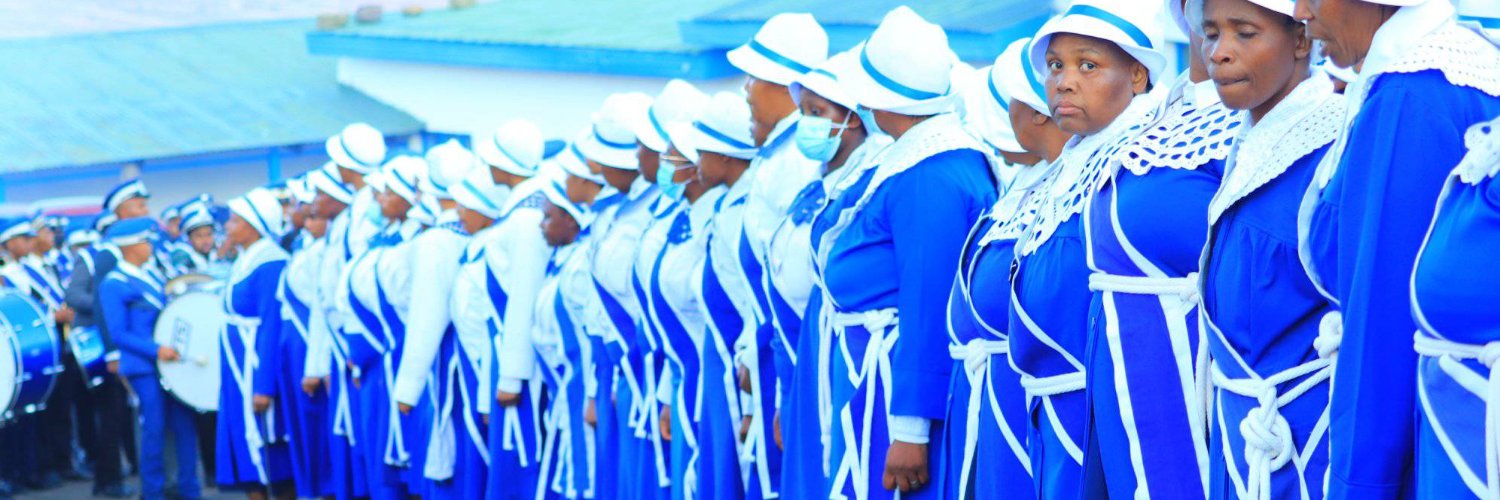
Christinah Mokotuli MmaNku 1894–1988 was a South African prophet, healer, and founder of the St. John's Apostolic Faith Mission, a prominent African independent church. Her visions and healing ministry led to the establishment of one of the country's largest independent churches.
@WitsCLM Congratulations, Dr de Klerk! 🎉 Back in 2020, you donated me a laptop I still use today, and shared study tips, time management strategies, and templates that truly shaped my academic journey. Your care and time in those office sessions made a lasting impact— Well deserved! 👏
9/
I honour Ward 4 residents—Ntate Selemoseng, Ntate Mokoto, Mme Ma Kgosing, and others—whose work in the SEI facility "Dishopong" exemplifies ward-based LED.
10/
The report is a call:
To cleanse municipalities of their political sethotsela/isithunzela
To build new municipalism
8/ I contrast the municipal manager’s call for “data-driven relationships” with @EFFSouthAfrica principle of organic engagement with the masses.
While one is technocratic.
The other is political and rooted.
8/
But then, the report critiques the Municipal Systems Act 32 of 2000 and the National LED Framework (2006–2011).
These frameworks fail to translate constitutional imperatives into community-centred practice.