Most AI agents can complete a task.
But can they stay consistent through hundreds of interactions — and actually get better from the work they do?
That’s what caught my attention about openJiuwen’s WorkSwarm.
Persistent Session helps agents hold onto key facts, roles, decisions, and boundaries across long-running workflows, instead of losing track as context grows.
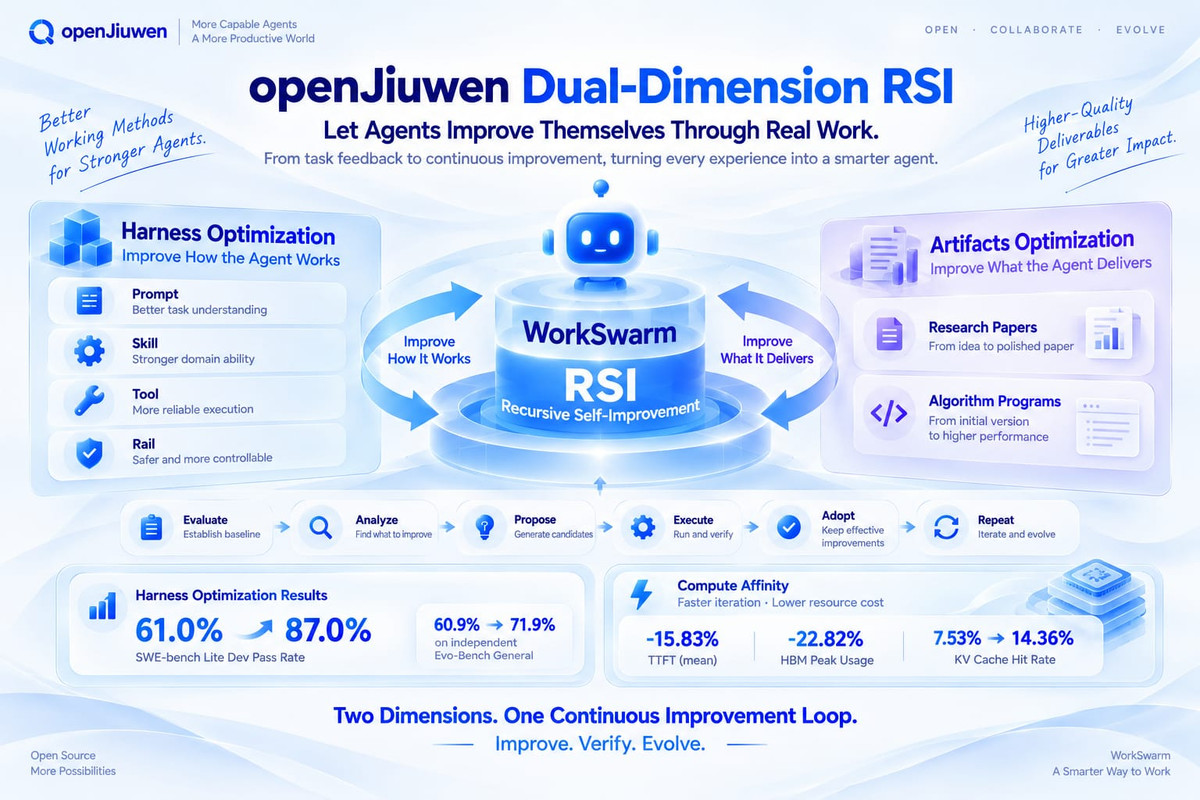
Then there’s Dual-Dimension RSI: WorkSwarm can learn from real task feedback, propose improvements, verify them through execution, and keep what actually works.... improving both how the agent works and what it delivers.
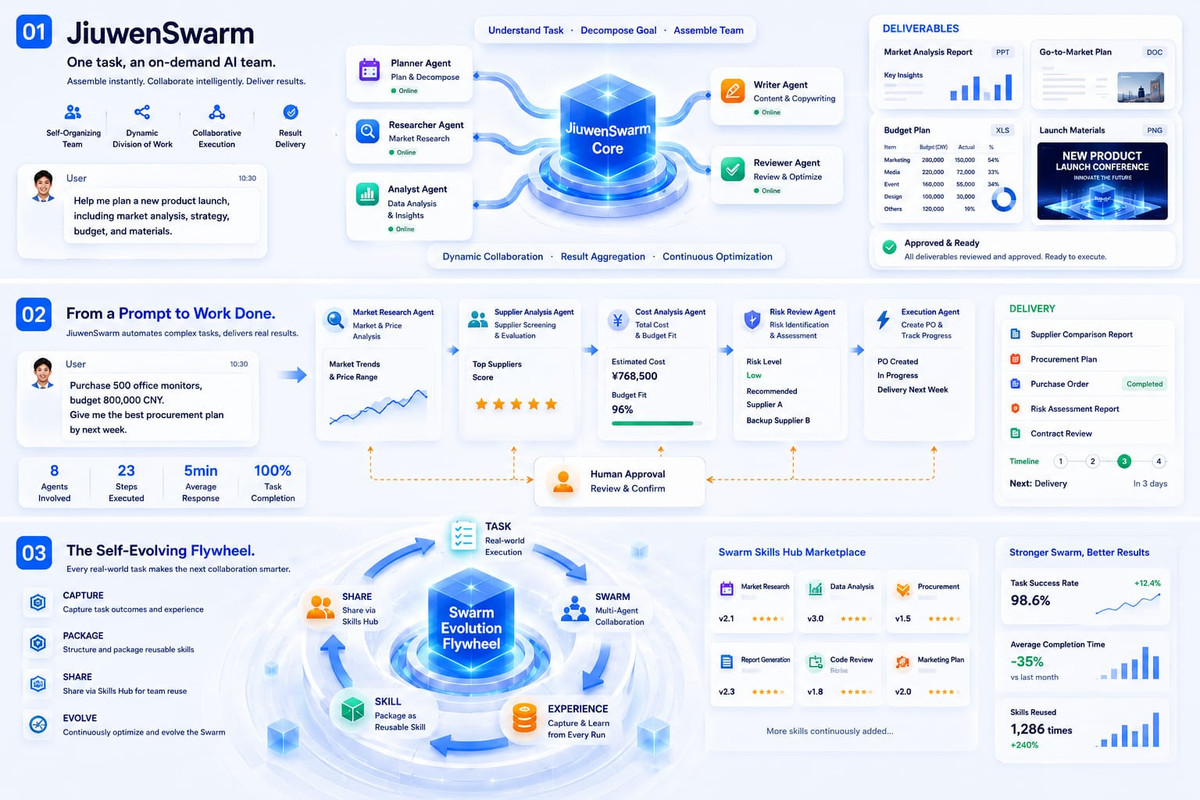
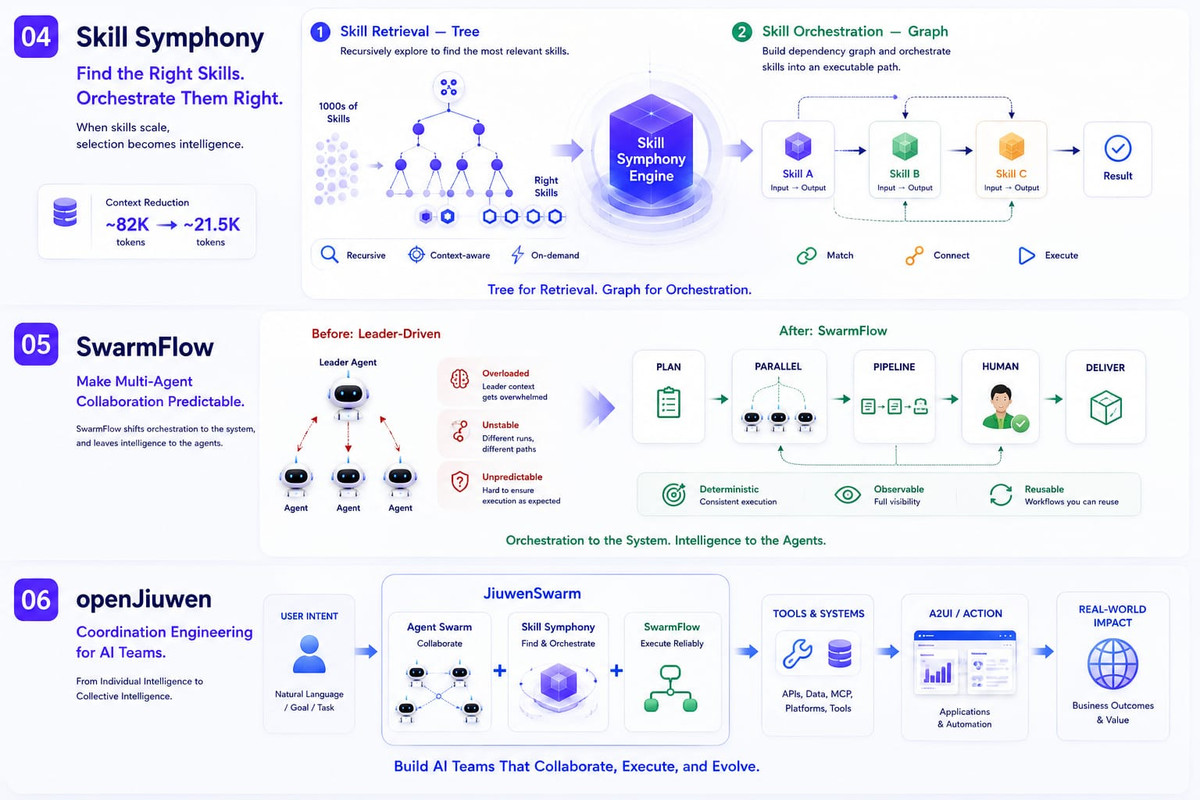
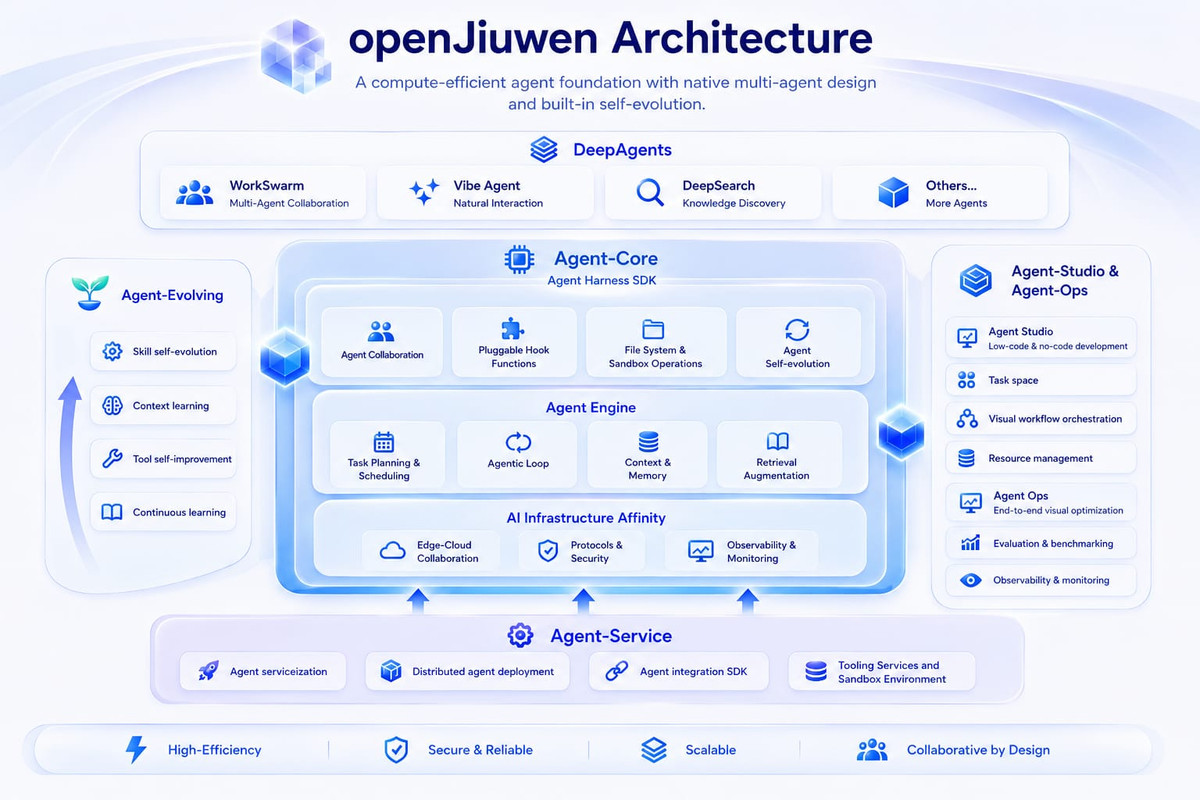
I like the bigger idea here: not just building a smarter individual agent, but creating systems where specialized agents can collaborate, remember, and continuously improve.
openJiuwen / WorkSwarm is open source under Apache 2.0. Worth exploring the code and docs..... and dropping a ⭐ if you find the direction interesting.
https://t.co/q0cTqc6ITg
#AI #Agent #openJiuwen #WorkSwarm
A 4B model just beat the frontier ones at reading agent traces.
Most teams still route every eval through a giant general-purpose model. Expensive and overkill for spotting frustration, a refund, or a quiet jailbreak.
Span-1 flips it. Give it a full trace + a behavior in plain English → present / absent / not observable. Live, on every span.
0.843 F1 on the public benchmark (1,990 traces, 19 languages).... ahead of GPT-5.6-terra, GPT-6-luna, and Jev.
Narrow models win when the job is narrow.
Span-1 Lite free · $0.02/1M tokens
Every "AI world model" demo I've seen is the same: watch a video, take their word for it.
PixVerse R2 said forget that.... just fly the dragon yourself.
So I did. WASD to move, mouse to look, and mid-flight I typed "Breathe Fire"... the whole world reacted right there, live, no render, no waiting.
Most models show you a demo. R2 lets you get in and judge it yourself.
Go try it firsthand → https://t.co/ksFv7gCOl1
@PixVerse #PixVerseWorldModel
I expected the visual design process to be the most exciting part, but the conversation completely changed my mind.
The moment the avatar responded to an interruption and followed a new direction, it started feeling surprisingly present.
Made with Flova 🎮
Built a full GTA-style trailer from a single conversation.... a heist unraveling across a neon-drenched city, sirens, chaos, and one getaway that shouldn't have worked. No editing suite. No crew. Just direction.
#Flovaai#Flovacpp@Flovaai
A one-person studio doesn’t mean doing every production task manually.
It means one creator can explore a complete visual direction before deciding where more time, budget or collaboration is needed.
Taste remains the real leverage.
.#PixVerseWorldModel
AI-generated video is starting to feel less like a clip and more like an interactive world. Move through it, shape what happens, and watch the environment respond to your actions in real time.
@PixVerse
Finally sat down with Qoder instead of just reading about it.
Not an IDE, not a chatbot....you describe an outcome, it plans, executes, and verifies.
Watch, adjust, or take over anytime.
Here's what happened when I gave it a real task 🧵
https://t.co/AF5yIdyaPk
Deel built an AI agent for their own $17B back office. They're guaranteeing 1,000 hours saved in the first 30 days... or a full refund.... for companies over 100 people.
I used to burn 40+ hours every month on management reports. Now it takes under an hour.
I recorded myself once pulling data from NetSuite, Payhawk and Zip, then grouping it four levels deep (subsidiary → department → cost centre → account category).
Akai watched the screen and my voice, connected every system (even the one with no API), built the full SOP, and figured out the entity mapping between systems on its own. It validates totals at every level and holds the report for human review before publishing.
It now runs at ~98% completion and keeps getting cheaper and more autonomous by itself.
Curious how something like this would work in your company? Drop a comment or DM me.