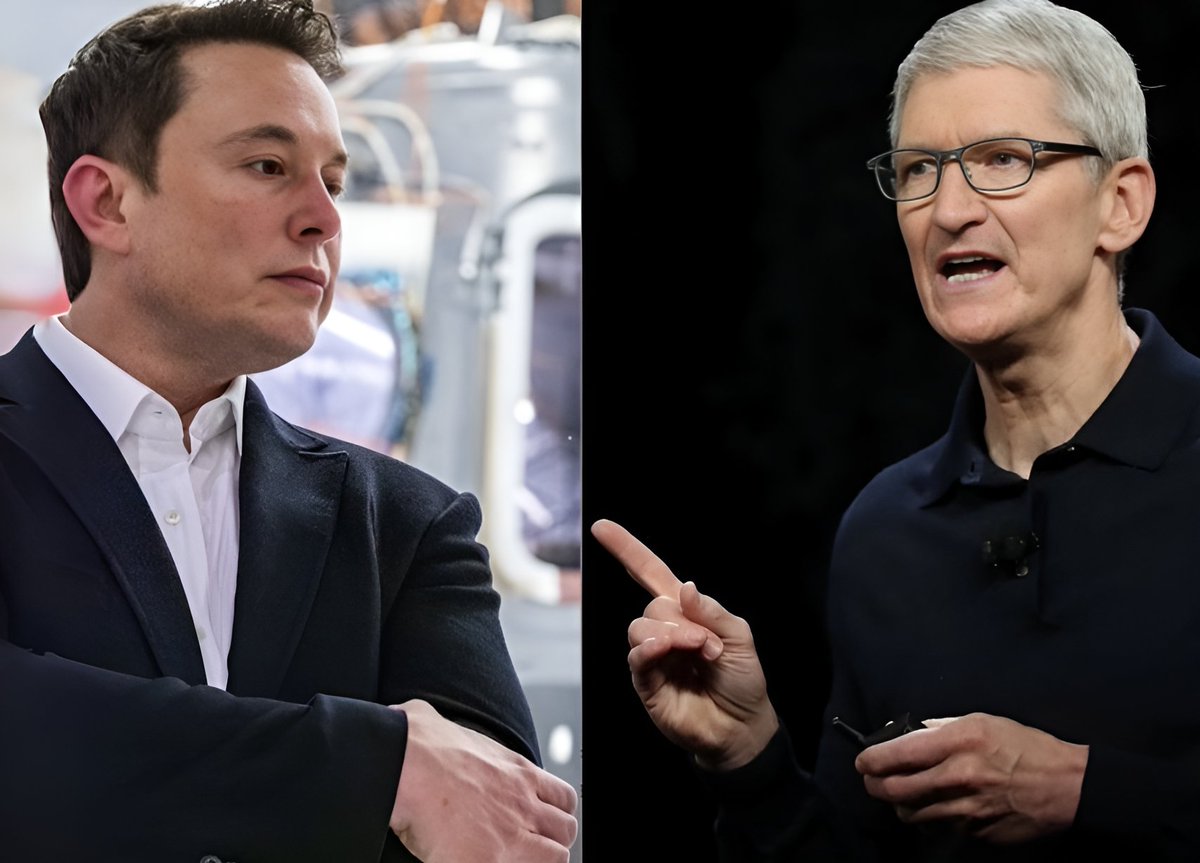
After Elon bought Twitter for $44 BILLION...
Apple tried deleting it from the App Store.
No warning. No explanation. Just a threat.
Instead of backing down... Elon went straight to Tim Cook.
Here’s the face-to-face meeting that shook Apple to its core: 🍎
Nobody is talking about this, but claymation ads are crushing it on Meta right now.
They pull 2-3x the average feed CTR, and barely any brands are running them. Most people scroll past the idea because they think it means hiring a studio and burning $5,000 to get one made.
It doesn't. It just comes down to the prompts.
So we built the whole thing into a free Claude workflow.
Drop in a product URL and it hands you a complete ad in minutes:
→ a 9-shot storyboard built on the problem-villain-hero structure
→ a ready-to-use image prompt for every frame
→ video prompts you can paste straight into Kling, Veo or Runway
→ a voiceover script timed to each shot
→ direction for music and sound effects
The villain reveal shot does the heavy lifting. It's the kind of weird, tactile moment that yanks the thumb to a stop mid-scroll.
The math is almost silly.
Studio route: $3,000 to $5,000 and a 3 week wait.
This route: a few dollars in credits and less than an hour.
Founders are literally shipping their first one before their coffee break is over.
Totally free. No email wall, no signup form.
Want the workflow? Drop "CLAY" in the comments and we'll send the full guide your way.
(make sure you're following so it can reach you)
STOP paying for Grammarly → use LanguageTool
STOP paying for Jasper → use Claude
STOP paying for Descript → use Captions
STOP paying for Adobe Firefly → use Ideogram
STOP paying for Synthesia → use HeyGen Free
STOP paying for Loom → use Tella
STOP paying for Typeform → use Tally
STOP paying for Buffer → use Publer
STOP paying for Surfer SEO → use NeuronWriter
STOP paying for Semrush → use Ubersuggest
(Bookmark this before your wallet cries)
Farther just raised $150M Series D led by General Atlantic to rebuild wealth management around AI-native infrastructure.
The bigger signal isn’t the funding. It’s the collapse of tolerance for legacy advisor tech.
For decades, wealth management firms operated on fragmented systems, operational drag, and workflows that made “digital transformation” feel like changing dashboard colors while everything underneath stayed broken.
Farther is betting the future belongs to firms where:
• AI reduces operational friction
• Advisors focus on relationships and strategy
• Infrastructure becomes the competitive advantage
The company says it has recruited $23B+ in assets since launch while building a fully integrated RIA platform instead of stitching together disconnected third-party tools.
Their thesis is simple:
AI won’t replace financial advisors.
But advisors using AI-native systems will outperform those trapped inside outdated infrastructure.
Wealth management is quietly becoming a software business disguised as a relationship business.
Claude + GPT Image 2 + Seedance + Meta Ads MCP
Just fired my $10k/month performance marketing agency.
Here's the exact stack (and how it runs):
Step 1: Research
Hand Claude your product page, your competitors' pages, and your best ad angles.
It spits out a full brand brief + competitor breakdown in minutes.
No strategist. No $200/hour consultant.
Step 2: Static ads in seconds
Claude crafts image prompts from your brief.
Drop those into GPT Image 2.
You get scroll-stopping creative. Batched. On-brand. No Figma needed.
Step 3: Video ads that convert
Claude writes video prompts. Feed them into Seedance 2.0.
UGC-style clips. AI actor formats. Product showcases.
All generated. Zero filming.
(Both GPT Image 2 + Seedance are live on HeyOz right now.)
Step 4: Publish + optimize on autopilot
Hook Claude into Meta Ads MCP.
It pushes your creatives live, tracks performance, and keeps iterating.
Your agency was billing you hourly for this exact thing.
I documented the full workflow in a guide: prompts, setup, and the exact MCP config.
Why this matters:
Most brands are still bleeding money on slow, overpriced creative production.
The ones who crack this in the next 90 days will own an unfair advantage.
Don't be the brand that figures it out too late.
Comment "REPLACE" and I'll DM it to you.
Claude + GPT Image 2 + seedance + Meta ads MCP
Replaced my 10k/month performance marketing agency
Here's the exact stack (and how it works):
Step 1: Research
Feed Claude your product URL, your competitors' URLs, and your top-performing ad angles.
It builds your full brand brief + competitor intelligence in minutes.
No agency strategist needed.
Step 2: Static ads in seconds
Claude writes image generation prompts based on your brief.
Those prompts go straight into GPT Image 2.
Out comes scroll-stopping creative. Batched. On-brand. No designer.
Step 3: Video ads that convert
Claude writes video prompts. Those go into Seedance 2.0.
UGC-style videos. AI actor formats. Product showcases.
All generated, not filmed.
(Both GPT Image 2 + Seedance are live on HeyOz right now.)
Step 4: Publish + optimize on autopilot
Connect Claude to Meta Ads MCP.
It publishes your creatives, monitors performance, and keeps iterating.
Your agency was charging you for this.
This entire workflow is documented in a guide I put together, covering prompts, setup, and the exact MCP config.
Why this matters:
Most brands are still paying for slow, expensive creative production.
The ones who figure this out in the next 90 days will have an unfair advantage.
Don't be the last one to know.
Comment "REPLACE" and I'll send it to you directly.
R.I.P. Video Ads
Google Omni just changed video ad creation.
I did not test this with random prompts.
I did not test this with made up concepts.
I took ads that already won.
Ads that already converted. Ads that already made money.
Then I fed them into Google Omni and asked for new variations.
Here is what happened.
Turnaround time collapsed from days to minutes.
The quality came back sharper than I expected.
The new ads looked more real.
More polished.
More ready to run than half the content brands are still waiting weeks to receive.
What used to be a full production cycle is now a few clicks.
And here is the part that should worry slow movers.
The variations did not just look good.
They looked better than most agency deliverables I have seen this quarter.
What stood out:
→ Took proven winners and spun up fresh versions in record time
→ Visual quality exceeded what I thought AI video could do
→ Output looked genuinely realistic, not synthetic
→ Ad production became stupidly fast
→ The gap between idea and live ad basically disappeared
This is where it gets unfair.
Most brands are still running the old playbook.
Write a brief.
Wait for production.
Wait for edits.
Wait for feedback.
Launch after the moment has passed.
Meanwhile Google Omni lets you clone a winning ad into multiple new assets before your coffee gets cold.
That means:
More tests running.
More iterations live.
More creative in market.
Better looking content.
Realistic output at actual scale.
If you already know what creative works for you, this is not just a tool. It is a weapon.
Grab the winner.
Generate better versions.
Launch while the data is still hot.
Do it again.
That is the shift.
It is not about spending more time making ads.
It is about spending less time.
Getting better quality.
And putting more realistic creative into the world faster than your competitors can respond.
I do not think most advertisers realize how quickly this gap is about to widen.
If you want the exact workflow I used to turn previous winners into new variations with Google Omni:
Comment "OMNI" below
Follow so I can DM you the breakdown
P.S. Repost this and I will send you the prompt structure I use to generate stronger variations from ads that already perform.
Slack was supposed to simplify work.
Instead, it became the operating system for chaos.
Now Viktor wants to turn it into the operating system for execution.
Viktor just raised $75M Series A led by Accel to build an AI coworker that lives directly inside Slack & Microsoft Teams — connecting 3,000+ workplace tools to automate workflows, reports, ops, and coordination.
The bigger shift isn’t “AI chat.”
It’s AI that actually executes work.
Enterprise AI is moving from copilots → operational infrastructure.
And the winners may be the companies embedded where work already happens. 👀
5 skills you can learn online to start earning in 2026
1-Google Data Analytics Professional Certificate
https://t.co/WPRVfkmFcz…
2-Google Project Management: Professional Certificate
https://t.co/fLE8bkuY2u…
3-Google UX Design Professional Certificate
https://t.co/WfQ5hVtlFr…
4-Google IT Support Professional Certificate
https://t.co/7t5E9iZRy5…
5-Deep Learning Specialization
https://t.co/yI6CHyfYww…
I USE CLAUDE ALL DAY WITHOUT BURNING MY LIMIT.
Most people think Claude only counts messages.
Wrong.
Claude tracks:
• The size of your prompts
• The files and context it reads
• The length of its responses
That’s why your limit disappears faster than expected.
I changed a few habits and now Claude lasts WAY longer every day.
Here are 9 simple tricks that save my usage 👇
1. Start new chats often
2. Keep prompts short and direct
3. Avoid uploading huge files
4. Ask for concise outputs
5. Remove unnecessary context
6. Use bullet points instead of paragraphs
7. Don’t paste entire codebases
8. Split big tasks into smaller chats
9. Reuse clean prompt templates
Small changes = massively more usage.
If you use Claude daily, this will save you hours.
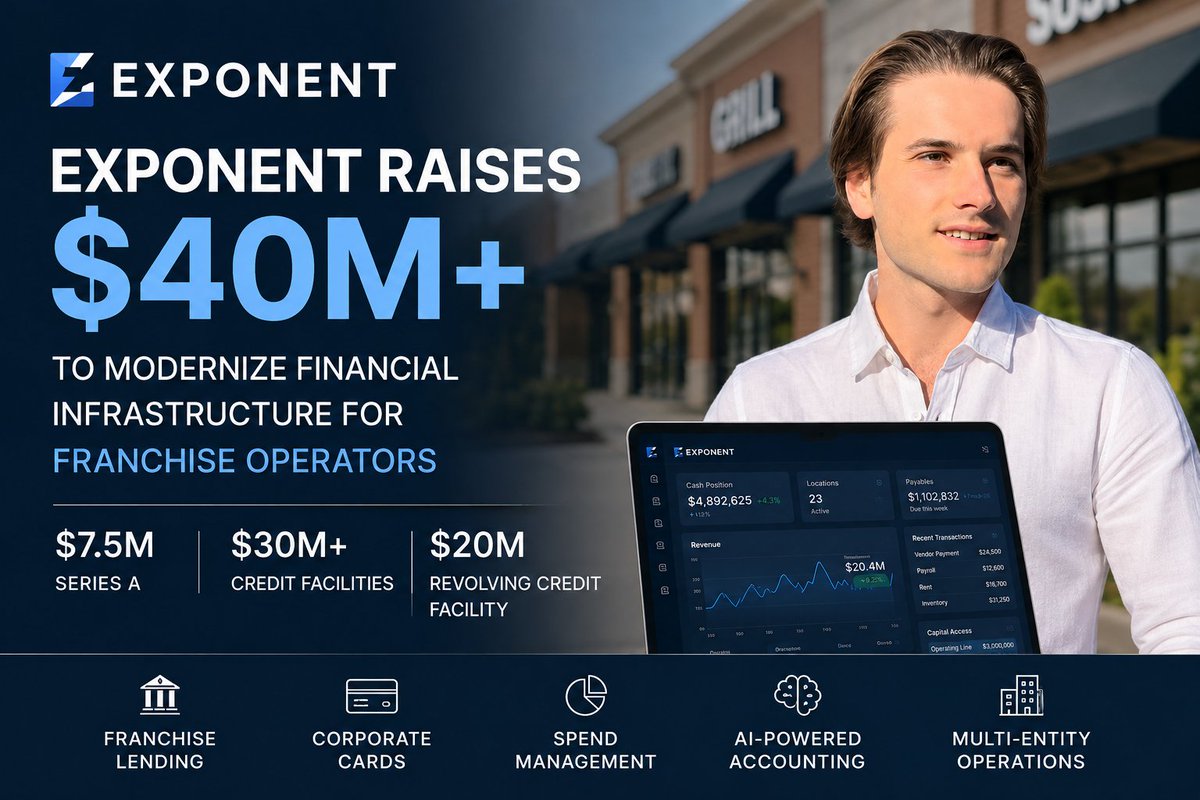
Exponent just raised $40M+ to fix one of the least glamorous but most important problems in America: franchise finance.
Multi-location operators manage payroll, inventory, remodels, expansion loans, and cash flow across dozens of entities using systems that barely communicate with each other.
Exponent is building the financial operating system they actually need:
• Franchise lending
• Corporate charge cards
• Spend management
• AI-powered accounting
• Multi-entity financial operations
The company secured:
• $7.5M Series A
• $30M+ committed credit facilities
• Backing from Chailease, Andre Koo, Era, K8 Capital, and Inauguration Capital
This is part of a larger shift happening in fintech.
Investors are moving away from “growth at all costs” consumer apps and toward vertical infrastructure businesses with deep operational workflows and sticky revenue.
Franchise operators generate $921B+ annually in the U.S. economy, yet most still run on fragmented financial systems held together by spreadsheets and stress.
Exponent’s bet:
The next big fintech winners won’t just serve businesses.
They’ll become embedded inside how industries actually operate.
Flick just raised $6M to build AI filmmaking tools for directors — not prompt addicts. 🎬
Backed by True Ventures, GV, YC, and Lightspeed, Flick is betting the future of AI video won’t belong to one-click generators.
It’ll belong to creators who want:
→ cinematic control
→ iterative storytelling
→ emotional continuity
→ real filmmaking workflows
Founded by former Instagram Stories builder Ray Wang and filmmaker/designer Zoey Zhang, Flick is building infrastructure for AI-native cinema instead of chasing viral 8-second demos.
That distinction matters.
Because AI video is entering its next phase:
from spectacle → to creative operating systems.
The companies that win won’t just generate clips.
They’ll own the workflow creators live inside every day.
Cheap content scales infinitely.
Taste doesn’t.
Flick understands that. 🚀
OpenAI vs Apple is becoming more than a partnership dispute — it’s turning into a full-scale AI rivalry.
After integrating ChatGPT into Siri last year, OpenAI reportedly expected deep OS-level integration and billions in subscription growth from Apple’s massive user base.
Instead:
→ Limited ChatGPT visibility inside iPhones
→ Restricted Siri-powered responses
→ Apple shifting toward Google Gemini integration
Now OpenAI is reportedly exploring legal action, claiming Apple failed to deliver on its commitments.
The AI wars are no longer just model vs model.
They’re becoming platform vs platform.
Apple + Google.
OpenAI + devices.
The next battle is ecosystem control.