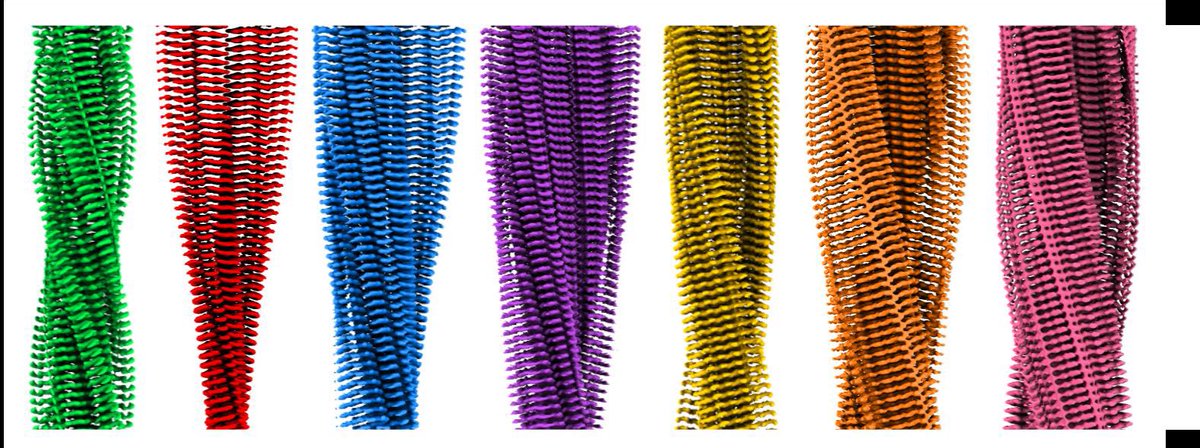
Great opportunity to join the Radford / Ranson labs and the world-renowned Astbury Centre as a Research Fellow in Structural Biology! Please see https://t.co/9ILjd76AK8
4/6 🚨 Our findings raise concerns about using E. coli Nissle 1917 as a probiotic. Minimal mutations in Nissle FimH can transform this pks⁺ strain into a highly genotoxic one, potentially increasing cancer risk. A re-evaluation of its safety as a probiotic may be warranted. 🧬⚠️
3/6 Pharmacological inhibition of FimH effectively blocks bacterial binding, reducing genotoxicity and colon cancer progression. This targeted approach spares beneficial gut microbes, offering a promising therapeutic strategy without the drawbacks of antibiotics. 🚫💊
2/6 Our study reveals that the adhesins FimH and FmlH are critical for pks⁺ E. coli to bind epithelial cells, enabling colibactin production in close proximity to host DNA. This binding significantly amplifies DNA damage, driving colon cancer development. 🦠🔬
🎉 Super excited to announce that our study "Colibactin-driven colon cancer requires adhesin-mediated epithelial binding" is now published in Nature! Huge congratulations to first authors @MaudeJans and @magdalenakolata for their fantastic work! 1/6🧵🎉
https://t.co/mhCUpxsKXX
Post doc in cryo EM of Amyloid- with @naranson and @AstburyCentre- an exciting opportunity for you to join our collegiate and inspiring team trying to crack amyloid disease by better understanding its formation from test tubes to tissues. Apply here
https://t.co/J4y8XDo65f