Netherlandish Proverbs
Artist: Pieter Bruegel
The “Where’s Waldo?” of Renaissance paintings is an encyclopedic collection of Dutch proverbs — illustrating more than 100 sayings through scenes in a village setting. The painting from 1559 is also called "The Blue Cloak". (🧵)
#renaissanceart #oldmasters #bruegel
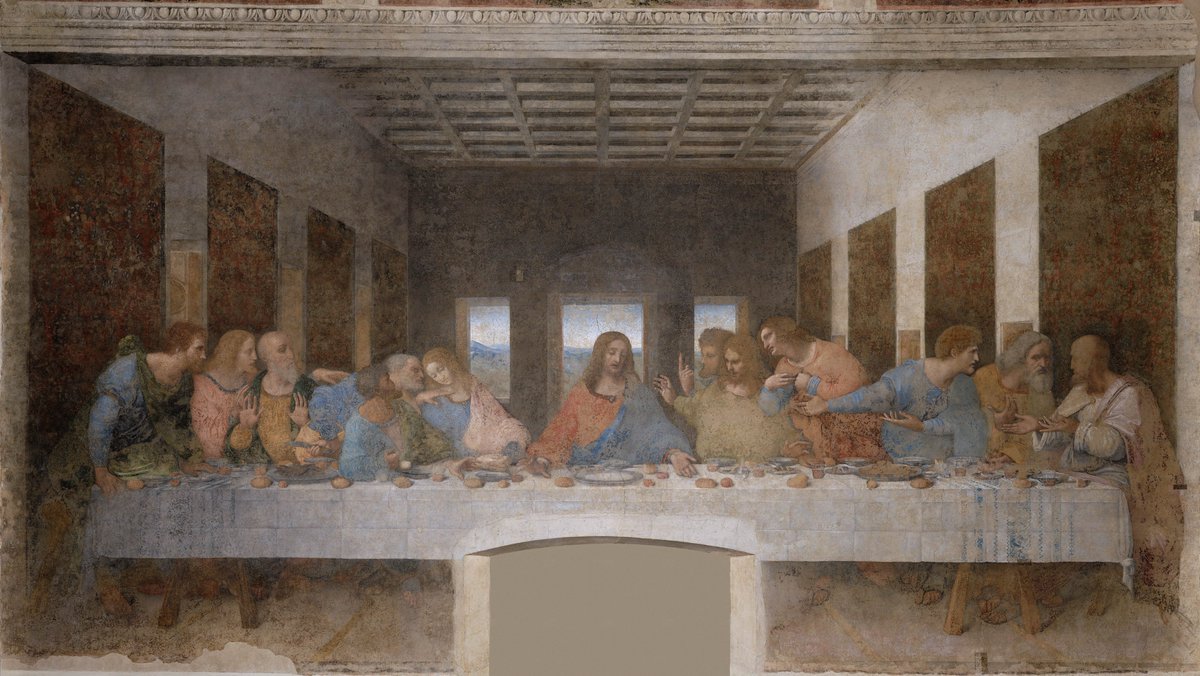
The Last Supper
Artist: Leonardo da Vinci
'The Last Supper' is a testament to the Renaissance's golden age of art. Its composition, use of light, and emotional depth make it one of the most studied and admired works in history. Each apostle's reaction, the architectural perspective, and the sheer scale of the work invite us to ponder the intersection of art, science, and human emotion. 🧵
#RenaissanceArt #LeonardoDaVinci #TheLastSupper #ArtHistory #RenaissancePaintings
The Last Supper
Artist: Netherlandish Painters
Created between 1515–20 this painting remains a fascinating piece where the artist's identity is lost to time. 🧵
Attributed to anonymous Netherlandish Painters, it showcases the dramatic flair and theatrical style characteristic of Antwerp Mannerism.
#RenaissancePaintings #RenaissancePainting #RenaissanceArt #Renaissance #RenaissanceRevival #RenaissanceReawakening #RenaissanceArtists #Art #Artists
Bacchus and Ariadne
Artist: Titian
Titian created this piece between 1520-1523 — encapsulating the exuberance of Renaissance art through his masterful use of color and vivid storytelling.🧵⬇️ Zoom in!
#Titian#BacchusAndAriadne#RenaissanceArt
Netherlandish Proverbs
Artist: Pieter Bruegel
The “Where’s Waldo?” of Renaissance paintings is an encyclopedic collection of Dutch proverbs — illustrating more than 100 sayings through scenes in a village setting. The painting from 1559 is also called "The Blue Cloak". (🧵)
#renaissanceart #oldmasters #bruegel
Each scene in the painting represents a different proverb through visual storytelling. Proverbs include "Banging one's head against a brick wall" for frustration, "Swimming against the tide" for resistance to societal norms, and "The world turned upside down" depicted by a man standing on his head.
#arthistory #artlovers #renaissancepainting
Bruegel's aim was to comment on human behavior, folly, and the absurdity of proverbs when taken literally. It critiques human nature and societal norms, along with their contradictions. The central scene shows a woman putting a blue cloak on her husband, symbolizing deception or infidelity — illustrating the proverb "to put the blue cloak on someone." #artjourney
Pieter Bruegel the Elder was born about 1530 in the Netherlands. He was renowned for his detailed and sometimes humorous depictions of peasant life. Don’t forget to drop a like and follow for more renaissance paintings and history.
#artcollector#masters#oldmasterpaintings
Despite the anonymity of the artis(or artists), this painting embodies the transition from the Gothic to Renaissance styles, capturing the essence of a moment through its expressive and somewhat surreal portrayal. It's a reminder that even without a known name, art can speak volumes, echoing the spirit of an era.
#RenaissanceArt #AntwerpMannerism #TheLastSupper #ArtHistory
Notice how one figure breaks convention by looking directly at the viewer. This direct gaze might invite participation or reflection, altering the traditional viewer-artwork relationship in a way characteristic of Mannerist art.
#OldMasters#Masters#ImmortalMasters #RenaissanceMinds #CulturalRevival #ArtDetails #Mannerism #RenaissanceArt
The Last Supper, once part of a larger altarpiece in Antwerp's Cathedral of Our Lady, was disassembled during the iconoclastic fury of the Reformation, leading to its current standalone existence.
Don’t forget to drop a like and follow for more renaissance paintings and art history.
#ArtHistory #RenaissanceRelics
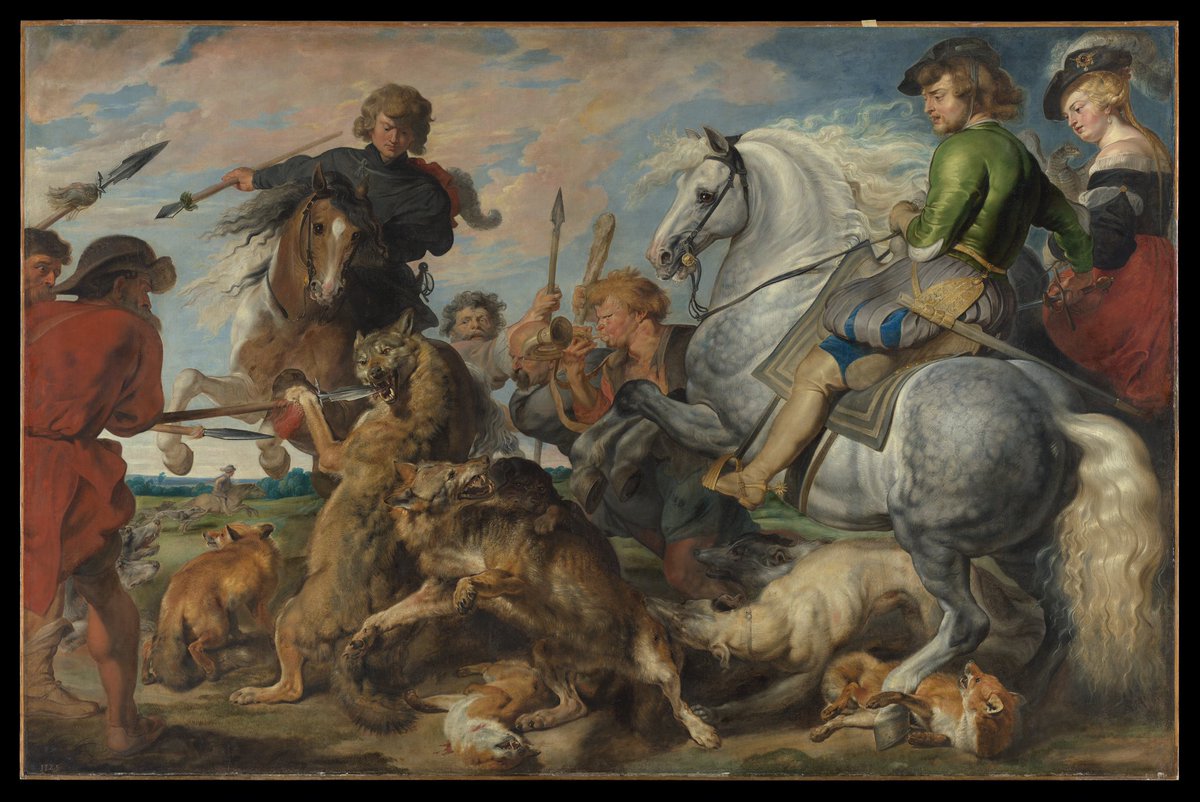
Wolf and Fox Hunt
Artist: Peter Paul Rubens
This painting from roughly 1616 was during the height of Ruben’s career, and showcases his ability to infuse life into his subjects. Rubens said he painted the wolves, with assistants helping on the rest of the painting. 🧵
The fur of the animals contrasts with the smooth metallic sheen of the hunters' armor. This play on texture adds realism and enhances the chaos of the scene, making each element stand out. The vibrant colors enhance the tension and drama of the hunt.
The artwork was commissioned for the Archduke Albert and Infanta Isabella, as part of a series celebrating hunting, a popular theme in Flemish art with aristocratic connotations. @metmuseum
#ArtSymbolism #ArtJourney #ArtNarrative #renaissanceart #renaissancepainting #artcollector #artlovers #oldmasters
#masters #oldmasterpaintings
Interpretations of symbolism include the struggle between civilization and the wild, and the battle between good and evil. The wolves and foxes, cornered yet cunning, could reflect human resilience or darker instincts. What do you see? #ArtSymbolism#ArtJourney#ArtNarrative #renaissanceart #renaissancepainting #artcollector #artlovers #oldmasters
#masters #oldmasterpaintings #artlover
It has been speculated and claimed that the painting contains a hidden melody. Musician Giovanni Maria Pala suggested in 2007 that the positioning of hands and bread rolls could be interpreted as musical notes, potentially forming a requiem-like piece. This intriguing theory adds another layer of mystery to Da Vinci's masterpiece, blending visual art with music. #RenaissanceArt #LeonardoDaVinci #TheLastSupper #HiddenMelody #OldMasters #Masters #RenaissanceArtists #Art #Artists