US$260.000 en dos departamentos. Pagos en negro. Un contrato firmado “para no ser visto”. Y una pregunta que el mandamás del arbitraje argentino no responde: ¿de dónde salió el dinero? La trama de su inversión en una desarrolladora investigada por fraude y lavado.
Los detalles de la investigación con @NicolasPizzi, acá:
https://t.co/eUFW8Oflr7
Mañana se cumple un nuevo aniversario del asesinato del empresario Francisco Soldati a manos de MONTONEROS.
Soldati fallece junto a su chófer. El grupo montonero había sido entrenado en el Líbano.
El atentado se produce a pocas cuadras del obelisco.
También pierden la vida 3 terroristas al explotar la bomba q llevaban en una camioneta.
Firmenich es juzgado x este hecho junto al atentado de ALEMANN, producido 6 días antes.
Su condena: 30 años.
INDULTADO por Carlos Menem.
LA VERDAD TIENE QUE SER COMPLETA.
De CORRUPTE EU baas Ursula von Der Leyen werd niet alleen in Bulgarije bekogeld met eieren en weggejaagd!
Ook in Portugal, Duitsland en Frankrijk liet het volk weten dat ze NIET welkom is!
Ze hoort in de GEVANGENIS!
Eens?
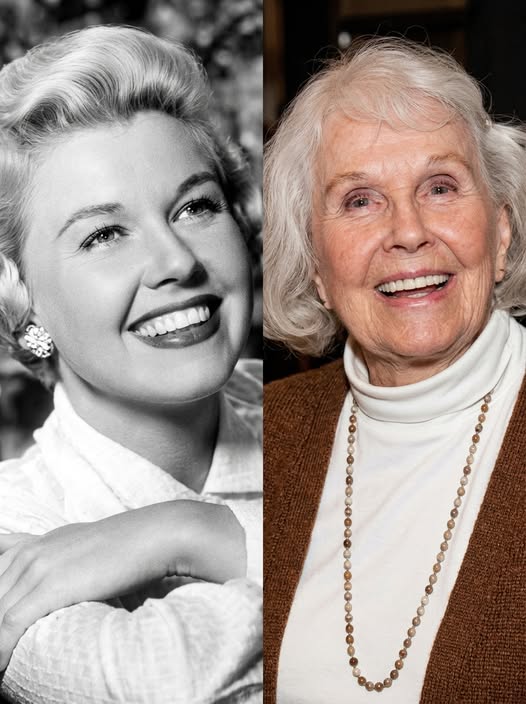
She was America's sweetheart. Then she discovered her husband had secretly stolen every dollar she'd ever earned.
April 1968.
Doris Day's husband Martin Melcher died suddenly of an enlarged heart.
She was devastated. They'd been married 17 years. He'd been her manager, her partner, her protector.
Or so she thought.
When the lawyers came with paperwork to settle the estate, Doris expected to sign documents about her fortune. After all, she was one of Hollywood's biggest stars.
"Que Sera, Sera" had topped charts worldwide.
"Pillow Talk" made her the highest-paid actress in America.
She'd made 39 films. Sold millions of records. Built an empire.
She opened the envelope expecting security.
Instead, she found ruin.
Doris Day wasn't rich.
She was $450,000 in debt.
Every dollar she'd earned—every film, every song, every appearance—was gone.
Her husband had lost it all.
Melcher had secretly invested her entire fortune into bad business deals without her knowledge or consent. Oil wells that never produced. Hotels that failed. Schemes that collapsed.
He'd signed contracts in her name.
Made commitments she knew nothing about.
Gambled her future while she smiled for cameras and sang about whatever will be, will be.
But the worst revelation?
He'd committed her to a television show she didn't even know existed.
CBS was expecting her to star in "The Doris Day Show." Five-year contract. Already signed.
She'd never read the script. Never agreed to do television. Never wanted to do a sitcom.
But the contract was real. And if she didn't honor it, she'd be sued for breach.
Most people would have broken down.
Doris Day showed up for work.
Not because she wanted fame or loved the spotlight.
Because she needed to survive.
At 46 years old—after decades of success—she was starting over. Broke. Betrayed. With no choice but to put on that smile and pretend everything was fine.
America tuned in every week to watch a lighthearted sitcom about a widowed mother navigating life.
They had no idea they were watching a woman fighting for her financial survival in real time.
Behind every laugh track was someone who'd been betrayed by the person she trusted most.
Behind every cheerful scene was someone who'd lost everything.
But she never let it show.
"The Doris Day Show" ran for five seasons. It was a hit. And slowly, episode by episode, Doris rebuilt what had been stolen from her.
But she wasn't done fighting.
In 1974, Doris Day sued Martin Melcher's business partner and attorney, Jerome Rosenthal, for fraud and legal malpractice.
She accused him of participating in the financial schemes that destroyed her fortune. Of knowing about the unauthorized deals and saying nothing. Of betraying his duty to protect her interests.
The trial revealed shocking details about how completely she'd been deceived.
Contracts signed without her knowledge. Investments made without her consent. A systematic plundering of everything she'd earned.
The jury ruled in her favor.
The judgment: $22.8 million.
But winning the lawsuit wasn't the end of the fight. It was just the beginning.
Collecting that money took years. Over a decade of legal battles. Appeals. Delays. Complications.
She never got the full amount. But she fought every step of the way—not for revenge, but for justice.
By the time "The Doris Day Show" ended in 1973, Doris was financially stable again. She'd survived the betrayal. Rebuilt her life. Won her case.
And then she did something Hollywood couldn't understand.
She walked away.
No farewell tour. No final album. No victory lap.
She moved to Carmel, California—a quiet coastal town far from the spotlight—and never looked back.
While other stars chased fame until their final breath, Doris chose something different.
She rescued animals.
Dogs, cats, horses—any creature that needed help. She founded the Doris Day Animal Foundation, which continues her work today.
She bought a hotel in Carmel and turned it pet-friendly decades before that was common.
She spent her final years surrounded by the animals she loved, living quietly, finding peace in kindness instead of cameras.
Reporters would occasionally ask why she left Hollywood at the height of her fame.
Her answer was simple: "I like being the girl next door. I just wish I'd known what the neighborhood was really like."
Behind that characteristic wit was a truth many people learn the hard way:
Sometimes the people closest to you are the ones who hurt you most.
But Doris Day's story isn't really about betrayal.
It's about what you do after the betrayal.
She could have become bitter. Withdrawn. Broken.
Instead, she showed up. She worked. She fought. She rebuilt.
She didn't just survive—she chose a life that mattered more than money or fame.
When Doris Day died in 2019 at age 97, obituaries focused on her films and songs.
But her real legacy is quieter than that.
It's in the resilience she showed when everything fell apart.
It's in the years of fighting for justice even when it would've been easier to give up.
It's in choosing peace over fame when she finally had a choice.
It's in every animal she saved and every person inspired by her refusal to stay defeated.
"Que Sera, Sera" became her signature song: Whatever will be, will be.
But Doris Day proved something more important:
Whatever has been doesn't have to define what will be.
You can lose everything and still rebuild.
You can be betrayed and still trust again.
You can survive the worst and still choose kindness.
She didn't just play America's sweetheart.
She showed America what real strength looks like.
Not the kind that screams or breaks things.
The kind that shows up the next day. And the day after that. And the day after that.
Until one day, you realize you've built a whole new life—one that's yours, on your terms, without the people who tried to destroy you.
Doris Day: 1922-2019.
The woman who lost everything, rebuilt it all, and then walked away to live on her own terms.
That's not just a Hollywood story.
That's a lesson in how to survive anything
🇮🇹 | El Gobierno de Meloni reduce un 55% las llegadas de inmigrantes por mar a Italia.
Los desembarcos suman 27.801 hasta el 11 de noviembre, frente a 61.642 un año antes, según el Ministerio del Interior italiano. Las repatriaciones de 2026 ya superan el total de todo 2025.
La diferencia con el año pasado es de 33.841 llegadas menos, una caída del 54,9%. Frente a 2024, cuando en las mismas fechas se contabilizaron 58.668 entradas, el descenso es del 52,6%. Los datos son del Ministerio del Interior italiano.
El ritmo también ha bajado en noviembre. Hasta el día 11 habían llegado por mar 993 inmigrantes, mientras que en todo noviembre de 2025 fueron 4.360 y en el mismo mes de 2024, 8.124.
https://t.co/PBJiOiwCln
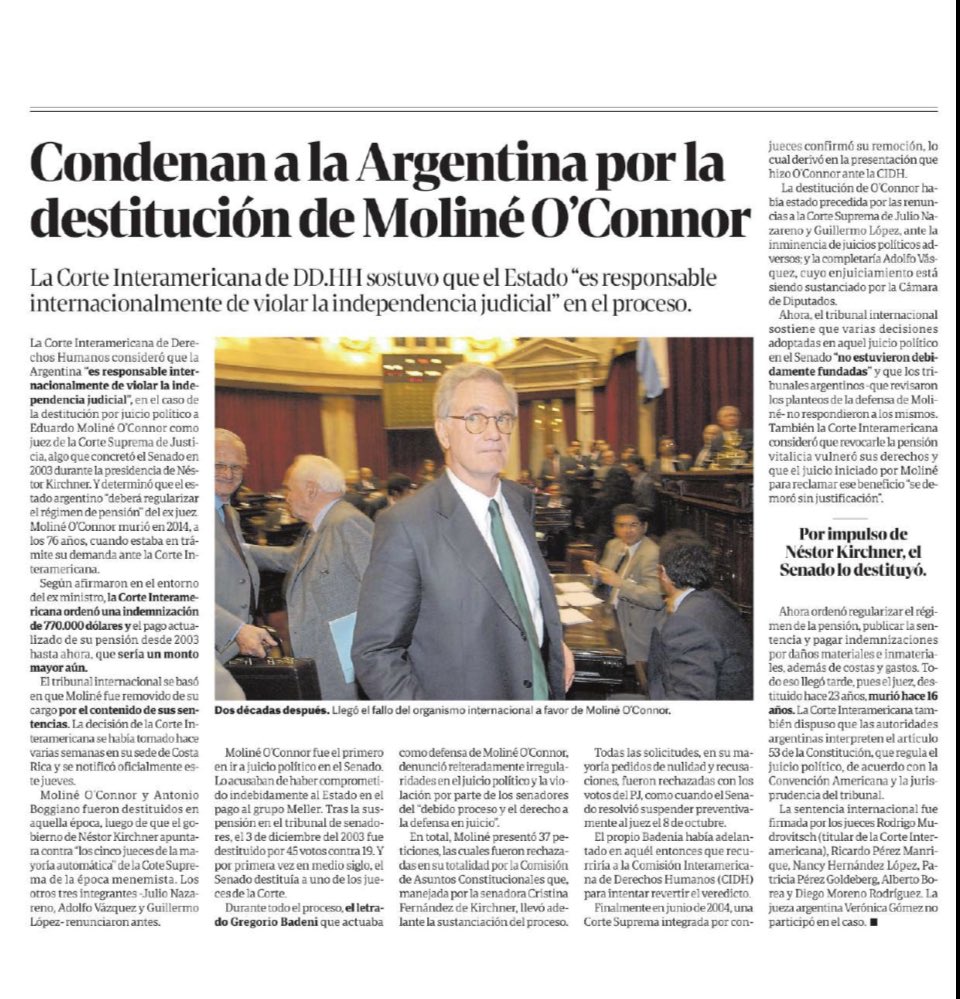
Expliquemos: a Moliné O'Connor y a Boggiano los echó ilegítimamente de la Corte el PJK o sea, el kirchnerismo y el peronismo que se les obedecía.
Además presionaron a los otros miembros a renunciar.
Desgraciadamente, a la perversidad e ilegitimidad K, se sumó la inconcebible lentitud de los sistemas judiciales a todo nivel, incluyendo a la Corte Interamericana de DDHH.
Mientras se siga votando kirchnerismo y mientras quienes hacemos derecho no entendamos que el tiempo vale en serio y debemos ser eficientes en los procedimientos judiciales, estas barbaridades seguirán ocurriendo.
Ramadan närmar sig skriver många muslimer både här på X och i tidskrifter.
De ber oss icke muslimer att inte äta eller dricka framför dem, de vill att vi ska visa respekt för deras högtid.
Då vår underbara högtid julen är på ingång så ber vi er muslimer att inte köra in bilar eller lastbilar på våra julmarknader i syfte att döda oss.
Riv inte heller ner och förstör vårt julpynt i våra trädgårdar och i våra städer.
Förstör inte våra granar på torgen och i köpcentren.
Ni ska visa respekt för Sveriges största högtid och världens mest firade.🎄
La desesperación es infernal, claro, saben que por los otros juicios no sale nunca más y probablemente vaya a cárcel común sin teléfono ni manicura ni peluqueo ni fotógrafo.
TN DEPORTIVO GANÓ EL MARTÍN FIERRO DE CABLE: CARUSO LOMBARDI EN ÉXTASIS Y CHIQUI TAPIA LO MIRA POR TV 🚨
"Aunque la AFA no quiera... Nos dan un premio en el día que NO PUDIMOS ENTRAR A CUBRIR LA CONFERENCIA DE PRENSA DE SCALONI porque en AFA se están haciendo cosas feas, PERO LA CENSURA es algo que merece SER REPUDIADA, no nos gusta esta situación que estamos viviendo."
Caruso Lombardi: "Nunca imaginámos ganarlos dos veces seguidos. NI COMO TÉCNICO GANÉ TANTAS COSAS... Pero salvé a varios del descenso que es más difícil. Lo bueno es que DECIMOS NUESTRA VERDAD, y la gente lo valora muchísimo." 🤣
¿A dónde están todos los paladines de LA LIBERTAD DE LA EXPRESIÓN como FOPEA quejándose de esta situación? Cuántas CARITAS DE ORTO de varios "colegas" que había por ahí, SE NOTA MUCHO.
"Puro humo Caruso" le gritaba Lapegüe😭
Le roi Hassan II du Maroc a fait enfermer pendant 19 ans une mère et ses 6 enfants, dont le plus jeune, Abdellatif, âgé de 2 ans et demi, dans des cachots secrets, et a fait emmurer vivants 58 militaires dans des cellules sans lumière au milieu du désert pendant 18 ans jusqu'à ce que plus de la moitié d'entre eux y laissent la vie.
Il reste pourtant célébré dans les chancelleries occidentales comme le monarque éclairé et moderne qui a unifié le royaume de 1961 à 1999, grand allié de la France et de l'Occident.
Dans l'imaginaire diplomatique, le souverain chérifien demeure un chef d'État francophile d'une grande culture littéraire, artisan du dialogue interreligieux et médiateur incontournable des processus de paix au Moyen-Orient.
La réalité, établie par le rapport officiel de l'Instance Équité et Réconciliation créée par l'État marocain en 2004 ainsi que par les témoignages des survivants Malika Oufkir et Ahmed Marzouki, dévoile l'implacable cruauté de ses prisons secrètes durant les Années de plomb.
En août 1972, après l'échec du coup d'État orchestré par son ministre de la Défense, le général Mohamed Oufkir, qui est aussitôt exécuté, le roi décide de faire payer cette trahison à toute sa descendance.
Il fait arrêter la veuve du général, Fatima, ainsi que leurs 6 enfants, dont la fille aînée Malika âgée de 19 ans et le petit dernier Abdellatif, qui n'a alors que 2 ans et demi.
Sans le moindre procès ni la moindre inculpation, la mère et les enfants sont jetés au secret pendant 19 ans dans des forteresses isolées du Sahara puis dans les cachots souterrains de Bir Jdid, affamés, privés de soins et séparés les uns des autres dans l'obscurité, jusqu'à ce que 4 des enfants parviennent à creuser un tunnel à la cuillère en 1987 pour alerter l'opinion internationale et obtenir leur libération en 1991.
Au même moment, en août 1973, le monarque fait transférer en secret 58 officiers et sous-officiers impliqués dans les tentatives de putsch vers la caserne désaffectée de Tazmamart, perdue dans les montagnes arides de l'Atlas.
Les prisonniers, bien qu'ayant déjà été condamnés à des peines de prison limitées par un tribunal, y sont littéralement emmurés vivants dans 2 bâtiments de béton divisés en cellules individuelles de 3 mètres sur 2.
Pendant 18 années consécutives, les portes en fer restent soudées : les détenus survivent dans le noir absolu, sans fenêtre, sans lumière, sans médecin, sans jamais sortir une seule minute, par des températures allant de 0 degré en hiver à plus de 40 degrés en été, au milieu des scorpions, des cafards et de leurs propres excréments.
Alors qu'Hassan II nie catégoriquement l'existence même de Tazmamart sur les plateaux de la télévision française en souriant aux journalistes.
Selon le rapport de l'Instance Équité et Réconciliation, 30 des 58 militaires transférés à Tazmamart y sont morts après des années de détention dans des conditions inhumaines : ils meurent lentement de malnutrition, de maladies et de l'absence totale de soins médicaux, avant d'être enterrés sous de la chaux vive dans la cour du bagne.
Sous la pression internationale, les 28 survivants squelettiques et à demi aveugles ne sont extraits de leurs tombes de béton qu'en septembre 1991, juste avant que le roi ne fasse raser les bâtiments pour effacer les traces du mouroir.
Le monarque que les chefs d'État occidentaux recevaient avec tous les honneurs a maintenu pendant près de 2 décennies des enfants innocents et des dizaines de prisonniers enterrés vivants dans des tombeaux d'État.
This is what REAL New Yorkers do when these black folks try to steal bikes in broad daylight. Bystanders jumped in, fought back, and the kid who thought he was untouchable ended up on the ground crying for mommy instead of becoming the next “victim.” No safe spaces, no excuses—just consequences.
This is exactly what EVERYONE in NYC needs to start doing. Nobody’s coming to save you.
En los últimos años en La Cornisa anticipamos: La facturación desde prisión de Lázaro Báez. Te mostramos cada una de las facturas. La justicia llegó un año después.
Escuchaste los audios y testimonios de los aprietes y extorsiones de Claudia Insaurralde, la pareja de Báez.
Encontramos al yerno de Báez alquilando un chalet embargado por la justicia en Pinamar.
Nos quedamos cortos.
Había más. La pata del narcotráfico en el sur con los camiones del empresario K
Las investigaciones se confirmaron en la justicia.
Para muchos "la vecina de arriba". Para mí, mi vecina. Esa que me cruzaba yendo a Disco. Esa que me invitaba a tomar café con alguna cosa rica. Esa que siempre estaba de buen humor y con proyectos. Esa que no sabía tener más que palabras de elogio para con mi mamá y cada vez que la veía por el barrio y se ponían a charlar, luego me llamaba para contármelo admirada diciéndome: "qué regia, divina y elegante es tu mami". Esa que luchó con valentía y coraje mientras muchos preferían callar. Gracias por tu afecto y cordialidad siempre. QEPD, Ximenita.
Esta bandera la colgó Ximena, "la vecina de arriba".
En un país de genuflexos, ella tuvo los ovarios y le puso la bandera en la cara a la condenada, mientras el resto aplaudía y miraba para otro lado.
Fin de un día muy triste, mañana seguimos.
Cuídense y buenas noches.