Uma menina de 17 anos e uma lição certeira a isentões e alienados em geral.
Especialmente no Brasil onde o que não falta são políticos bandidos, a política, infelizmente, faz parte, afeta e inferniza a vida dos brasileiros a cada minuto.
Está no café que tomamos numa padaria qualquer, no susto que tomamos no caixa dos supermercados da vida, na escola de nossos filhos.
Se isolar da realidade e se refugiar numa pretensa zona de conforto e conformismo -que não existem- não funciona.
E afeta a vida de todos os que estão no entorno do isentão: filhos, netos, parentes, amigos, papagaio, gato e cachorro.
A desculpa clássica de todo alienado é a de que não tem jeito:
'Desde que o Pedrão (o alvares Cabral) pisou nestas praias o Brasil é um país corrupto e isso é imutável.'
Isso poderia até ser verdade se não existissem jovens como essa menina.
Ou brasileiros de verdade que insistem teimosamente em lutar por esse nosso país.
*Infelizmente, não tem identificação dessa menina.
Se alguém souber quem é por favor informe.
Publicado originalmente por @gozadorjabuti
There is a statue in Milan Cathedral that tourists mistake for a man wearing a robe.
Then they look closer.
The robe has hands. The robe has a face. The robe has feet, hanging down his back like the hood of a cloak.
He is wearing his own skin.
Saint Bartholomew Flayed. Carved by Marco d'Agrate in 1562. Every muscle exposed. Tendons like rope. Veins running down forearms with no skin to hide under. And draped over his shoulders, folded neat as a priest's vestment, everything they took off of him.
The sculptor was so proud of the anatomy that he carved a boast into the base: Praxiteles did not make me. Marco d'Agrate did.
But the statue isn't the story.
The story is who this man was.
Bartholomew is Nathanael. Same man: Bartholomew is the family name, Nathanael the given one. And Nathanael enters the Bible by insulting Jesus to His friend's face.
John 1:45. Philip runs to him: We have found him, of whom Moses in the law, and the prophets, did write, Jesus of Nazareth.
Nathanael's answer: Can there any good thing come out of Nazareth?
That's the future apostle. First recorded words: trash-talking the Messiah's hometown.
Then he walks up to Jesus, and before he can say a word, Jesus says something no one had ever said about him.
Behold an Israelite indeed, in whom is no guile!
No guile. No mask. No hidden self. Nothing performed. What you see is what he is, even when what he is, is rude about Nazareth.
Nathanael is stunned. Whence knowest thou me?
Jesus answered and said unto him, Before that Philip called thee, when thou wast under the fig tree, I saw thee.
Under the fig tree.
Slow down. Where have you seen fig leaves before?
Genesis 3:7. And the eyes of them both were opened, and they knew that they were naked; and they sewed fig leaves together, and made themselves aprons.
Fig leaves are the first thing shame ever made. The first human invention was a covering. Adam heard God in the garden and hid, and men have been hiding ever since behind reputations, behind religion, behind the version of themselves they let people see.
And Jesus finds Nathanael under a fig tree, the plant of hiding, and announces that this man hides nothing.
I saw thee.
Before Philip called you. Before you knew My name. Under the tree. I saw you already, and I'm still calling you.
That one sentence broke Nathanael. Rabbi, thou art the Son of God; thou art the King of Israel. From insult to confession in two verses.
Now follow him to the end.
Scripture doesn't record his death, but the tradition is ancient and unanimous about the manner of it. He carried the gospel east, as far as Armenia. And when they decided to kill him for it, they didn't hang him or behead him first.
They flayed him. Alive. They took his skin.
The man in whom was no guile, no covering, no mask, no hidden layer, died with the last covering he had peeled away.
And here's what the sculptor saw that the executioners didn't.
D'Agrate didn't carve the skin lying in the dirt. He didn't carve it in an enemy's fist. He carved it draped over Bartholomew's shoulders like a stole. Like a garment of office. Folded. Worn. The way a priest wears what he's been given, not what was taken.
The thing they used to destroy him, he wears like vestments.
Because that's what God does with what the world strips off His people.
Isaiah 61:10. He hath clothed me with the garments of salvation; he hath covered me with the robe of righteousness.
Revelation 6:11. And white robes were given unto every one of them, that's the martyrs, the ones killed for the word of God.
They took his covering. God had a better one waiting.
Now you.
You're under the tree right now. The fig leaves fit so well you've forgotten you're wearing them. The polished version of you at church. The profile. The reputation. The self you perform because you're certain the real one, seen plainly, would be walked away from.
Ask Nathanael how that works out.
The only man Jesus ever publicly certified as having no mask is the man He praised on sight. Seeing all of him was not the obstacle. Seeing all of him was the compliment.
He already sees under yours. Before you ever call on Him, before your Philip ever finds you, He has already looked under the tree, seen the whole thing, everything the leaves were for.
And He's still calling you.
Come out from under the tree.
He has robes.
Filho grava vídeo no túmulo do pai em desespero após o SUS liberar o exame somente depois da morte do paciente; a autorização levou dois anos para sair.
Dor, revolta e mais uma morte no SUS.
Um filho gravou um desabafo no cemitério, em frente ao túmulo do pai, após receber a notícia de que uma colonoscopia solicitada com urgência havia sido finalmente liberada dois anos após o pedido.
O caso envolve Gerson Luiz dos Santos. Segundo o relato do filho, o exame foi solicitado pela médica com caráter de urgência, devendo ser realizado em até 15 dias.
Na época, Gerson estava acamado e enfrentava dificuldades de locomoção. No entanto, a autorização da regulação só chegou cerca de dois anos depois, quando o paciente já havia falecido.
No vídeo, o filho aparece diante da sepultura e diz, em tom irônico: “Vim trazer uma novidade boa para o senhor! Você acredita que sua colonoscopia saiu?” Ele ainda menciona a mensagem enviada pela Secretaria de Saúde, que questionava se Gerson ainda tinha interesse no procedimento ou se já havia realizado o exame.
Até o momento, não há posicionamento oficial da Secretaria de Saúde responsável pelo caso.
O anúncio desta segunda-feira, 24 de agosto, é muito maior do que uma nova rodada de sanções. Sob ordem de Donald Trump, o secretário do Tesouro, Scott Bessent, lançou a Operação Economic Outcast para cortar as fontes internacionais de receita do regime iraniano. Bessent comparou a campanha ao Dia D - desta vez, a ofensiva será financeira.
Foram atingidos quase 60 indivíduos, empresas e embarcações acusados de ajudar o Irã a obter tecnologia nuclear e de mísseis, realizar operações cibernéticas, vender petróleo e driblar as restrições existentes. A ofensiva também alcança cinco setores estratégicos: ativos digitais, tecnologia, ouro, aviação e transporte marítimo.
O ponto central é o aviso aos demais países - quem continuar negociando com Teerã poderá sofrer sanções secundárias e ser afastado do sistema financeiro baseado no dólar. Trump está dizendo ao mundo - especialmente à China, principal compradora do petróleo iraniano - que terá de escolher entre os Estados Unidos e o Irã.
Washington afirma ter mapeado as redes usadas pelo regime para vender petróleo e movimentar dinheiro. Trump pressiona líderes estrangeiros a romper negócios com Teerã; quem oferecer uma saída econômica também poderá ser punido.
Ao Irã, os Estados Unidos apresentaram duas opções: aceitar o isolamento global e uma economia de subsistência ou mudar de direção para retornar ao sistema econômico internacional. Teerã respondeu ameaçando retaliar as nações que aderirem ao cerco e voltou a usar o Estreito de Ormuz, passagem estratégica para o petróleo mundial, como instrumento de pressão.
O Brasil não está fora. Em 2025, exportou cerca de US$ 2,9 bilhões ao Irã, principalmente milho e soja, e Teerã tornou-se o maior comprador do milho brasileiro. Com as sanções secundárias, exportadores, bancos e empresas brasileiras poderão sofrer restrições.
Lula não precisa decidir de que lado ficará; sua política externa já respondeu. Lula colocou os BRICS - bloco que reúne China, Rússia e Irã - no centro de seu projeto e defende alternativas ao dólar.
Resta saber quanto o Brasil pagará pela escolha que o regime Lulopetista já fez.
Look at Christ's hand in this painting.
Not the wound. The hand.
Jesus has Thomas by the wrist. He is pulling the man's finger into the hole in His own side.
Thomas isn't forcing his way in. Look at his arm. It's slack. Led. His hand goes where it's taken.
Caravaggio painted this around 1602, and it scandalized people, because he painted the apostles the way they actually were. No halos. No gold. Three working men with sunburned necks and dirt under their fingernails, crowding in like farmers inspecting a wound on livestock. Thomas's forehead is folded into furrows you could plant seed in.
And Caravaggio hid a detail in Thomas's clothes.
Look at his shoulder. The seam of his garment is torn open. Split at the shoulder, a small, ragged opening in the fabric.
The same shape as the wound in Christ's side.
The doubter is torn too. He just doesn't know it yet.
Now the part everyone gets wrong about Thomas.
He wasn't a coward. When Jesus decided to walk back into Judea, where men were waiting to stone Him, the disciples tried to talk Him out of it. One of them said: Let's go anyway.
John 11:16. Then said Thomas, which is called Didymus, unto his fellow disciples, Let us also go, that we may die with him.
That's Thomas. First volunteer to die.
His problem was never courage.
His problem was that he watched them do it. He saw the man he was ready to die for get taken apart in public. And when the others came running with we have seen the Lord, something in Thomas refused to open the door again.
Except I shall see in his hands the print of the nails, and put my finger into the print of the nails, and thrust my hand into his side, I will not believe.
That's not skepticism. That's a man protecting the last unbroken piece of himself. Hope had already killed him once.
He held that line for eight days.
Eight days of the other ten glowing. Eight days of being the only man in the room who missed it.
Then the doors were shut again. And Jesus stood in the middle of them.
And He went straight to Thomas.
Reach hither thy finger, and behold my hands; and reach hither thy hand, and thrust it into my side: and be not faithless, but believing.
Word for word. The exact demands Thomas had made, in a room Jesus was not standing in.
He heard the doubt spoken in His absence. And instead of answering it with a rebuke, He answered it with His body.
Now read John 20 carefully. Slowly.
The text never says Thomas touched Him.
Look for it. It isn't there. Jesus makes the offer, and the very next verse is Thomas answering, My Lord and my God. The touch is never recorded. For two thousand years, readers have argued about whether his finger ever reached the wound, or whether the offer alone broke him.
Caravaggio read that silence and made a decision.
He painted Jesus closing the gap Himself.
Because that's what the whole scene is. Thomas set the terms: I will not believe unless and Jesus, instead of being insulted, took the man's wrist and brought his hand to the proof. He didn't wait for Thomas's faith to grow strong enough to reach. He reached.
And think about what had to be true for that moment to happen at all.
He rose in a glorified body. Death couldn't hold it. Locked doors couldn't stop it.
And it still has the holes in it.
He kept the wounds. The one thing He carried out of the grave was the damage. He kept them so that a man drowning in doubt would have somewhere to put his hand.
Then He said one more thing, and this is where you walk into the scene.
Thomas, because thou hast seen me, thou hast believed: blessed are they that have not seen, and yet have believed.
They that have not seen.
He's not talking about anyone in that room. Every man in that room saw. He's talking past them through the locked door, down twenty centuries to the ones who would have to do it the hard way.
That's you. You're in the sentence.
So bring Him the doubt. The real one. The one you don't say out loud in church. He's heard it already. He hears the ones spoken when He's not in the room.
He is not threatened by your unless.
The wounds are still open for inspection.
And if your faith can't reach that far, look at the painting one more time.
He'll take your hand.
"I saw Satan fall like lightning from heaven."
Jesus said this out of nowhere. One sentence. No explanation. Then He moved on.
It's one of the strangest verses in the Gospels, and most people skip right past it.
Here's what was actually happening.
In Luke 10, Jesus sends out seventy-two disciples ahead of Him. Ordinary people. Not the twelve. They come back stunned: "Lord, even the demons submit to us in your name!"
And Jesus answers: "I saw Satan fall like lightning from heaven."
The Greek unlocks it. The verb is ἐθεώρουν (etheōroun) - imperfect tense. Not "I saw" as a single glance, but "I was watching." Continuous. Ongoing.
While the seventy-two were out preaching in village after village, Jesus was watching Satan's dominion collapse in real time. Every demon that fled, every town that received the Kingdom, another crack of lightning. Sudden. Visible. Irreversible.
Some hear an echo of Isaiah 14:12 here - "How you are fallen from heaven, O Day Star" and the ancient fall of the enemy. Others see Jesus speaking prophetically of the cross, where the ruler of this world would be driven out (John 12:31). The early church fathers read it both ways, and the verse holds both: what began before time was now breaking into time.
But notice what Jesus says next because it's the real point, and almost nobody quotes it:
"Nevertheless, do not rejoice that the spirits are subject to you, but rejoice that your names are written in heaven." (Luke 10:20)
Power over darkness wasn't the prize. It never was.
The enemy falls like lightning - fast, loud, spectacular.
But your name in heaven is written quietly and permanently in a Book no lightning can touch.
That's where Jesus told them to fix their joy.
That's where He tells you to fix yours.
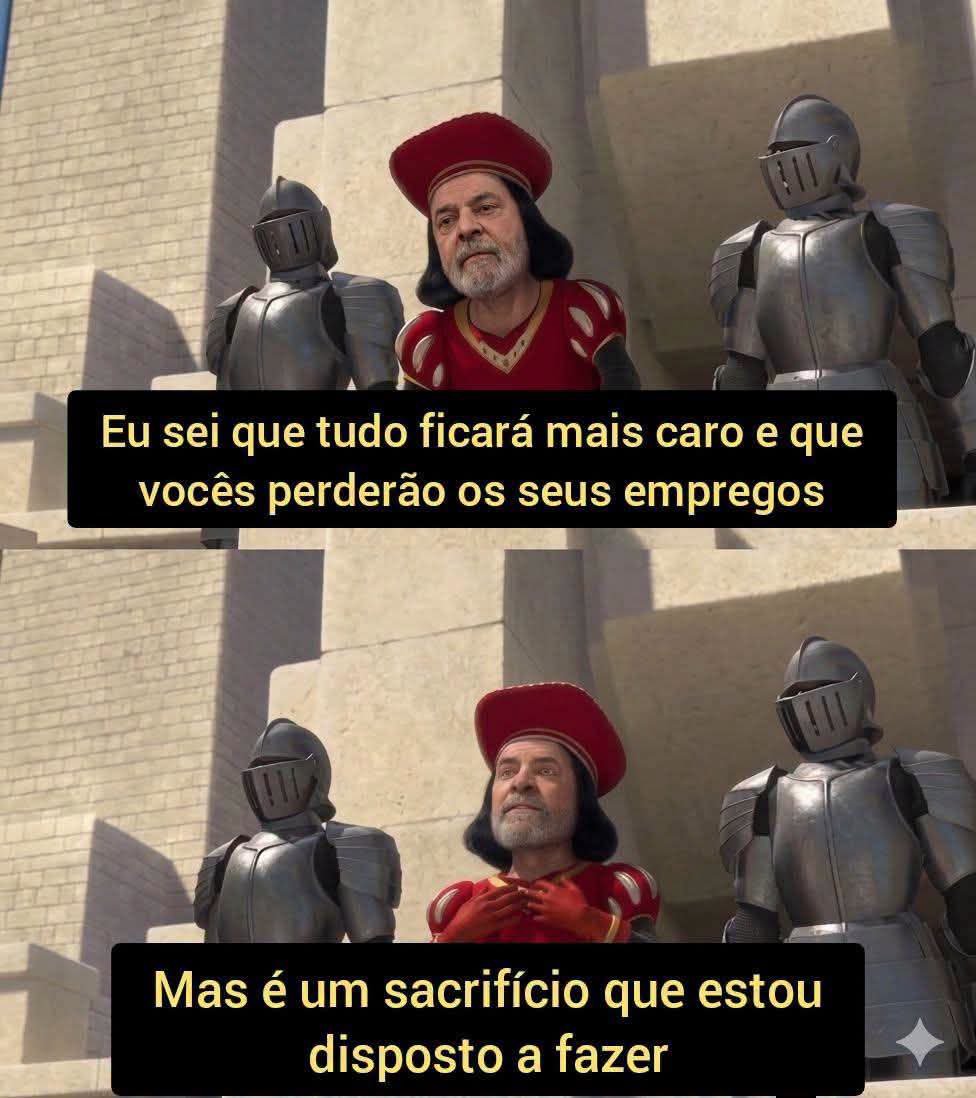
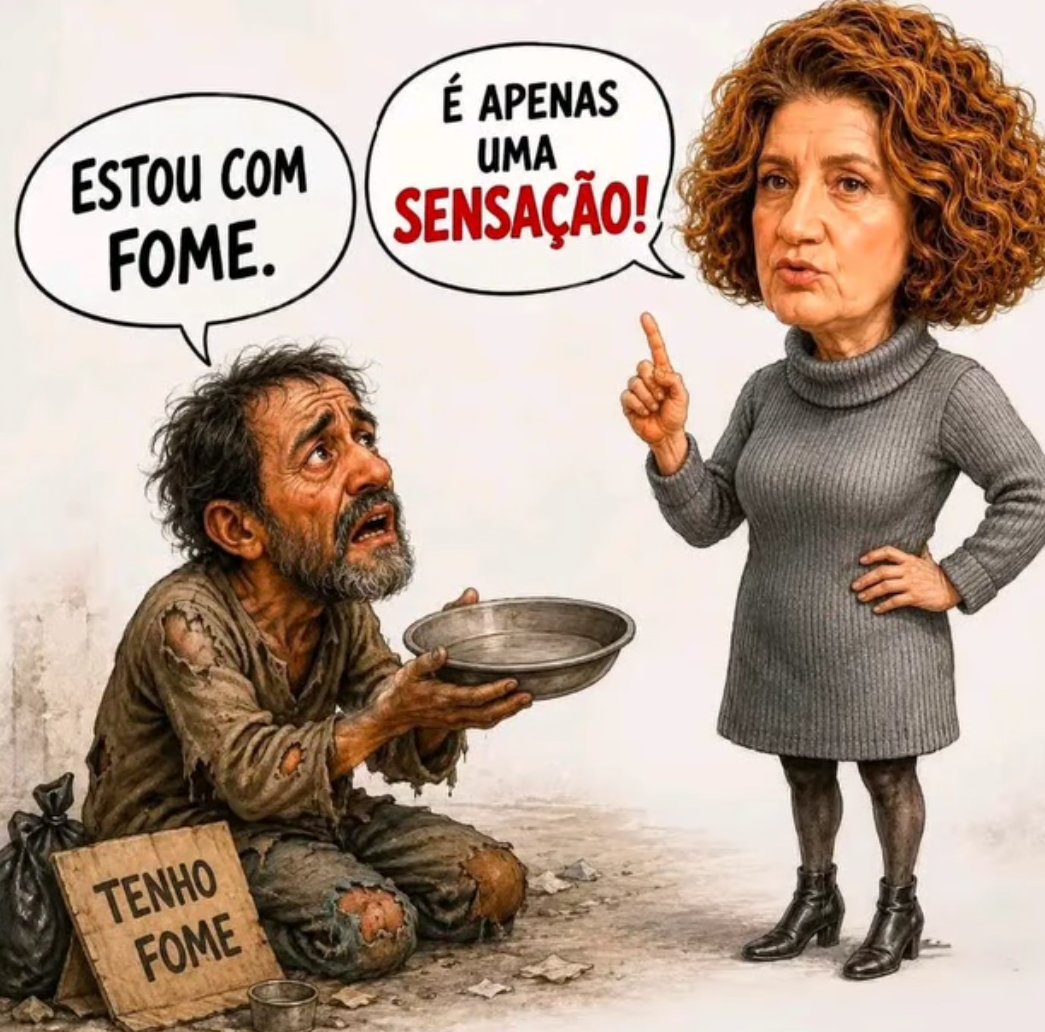
📌Lula encontrou a solução para a carestia - negar a realidade. Se o supermercado parece caro, não é porque os preços subiram, é porque você está “comprando mais”.
O brasileiro sai com a sacola menor e a conta maior; no Planalto, isso virou “sensação” de prosperidade…
🚨Lula gravou, no Alvorada, uma entrevista à Record para ser exibida durante o debate. Não era uma entrevista do presidente, mas uma estratégia do candidato. Ao gravá-la no Alvorada, usou a estrutura do Estado.
O TSE já considerou esse uso eleitoral do Alvorada elemento de abuso de poder político, quando tornou Bolsonaro inelegível. A mesma regra não vale para Lula?
PÚBLICO VAIA LULA DURANTE SHOW DE GUSTTAVO LIMA EM BARRETOS E PUXA GRITO CONTRA O PRESIDENTE
Segundo Leo Dias, parte do público xingou Lula durante a apresentação e entoou: “Ei, Lula, vai tomar no cú!”
Esse cara apreendeu mais de 100 toneladas de cocaina durante o governo de jair Bolsonaro, tem um dos melhores currículos em segurança pública. Está preso por retaliação política.
Look at what Hamas did to Gaza because it started a war it can’t win against a superpower. I hope Gazans will learn never to elect terrorist organizations as their leaders ever again. The free world stands with Israel.
Passando para avisar que o juiz americano identificou a inserção fraudulenta da entrada do Filipe Martins nos EUA e determinou que o nome, nao apenas de quem inseriu, mas de quem mandou inserir, seja revelado.
Essa história esta arrastada, eu sei, mas foi MUITA GENTE tentando impedir que esse momento chegasse.
O CBP segue tentando impedir a entrega desses nomes, mas me parece que a justiça americana (graças a Deus) é bem diferente da nossa...
⚠️👮♂️ Os dois indivíduos que m0rreram após serem atr0pelad0s durante uma perseguição, na manhã desta sexta-feira (21), no Capão Redondo, Zona Sul de São Paulo, tinham publicações nas redes sociais nas quais apareciam ostentando dinheiro. A dupla estava em uma motocicleta e teria abordado um motorista para r0ubar seus pertences. Os suspeitos utilizavam bolsas de aplicativo, simulando serem entregadores. Inicialmente, o motorista entregou os pertences e não reagiu. Após os cr1min0sos deixarem o local, ele entrou no veículo e passou a persegui-los. Durante a perseguição, o carro atingiu a motocicleta. Os dois jovens ficaram prensados entre o veículo, um poste e um muro e m0rreram no local. Nas redes sociais, imagens atribuídas aos dois mostram momentos em que eles aparecem com dinheiro em espécie. O motorista envolvido na perseguição não ficou ferido e permaneceu no local para prestar esclarecimentos.
For our hemisphere to be secure and united against narcotraffickers, Lula da Silva must lose next October.
It is time to unite Latin America behind strong leaders who will move our continent toward prosperity, security, and democracy, not socialism and criminal appeasement.
Brazil can lead the way. 🇧🇷🇺🇸