Just published #BMJ paper: strong against all interventional procedures for spine pain (joint radio frequency ablation; epidural injections; intramuscular injections, etc.) useless & harmful but lucrative. How to stop clear: stop paying. But can it happen? https://t.co/XDRSrgLgdR
Clinicians and patients increasingly look to chatbots to guide medical decisions. Articles addressing their performance are increasing. Just published survey highlights limitations of evaluations, in particular choice of criterion standard for good advice. https://t.co/8evYz3n3Zh
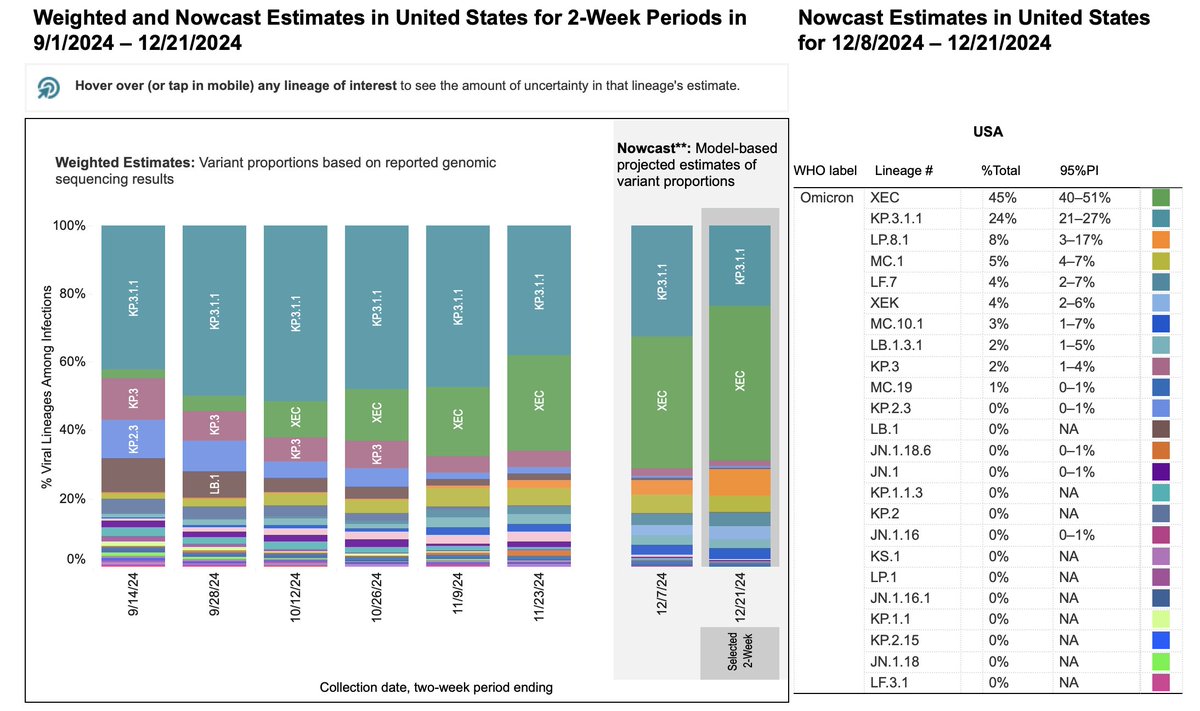
For the first time in 5 years Covid is relatively quiet during the holiday season. The XEC variant marches on (latest CDC genomic surveillance below) slowly advancing as % of attributable cases. Fortunately, it's not one that poses a big challenge to our now conditioned immune response
https://t.co/loxuX2y4bH
If you like dark chocolate, you'll like this finding from today that it reduces the risk of developing Type 2 diabetes (not seen with milk chocolate)
[in 3 large prospective cohorts, with the usual caveats of epidemiological, observational nutrition studies]🍫🍫
Just published BMJ Rapid Rec SGLT-2 inhibitors patients with chronic kidney disease demonstrated necessity for & provided approach to risk stratified recommendations & used innovative panel survey to arrive efficiently at recommendations for each stratum. https://t.co/Y49wyKdJW2
A systematic review of 24 randomized trials for #LongCovid
https://t.co/LAjDRnRfgG open-access @bmj_latest
No drug, diet, or device intervention has supportive evidence for efficacy. CBT, rehab provided some relief of symptoms (moderate certainty).
We're still in desperate need for a validated treatment!
Fréquents dans la population générale, les troubles de la personnalité peuvent confronter les médecins à certaines limites dans leur pratique.
Le Pr Paco Prada, des @hug_ge, a tenté de répondre à ces questions lors des Assises de la médecine romande.
https://t.co/bWxgPF9EOZ
Just published review of the evidence that copays and deductibles cause people to skip needed care and result in adverse health outcomes. Good news that some previously misguided health economists finally getting the message.
https://t.co/Zv7Eqs9Tmy
En Suisse 20% des médecins assistants en formation post-graduée de médecine interne générale rapportent un faible niveau de bien-être et des regrets par rapport à leur choix de carrière.
➡https://t.co/rByBVcW4VI
@RenyLuc@hug_ge
In newly released interview, I highlight problems with current GRADE guidance for certainty of evidence & evidence to recommendation: too complex, poor organization. I highlight a soon-to-arrive solution: Core GRADE that presents essentials for using GRADE
https://t.co/JcUT56vWL2
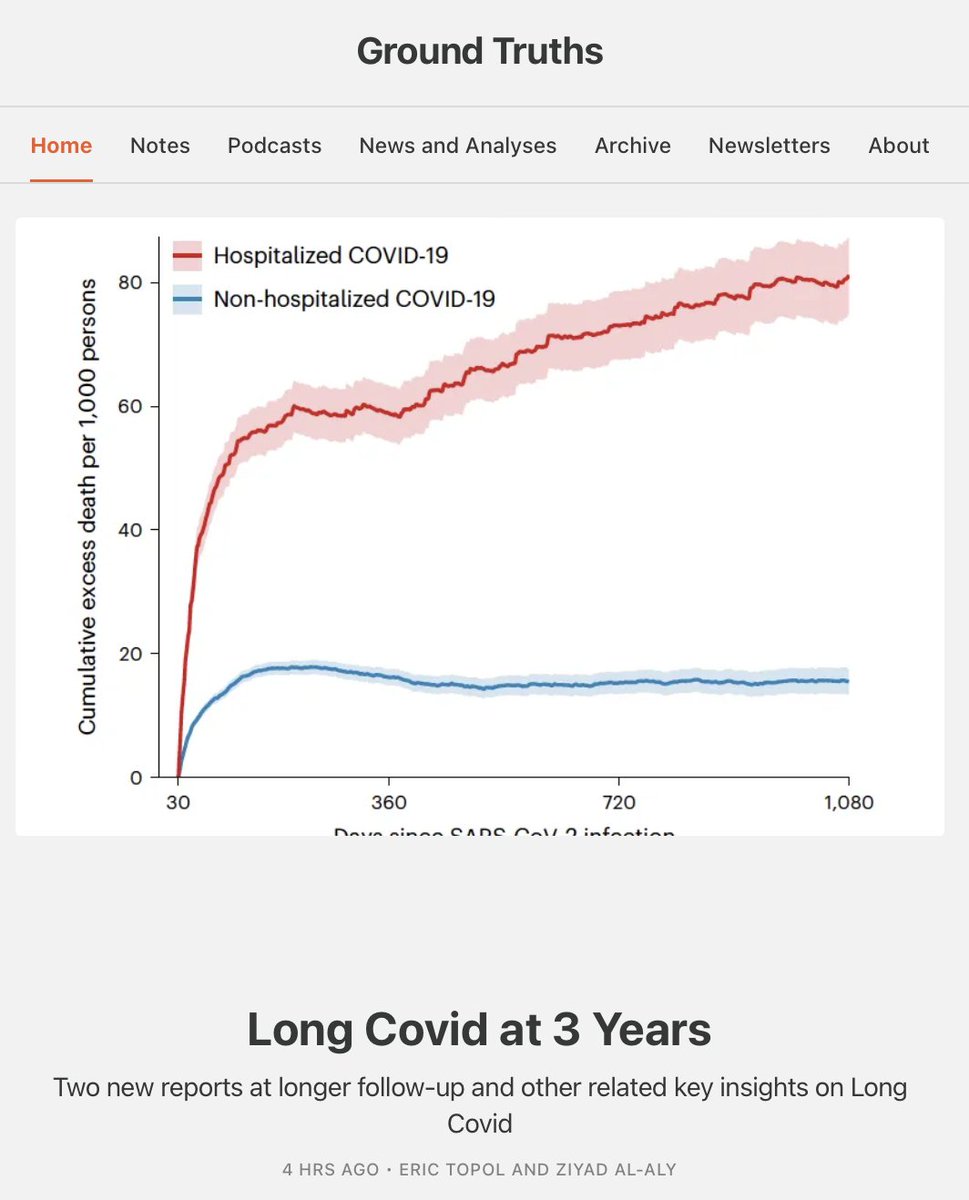
Today the first 3-year follow-up of #LongCovid for outcomes @NatureMedicine https://t.co/Pee1HzJUPn
@zalaly and I review the findings along w/ several relevant new reports and current status in the new Ground Truths
+ Ziyad's🧵on the new report
https://t.co/1CMKghlZZl
Antipsychotic use is associated with a wide range of serious adverse outcomes in people with dementia, with relatively large absolute risks for some outcomes, finds study.
These risks should be considered in future regulatory decisions, say authors
https://t.co/lNU59YvX2j
Kahneman’s “Thinking, Fast & Slow” characterizes rapid, intuitive (system 1) with slow deliberative (system 2) decision making. Each has use, but many errors occur when we use 1 but should use 2. Encourage administrative staff in particular to stop & think https://t.co/LHEPtUqmZH


![EricTopol's tweet photo. If you like dark chocolate, you'll like this finding from today that it reduces the risk of developing Type 2 diabetes (not seen with milk chocolate)
[in 3 large prospective cohorts, with the usual caveats of epidemiological, observational nutrition studies]🍫🍫](https://pbs.twimg.com/media/Gd_i2WTWsAAdJl6.jpg)







![EricTopol's tweet photo. If you like dark chocolate, you'll like this finding from today that it reduces the risk of developing Type 2 diabetes (not seen with milk chocolate)
[in 3 large prospective cohorts, with the usual caveats of epidemiological, observational nutrition studies]🍫🍫](https://pbs.twimg.com/media/Gd_i4VSXsAAPTHH.jpg)