This report shows exactly why negative results matter: they help the community avoid repeated dead ends and refine the tools we use to study biological systems.
Thanks to the authors and reviewers for their work, helping build a more transparent and complete mosaic of knowledge.
❗New Marble alert!
We are excited to share the publication of a new Marble on Research Agora: “The Venus Trap: intrinsic affinity of split-fluorophore halves drives false-positive signal”
🔗 Check it out here: https://t.co/d5rAoNaPbd
While each component bound to its specific target as expected, co-transfection of both halves produced a strong signal even in the absence of DNA methylation, suggesting spontaneous complementation of the split-Venus halves rather than a true methylation readout.
When we talk about brilliant minds in science, the default is often male.
To commemorate International Women's Day, we highlight 4 structural gender gaps still affecting research today.
Did you recognise all the names? What other examples would you add?
#8M#WomenInScience
This year’s #11F theme is “From vision to impact: redefining STEM by closing the gender gap”.
We turn that vision into concrete actions across different steps of the research process.
Closing the gender gap in STEM starts with changing what (and who) counts in research.
We received a wonderful message from Stephani Schmitz, one of our reviewers, right after she submitted her first review.
Knowing that researchers find value in what we are building is what motivates us to continue every day.
Join us here: https://t.co/o0iFGg562j
We were awarded the Junior Prize organized by IMFE Málaga! This prize recognizes the work of newly created businesses that contribute to the economic growth of the city. Thanks to IMFE and to the jury for trusting us & to the team of Canal Málaga for helping us show what we do.
It’s #OpenAccessWeek!
On Wednesday, we will join two talks: at Udruga Penkala and at the Max-Delbrück Center, to talk about making every result count in science.
Join the conversation about what deserves credit in research:
🔗https://t.co/oxoFVQE02n
🔗https://t.co/ptHUj7g2cg
Our reviewers bring expertise from a wide range of scientific fields.
Here are the main areas represented in our community.
Do You Have Unpublished Research Data in These Fields?
Submit a Marble: https://t.co/qOZ1cPS3zL
#OpenScience#PeerReview#Marble#ResearchAgora
Last week, Research Agora was awarded Best Startup at the III DeepTech Coworking Programme by @eoi & @PoloDigitalMLG!
This win fuels our mission to improve research culture and foster open, transparent science.
#ResearchAgora#Startup#OpenScience
Our reviewers come from some of the world’s most respected research hubs.
Check the top 5 countries and institutions our reviewer community belongs to.
Want to join? Sign up as a reviewer here: https://t.co/717J2lw8ig
Proud to grow our reviewer network: 39 top institutions, 14 countries! Are you passionate about Open Science? Join our network here: https://t.co/uYnfZNQxn6
#OpenScience#PeerReview
Call for Reviewers. Topic: Hematopoietic Stem Cells!
Research Agora received its first Marble on this topic. Are you an expert? Join our reviewer community!
Sign up: https://t.co/uYnfZNQxn6
#OpenScience#PeerReview#HematopoieticStemCells#ResearchAgora
ERC 2026 Grants: Applications are open! Relevant information attached.
ERC values the full spectrum of your research—make every output count.
Research Agora helps you showcase diverse contributions for a stronger application.
Questions? Contact us.
Research Agora is now officially recognized as 'Empresa emergente' (startup) by @enisa, Spain’s national innovation agency!
This is a seal of trust in our mission to drive innovation in open science, transparency, and reproducibility.
Join the future of #OpenScience!
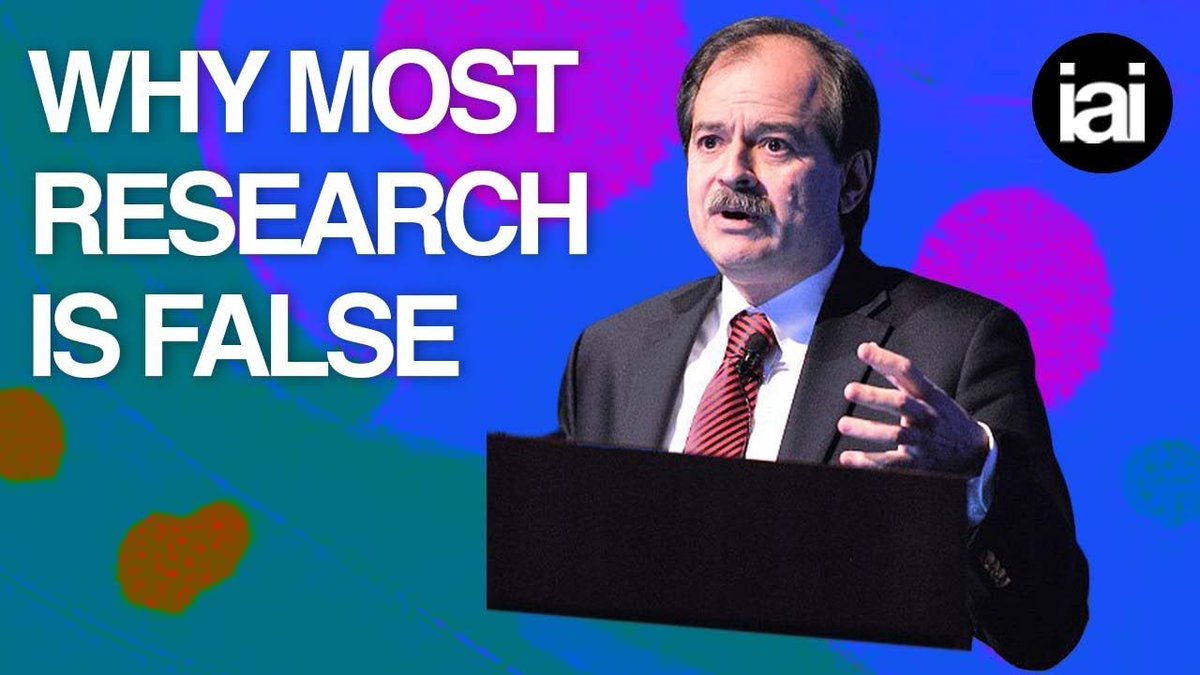
How do reward systems shape scientists? Ioannidis says incentives create Diligent, Sloppy, or Fraudulent researchers. Counting papers rewards the wrong behaviors. We must value quality, integrity, and reproducibility. Watch his talk: https://t.co/zaEtBfH5b0
#ResearchCulture
Why are we still using Stone Age assessment practices?
RRA should be implemented at every stage.
See the 4 key moments in the image below. Has your institution started this shift?
#ResearchAssessment#OpenScience
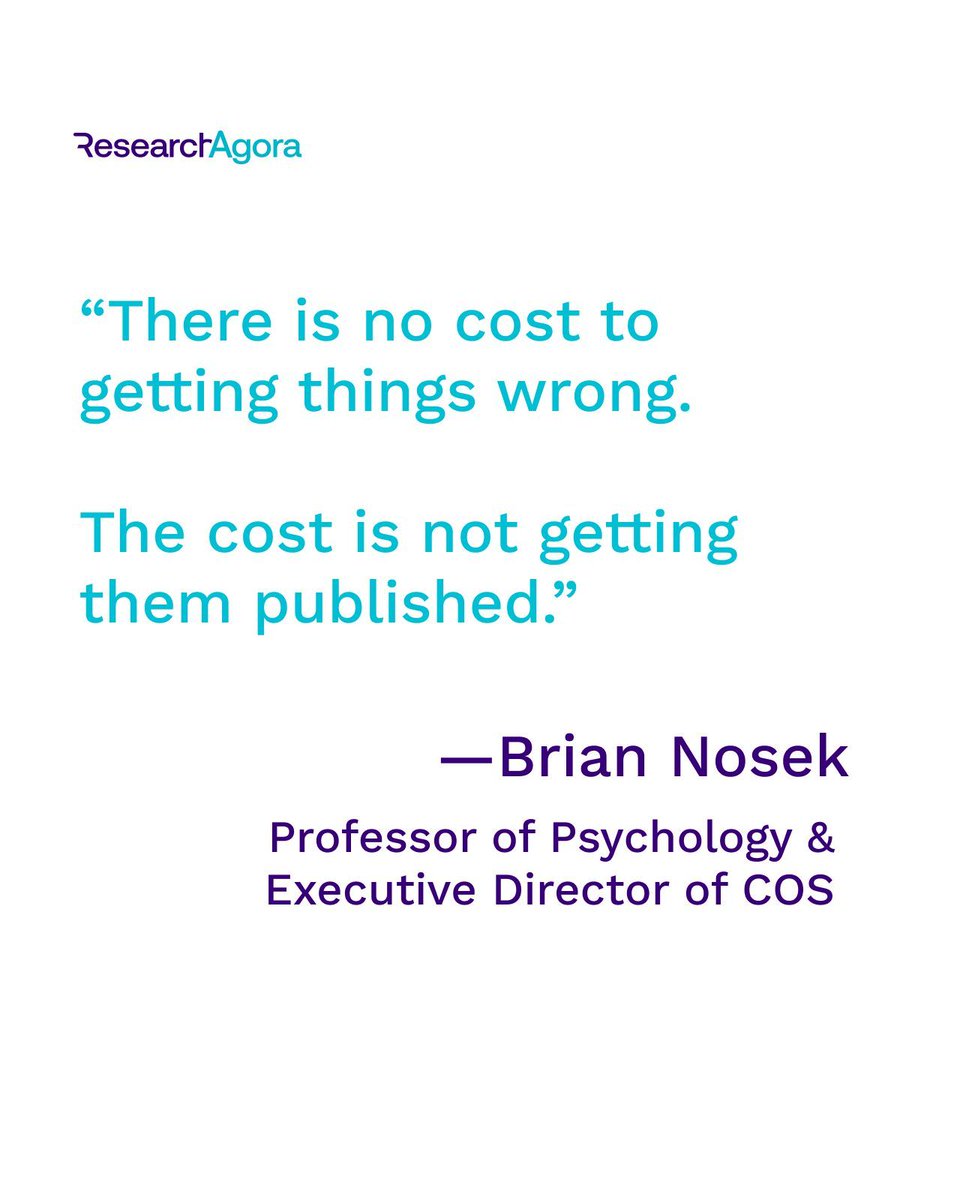
“There’s no cost to getting things wrong. The cost is not getting them published.” — @BrianNosek
Funders and institutions now value quality, openness, and all research outputs. At Research Agora, we make them visible. Join us: https://t.co/7WrUIzBnMo