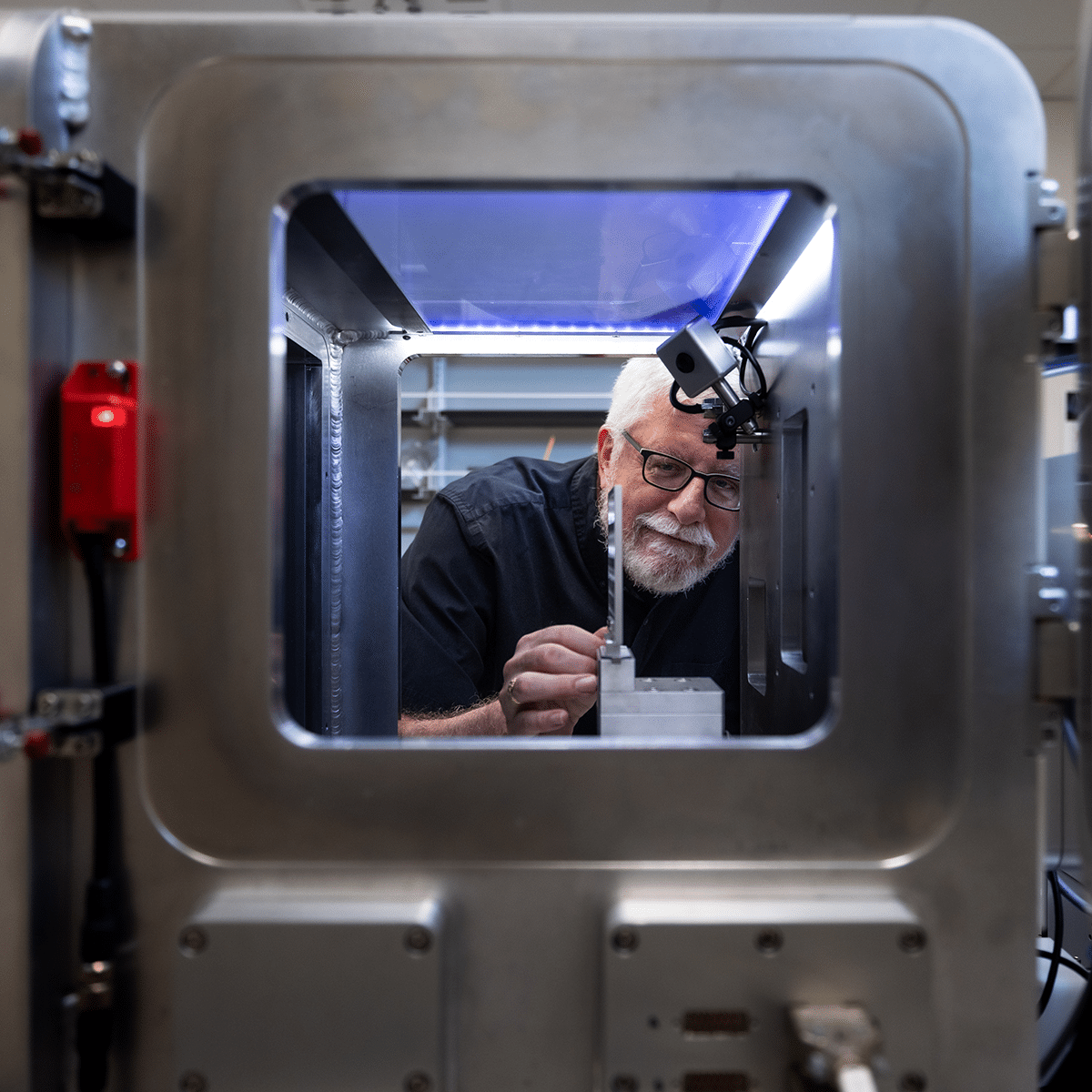
UT will translate lab-based additive manufacturing technologies into scaled-up solutions ready for deployment. The team is also studying “super materials” designed to perform under challenging conditions like extreme temperatures and pressures.
The U.S. Army could soon be able to create critical replacement parts in the field thanks to UT researchers' advanced materials and manufacturing innovations. Read more. ⤵️ https://t.co/0odF8T8HIy
Transient grating spectroscopy could improve UT’s material characterization capabilities and integrate with ATHENA, the university’s federally funded research hub devoted to automating material characterization.
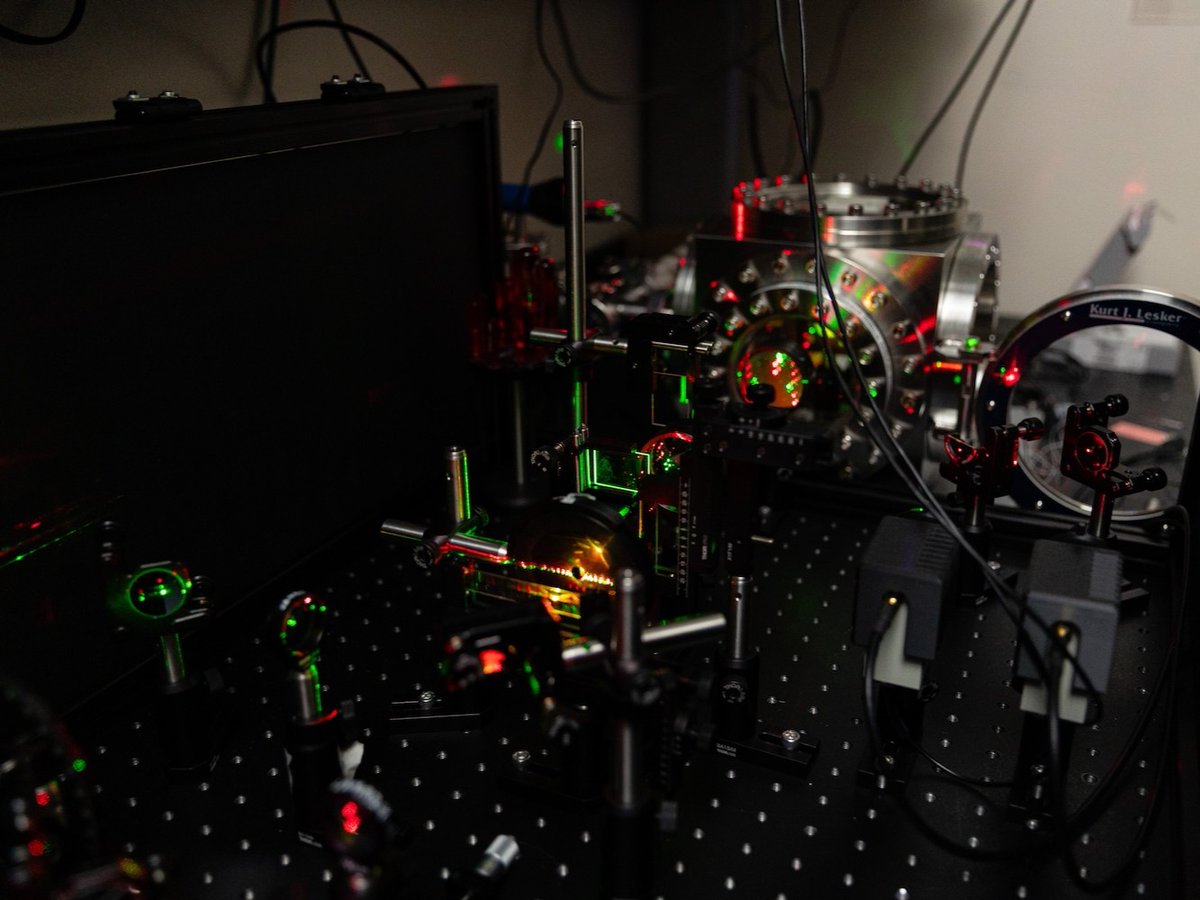
Research Assistant Professor Alexis Devitre’s interdisciplinary team is building a laser-based device that will one day assess the integrity of materials inside running nuclear reactors. @utkne@ut_mse
Learn More ➡️ https://t.co/FcSfelYQoV
The @utknursing program has previously engaged in NCI-related research, but Roberson’s award is the first funded award from NCI received at UT, marking an important milestone for the university’s growing cancer research efforts.
Nursing Assistant Professor Patricia N. E. Roberson has received a National Cancer Institute (NCI) award for “Conquering Pain Together,” a project exploring how family support can help Appalachian breast cancer survivors. https://t.co/RCozNYXX3D
Researchers at UT are advancing quantum materials, computing, sensing and networking alongside @ORNL and industry partners. From faster computers to more secure communications, discover how UT is building the future of quantum innovation. https://t.co/KBFihIAtRr
This year, Hazen and his students shared an important discovery about the types of microbes that live in and around different DOE sites, establishing a method of tracing very small levels of radionuclides that has garnered attention from national laboratories across the country.
As the chief scientist of UT’s DNN TECH consortium, Governor’s Chair and CEE Professor Terry Hazen is applying his microbiome expertise to nuclear nonproliferation efforts.
Read about his efforts ➡️ https://t.co/lEPvZFbwca
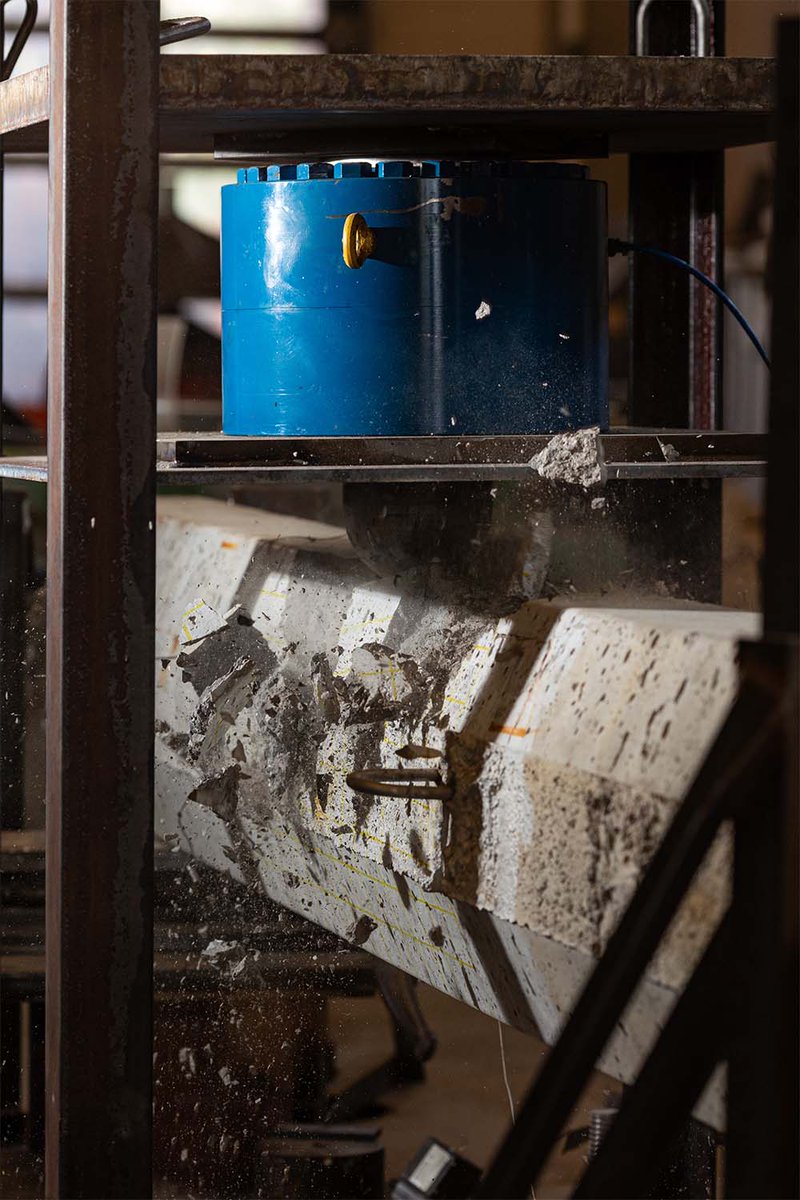
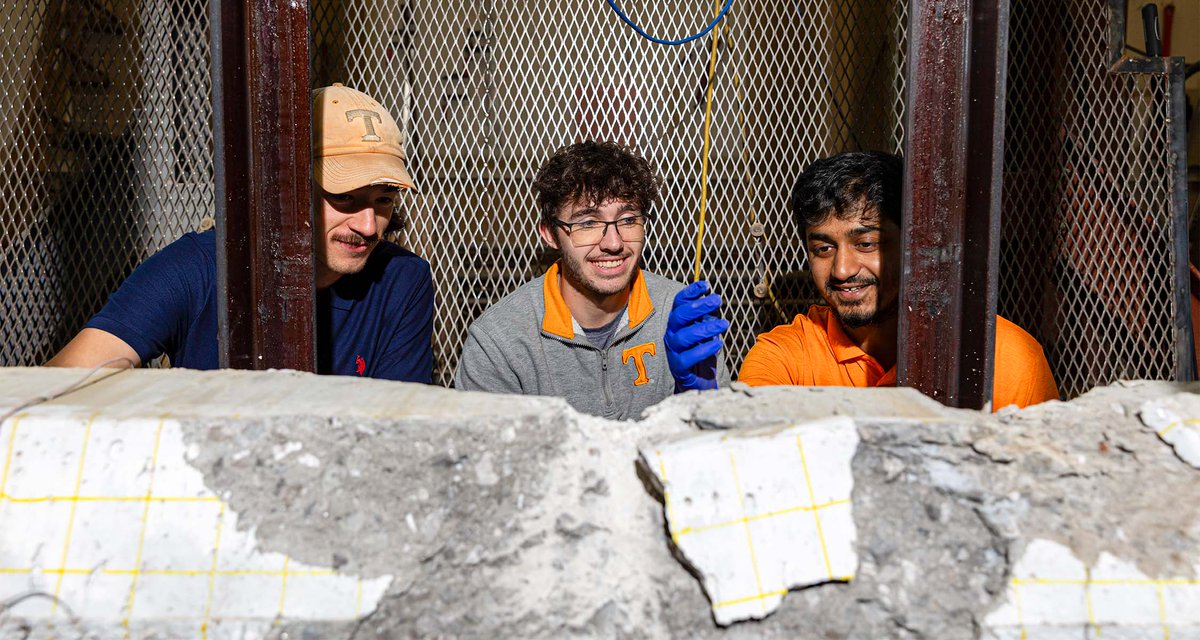
Ma and Saykat evaluated 40 bridges across Tennessee, working through police and TDOT reports of vehicle strikes to help ground the simulation in real physics. If the improvement is as dramatic as they expect, Saykat foresees the new beam design spreading across the nation.
@cee_utk Professor John Ma and PhD #EngineeringVol Sazzadul Shahriar Saykat are working with @myTDOT and the @USDOTFHWA to find a cost-effective, labor-efficient way to make Tennessee’s bridges more robust. 🚧
Learn more about their research ➡️ https://t.co/oF05O4ubFG
The sensors Swaminathan and his group are creating need to survive at least 500 degrees Celsius for more than 1,000 hours. The group has been 3D printing different materials and testing the electrical performance of them in extreme heat to see if they degrade.
Along with graduate #EngineeringVol Daniel Powers, Assistant Professor Sai Swaminathan has received funding through NASA’s SBIR/STTR program to develop sensor systems that can survive extreme temperatures on Venus.
Read about their work ➡️ https://t.co/TNTNBHnsqg
UT contributes a top-ranked nuclear engineering department within the Tickle College of Engineering, bringing standalone bachelor’s, master’s, and PhD nuclear programs and seamless research integration with Oak Ridge National Laboratory.
@UTKnoxville is partnering with @ASU and @LifeAtPurdue to meet America’s demand for electricity. This partnership, known as the New Nuclear Academic Consortium, will tackle the workforce shortage head-on, preparing the next generation of graduates. https://t.co/SeHsL3rR0I
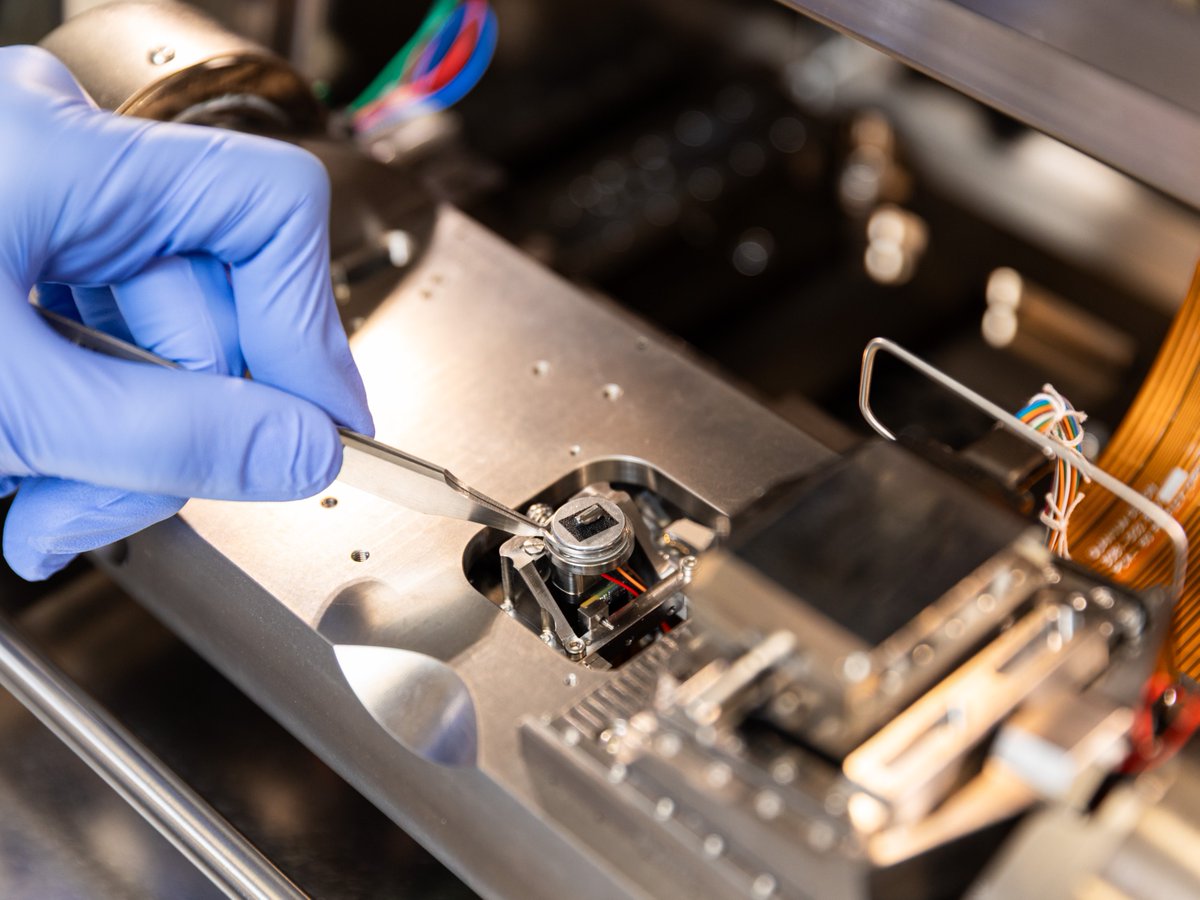
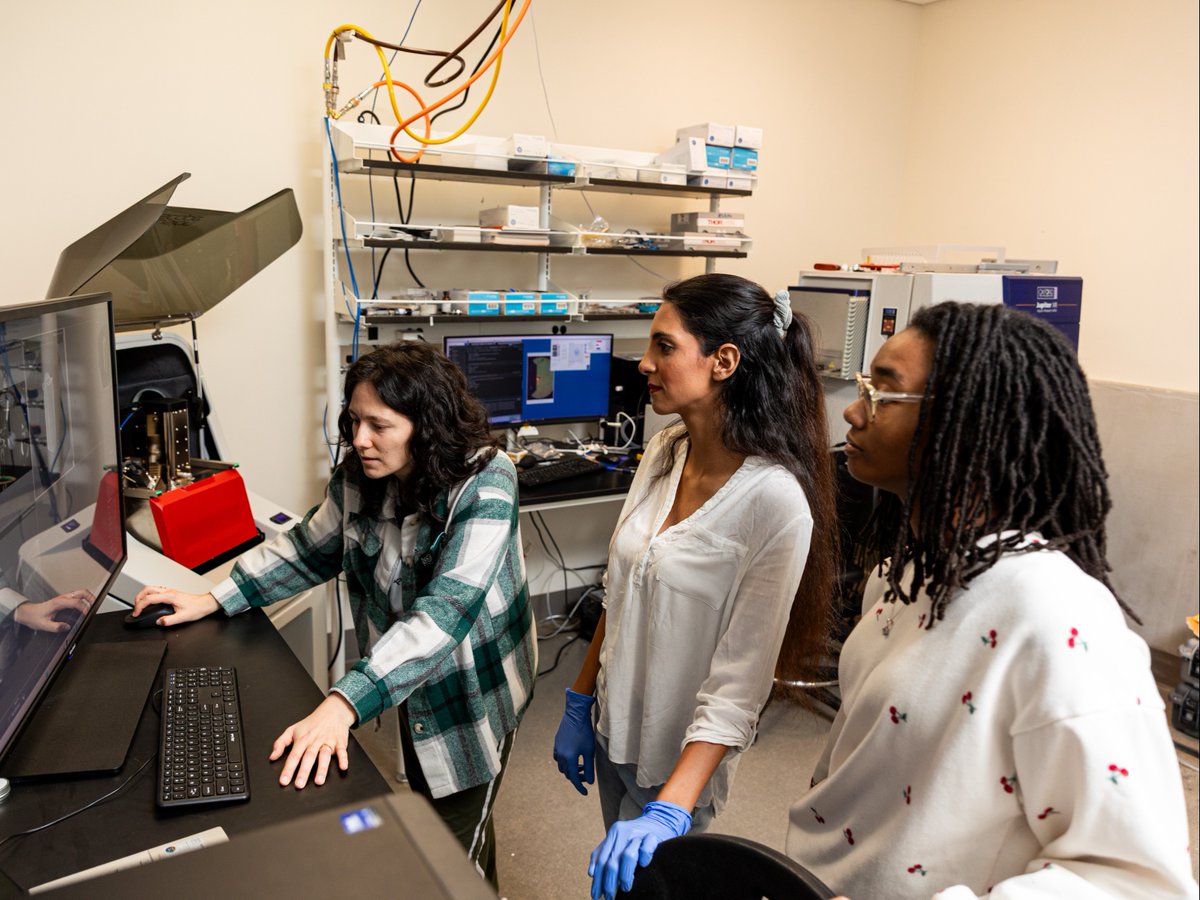
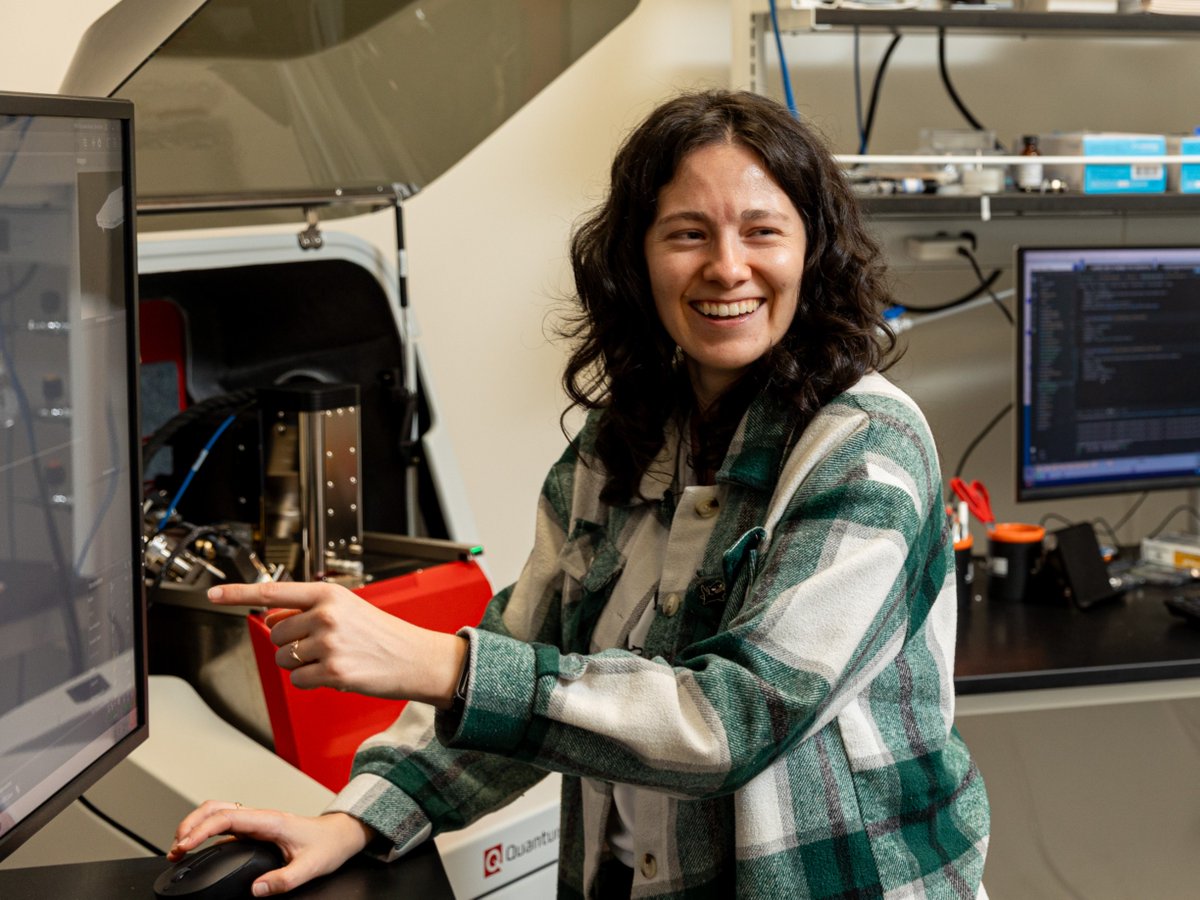
Alla Slautina, a research specialist at IAMM, highlights how Quantum Design FusionScope reduces the time spent selecting measurement modes and workflows, boosting speed and confidence in evaluating new materials.
Full Story ➡️ https://t.co/HBWUgkBjeV
These findings could add beneficial statistics for community health studies. Current cleaner-air policies are justified by lower rates in deaths from heart and lung diseases. Taking children’s brain development into consideration would strengthen the case for stricter limits.
An interdisciplinary report by UT researchers indicates a strong historical correlation between air pollution and instances of childhood ADHD over time.
Learn more about their findings: https://t.co/Z35OX8qsSW
#UTArtSci#CASAdvantage@UTK_Anth@ResearchUTK@UTProvost
The Peninsula Innovation District has been named the 2026 Emerging Community of Innovation by @AURP. The Peninsula is creating new opportunities for researchers, entrepreneurs, companies and healthcare partners to collaborate and drive real-world impact. https://t.co/ktB6TEgXRh
He’s team will investigate advanced hardware and control techniques to enable the integrated charger-inverter to efficiently achieve fast charging from almost any standard power source, leading to lower charging bills and better mileage between charges.
As part of a $3M DOE grant, EECS Associate Professor JiangBiao He will spearhead development of an integrated charger-inverter that builds on existing components to enable fast charging in electric cars.
Fully Story 🔗 https://t.co/rdTuk9Li8m
Monteith and his team showed that lupus-associated inflammatory signals can reprogram white blood cells, rendering them less effective against a Staphylococcus aureus infection.
Assistant Professor Andrew Monteith's lab has discovered why patients with the autoimmune disease lupus are susceptible to serious bacterial infections.
Learn more about this discovery: https://t.co/S3VusbxjrG
#UTArtSci@UTProvost@ResearchUTK@UTKMicrobiology@CellPressNews
Professor Francisco N. Barrera’s lab in @BCMB_UTK is engineering peptides that can target cancer cells with hopes to create molecules that can find and fight metastatic cancer.
Read more: https://t.co/1dVDm4AzpN
#UTArtSci#CASAdvantage@ResearchUTK@UTProvost
Paul and Wilma Ziegler Professor of Chemistry Mark Dadmun is at the forefront of plastic waste reform. He's researching nanoplastics to determine how they form and to answer big questions in polymer science.
https://t.co/uW0884SjuN
#UTArtSci@ResearchUTK@tennalum@CHEMISTRYUTK
These projects will accelerate materials characterization by a factor of 30 and develop AI systems that can recognize and defend against adversarial attacks.
Weston Fulton Professor Sergei Kalinin and Associate Professor Mahshid Ahmadi are co-PIs on projects funded by the DOE's Genesis Mission, a push to advance AI-assisted research in the US.
Learn more at the link below!https://t.co/lsGTa8kkNr
UT researchers innovate for long-term impact, in Tennessee and beyond. The It Takes a Volunteer campaign kicked off today with a vision for more life-changing breakthroughs in the years to come!
Behind every discovery and victory are Vols who show up and make it possible. Together, we’re investing in student success, life-changing research, and championship athletics.
Learn more about the 𝑰𝒕 𝑻𝒂𝒌𝒆𝒔 𝒂 𝑽𝒐𝒍𝒖𝒏𝒕𝒆𝒆𝒓 campaign at https://t.co/G3Gn5Omop8.
CAMM is one of only twenty NSF Materials Research Science and Engineering Centers in the country, providing a long-term institutional anchor point for AI and quantum research and materials expertise.
The Center for Advanced Materials Manufacturing connects cutting-edge research with shared state-of-the-art facilities, federal laboratory partnerships, industry connections, and student training programs.
Learn more: https://t.co/pLwrRMPDIs
#UTArtSci#CASAdvantage@ResearchUTK
Professors (BME) Dustin Crouch, Jindong Tran and (EECS) Nicole McFarlane are developing and testing the Myo-Bridge, an implantable device that creates a virtual mechanical link between an amputee’s residual muscles and an external robotic prosthetic hand.https://t.co/dAnVgMIMjR
Early-career faculty at UT are making an impact in computing and AI that will be felt across Tennessee and the nation—and ensuring our students don’t simply learn to use future technologies, but actively invent them.
Two @utk_tce faculty have received @NSF Early Career Awards for their research, which will use AI to benefit Appalachian communities and will develop a new generation of superconducting electronics. https://t.co/bjC3T6vMad