When a disruption hits, which parts, sites, and revenue need attention first?
The second session of our Built to Act webinar series is now on demand and shows how impact analysis and part-to-site mapping set mitigation priorities.
Watch now: https://t.co/MpabkpSX0P
In life sciences, disruption can affect far more than a shipment.
Our recent webinar with @BlueYonder and @Accenture explored how teams can connect risk to suppliers, sites, products, and patient commitments.
Read the recap and watch on demand: https://t.co/W6zhS1IVXT
Russian diesel exports are restarting, but refinery damage and continued attacks mean a lasting supply recovery isn't assured.
Our latest blog looks at what the U.S.–Russia agreement changes, where constraints remain, and what teams should monitor.
More: https://t.co/lhSfq5Vy3h
Join us Thursday, November 12 at 10 AM PT for the second Built to Act webinar.
The live demonstration will explore how impact analysis, part-to-site mapping, and revenue context help teams evaluate exposure and prioritize mitigation.
Secure your spot: https://t.co/9YEboGYxj2
Russia reopened some diesel exports, but refinery damage, power outages, and transport constraints continue to create supply risk beyond the region.
Our latest special report looks at the global impact and what supply chain teams should watch next.
More: https://t.co/SCezjs5TTe
Resilinc will be at @AIAG’s North American Customs & Trade Town Hall tomorrow, November 5, in Detroit!
Stop by booth #2 to meet us for a live demo of our agentic AI platform. See you there!
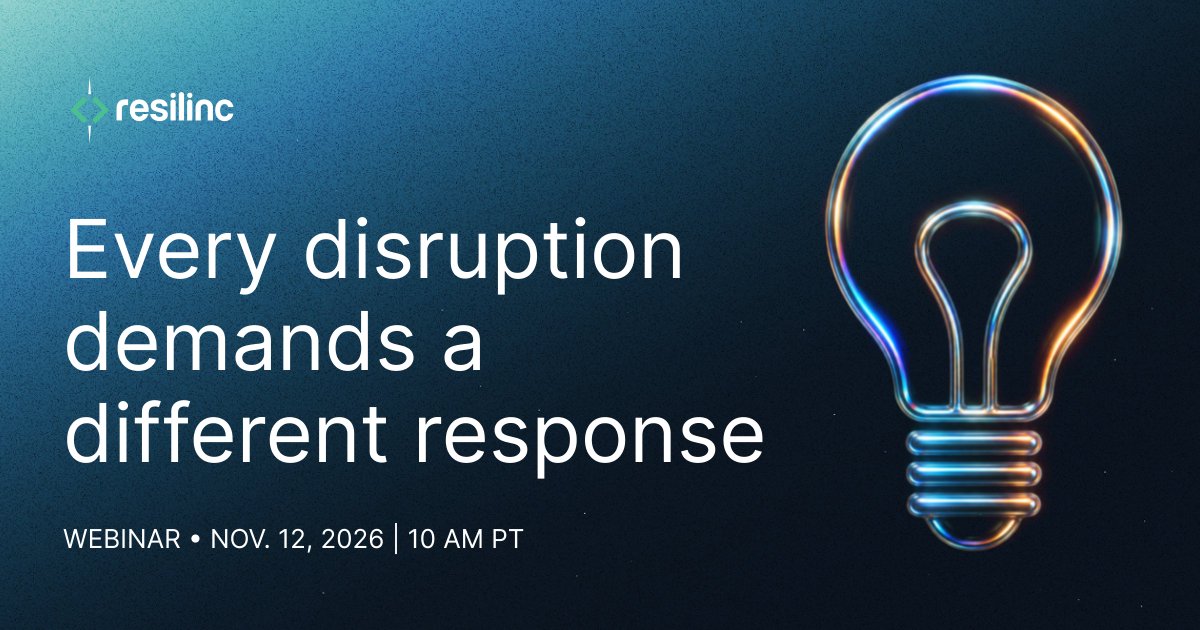
Every disruption demands a different response.
Join our webinar on Nov 12 at 10 AM PT for a customer use case and live demo showing how teams connect supplier and material exposure to revenue impact and prioritize mitigation.
Register: https://t.co/g8FIS89K3a
Resilinc data featured in the @FT shows drought-related disruptions across agriculture, food, and beverage have risen 250% since 2021.
The article looks at how climate pressure could reshape what we grow and how food supply chains adapt.
Read more: https://t.co/siljzzPyek
Supply chain disruptions are accelerating.
Resilinc EventWatch data shows notifications rose 12% from Q2 to Q3 2026, with sharp increases across cyber, port, factory, and geopolitical events.
This blog looks at what 2027 demands from risk teams.
More: https://t.co/rbrLYDOs0e
Supplier financial pressure is rising in 2026, with Western Europe a major area of concern.
Our new special report looks at growing insolvency risk, including a 13% YoY rise in large-company failures, and what it means for supply chain exposure.
More: https://t.co/f4mZGWL2QQ
When disruption hits, the next question is what deserves attention first.
Join Resilinc Nov. 12 at 10 AM PT for the next Built to Act webinar on connecting events to operational impact and prioritizing response.
Register: https://t.co/Pr87BB4Y1H
Supply chain risk has moved into the boardroom, impacting revenue, margins, compliance, and resilience.
Our new executive whitepaper explores how leaders can measure exposure, plan for disruption, and turn risk intelligence into action.
Read more: https://t.co/SUoqBoji26
@Roche scaled supplier risk management without scaling manual work.
With Resilinc, Roche reduced manual monitoring and assessment effort by 90%, expanded supplier coverage 15x, and delivered contextual alerts to 300+ users.
Read the case study: https://t.co/BVXDp6TJGZ
What does automotive due diligence look like beyond Tier 1?
At our recent Microsoft + Resilinc workshop in Detroit, leaders from Ford, Yazaki, and AIAG tackled that question through real-world risk and compliance scenarios.
Read the recap: https://t.co/ng5JPsfmU2
As El Niño strengthens through fall and winter, supply chain impacts will vary by region.
The bigger question: which suppliers, sites, parts, and materials are exposed, especially below Tier 1?
Our latest blog looks at how teams can prepare.
Read more: https://t.co/A2impqUpwP
What does supply chain intelligence look like inside @Microsoft Copilot?
Resilinc brings organization-specific context into questions about risk and compliance, helping teams connect signals to their supply chain and move faster.
See it in action: https://t.co/2HvWFItVZl
If you missed our recent EUDR webinar, check out this blog recap.
Epoch joined Resilinc leaders to explore the challenges of tracing regulated commodities beyond Tier 1, validating production origins, and building evidence to support due diligence.
More: https://t.co/OR3IUZ5oXI
Resilinc supply chain risk and compliance intelligence is now available in @MSFTCopilot.
Authorized users can ask about disruptions, tariffs, supplier risk, forced labor, sanctions, and more, with answers grounded in their own supply chain.
Learn more: https://t.co/NfCU2Kj4zv
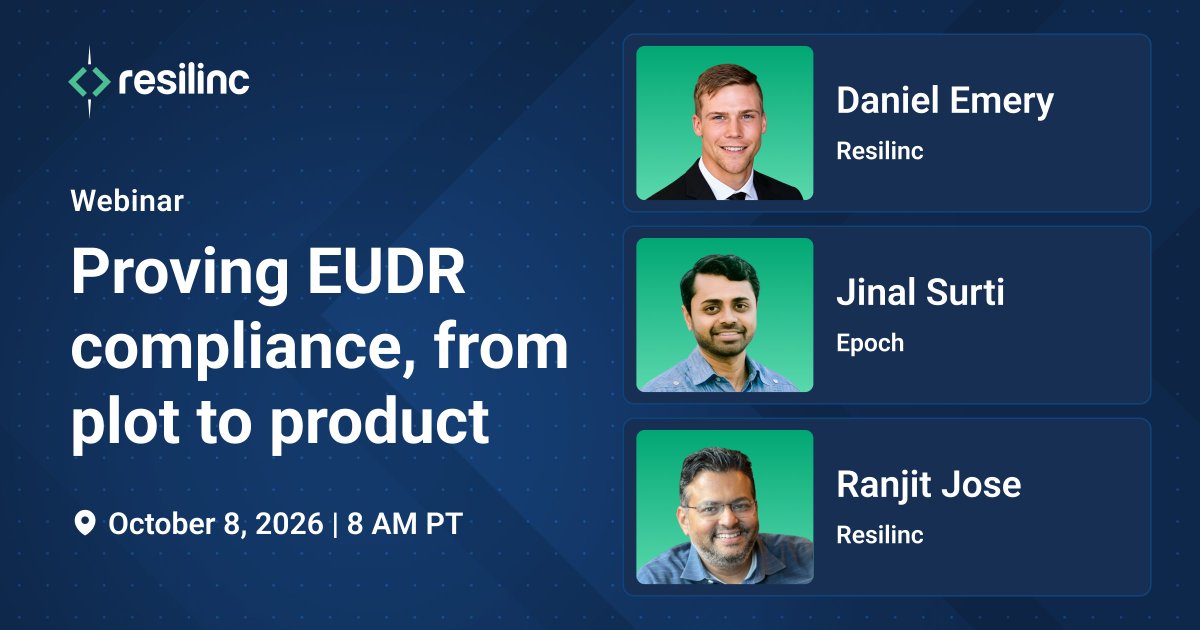
EUDR due diligence depends on evidence you can trace back to the source.
On Oct. 8, Epoch joins Resilinc for a webinar showing how agentic AI connects products, materials, suppliers, and production origins into a clear path to EUDR readiness.
Register: https://t.co/NcyvYSm2Nc
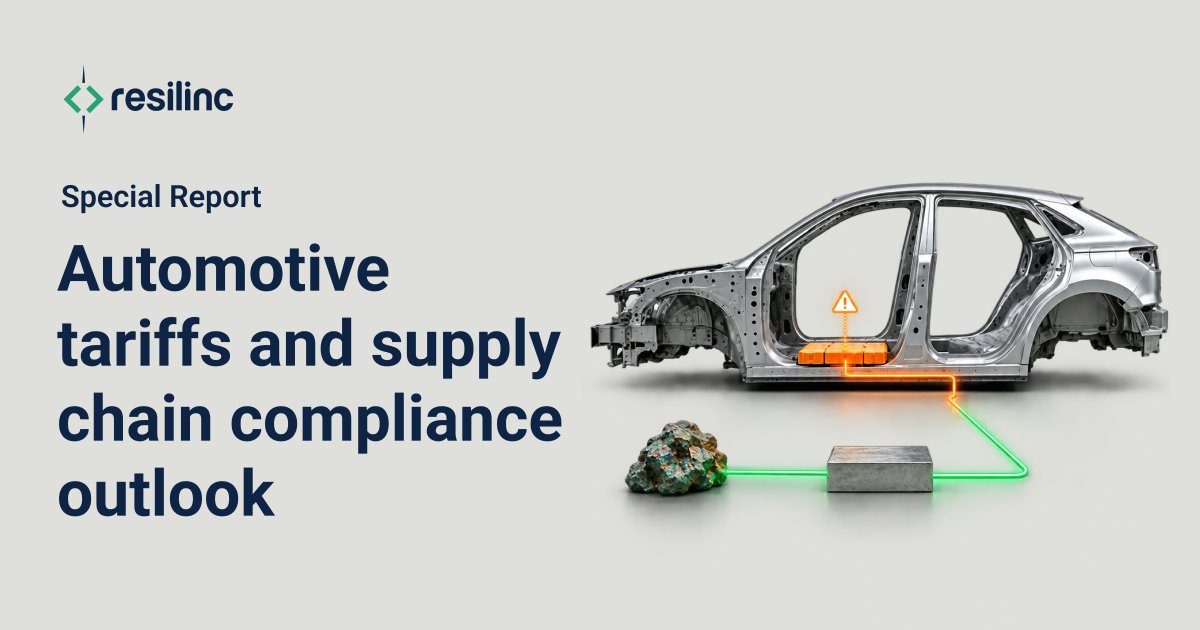
Resilinc’s new special peport looks at how tariffs, UFLPA enforcement, sourcing concentration, and connected-vehicle restrictions are reshaping automotive risk in 2026.
See where exposure is building and what can limit diversification.
Read: https://t.co/Eg5EOMkcCS