Judge B.C.’s LNG industry by the loading dock and it looks small: about 400 permanent jobs at Kitimat. That’s where most counting stops. It misses almost everything.
The Quiet Giant: a new report by @sjmuir follows the work inland, 240 direct occupations from Montney drilling pads to pipelines, gas plants and ports. Every cargo is crewed from the wellhead.
https://t.co/4DpPddu27g
#BCPoli #LNG #Energy
11 days from B.C. to Asia.
20–24 days from the U.S. Gulf Coast via Panama. Up to 40 days around Africa.
Canada's Pacific coast offers Asian LNG buyers something increasingly valuable: a shorter, more direct route from a stable energy supplier.
Canada's trade war had an unexpected winner: energy exports. 🇨🇦
In Q2 2026, energy exports hit a record $60.6 billion.
Projects like TMX and LNG Canada took years to build.
Trade diversification requires infrastructure.
#CanadianEnergy
Nearly 140 LNG cargoes have sailed from Kitimat since June 2025.
The buyers? South Korea, Japan, China and Taiwan.
Major energy companies are also securing supply from upcoming B.C. projects—including some that previously abandoned their own Canadian LNG developments.
An ancient ocean left B.C. quite an inheritance!
Buried beneath northeastern B.C. is the Montney Formation, one of North America's largest natural gas resources.
How did it get there?
@SiavashTahan explains.
#NaturalGas#BC#WorksinProgress
B.C. faces a projected $14 billion deficit, and the parties have very different plans to address it. Higher taxes on top earners, tax cuts to stimulate growth, and new wealth taxes are all on the table.
But which approach can deliver sustainable revenues and fiscal balance? @nbennett_ca breaks down what was heard at the @BoardofTrade leaders’ forum this week: https://t.co/I0TPpEq6TL
11 days from B.C. to Asia.
20–24 days from the U.S. Gulf Coast via Panama. Up to 40 days around Africa.
Canada's Pacific coast offers Asian LNG buyers something increasingly valuable: a shorter, more direct route from a stable energy supplier.
The clock is literally ticking. B.C. salmon farms must buy eggs now for a harvest in three years, but in three years every open-net farm must shut down under a Trudeau-era ban.
4,560 jobs, $1 billion in annual activity, much of it in small coastal First Nations communities like Klemtu. And it’s those nations leading the fight to keep the industry, not end it. @nbennett_ca on an avoidable collapse: https://t.co/U73em20NOV
#BCPoli #Aquaculture
Canadian energy isn't just competing on price anymore. It's competing on reliability.
That's not just energy. That's security. Read more: https://t.co/vQsiJIEeMw
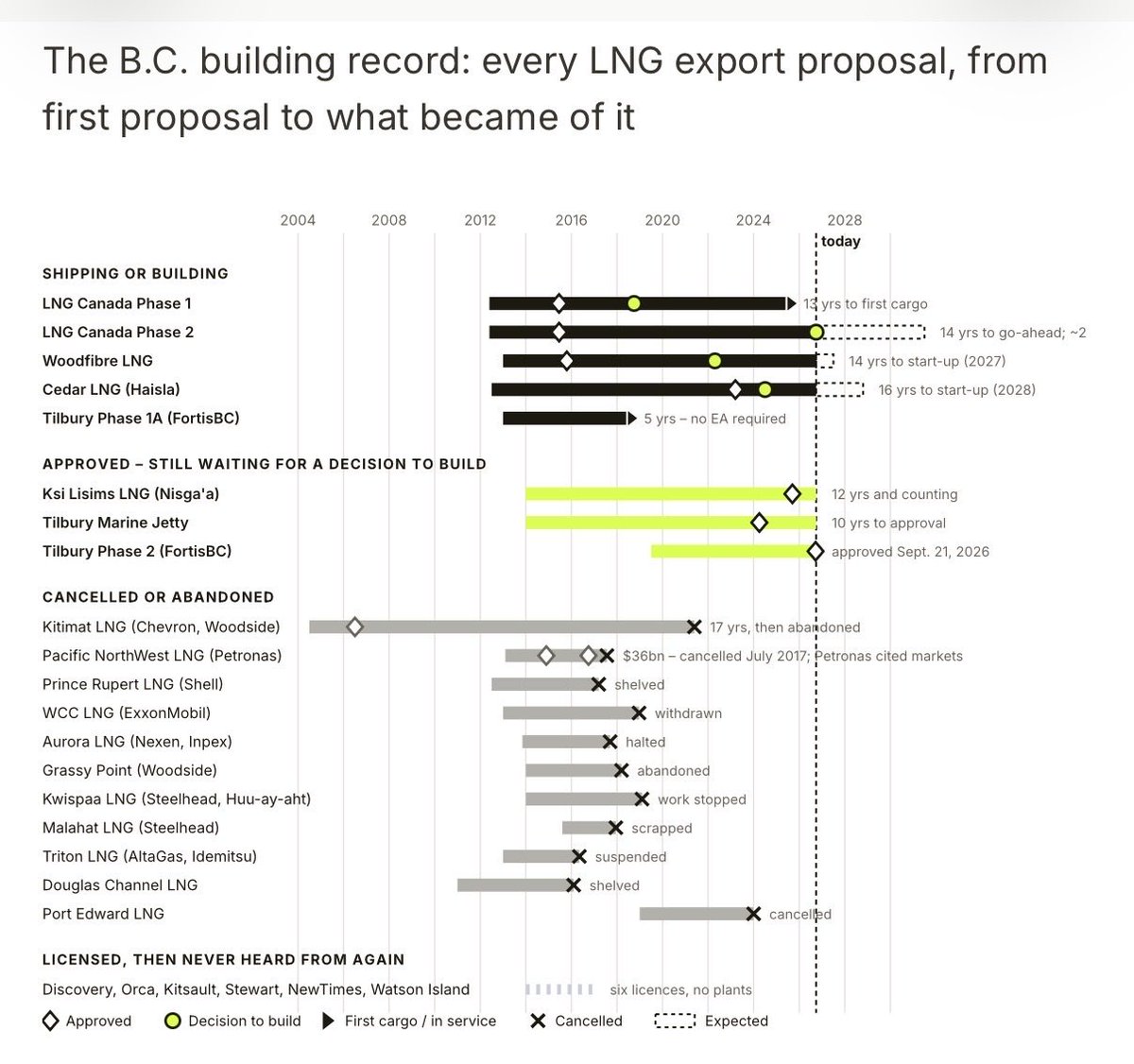
LNG Canada just greenlit Phase 2: $33B to double Kitimat to 28 million tonnes of LNG a year.
Why now? Because the world just got a lot more dangerous, and Canadian energy just got a lot more valuable. 🧵
For decades Canada had the resources but not the access. Now Trans Mountain reaches the Pacific and LNG Canada ships B.C. gas straight to Asia. Phase 2 doubles that.
New Ipsos polling commissioned by the Energy Futures Institute finds strong support among British Columbians for a new oil pipeline to BC’s south coast, LNG, & consumer choice in home heating and vehicles.
https://t.co/ugekIoOaIG
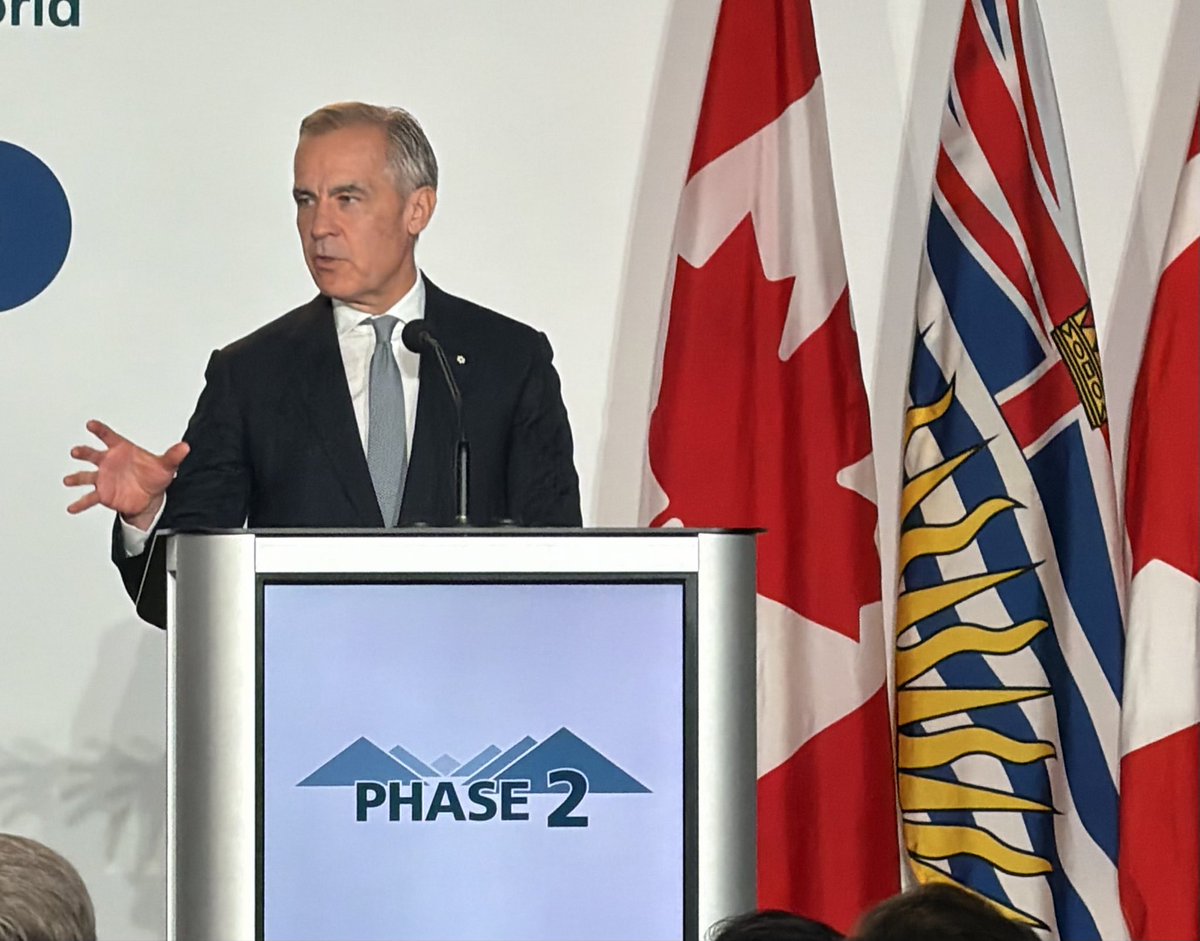
“What a great day for Canada…Canada’s building big again.”
PM Mark Carney comments moments ago in Vancouver on today’s news - phase 2 of LNG Canada, which will become the second largest LNG facility in the world.
Canada is already one of the world's leading energy producers.
The challenge now is getting more of those exports to more markets.
Karen Graham explains why diversification—and access to tidewater—has become one of Canada's biggest economic priorities.
#Energy#Canada #Infrastructure #Trade
Metro Vancouver doesn't have a working mine. But it's the command hub of a vast resource economy.
Before you vote on Oct. 17 and Oct. 24, see the economy you already have: https://t.co/knfULsmjOe
#BCpoli#VanPoli
.@lngcanada Phase 2 is a go.
The expansion will double the Kitimat facility's export capacity to 28 million tonnes per year, strengthening Canada's role as a reliable LNG supplier to global markets.
For B.C. it means more investment, more jobs and more opportunities across the supply chain. For Canada, it's another step toward becoming a global energy exporter with diversified markets: https://t.co/BlQnRGb9Sz