Menerjemahkan crypto ke bahasa warung kopi ☕ |
🧵 Thread edukasi tiap Senin/Kamis
🎬 Konten crypto yang mudah dicerna
⚠️ Bukan financial advice | DYOR selalu
Web3 has too many shillers.
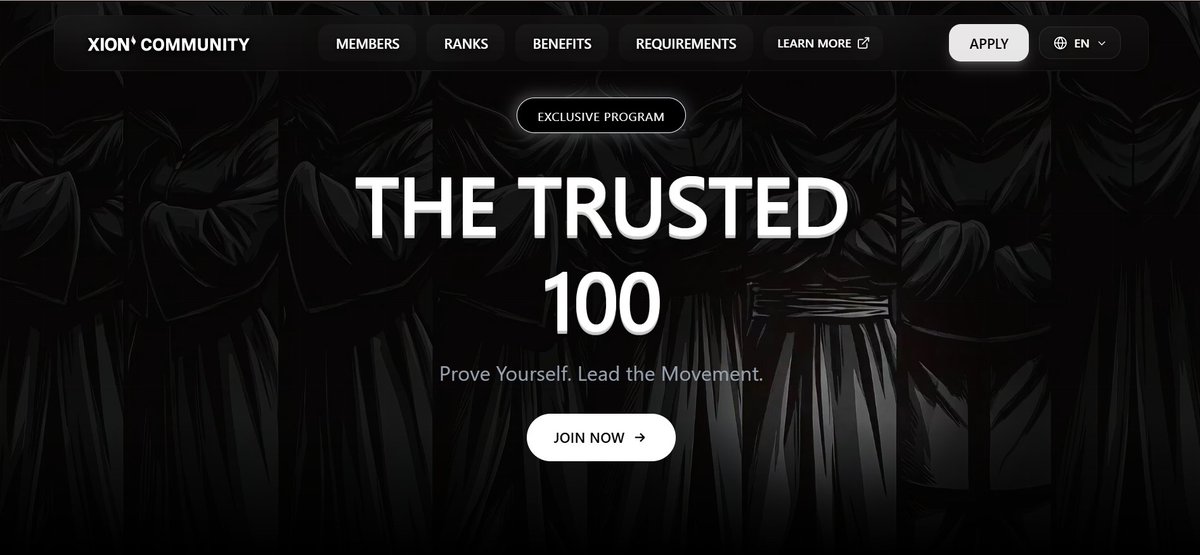
@xion_community is looking for storytellers.
And that is exactly what makes The Trusted 100 more interesting than a typical ambassador program.
This is not just about posting more content.
It is about making trust easier to understand.
This is what an L1 looks like when it ships like a real platform.
Mob gives XION one Rust core with bindings across Swift, Kotlin, Python, Ruby, Rust, and more.
Same signing flow. Same session keys. Same developer surface.
No scattered SDK chaos. No second-class stacks.
Just @burnt_xion becoming easier to build with everywhere.
This is what separates a chain with tools from a chain built like a real platform.
@burnt_xion just shipped Mob.
At first glance, it looks like a multi-platform signing client.
Swift. Kotlin. Python. Ruby. Rust. And beyond.
But the real signal is not just language support.
It is consistency.
Most blockchains end up with different toolkits for different languages.
One SDK for this stack. Another SDK for that stack. Different behavior. Different update speed. Different developer experience.
That works for experiments.
It does not work for platform-grade infrastructure.
Mob takes a cleaner approach.
One Rust core.
Multiple bindings.
Same experience across every supported language.
That means a Swift developer building a native iOS app and a Python developer running backend automation are not dealing with two completely different worlds.
They are calling into the same foundation.
Same signing logic. Same account abstraction flow. Same session key model. Same gasless experience. Same XION interface.
This matters because serious adoption needs serious infrastructure.
Real teams do not all build in the same stack.
Mobile teams use Swift and Kotlin.
Backend teams use Python or Ruby.
Infrastructure teams may use Rust.
Automation, scripts, payment flows, internal tools, and enterprise systems all live in different environments.
If XION wants verification to reach the internet, it cannot only be convenient for one type of developer.
It has to be callable everywhere.
That is what Mob unlocks.
Not just more dev access.
Better infrastructure architecture.
Fewer fragmented SDKs. Fewer inconsistent experiences. More reliable paths for builders to plug into XION.
Mob is not just another developer tool.
It is XION showing what platform-grade Web3 infrastructure should look like:
one core, many surfaces, consistent execution.
Make It Real means making XION usable everywhere builders already work.