A terrifying number of people are more invested in the "idea" of a relationship than the actual execution of one. They want the matching outfits, the soft-launch pictures, and the cute anniversary captions. But the exact second the relationship requires actual work,having an uncomfortable conversation, compromising, or dealing with a partner's bad day, they want to tap out. They are casting co-stars for their social media feed, not looking for a life partner.
Horarios oficiales para el día de mañana ⏰
Como indica en la parte de abajo, no la apliquen y lleguen con tiempo lqm
📅 21 de febrero
📍 Cristóbal Colón 50, Colón Echegaray
🔗 https://t.co/MVduHhT2an
2 streamer sisters both break up with their boyfriends in the span of 2 days. Kyedae with TenZ, Sakura with JasonTheWeen.
Here's the reality everyone needs to understand.
In today's dating landscape, women face an unprecedented flood of options. Dating apps alone tilt the scales dramatically: women receive far more matches and attention than most men, often from thousands of eager suitors in a single session.
This dynamic explodes even further in the online creator economy, where e-girls and influencers cultivate literal armies of simps who shower them with likes, comments, gifts, and DMs, while high-status, attractive, or wealthy men stand ready to pursue them for casual encounters or relationships.
Women crave attention and validation—it's one of their most precious forms of social currency and gauges of personal worth. When that attention flows so abundantly and effortlessly from multiple directions, the incentives shift. Loyalty becomes harder to sustain because there's always another admirer waiting in the wings, ready to offer more excitement, compliments, resources, or novelty. The sheer volume of options erodes the perceived cost of straying or branch-swinging. Why settle when the next "upgrade" feels just one swipe, DM, or stream away? Even if you're dating rich, successful streamers, there's always the lurking "what if there's more out there?" for women.
This isn't simply about blindly blaming women. The modern attention economy warps incentives for everyone involved. Simps fuel the cycle by providing endless, no-strings validation, inflating egos and expectations to unrealistic levels. High-value men compound the issue by chasing casually. The result? Genuine commitment feels optional rather than valuable, and faithfulness loses its appeal when the market never stops supplying alternatives.
The paradox is brutal: endless choice often breeds dissatisfaction rather than fulfillment, leaving many women overwhelmed or perpetually searching for "better," while men feel increasingly disposable or forced into desperate, one-sided pursuit. Until the incentives realign, the dating market will keep rewarding volume over depth, and men will continue to be burned by women looking to "discover themselves".
Palworld developer Pocketpair requires game designer candidates to provide screenshots of their Steam libraries and playtime, according to CEO Takuro Mizobe.
“At Pocketpair, we ask game designer candidates to submit screenshots of their playtime history on Steam. In fact, if you don’t play games on Steam at all, you won’t make it past the resume screening stage.”
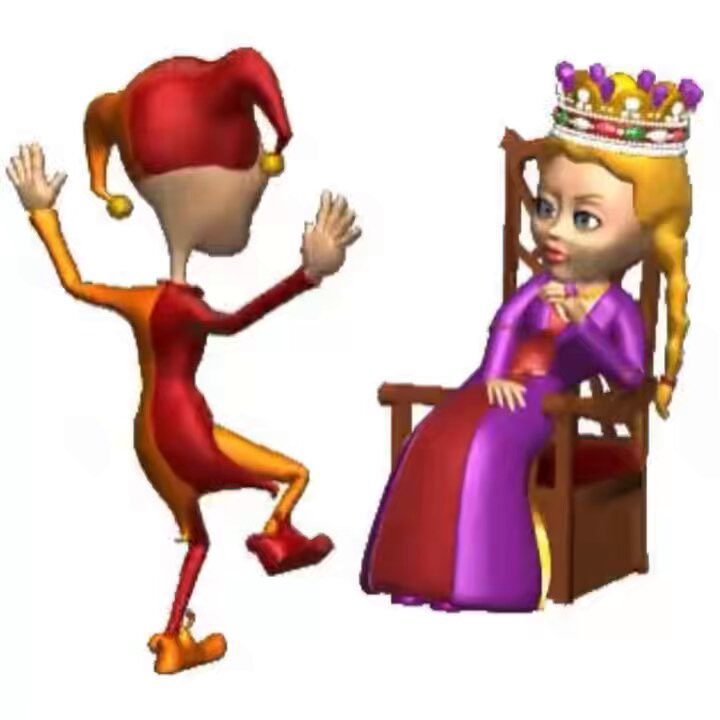
There’s a reason this image went viral. It reflects something we all intuit about modern dating.
We all know that dating now has become a humiliating performance for attention. Before any interaction takes place - on an app or in person - everybody is already aware of the hyper-stratified dating market. Men know that they are competing with millions just to be noticed, while woman know they have the power to choose among many options. The result is a unequal power dynamic in which women play the role of queen-like arbiters, consigning dating profiles to a virtual reject pile with the swipe of a thumb, while men are forced to differentiate themselves through self-conscious clownery just to provoke interest.
Neither party relates to the other as a unique person. Instead, both sides follow a choreographed script. When courtship is reduced to binary choices - DM or don’t, swipe left or right, approach or avoid - intentions become obvious from the start. Because of this, each side becomes hyper-aware of the other’s incentives, which only makes every interaction feel derivative, instrumental, and outcome-driven. This explains why most matches devolve into meaningless hookups or situationships.
When both sides know the objective of the interaction from the outset - and know that the other knows it too - dating becomes a contest over who can appear more self-aware and detached from the process itself. Men, fatigued by being ignored or left on read constantly, and women, fatigued by transparent bids for attention, hide behind layers of irony as a form of emotional plausible deniability. Profiles are scrubbed of anything that might seem “cringe” and replaced with memes and self-aware jokes. Nobody takes the other, or themselves seriously out of fear of being hurt.
To express passion or seriousness openly is also to risk being seen as desperate, clingy, or emotionally unstable - labels that we fear now because they imply weakness, insecurity, and codependence. For men, vulnerability or romantic sensitivity is framed as a failure of masculinity, a sign of weakness or simpery. For women, expressing dependence or attachment is treated as a failure to be modern, liberated, and independent. Both manosphere and feminist discourse feed into the fear of sincerity. Men are pressured to conceal the depth of their inner lives, while woman are pressured to be emotionally self-sufficient, and appear strong by staying single.
Today, love is expected to generate only surface level feelings - harmless emotion and inconsequential arousal. As Byung Chul Han writes, love has been stripped of negativity, made “free from injury, assault, or collision.” To fall in love would already be too disruptive. “Yet it is precisely this negativity that constitutes love. Love is not a possibility, is not due to our initiative, is without reason; it invades and wounds us.”
Donde pintas la línea? La IA generativa ya está incrustada en las herramientas de desarrollo, ahora mismo es mas difícil esquivar el uso de IA que aceptar su uso en la rutina. Están entorpeciendo el progreso y desacreditando el labor manual humano.
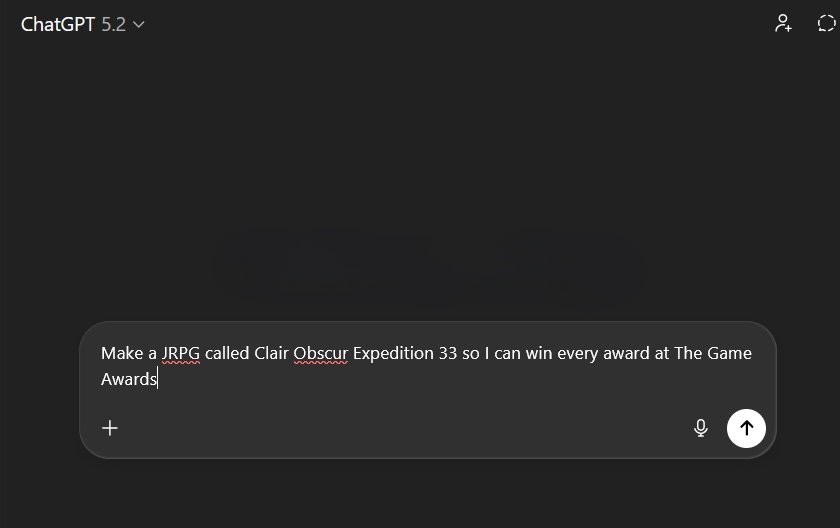
Indie Game Awards Disqualifies Clair Obscur: Expedition 33 Due To Gen AI Usage
“The Indie Game Awards have a hard stance on the use of gen AI throughout the nomination process and during the ceremony itself,”