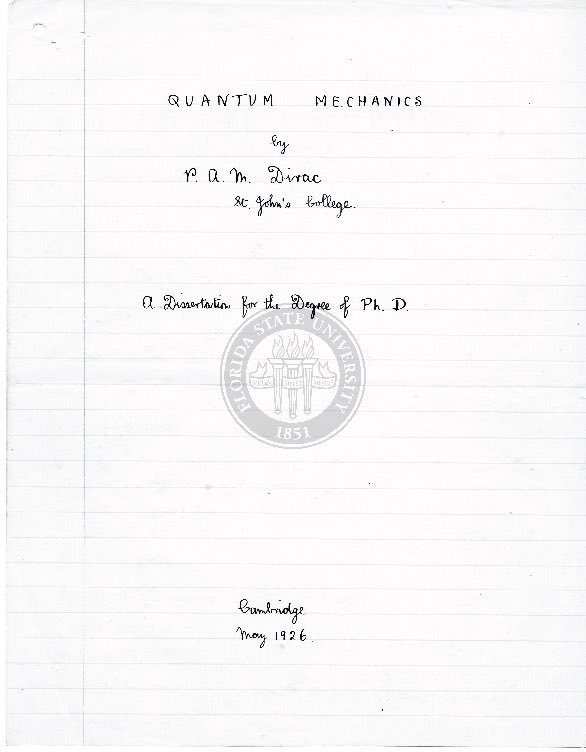
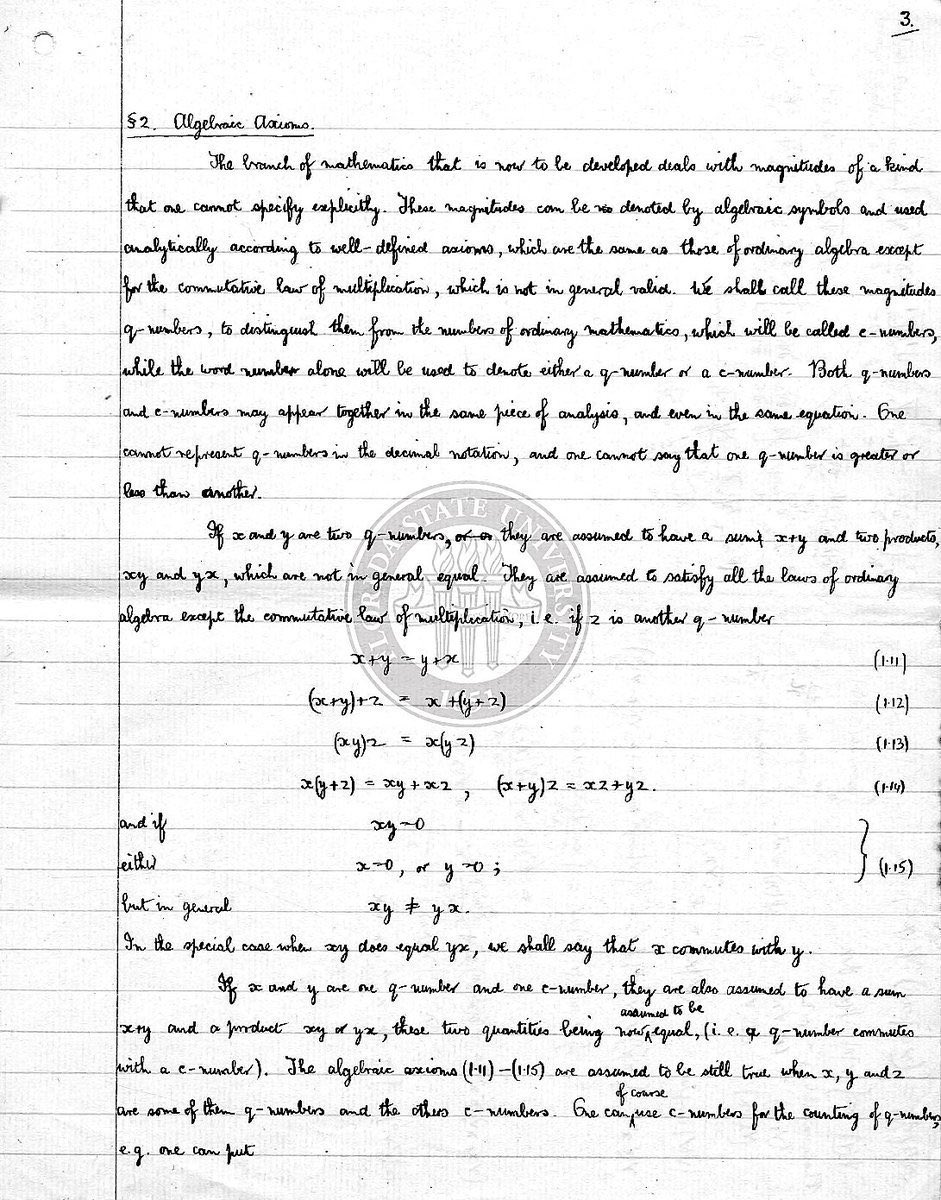
Imagine writing a PhD thesis so foundational that the title is literally just the name of the entire field of study.
Paul Dirac, 1926: "Quantum Mechanics."
More pictures from the project.
We can infact build low-cost buildings using local materials and still have a contemporary, contextual aesthetic.
It doesn’t have to be either/or.
Watch a team of humanoid robots running a full 8-hr shift at human performance levels. This is fully autonomous running Helix-02 https://t.co/bIgpYuaYCj
Want to transcribe Luganda speech with AI? This fine-tuned Whisper model does exactly that. It's a small, efficient model trained on 400 hours of Luganda audio. Perfect for developers and researchers working on African language tech.
“Expecting an algorithmic description to instantiate the quality it maps is like expecting the mathematical formula of gravity to physically exert weight.”
Someone could go to school for 4 years and study aerospace engineering, then get a PhD with a dissertation related to orbital mechanics, and some instagram influencer who watched a youtube video will be like "actually that guy is wrong" on a topic related to space travel and people will believe them.
I'm not sure how we got here, but I hope we go back to a society where credibility is earned with rigorous training in the associated field, not by a popularity contest.
You fkn handicaps would think if they wanted to fake all of this they wouldn’t thought about all of this “obvious” fake shit and not displayed it? Someone so organised as to spend billions to fake such thing and convince millions of people to lie would be smart enough to think of all the fake physics right?.
Lmao it’s you who is the absolutely germ level of iq royally dumb cunts who think your YouTube education is worth more then real science. The normal approach of “hmm this don’t make sense to me maybe I don’t understand it” vs “na this looks dumb to me all science is wrong” arrogance is fkn incredible and needs to be studied on how stupid and delusional you freaks are hahahahahahah.
Asylums need to be pushed again.
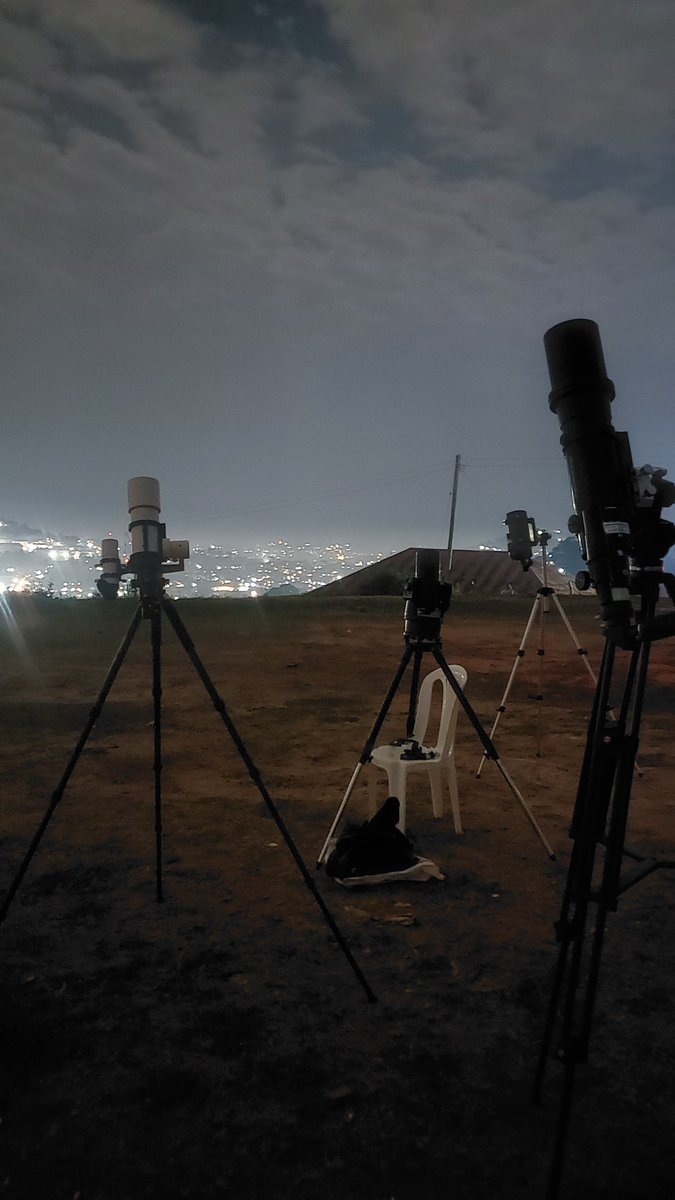
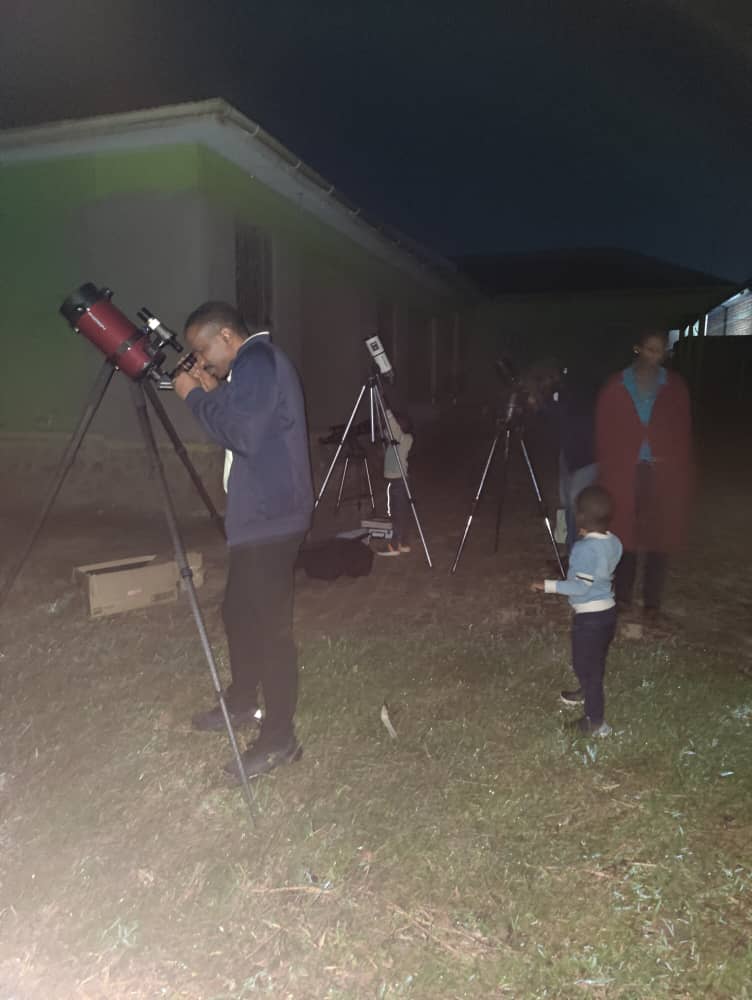
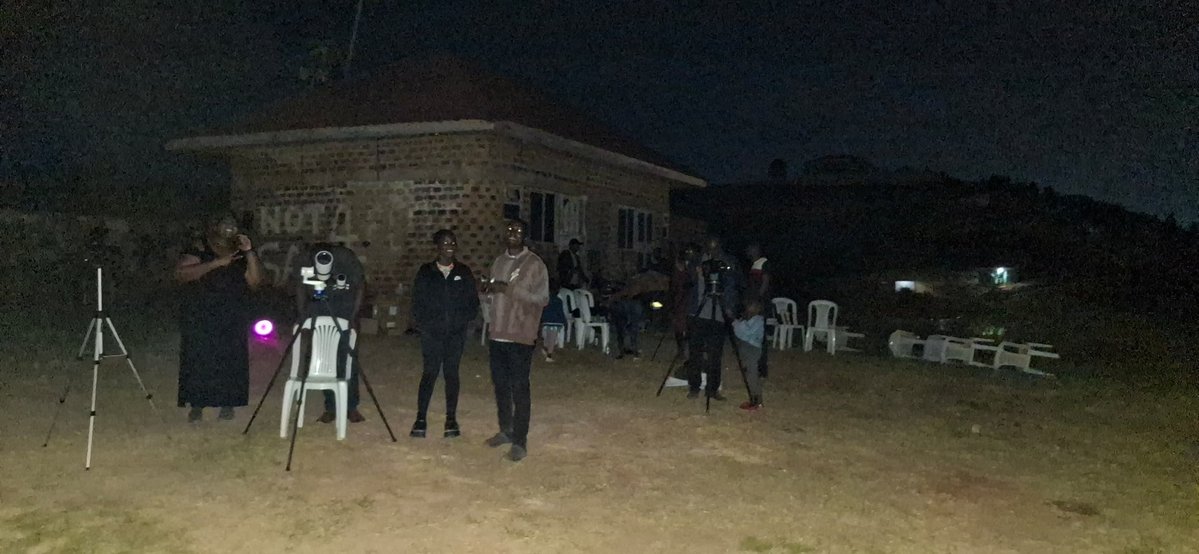
Its interesting that for the last three years we have been hosting star gazing events but not many people care to come through even when the events are mostly free.
I think Ugandans are not as curious as I thought they were.
Most of the universe is not made of stars, galaxies, or beautiful glowing nebulae. Instead, the majority of it is what seems to be vast, silent emptiness. But these dark regions are not just empty space. They are dynamic structures that grow, merge, and shape the entire architecture of the universe.
What exactly are cosmic void, how did they form, and what role might they play in the future of the universe? Watch our full video to find out: https://t.co/hQ19m6xx68
An 18-year-old high school student harnessed artificial intelligence to uncover 1.5 million previously unknown cosmic objects.
Matteo Paz, from Pasadena, California, created a sophisticated machine learning algorithm that sifted through vast archives of data from NASA's NEOWISE telescope (the Near-Earth Object Wide-field Infrared Survey Explorer). Launched in 2009, NEOWISE spent over a decade surveying the sky in infrared wavelengths, originally hunting for near-Earth asteroids and comets while capturing billions of detections—roughly 200 billion in total—of celestial sources.
Hidden within this enormous dataset were subtle changes in infrared brightness that hint at dynamic phenomena: variable stars, supernovae explosions, feeding supermassive black holes, and close binary star systems, among others.
Rather than relying on manual inspection, Paz trained an AI model (including techniques like waveform analysis and his VARnet algorithm) to automatically detect and classify these faint variability signals across the entire collection. The result: a groundbreaking catalog named VarWISE, which identified about 1.9 million infrared variable objects overall, with 1.5 million representing entirely new discoveries never before cataloged by astronomers.
This VarWISE catalog is already aiding researchers in exploring unusual stellar behavior and other transient events across the universe.
Paz's achievement—conducted during research at Caltech under mentorship and culminating in a peer-reviewed paper—earned him first place and a $250,000 prize in the 2025 Regeneron Science Talent Search. It powerfully illustrates the transformation in modern astronomy: as telescopes generate data far beyond human processing capacity, pairing cutting-edge instruments with intelligent algorithms is unlocking hidden treasures right in existing archives.
The next big discoveries aren't always out in the distant cosmos—they're often buried in the data we've already collected.