When your opponents attack each other, get out of their way and let them! When former Trump aide Caroline Sunshine laid into Trump donor Hal Lambert about Trump’s disastrous Iran war, I crossed my arms and enjoyed the show. @ananavarrofl tried to keep a stunned @lzgranderson quiet to let them go at it. I wish I had popcorn. And, Caroline wasn’t wrong. Bravo! They fight, we win.
"Being Black is not a problem for a Black person. Being Black is a problem for the community that doesn't understand that you are a human being." Diahann Carroll
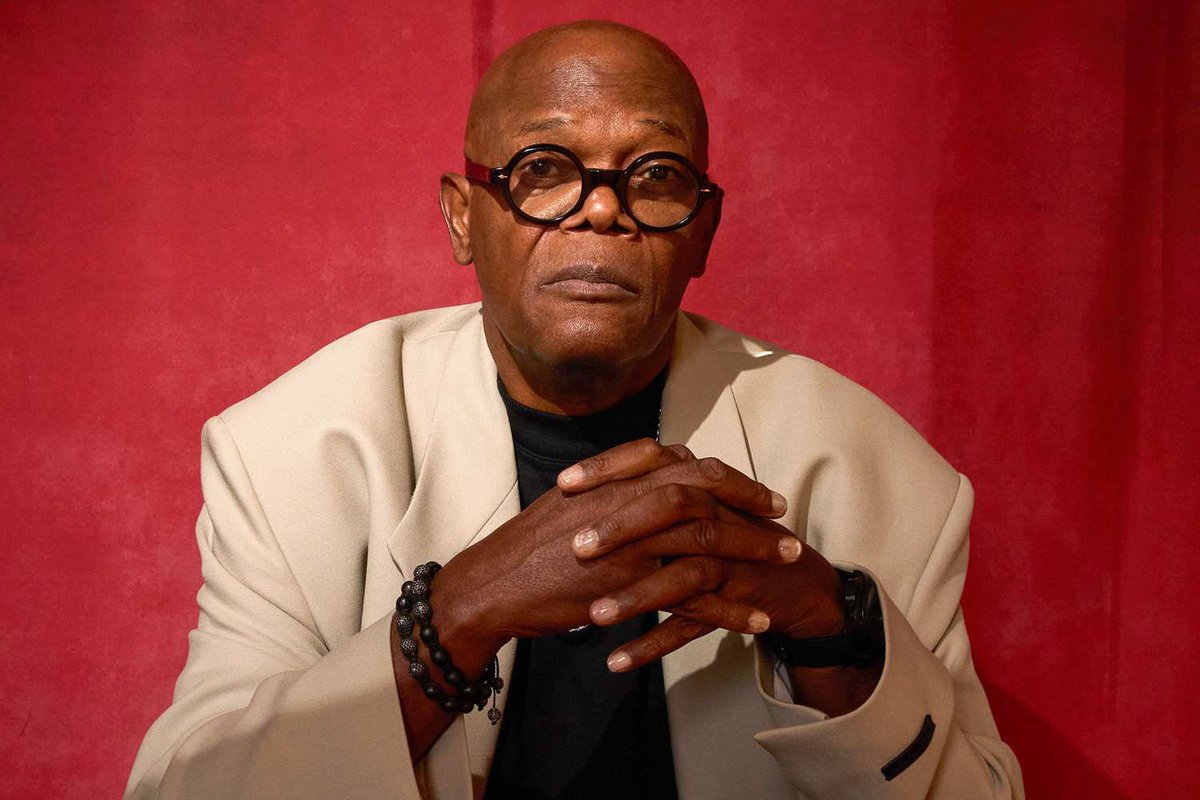
"When I see Trump, I see the same rednecks I saw growing up. People who called me the 'N-word' and tried to keep me in my place. That's what the Republican Party is to me." Legendary actor Samuel L. Jackson
Pope Leo XIV has appointed Benedictine monk Bishop Godfrey Mullen to lead the Diocese of Belleville, Illinois. @mckeownjonah of the @ncregister speaks with the new bishop about how Benedictine spirituality and monastic life have prepared him for episcopal leadership.
,
Mother’s Day carries a range of emotions. Some celebrate with joy, some grieve mothers who are gone, and some are healing from painful relationships. All of those feelings are valid today.
Give yourself permission to feel what you feel. #MothersDayRange#GriefAndGrace
In 1937, Rupert Mayer stood in his pulpit at St. Michael's Church in Munich and preached against Hitler.
By then, Germany had been a Nazi dictatorship for four years. Most priests remained silent. Most bishops tried to negotiate with the regime. Most Germans cheered. Mayer preached the opposite.
He was 61 years old—a Jesuit priest in a black cassock, standing on a wooden prosthetic leg. He had lost his original leg 21 years earlier. Here is how he got there.
Rupert Mayer was born in Stuttgart on January 23, 1876, the son of a prosperous merchant. He wanted to be a Jesuit from his teens, but at his father’s request, he became a diocesan priest first. He was ordained in 1899 at age 23, and a year later, he finally entered the Jesuit novitiate.
By 1912, he had settled in Munich, the city he would serve for the rest of his life. After World War I, Munich was a broken place—full of jobless veterans, hungry families, and people drifting in from the countryside with no housing or hope. Mayer went to work. He collected food and clothing, found jobs, and walked the streets at night to visit the poor. He walked, then hobbled, then walked again on that wooden leg.
He had lost his leg during the Great War. Having volunteered as a military chaplain, he served in field hospitals and the trenches across France, Poland, and Romania. On December 30, 1916, a grenade exploded near him, destroying his left leg. He was awarded the Iron Cross, First Class—the first priest to receive one of Germany’s highest military honors.
Back in Munich, he never stopped. By 1921, he was preaching at St. Michael's and celebrating Mass at the train station at 3:10 AM so workers could attend before their early shifts. The city began calling him "the Apostle of Munich."
Then came 1933. Adolf Hitler became Chancellor, and the Nazi Party began closing Catholic schools and trying to replace Christian identity with Nazi ideology. While much of the clergy stayed quiet to protect what they had, Mayer went straight to the pulpit. He preached against the Nazis by name, stating that a Catholic could not be a National Socialist and that Hitler’s racial theories contradicted the Gospel.
The Gestapo began sending informants to his sermons. In 1937, they ordered him to stop speaking in public altogether. He obeyed the letter of the law by avoiding rallies, but he returned to his pulpit and preached harder than ever.
He was arrested on June 5, 1937. At his trial, he told the judge: "Despite the ban imposed on me, I shall preach further, even if the state deems it a punishable act." He was given a suspended sentence, but he didn't stop. He was arrested a second time in 1938, then a third time in 1939. This time, the Gestapo tried to force him to break the seal of confession to reveal the names of Nazi opponents. Mayer refused.
At age 63, the one-legged priest was sent to the Sachsenhausen concentration camp and placed in solitary confinement. His health collapsed quickly. Fearing that his death in the camp would create a martyr, the Nazis moved him to Ettal Abbey under house arrest in 1940. For five years, he was forbidden to preach, leave, or receive visitors. He waited and prayed while his country destroyed itself.
On May 11, 1945, American soldiers liberated the Abbey. A U.S. officer personally drove Mayer back to the ruins of Munich. He climbed back into his damaged pulpit at St. Michael's and told the congregation: "Even a one-legged Jesuit, if it is God's will, can live longer than a 'thousand-year' dictatorship."
He spent his final months preaching reconciliation and forgiveness, refusing to call for revenge. On November 1, 1945, while preaching during Mass on All Saints' Day, he suffered a stroke and collapsed. He died within minutes, still in his vestments, still in his pulpit.
Mayer’s story matters because when most chose survival over witness, he chose the truth. He could have stayed quiet, but as he told a Gestapo interrogator, ....
With the Supreme Court ruling yesterday, effectively rolling back voting rights to the 1950s, Chris Hayes provides a history lesson on how we have been here before. It isn’t over yet; don’t give up. We will win in the end.
#DemsUnited
Today’s Supreme Court decision effectively guts a key pillar of the Voting Rights Act, freeing state legislatures to gerrymander legislative districts to systematically dilute and weaken the voting power of racial minorities - so long as they do it under the guise of “partisanship” rather than explicit “racial bias.” And it serves as just one more example of how a majority of the current Court seems intent on abandoning its vital role in ensuring equal participation in our democracy and protecting the rights of minority groups against majority overreach.
The good news is that such setbacks can be overcome. But that will only happen if citizens across the country who cherish our democratic ideals continue to mobilize and vote in record numbers - not just in the upcoming midterms or in high profile races, but in every election and every level.
Earlier today on #TheBeatWithAri, we discussed the Supreme Court’s latest ruling on Louisiana’s congressional map.
What we are witnessing is not just another legal decision. It is the continued dismantling of the Voting Rights Act, one piece at a time. Voting rights were already weakened, today’s ruling strikes at the heart of them.
When you remove the ability to acknowledge race in order to remedy discrimination, you make it impossible to correct the very injustice the law was created to address. This opens the door to diluting voting power, limiting representation, and turning back the clock on decades of progress.
We are not asking for special treatment. We are demanding that this nation live up to its promise of equal access and equal representation.
Wow Bishop Fulton Sheen was right! Here he is explaining why dropping atomic bombs on innocent civilians is no better than supporting abortion and why we need boundaries and restraints.
Trump worshipper Sean Hannity declares he no longer considers himself Catholic, in part because the Church is against nuking people.