@lukei4655@cath_menarion@BaldwinIVofJer I think once you really consider the marriage case (placing validity in terms of how the sacrament is witnessed vs. something defective in the minister or intent), it opens the door for really any condition for any sacrament the Church wants to put on it.
@lukei4655@cath_menarion@BaldwinIVofJer I think the allowance for the validity of leavened bread in the Eucharist suggests more malleability in the RCC's ability to recognize/restrict validity than you give credit for. The Church can still decide what is the essential part of what is handed on and what is variable.
@HansFiene @jaegermedia1 Of course its made up. All language is made up. But using "gift" as a verb (including its past participle 'gifted') was made up at least 400 years ago. https://t.co/d5IjGVrd6U
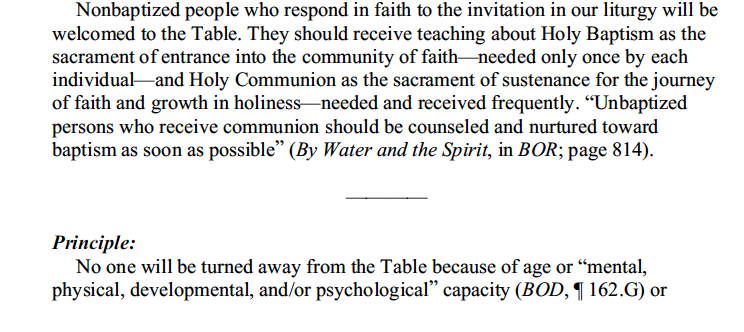
@Jordan_Morrow12@the_thin_place Of course, we wouldn't deny someone communion, but the counsel of a pastor to an unbaptized communicant should be clear that they need to be baptized.
@Jordan_Morrow12@the_thin_place Just to delineate the UMC position we do officially say that the norm is baptism before communion. Our Eucharist theology statement says that we don’t deny anyone who presents themselves, allowing unbaptized communion as a singular temporary allowance with baptism mandated ASAP.
@TheModernist_CA@SimpTheotokos I think the Adam & Eve story gives internal winks at its own mythic nature (i.e. they are the only created people, but their sons get wives from...somewhere; Cain is worried about other people murdering him; etc.)
@KenShepherd In your flavor of presby-ism are ruling elders considered "ministers"? I know in PCUSA REs can be commissioned to do pastoral functions but I was under the impression that in, say, the PCA the book of order limited solemnization to "ministers" (exclusive of RE & deacons)
@jathanasius1@angcathalex There might be - it's a murky historical area. Gary Macy wrote a book on it: "The Hidden History of Women’s Ordination." (Setting aside, of course, the scriptural debate over Junia).
@the_thin_place Which, I think, is helpful in distinguishing a doctrine of Original Sin (indwelling corruption) from Original Guilt (damnation for unbaptized infants for Adam's crime).
@the_thin_place At least in the Wesleyan Tradition we would separate those aspects you name as natural consequences of humanity's loss of divine communion, rather than penal cons. The penal punishment would be damnation. Original Guilt is preveniently forgiven through Christ's merits at birth.
@TheModernist_CA@Make_it_Raines@benjamindcrosby I think we do so in the theology of the biblical canon itself. Scripture derives authority from God, but the Church acts as an authoritative/definitive witness to the books which are inspired. Through the canon the (fallible) church makes a ruling on what is infallible.
@brannonmc It really depends on how its being used, it seems to me. Endowments can be a great way for churches to maintain a level of charitable support for mission partners that's generally more stable than the ups and downs of offerings.