RIP Sam Neill (1947-2026)
Sam Neill on why "The Piano" (1993) is an important movie in Cinema history:
"I don’t think I can overestimate how important 'The Piano' (1993) is for me in hindsight. It sits on my funny old CV like a medal on my chest. It wasn’t my film. It was Jane Campion's. I wasn’t the star of the film. That was Holly Hunter. But there is honour to be found in the second fiddle. Or fourth. No one notices you much, you don’t get nominated for things. But you served. I was there in an important feminist film. I was there on the front line in an important New Zealand film. Neither of these labels does the film justice. It’s a work of art. And look, that tiny little figure in the fabric— see down there on the right—that’s me. It’s a film that will always have a place in cinema history. And I served in it."
("Did I Ever Tell You This: A Memoir", Sam Neill, 2023)
The Atlantic’s new cover story on the decline of reading features a Harvard student who complained that he had to read a book written in "Old English."
Now, you might be thinking that he was assigned Beowulf or The Canterbury Tales.
Nope.
This student was assigned A Clockwork Orange—and used ChatGPT to “translate” it.
A Clockwork Orange was written in 1962 (not 1692, which is still modern English, by the way). This student’s grandparents were alive in the 60s. Is he also using a translation bot to speak to them?
Yes, I had an easier time than most people with the novel's Nadsat slang because I speak Russian, but you catch on very quickly if you turn on more than two brain cells—and the entire point is to compel you to inhabit Alex’s deranged mind, which is cool!
For the first time in my life, I feel bad for Alex from A Clockwork Orange for being so misunderstood.
Stanford professor Judy Fan went on stage at MIT and broke down why humans are so good at making the invisible visible...
And why AI hasn't actually learned to "see" the way we do.
It completely changes how you think about Human Intelligence v/s Artificial Intelligence:
1. Nature never gave us straight lines or sharp corners. The number line, the coordinate plane, even basic geometry are all human inventions. We created tools that do not exist in nature simply because we needed a way to think more clearly.
2. The coordinate system Descartes invented solved a problem that had stumped mathematicians for centuries, doubling the volume of a cube. Once invented, this tool became so indispensable that virtually every math curriculum on Earth still depends on it.
3. Humans have been doing this for at least 30,000 to 80,000 years. The story of human progress is inseparable from the story of marking up our environment, from cave walls to Galileo's telescope to Feynman diagrams of particles we will never see with our own eyes.
4. Every major scientific breakthrough relied on a visual tool that made something invisible visible. Darwin needed side-by-side illustrations of finches to see variation that was otherwise too subtle to notice. Cajal needed detailed drawings of neurons under a microscope to map how the nervous system was wired.
5. Fan's research group studies something deceptively simple: how people decide what to put into a drawing and what to leave out. When two people played a drawing game, sketchers used far more detail when the target object had close competitors than when it stood alone, all the way down to using fewer strokes and less time when more detail was not necessary.
6. People are not just copying what they see. They are making constant judgment calls about what level of detail actually serves the goal of communication, and they do this naturally without ever being taught the theory behind it.
7. There is a real difference between drawing something so someone can identify it and drawing something so someone can understand how it works. In one study, participants drew explanatory diagrams that emphasized moving, causal parts of a machine while depictive drawings emphasized background and overall appearance, even though both were drawing the exact same object.
8. Explanatory drawings were genuinely better at helping someone figure out how to operate a machine, but worse at helping someone identify which machine it actually was. You cannot optimize a single drawing for both goals at once. Communication always involves tradeoffs.
9. AI vision models trained on photographs generalize surprisingly well to simple, sparse sketches, suggesting that resemblance based recognition is not just a story we tell ourselves. It is something modern neural networks can replicate with real accuracy.
10. But there remains a large, measurable gap between how confidently AI models recognize sketches and how confidently humans do, even when both groups answer the same questions about the same images. Humans are simply far more reliable and far more consistent in their judgments.
11. When researchers compared human-made sketches to AI-generated sketches under tight stroke budgets, both were similarly recognizable at higher budgets, but diverged sharply as the budget shrank. Humans and AI systems simplify drawings in fundamentally different ways once resources get scarce.
12. Reading a graph is not one single skill. It involves perception, knowing where to look, mapping that visual information onto the actual question being asked, and then translating that mapping into an answer. Each of these steps can independently break down, and people fail for very different underlying reasons even when they land on the same wrong answer.
13. When tested directly against humans on graph reading tasks, leading multimodal AI models, including GPT-4V, showed a meaningful performance gap. Even when a model's overall accuracy approached human levels, its pattern of mistakes looked nothing like how humans actually get things wrong.
14. People choose entirely different types of charts depending on what specific question they are trying to answer, not out of a generic preference for bar charts or scatter plots. Their chart choices closely tracked which visualization would genuinely help someone answer that specific question correctly.
15. Two of the most widely used graph literacy tests in education research turned out to correlate strongly with each other, suggesting they measure overlapping skills. But when researchers dug into the actual error patterns, the standard categories used in textbooks, like "find the maximum" or "identify a cluster," failed to explain why people got things wrong nearly as well as a more basic, underlying four-factor model did.
16. The deepest goal behind all of this research is not just academic curiosity. It is to eventually help students and everyday people develop genuine literacy with the visual tools that science and modern decision-making increasingly depend on, because every generation should be able to see further than the last by standing on the visual tools the previous generation built.
Follow @yasminekho for more ideas on thinking better, becoming clearer & building a more intentional life.
SHOCKING details read out by father Mark Nowak regarding the murder of his son Henry.
- As blood filled his chest, Henry Nowak tried desperately to escape. Instead, he was chased and subjected to further abuse.
- When police arrived, Henry was lying on the ground, unable to sit up and clearly suffering severe medical distress.
- With his final words, he told officers nine times that he could not breathe.
- He also repeatedly told them that he had been stabbed four times.
- One officer responded: “I don’t think you have, mate.”
- Police later claimed they had been misled by the murderer.
- Henry’s father, Mark Nowak, believes the truth is far simpler.
- Both Henry and a member of the public who called 999 told police that Henry had been stabbed.
- Despite these warnings, officers failed to believe them.
- Henry was dragged across gravel and placed in handcuffs.
- Police arrested Henry for assault and read him his rights. According to his father, those were the last words Henry heard before he died.
- Mark Nowak says his son was denied even the dignity of a proper death.
- Henry should never have died on the streets of Southampton while in police custody.
- Meanwhile, his killer, Vikram Digwa, was afforded a level of decency that Henry was not. Reports suggest he was not even handcuffed when arrested.
- Officers reportedly took Digwa to the kitchen and allowed him to choose his own food.
Let me trace the timeline here because nobody's connecting it.
Step 1: Scrape the entire internet. Every book, every article, every conversation, every piece of art, every forum post. Do it without asking. Do it without paying.
Step 2: Train a model on all of it. Call it "artificial intelligence."
Step 3: Go to BlackRock's Infrastructure Summit and announce: "We see a future where intelligence is a utility, like electricity or water, and people buy it from us on a meter."
Step 3 is where you sell people's own knowledge back to them. On a meter.
They took the collective output of human thought, compressed it into a model, and now they want to charge you by the token to access a version of what you and everyone you know already created.
One Reddit user put it perfectly: "They stole all this data from us, the people, our life's work, creativity, art, by devouring the internet and blowing through all copyright laws. Now they want to sell it back to us in the form of a utility."
Imagine if someone photocopied every book in the public library, burned the library down, and then opened a subscription service for the copies.
That's the metered intelligence business model.
And they're pitching it to infrastructure investors as though they invented water.
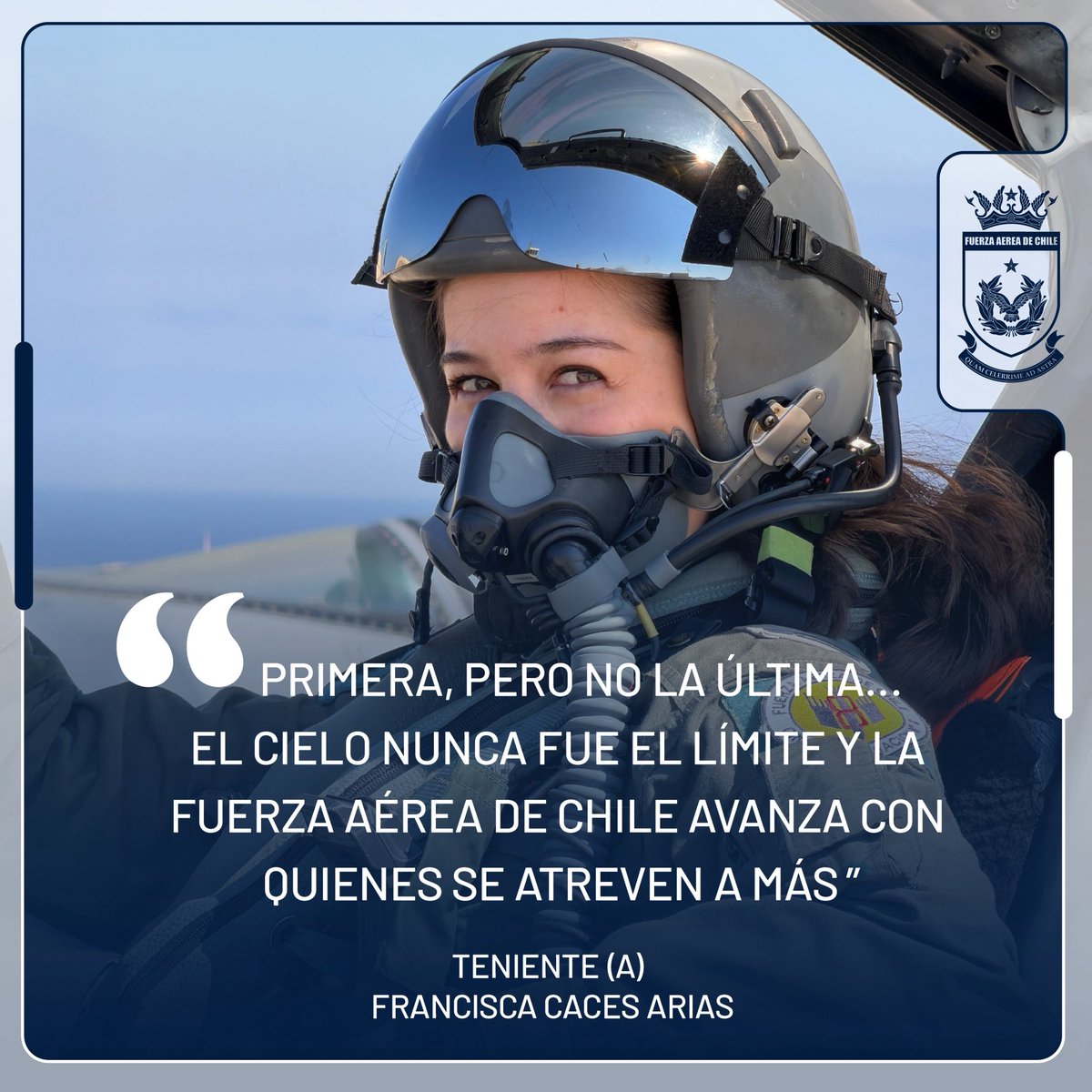
Fuerza Aérea de Chile gradúa a la primera mujer piloto de F-16, marcando un antes y un después en la aviación de combate en Chile.
Un logro que no habla de género, sino de capacidad, preparación y excelencia, tras un exigente proceso que demanda lo mejor de cada aviador militar.
In the era of #ArtificialIntelligence, when human dignity is threatened by new forms of dehumanization, ours is the pressing duty to remain profoundly human. We must lovingly safeguard the grandeur of humanity bestowed upon us and revealed in its fullness in Christ, the splendor of which no machine can ever replace. #MagnificaHumanitas
https://t.co/6i9MWs6LJl
lIf you do anything today, watch @MaeveHalligan at the Cambridge Union. I genuinely think this was the first time many people in that room were confronted with the hard reality of the trans debate, rather than the slogans that usually surround it.
@BuckAngel was exceptional: calm, articulate, humane. Ultimate respect.
And then there was Helen Webberley. I remember once thinking the criticism directed at her by GC women was excessive, especially the claim she was ‘pure evil’. After hearing her speak, I no longer think that. She is totally insincere. I can deal with hard ideologues- they believe they are telling the truth; they are genuine, @HelenWebberley is different.
One audience member, a trans-identified male and former patient of hers, stood to speak during points of information. His account of how he had been treated was deeply disturbing.
Watch the full debate. It is worth your time.
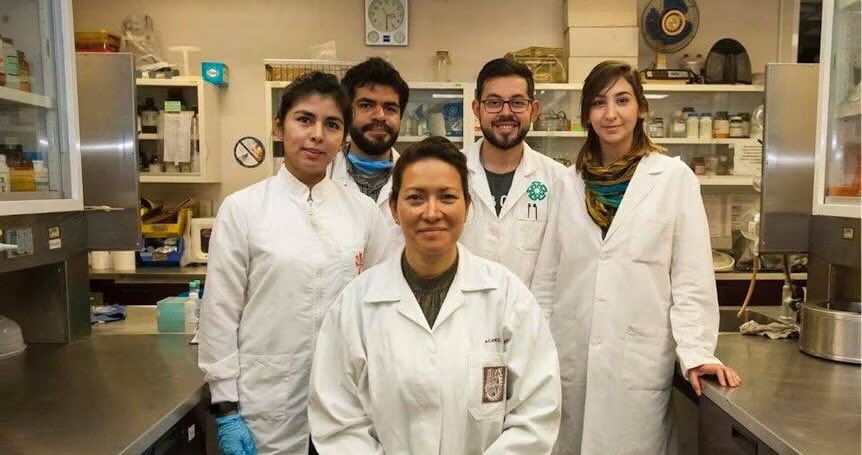
Un liceo público en Quellón, Chiloé construyó un radiotelescopio real. No es simulación ni maqueta. Acaban de ganar el fondo ALMA ANID para expandirlo a Chile y al mundo. Desde el fin del mundo hacen ciencia de verdad. Eso es educación pública de calidad 🔭🇨🇱👍
She was supposed to attend a Daniel Craig film premiere in London that weekend. Instead, she was in a Belfast hospital with 39 separate injuries. She was 29 years old.
Winnie M Li was a Harvard graduate and a George Mitchell Scholar who had co-produced a short film shortlisted for an Oscar. She flew to Belfast for a conference. The day before she was supposed to fly home, she decided to squeeze in a solo hike through a forest park on the western edge of the city. A 15-year-old boy followed her in and raped her in broad daylight.
She later said she went from being a confident woman to a ghost, with PTSD and depression so severe she had to give up her film career. Her attacker was sentenced to 8 years. He was out in 4.
Hiking had been one of her great joys before the attack. It took years before she could do it alone again. In 2009, she forced herself to backpack through Southeast Asia for three months, trying to find the person she used to be. Five and a half years after the assault, she sat down and started writing about what happened to her. Her novel Dark Chapter, built from her own experience, won a major literary prize. Her second novel was fought over by five US publishers and picked by The New York Times for their book club. She co-founded a festival in London dedicated to conversations about sexual violence, and earned a PhD from the London School of Economics studying how survivors use their voices to reclaim their stories.
And every year, on the exact anniversary of the worst day of her life, she goes on a solo hike. In her own words: to remind herself that beauty still exists, and she can enjoy it.
This year was year 18. She walked the Southwest Coast Path along England's coastline, and the photos show her smiling on a cliff in Cornwall. After 17 years of doing this, she said the nausea and anxiety on the anniversary are finally gone. That took 17 years, but she got there.
I have nothing to add to her story except this. If you are in the middle of your own recovery and it feels like it will never end, her 18 years of annual walks say otherwise.
1/ The ovary is the fastest-aging organ in the female body. And almost no one is studying why.I just sat down with @BBParis1984 (@USCLeonardDavis ), who runs one of the only labs in the world mapping ovarian aging.
A few things from our conversation I can't stop thinking about:
At first, I couldn't fucking believe this was a real article. So I had to look it up... and it's real.
This is some deranged, evil nonsense, man... no amount of ideological spin turns a sexual assault into some noble "assimilation tool". This is just morally bankrupt.
Then they use a linguistic sleight-of-hand to dress up sexual assault as some quirky "cultural misunderstanding"... Fucking disgusting.
Anything "quasi" = not consensual = sexual assault... no such thing as a "kinda raped" category that magically fixes racism. 🤡
SE TIENE EL CONTROL FORMAL, PERO NO MANEJAN EL RELATO
Ing. Jorge Sepúlveda Haugen
El gobierno de Kast, a quien voté y en quien deposité mi confianza, está cometiendo un error que no tiene que ver con la economía, con la herencia de Boric ni con la guerra en el Medio Oriente.
Tiene que ver con algo mucho más simple y al mismo tiempo mucho más difícil de admitir: no saben hablar con los chilenos. Y lo digo precisamente porque lo voté, no a pesar de eso.
Porque quien apoya a alguien tiene más derecho que nadie a exigirle que esté a la altura. No me refiero a que les falte elocuencia ni inteligencia.
Me refiero a algo más profundo: están usando el idioma equivocado para el momento equivocado, con las personas equivocadas a cargo de la conversación. Y eso, en política, es tan grave como una mala decisión económica. Los errores de gestión se corrigen con datos.
Los errores de relato se corrigen mucho más tarde, cuando el daño ya está hecho y la confianza ya se fue.
Cristian Valenzuela, el hombre que opera la comunicación desde el Segundo Piso de La Moneda, es brillante haciendo lo que sabe hacer. El problema es que lo que sabe hacer ya no sirve.
Valenzuela ganó elecciones atacando a la izquierda, destruyendo narrativas del adversario, generando contenido agresivo que activaba a la base republicana.
Eso funcionó perfecto para llevar a Kast a La Moneda. Pero hoy Kast ya está en La Moneda, y Valenzuela sigue operando con el mismo manual, como si la elección no hubiera terminado, como si todavía hubiera que convencer a alguien de votar.
Es como el mozo que en lugar de traerte la comida te pasa veinte minutos explicando lo malo que era el restaurant anterior. Puede que tenga toda la razón. Pero tú sigues teniendo hambre. Y cada minuto que pasa sin que aparezca el plato, más irritado te sientes con el mozo que tienes enfrente.
El resultado es grotesco. El gobierno publica un tweet oficial criticando al gobierno anterior en medio de una crisis de precios, tiene que autodesmentirse públicamente horas después, y la oposición recibe ese regalo con una sonrisa que no puede ocultar. Eso no es un error de comunicación. Es un error de identidad. No saben quiénes son ahora que ganaron.
La vocera Mara Sedini desaparece exactamente cuando más se la necesita. Durante la crisis de los combustibles, cuando los chilenos estaban en las bombas de bencina sintiendo en el bolsillo el primer golpe del nuevo gobierno, la vocera estaba prácticamente ausente.
El ministro de Hacienda Jorge Quirós, el hombre que debería ser la voz más tranquilizadora del gabinete en materia económica, no tiene las herramientas comunicacionales para cumplir ese rol.
Y mientras tanto, el Segundo Piso intenta controlarlo todo desde las sombras y termina siendo el blanco favorito de la oposición, que ya identificó a Valenzuela como el objetivo más fácil para desgastar al gobierno sin tener que atacar directamente al presidente. Le están regalando el partido a la izquierda sin que la izquierda tenga que hacer nada.
El resultado de todo esto es un desplome sin precedentes en la historia política reciente de Chile. Kast comenzó con casi sesenta por ciento de aprobación. En menos de dos semanas cayó a cuarenta y dos por ciento. Diecisiete puntos en días.
Eso no es el efecto luna de miel que se termina ni el ajuste natural de expectativas. Es un colapso de percepción con velocidad propia, y si no se interviene en la causa real, va a seguir cayendo independientemente de lo que haga el gobierno en materia de gestión concreta.
Y aquí está la parte que más incomoda, la que los equipos de gobierno no quieren escuchar porque implica admitir algo que va contra toda su intuición política. Los hechos no son lo que más mueve a las personas. Las historias sí. No es una opinión ni una teoría de marketing. Es la forma en que funciona el cerebro humano.
Continúa en comentarios
Buenos días.
Ayer me pidieron que dijera algo sobre el caso de #Noelia desde la #Bioética. Confieso que su historia me ha conmovido profundamente. La de una joven, hija de padres divorciados con dificultades, de la que se hizo cargo Asuntos Sociales y fue internada en un centro de menores. Allí sufrió una violación grupal y no recibió la atención psicológica ni el acompañamiento humano que necesitaba. Un intento de suicido fallido, queda en silla de ruedas y ahonda en su dolor. Su historia deja al descubierto las grietas más profundas de nuestro sistema: una víctima de un abandono institucional que la dejó completamente sola ante el dolor. Ahora, su petición de ayuda para morir se presenta como un acto de libertad, cuando en realidad expresa la desesperanza de quien nunca fue acogida ni tratada como merecía.
No estamos ante un caso de #eutanasia, sino de #suicidioasistido. Noelia no padece una enfermedad terminal, sino una depresión profunda derivada de un trauma no sanado. Aun así, la ley permite abrir esa puerta sin distinguir entre un sufrimiento físico irreversible y un sufrimiento psicológico que puede tratarse y aliviarse. Es una falla gravísima que sienta un precedente: una norma que hoy se aplica a quienes podrían recuperar su vida si recibieran la ayuda, la terapia y el acompañamiento adecuados.
La vida de Noelia es valiosa, aunque ella no lo perciba ni lo vea. La #dignidad humana no depende del sufrimiento ni de la autonomía entendida como autosuficiencia. Nace del valor único de cada persona, de su necesidad de vínculos, cuidado y amor. Sin embargo, la ley, en lugar de ofrecer compasión real, termina legitimando la renuncia a la vida de quienes más necesitan apoyo y esperanza.
Noelia no necesita que el Estado le ofrezca la muerte, necesita que alguien le devuelva el sentido, la ayuda y la posibilidad de sanar. A mi juicio, lo que está ocurriendo con ella no es un gesto de libertad, sino el reflejo de un profundo fracaso colectivo. Cuando la vida duele, lo verdaderamente humano es cuidar, acompañar y sostener, no matar.
Me duele una sociedad que sólo sabe ofrecer esta salida a una joven de 25 años, adulta y consciente, pero con heridas aún abiertas y profundas. Siento una enorme compasión por Noelia, una compasión que debería traducirse en presencia, acompañamiento y cuidado, no en la autorización para morir. Que el Estado contemple el suicidio asistido para una persona tan joven me parece un error gravísimo y, sobre todo, una derrota moral. Sí, la ley de eutanasia lo permite y Estrasburgo ampara su decisión, pero no todo lo que es legal es necesariamente ético ni verdaderamente humano.
Estas palabras no servirán de nada.
Todo mi afecto para ella y su familia en estos momentos tan duros.
Yesterday, on the eve of the Iranian New Year (Nowruz), the Islamic Republic hanged five teenagers who had been detained during the January protests in the cities of Qom and Ilam. Today, 18-year-old Melika Azizi from the city of Rasht, who was arrested for burning regime symbols during the protests, faces imminent execution in Rasht prison on the charge of Moharebeh (waging war against Allah).
#IranMassacre won't stop!
Today, in Iran, in the middle of a war, the regime executed a 19-year-old national wrestling champion for the crime of joining January protests. 💔
After signaling to the world, including President @realDonaldTrump, that they would halt executions of protesters, the regime has done the exact opposite.
Three young protesters, Saleh Mohammadi, Mehdi Ghasemi, and Saeed Davoudi, were hanged in Qom after a sham trial.
Reports indicate torture. Forced confessions. No access to chosen lawyers. Closed-door proceedings. No right to appeal.
I call on @GlobalAthleteHQ to stand with Iranian athletes who are being silenced, imprisoned, and executed simply for raising their voices.
This is not just about sports. This is about human dignity.