Yesterday I asked AI to imagine America after 50 years of Democrat rule. Today I gave it the exact same prompt, but with Republicans in charge for 50 years.
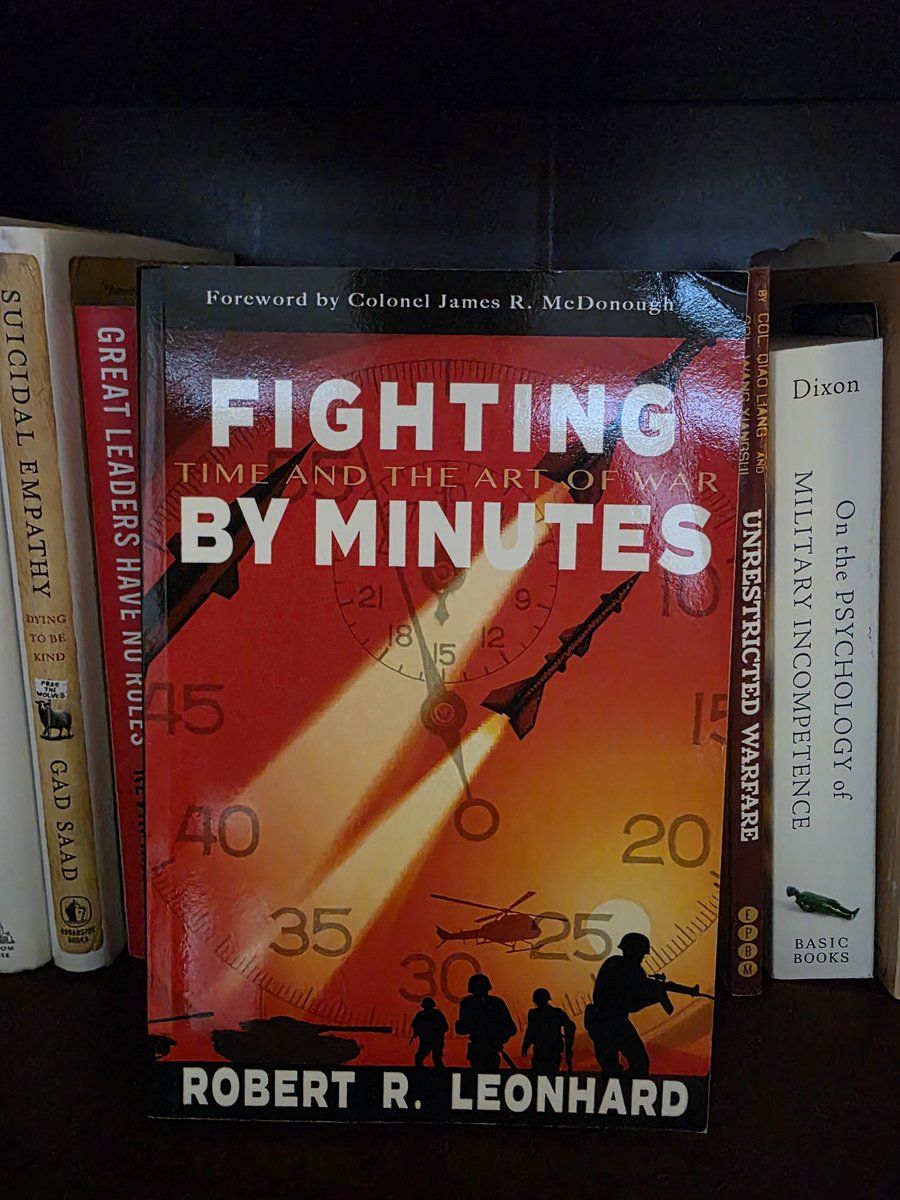
Some good lessons here, as the OPFOR shared a lot of the same observations being under resourced and outnumbered. Decision superiority was the difference, faster.
So much has been said and written about Star Wars – so let’s do it with a twist or two.
The original trilogy is the adventure. The prequels are the civilizational lesson. And nobody was paying attention to the right film.
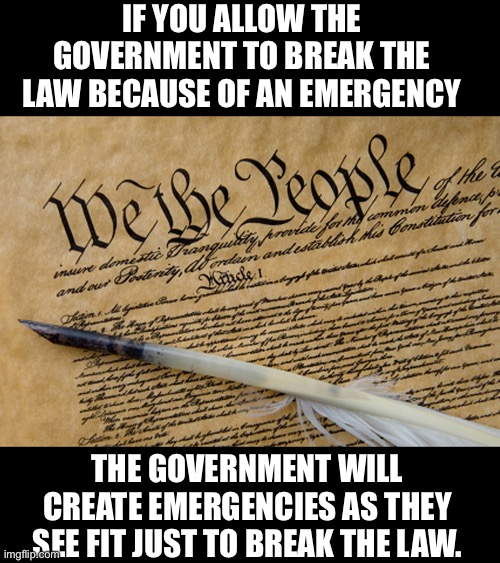
1. The prequels show how a free Republic destroys itself. Not conquered from outside. Not defeated in battle. Hollowed from within – through fear, manufactured crises, and emergency powers accumulated legally, one Senate vote at a time. This is not science fiction. This is Rome. This is Weimar. This is every republic that discovered, too late, that the constitution is only as strong as the people operating it.
2. Palpatine doesn’t seize power. He is given it – democratically, gratefully, with thunderous applause. He manufactures the crisis, presents himself as the solution, and asks only for temporary emergency authority. The temporary becomes permanent when the crisis is resolved – as it never quite is, because the crisis is the instrument. Every step is legal. Every step is popular. Every step is irreversible.
Reminds us of anything?
3. “So this is how liberty dies – with thunderous applause.” Padmé says it watching the Republic vote itself into an Empire. The most important political sentence in fifty years of popular cinema. And yet nobody puts it on a banner. It came and went in two seconds in a film everyone considered inferior to the originals. The originals gave you the adventure. The prequels gave you the explanation. The audience preferred the adventure.
4. The Jedi Council is the failed establishment – a priestly, unelected caste with special knowledge, too political, too institutional, too convinced of their own wisdom to see the corruption metastasizing around them. They sense that something is wrong. They form committees. They deliberate. They send one man to investigate. By the time they understand what Palpatine is, he has already won. The establishment always sees the threat last – because acknowledging it would require acknowledging their own failure to prevent it.
5. The Force is Hayek’s spontaneous order. You don’t control it, plan it, or impose it from above. You flow with it – or you fight it, which is precisely what turns you to the dark side. The dark side is the Ring: the totalitarian temptation that this time, in the right hands, for the right reasons, absolute power can produce good outcomes. Anakin falls not because he is evil but because he believes total control can save what he loves. He is wrong for the same reason everyone who reaches for the Ring is wrong.
6. The Death Star is the endpoint of central planning taken seriously: if the system cannot persuade you, it will destroy your planet and use the remaining ones as an example. This is not a metaphor. This is the logical conclusion of the General Will applied at galactic scale. Order through absolute deterrence. Compliance through the elimination of alternatives. It is Plato’s Republic with a superlaser.
7. And now the twist within the twist. The Empire is nasty. The Death Star is inexcusable. Nobody is defending either. But ask yourself one question: why has every studio, every cultural institution, every progressive establishment figure spent fifty years telling you the rebels are the good guys – and casting themselves as the rebels? Not a bit suspicious? The people controlling the algorithms, the narrative, the NGOs, the content moderation policies all go to work convinced they are Luke Skywalker. But aren’t the rebels — externally funded, media-celebrated, arriving with a program to tear down the existing order — actually the progressives? Aren’t they the color revolutions? (The real rebels are the ones being deplatformed, demonetized, and cancelled.)
At some point you have to ask: if everyone with institutional, cultural, and financial power is the Rebel Alliance – who exactly is the Empire?
The Transmission Problem.
Every civilization faces the same final question. Not the barbarian at the gate – that can be fought. Not the economic collapse – that can be recovered from. The question that cannot be survived if answered wrongly: did you pass it forward?
The torch changes hands or it doesn’t. The light doesn’t go out dramatically. It goes out quietly, generation by generation, when the transmission fails – when what was built is not explained, when what was defended is not named, when what was beautiful is not shown to the child who would have loved it if someone had taken the time.
1. The transmission mechanism is the most important institution in any civilization – and the least visible. Not the army, not the economy, not the government. The father who takes his son to the edge of the kingdom at dawn and says: everything the light touches is our kingdom, and one day you will stand here with your own son. The teacher who hands the student a book and says: this will change how you see everything, and it changed how I see everything, and someone handed it to me. The civilization that knows what it is and says so, clearly, to the next person in the chain. The torch doesn’t pass itself. Someone has to carry it, deliberately, to the next set of hands.
2. The long march understood this before the West did. Gramsci’s insight was precisely about transmission – the ruling class maintains power not through force but through controlling what the next generation is taught to think is natural. Capture the school, the university, the media – the transmission mechanisms – and the cultural hegemony reproduces itself automatically, without enforcement, because the next generation never learns that it could think otherwise. The march didn’t attack the civilization directly. It attacked the transmission. Which is more efficient and more permanent – because a civilization that has lost the ability to transmit itself is defeated without ever being confronted.
3. The family is the primary transmission mechanism – and therefore the primary target. Not because the family is politically significant in itself but because it is where the first transmission happens: the values, the stories, the sense of what is worth admiring and what is worth fighting for. The child who grows up in a family that knows what it is and says so becomes a person who knows what they are. The child who grows up in a family that has been taught that its own values are suspect, its own history shameful, its own civilization merely one option among many – that child is already a partial transmission failure. Multiply across a generation and you have what we are currently living through.
4. The school is the secondary transmission mechanism – and the most completely captured. The curriculum that replaced the canon with the critique of the canon. The teacher replaced by the facilitator. The examination replaced by the self-expression. The standard replaced by the affirmation. This is not incompetence – it is the long march’s most successful operation. Deconstructing a civilization’s transmission mechanism produces, reliably and by design, a generation with nothing to transmit. That was the point. The generation that cannot read the primary sources cannot assess the argument that the primary sources are oppressive. It simply accepts the conclusion, because it has no access to the evidence that would allow it to disagree.
5. The culture is the tertiary transmission mechanism – the stories, images, music, and beauty that transmit the civilization’s values below the level of argument. Homer transmitted Greek civilization for centuries before anyone theorized about what Greek civilization was. Shakespeare transmitted the English-speaking world’s understanding of human nature for four hundred years. The fairy tale transmitted the moral grammar of European civilization to children too young for philosophy. The long march captured this too – Hollywood, the prize committees, the arts funding, the music industry – and replaced the transmission with its own content. The child who grows up on a cultural diet produced by the captured mechanism is being transmitted to. The question is what is being transmitted.
6. This series is an act of transmission. Not primarily an argument – an attempt to pass forward the vocabulary, the framework, the sense of what the civilization is and what it is worth, in the format that reaches the person who will not read the primary sources but who will read this. The secondhand dealer in ideas, in Hayek’s formulation – making thinkable for millions what the primary producer made possible. Every piece is a link in the chain. The chain runs from Homer to Aristotle to Cicero to Augustine to Aquinas to Montesquieu to Burke to Tocqueville to Hayek to this feed to the person reading it now. The chain is only as strong as its weakest link. The weakest links are the ones the long march attacked. This is an attempt at repair.
7. The transmission problem has one solution and it is not institutional – it is personal. You cannot transmit a civilization through a policy. You can only transmit it through a person who has received it and passes it forward deliberately, to a specific other person, in the full knowledge that the chain depends on this act. The father and the son at the edge of the kingdom. The teacher and the student with the book. The writer and the reader with the vocabulary. Every act of genuine transmission is an act of civilizational resistance – because the managed reality depends on the chain being broken, on each generation starting fresh without the inheritance, on the past being made inaccessible so that the present can be managed. Break the managed access to the past. Pass it forward. To your children first. Then to everyone else.
The torch changes hands or it doesn’t.
You are holding it now.
Passing time in a tightly packed airport coffee shop recently, I ended up in conversation with a thirty-something couple sitting only inches from me. I was coming from Mexico City and they were going there. After the usual banter, I asked where they were from and learned they were New Yorkers moving out of that city. They didn’t offer a reason and I didn’t press for one.
They asked me what I did for a living and I explained that I was a writer currently investigating how cartels were smuggling people into the US. I say I was chatting with this couple, but it was really only with her. He said nothing the entire time. But he listened intently as she asked questions.
“You travel a lot? Where have you been?”
“Well, so far this year, I’ve covered the WEF in Davos, researched Karl Marx in London, went to Gaza with the IDF…”
“You’ve been to Israel?” She interrupted. “We’ve been there. What do you think of the war?”
I guessed that here our conversation would end unhappily. They were New Yorkers, so almost certainly heavily propagandized lefties. But I pressed on.
“Almost everything you hear in Western media is wrong…”
“You mean it’s a lie. How?”
“Oct 7 was not just a Charlie Hebdo-style terrorist attack. It was an act of war. More than 7,000 Hamas terrorists penetrated the frontier at more than 100 points. Inspired by Islam, they had been instructed to r8pe, behead, torture, and kidnap men, women, and children.”
He still said nothing, but leaned forward, eyes narrowing.
“Who helped them do it?” She asked.
“Iran was the biggest supplier, but North Korea, China, and Qatar mostly. The UNRWA also played a role. Weapons and matériel were stockpiled in Egypt and smuggled into Gaza through tunnels.”
“You know that?”
“I know that. Trust me.” That led to a discussion of President Sisi, the Muslim Brotherhood, and my standoff with Egyptian State Security in Cairo. Still, I had no real gauge for where they stood politically. She asked if I had written anything on the subject, so I pointed her to my article for The Federalist connecting the dots between Egypt, USAID, Gaza, and my swatting.
A woman sitting nearby, leaned over and said, “Forgive me for eavesdropping on your conversation, but this is fascinating.” We all chatted a bit longer and I left.
About 30 minutes later I was standing in line at the gate waiting to board my flight when the husband appeared.
“Pardon me, but I had to come find you.” He was full of emotion. He indicated that he and his wife were Israelis who had lived in NYC but were now fleeing Mamdani’s third world sh*thole.
“You are a man who needs the protection of angels,” he said, and then presented me with a Jewish holy book. “We want you to have this. I pray it protects you.”
With that he turned and walked away.
Gentile and fierce Protestant that I am, I was nonetheless deeply moved. It seems they had read the article and, catching a glimpse of my work, felt my life was in danger. For my own part, I was aware that the same ideology that threatened me, was the same one that threatened them, forced them to move, and imperiled their native land.
I’m often amazed by the people the Lord puts in my path when I pause long enough to look around and notice them.
Aaron Siri: "Babies have to remain alive for organs to be harvested in Vaccine development experiments."
"You can't grow viruses using dead organ tissue, they have to be born alive."
"Dr. Stanley Plotkin admits it under oath... unborn babies are alive at tissue extraction."
Famous vaccinologist, coined 'the godfather of vaccines' during 9 hours of deposition under oath, reveals horrifying acts of violence & experimentation on babies aborted for the sole purpose of research experimentation studies.
1,000s of babies are used for experimentation... whose mothers sign up to 'donate' their unwanted unborn child to be used experimentally for vaccine development.
Dr. Plotkin gladly admits, without remorse, to Lawyer Aaron Siri, that he accepts human sacrifice as a normal 'acceptable consequence' in order to 'further science' as he is 1st & foremost a scientist & practicing Atheist.
Former Vaccine Researcher & Biologist Pamela Acker has stated, "The babies are alive when the researchers start extracting the tissue. Their hearts are still beating & they're not given any anesthetic because that would contaminate the organs being harvested that need to be alive, pure & free of toxins."
According to expert Dr. Theresa Deisher, PhD, "Babies are born alive from five to six months old, with beating hearts cut out without anesthesia for research purposes. Researchers also cut through live babies' faces to collect brain tissue."
The vaccine industry is built on the use of babies organs to produce many vaccines. They also have to replace these lines with current organs, the most recent being WALVAX-2, using the lung from 1 of 10 babies in 2015 for vaccine development.
HEK-293: Human Kidney, female; used in development of Ebola & Covid. 293rd experiment.
MRC-5: Human Lung, male; used in Polio, Rabies, Chickenpox, MMR, Hep A & Shingles. 5th cell line.
WI-38: Human Lung, female; used in Polio, Rabies, Chickenpox, MMR, Hep A & Shingles. From fetus #38.
RA 27-3: Human Kidney, used in the Rubella & MMR. 27th fetus & 3rd organ.
PER-C6: Human Retina, used in the development of Ebola & Covid. Clone #6.
IMR-90: Human Lung; to replace the WI-38 line.
WALVAX-2: Human Lung; to replace the WI-38 and MRC-5 line. 2nd lung of 10 babies.
On Fear,
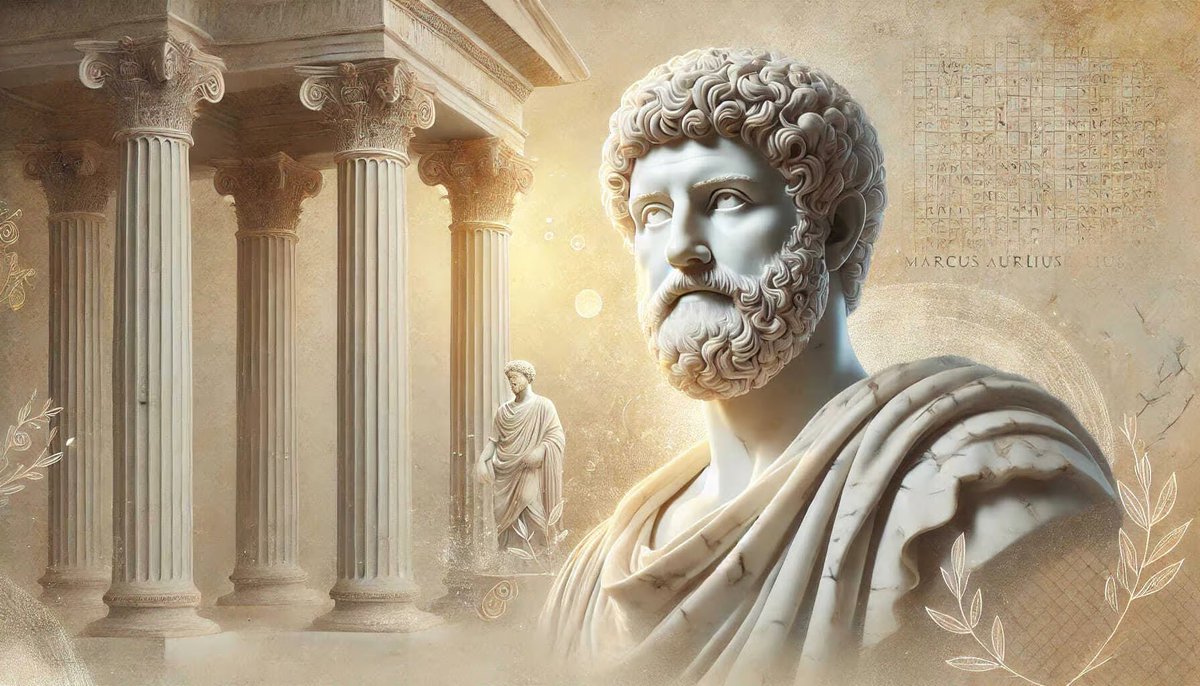
There is something powerful about facing uncertainty without surrendering your judgment. Fear rarely arrives as sheer panic; more often, it disguises itself as hesitation, overthinking, the need for approval, or the dread of failure. We believe we fear an external event, but what we truly dread is losing control or what failure might reveal about ourselves. Stoicism never promised an existence devoid of fear. The Stoics understood that fear is merely an impression, not a command. An event arrives without your permission, but your judgment regarding it is where your freedom begins. The goal is to feel fear and still choose wisely.
Fear gathers leverage when reality refuses to obey our expectations. We construct rigid mental scripts of how opportunities should unfold, how people should treat us, and how tomorrow ought to arrive. When circumstances shift, the untrained mind interprets that friction as danger. As Seneca observed, we suffer far more often in imagination than in reality. Neil Armstrong faced this during Apollo 11 when unexpected terrain threatened the lunar landing. He could not alter the moon, so he adjusted his controls and adapted. You cannot command the external world to obey, but you can always master your own response.
A fearful thought enters the mind, and rather than examining it, we replay it until an anxious whisper sounds like a verdict. Epictetus taught that we must test every impression, separating what is within our control from what is not. A possibility is not a fact, and an internal tremor is not an order. David Goggins built his discipline on separating the sensation of resistance from the decision to stop. When apprehension rises, pause before yielding. Ask what you actually know versus what you are projecting. When you examine an alarming thought rather than feeding it, its unearned authority collapses.
Much of our anxiety stems from the illusion that whatever we value must remain permanent. Stoicism does not ask you to become cold, but to hold fortunes with an open hand. If you hold a fragile flame in winter, panicking over every breeze ruins the very warmth it provides. Seneca practiced voluntary hardship to prove that losing comfort does not mean losing oneself. Appreciate what is present, love deeply, but anchor your identity solely in virtues that cannot be stripped away: courage, discipline, and integrity.
Avoidance offers temporary relief, but it trains the psyche to believe that retreat is the only path to safety. Every time you shrink from a difficult conversation or an intimidating challenge, you reinforce fear. Courage is not fearlessness; it is the refusal to let apprehension make the decision. Waiting for complete certainty creates an endless waiting room. Like a navigator steering through black waters at midnight, you do not need to view the entire horizon to take the next bearing. Thomas Edison progressed through persistent adjustments. Shrink an intimidating future until it fits inside the single action required right now.
Unfinished fears expand in the dark because we rarely follow them to their natural conclusion. Through the Stoic discipline of premeditatio malorum (Stoic practice of mentally rehearsing potential adversities to face them prepared, not surprised), you mentally strip away wealth, status, and comfort to confront the worst possible scenario. When Ernest Shackleton found his ship crushed by Antarctic ice, the original plan collapsed, yet his capacity for judgment remained sovereign. An ordeal can wound you without owning your identity, and it can alter circumstances without authoring your character. Confronting catastrophe beforehand strips adversity of its shock, proving that even on your hardest day, you still retain your next move.
Ultimately, you must become someone fear cannot command. Picture your consciousness as a vessel crossing an ocean at midnight. Fear may pace the deck shouting grim forecasts of ruin, but it must never be granted the captain's chair. As Frederick Douglass demonstrated by asserting his literacy, dignity, and agency against brutal bondage, genuine freedom emerges when you refuse to let frightening conditions dictate your principles. When alarm strikes, do not ask how to make the discomfort vanish; ask what you would do if fear were allowed to speak but forbidden to decide. Then execute that duty. Fear may knock, but your reason determines whether the door ever opens.
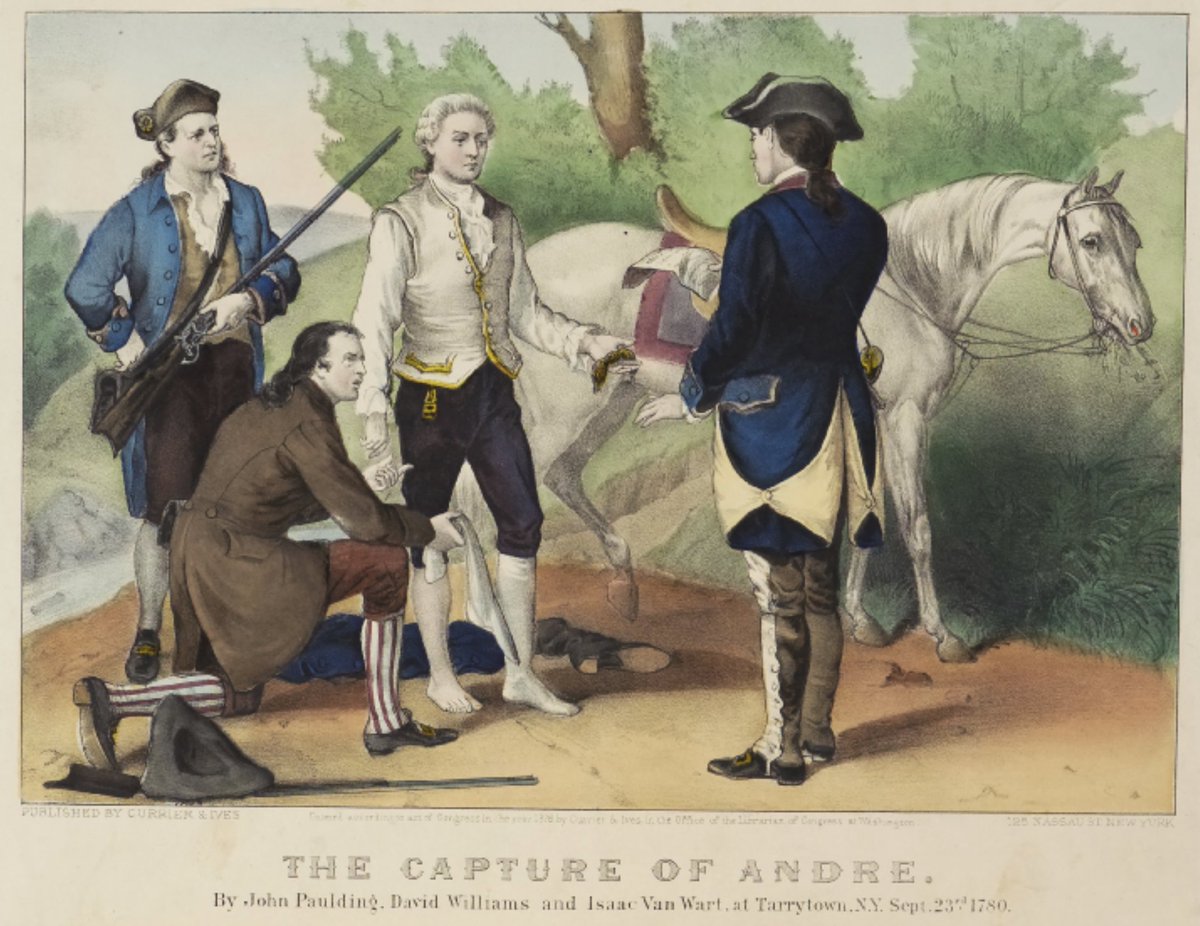
On this exact day in 1780, three ordinary militiamen stopped a stranger on a road, searched him, found treason hidden in his boot, turned down a small fortune to let him walk, and in doing so saved West Point and possibly the whole Revolution. Their names were John Paulding, Isaac Van Wart, and David Williams, and almost no one remembers them.
They were not famous soldiers. They were young New York farmers, part of the informal patrols that watched the dangerous no-man's-land north of British-occupied New York City, a lawless strip crawling with raiders and spies from both sides. On the morning of September 23, near Tarrytown, they stopped a well-dressed rider who called himself John Anderson.
Here is where luck and character collided. The rider, seeing rough men in mixed clothing, guessed wrong and assumed they were Loyalists like himself, and he let slip that he was a British officer. The instant he realized his mistake, he tried to backtrack, but it was too late. The three militiamen were suspicious now, and they decided to search him. They made him strip, and inside his stockings, tucked into his boot, David Williams found folded papers, detailed plans of the American fortress at West Point, its defenses, its garrison, its weaknesses.
They had no idea, in that moment, that the man was Major John André, head of British intelligence, or that the papers had been handed to him by Benedict Arnold himself in a treason plot to sell West Point to the enemy. But they knew they had caught something enormous.
And then came the test that made them heroes. André, desperate, tried to buy his freedom. He offered them his fine horse, his watch, and money, and by the account given at his trial, a bribe of a thousand guineas in gold, an almost unimaginable sum for three farmers of modest means, enough to change their lives forever. All they had to do was let him ride away.
They said no. Three poor young men, offered a fortune to look the other way, refused it, and instead marched their prisoner to the nearest American officer. That single act of plain honesty unraveled the entire conspiracy. The papers exposed the plot to betray West Point. Arnold barely escaped to a British ship. André was tried and hanged. And the fortress that guarded the Hudson, the linchpin of the American position, was saved.
The young nation understood what it owed them. Congress voted the three men the very first military decoration in American history, a silver medal called the Fidelity Medallion, its reverse inscribed with a Latin motto meaning "the love of country conquers." Each also received a lifetime pension and a farm. George Washington himself presented them their medals.
Remember Paulding, Van Wart, and Williams. Not generals, not statesmen, just three farmers on patrol who happened to stop the right man on the right morning, and who then proved that they could not be bought at any price. The Revolution was saved that day not by a brilliant plan or a famous hero, but by ordinary men who were simply, stubbornly honest when a fortune said they should not be.
One of the great lessons of adulthood is accepting that life isn't always fair.
Sometimes the undeserving get the promotion. Sometimes the person you love doesn't love you back. Sometimes good people die far too young. Sometimes you'll do everything right and will still lose.
None of us gets through life untouched by sorrow. Our character is measured less by what happens to us than by how we respond.
Find gratitude. Find purpose. Find joy. Then become a source of those things for others.
Life is too short to live any other way.
-J.B. Lloyd
Every three years in medieval England, the king's men went from cottage to cottage cutting the toes off the peasants' dogs.
It was called lawing. The dog's forefoot went on a block of wood, a chisel was set across three claws, and they came off with one blow of a mallet. The Charter of the Forest, 1217, records the correct method: three claws of the forefoot, but not the ball.
A dog with three toes missing cannot run down a deer. That was the entire purpose. A third of England was royal forest, every animal in it belonged to the king, and a poor man's dog was the one piece of hunting equipment he could not be stopped from owning. So they left him the dog and took its feet.
If the inspectors found yours intact, the fine was three shillings, about a month's wages. Before 1217 they simply took your ox.
No law ever told that man he could not eat meat. The law took his bow, his dog's toes and his right to the wood, then left him entirely free to work out the rest for himself. He worked it out. He ate oats and beans, and he raised children who ate oats and beans.
That is how it is always done. Meat is never banned for the poor. It just becomes, by one sensible regulation after another, impossible to get.
Count the sensible regulations being drafted for your dinner this year.
NEVER FORGET THE 21
In 2015, twenty Christian men were taken to a beach in Libya and ordered to deny Christ. Beside them, Matthew Ayariga chose their faith and their fate:
“Their God is my God.”
Twenty Christians were taken to that beach. Twenty-one died for Christ.