“Games are failing, it’s the economy and attention span!”
Then why did Nintendo just give raises?
Why is AA beating AAA numbers?
Why are Asian studios hiring while you be firing?
It’s the games stupid. And how you treated us.
Several people have brought this up, so let me address it, as I think it's one of the most important scenes in the film.
First, disabuse yourself of the notion that the main character is likeable, a "good guy", a hero, or anything else. He runs the person off the road to make a point. He spends the entire movie doing nothing but making points, often by killing people. The whole purpose of the film is to make a point, rather bluntly.
He doesn't care that he just possibly killed innocents. He doesn't have to. It's not his job to care. It's his job to make his point. Which he does.
And the point in that scene is one of the most important in the film. It's one I've discussed here in the past: People are so shackled by their own internal guiderails, placed there by societal brainwashing, that they will act in their own worst interest up to and including death, rather than see a system for what it is and violate its rules when and as necessary.
As he points out, the oncoming car could easily have swerved into the opposite lane and avoided him. But the driver is so indoctrinated to obey rules and laws that they would rather drive into a ditch and possibly die than break the law and cross into the other lane illegally.
That one scene sums up the paralysis most of society today faces, and the entire raison d'etre for the character: So afraid to say or do anything that violates expectations, norms, rules, and laws, that they will bring about their own demise before transgressing.
The main character -- as he himself tells you, repeatedly -- is doing what he's doing until you learn to do it for yourself. He is doing what must be done, because no one else is willing.
We have become a society of two cultures: One blindly follows rules, no matter how small or petty, because that's what one does. They would sooner cut their own throats than break a rule -- social, legal, etc. -- and be viewed by others as 'bad'.
The other culture doesn't give a wet fart what anyone thinks, and does whatever the hell they want.
The former continues to exist at the mercy -- or, more accurately, indifference -- of the latter. The latter runs roughshod over the former daily, and the former refuses to see things for what they are and act in self-preservation.
Hence, the entire premise of the film.
🚨| ÚLTIMA HORA: Avión C-17 Globemaster de la Fuerza Aérea de EE.UU. aterriza en la Base Aérea El Libertador de Maracay, Venezuela 🇺🇸🇻🇪. Lleva ayuda humanitaria y personal especializado en búsqueda y rescate tras la emergencia que afecta al país.¡Gracias presidente Trump!
The United States stands with the people of Venezuela after yesterday’s devastating earthquakes.
At President Trump’s direction, I immediately mobilized the War Department to work alongside the @StateDept to support the Venezuelan people. Our mission is clear: save lives and rapidly deliver critical aid where it is most needed.
The United States is committed to our hemisphere. When the lives of our friends are on the line, America moves.
Der Streisand Effekt wurde von den behinderten Vollspasten immer noch nicht verstanden.
Der Film generiert gerade ein kostenloses Werbe Budget wie es sich Blockbuster nicht leisten können.
Awesome.
The Left and Islam, these two ideologies should be at war, one claims to fight for feminism, LGBTQ rights, secularism, and equality, while the other is rooted in medieval theocracy, submission, and absolute control.
Yet, they’ve formed a perfect symbiotic relationship, using each other for power, influence, and the destruction of Western civilization from within.
For the left, Islam is a weapon.
It is the ultimate tool to dismantle Western values, weaken national identity, and push their own radical agenda.
They don’t care about Islam itself, they exploit it, knowing that the ideology carries a powerful victim narrative that they can weaponize against their political enemies.
The left thrives on oppression narratives.
Islam, with its deep-rooted sense of historical grievance, fits perfectly into the intersectional hierarchy of the “oppressed.”
The left despises Christianity because it upholds traditional morality. But they need a battering ram to dismantle it.
Islam, with its aggressive opposition to Christianity, becomes a convenient ally.
The left knows that Western-educated, patriotic voters won’t buy into their radical agenda.
So they import millions of people from Islamic countries who are more likely to vote for big government, hate Western traditions, and demand “tolerance” while refusing to assimilate.
The more chaos, the better, because a broken society is easier to control.
The left thrives on censorship.
What better way to shut down debate than by labeling any criticism of Islam as “hate speech”?
The left uses Islam as a shield, calling any factual discussion about jihad, sharia, or terrorism “racist.”
But Islam is not a passive tool, it is using the left just as much, if not more.
While the left believes it is controlling Islam, Islam is infiltrating and manipulating the left to expand its dominance.
Islamic jihadists understand that they don’t need a military conquest to take over the West, they just need to infiltrate.
With leftist backing, they gain positions in politics, media, academia, and law enforcement, where they can quietly reshape policy in their favor.
The left’s obsession with open borders and unrestricted immigration is Islam’s golden ticket.
Once a Muslim population reaches a critical mass, it doesn’t assimilate, it dominates.
London, Paris, and Sweden’s no-go zones are the results of Islam using democracy to establish enclaves where sharia law reigns supreme.
Islamic jihadists have learned to disguise their theocratic ambitions under the language of human rights.
They attach themselves to LGBTQ movements, feminist causes, and racial justice protests, even though Islam itself stands against everything these groups claim to support.
It’s a calculated move, gain leftist support, then turn against them when power is secured.
The left believes it can control Islam.
But history shows that every time Islam allies with a non-Islamic force, it ultimately turns against its so-called allies.
The communists in Iran learned this the hard way when they helped overthrow the Shah in 1979, only to be executed en masse by the same Islamic jihadists they had supported.
The same fate awaits the left.
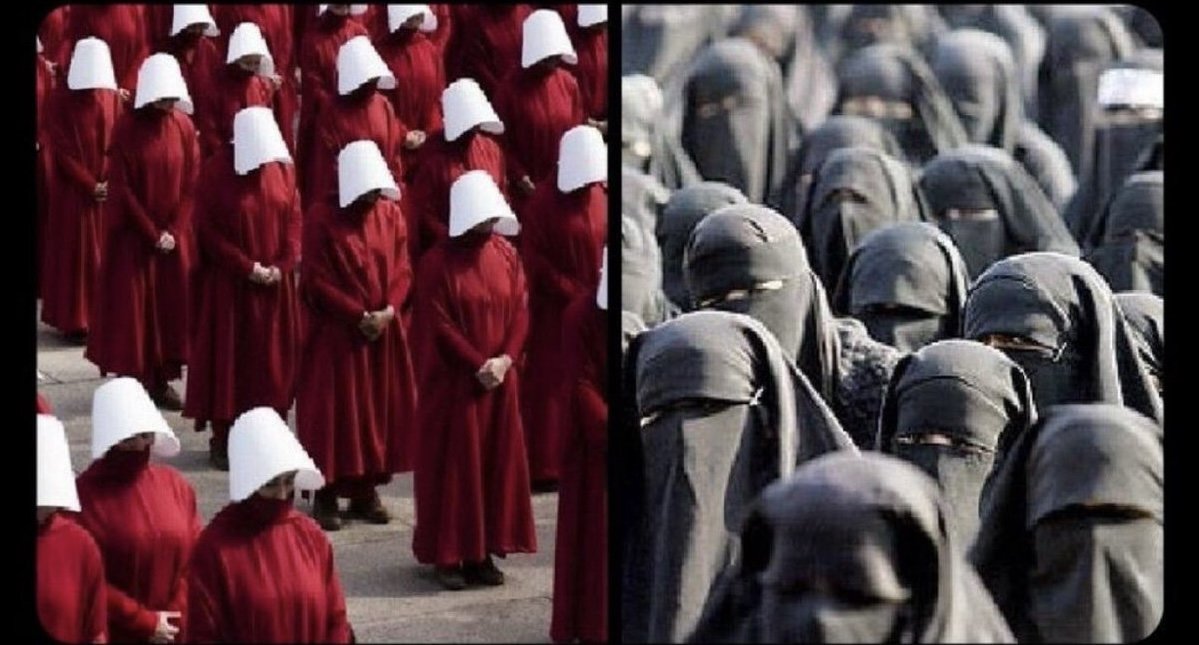
Radical feminists think they’re empowering women, until they’re forced into hijabs.
LGBTQ activists think they’re fighting for equality, until they’re thrown off rooftops.
Socialists think they’re creating utopia, until they find themselves living under the Caliphate.
Islam is not here to be anyone’s pawn. It is here to conquer. And the left, in its blind hatred of the West, is paving the way for its own destruction.
Germany’s censorship may have done more to promote Citizen Vigilante than any advertising campaign or guerrilla marketing ever could have achieved.
By refusing the film an official release, German authorities did not make the debate disappear. Quite the opposite. They made the film more interesting, more controversial, and far more visible to people who would otherwise never have watched it.
Originally, Citizen Vigilante was mainly about Europe’s inability to protect and defend itself: a continent paralyzed by submission, obedience to incompetent governments, and politically biased police forces. But the film has now become something larger as well: a free-speech issue against German and European censorship.
The hard and uncomfortable truth presented in the film does not fit the soft, woke worldview of those currently governing in Berlin. That is why they apparently preferred the movie to disappear quietly. The population was not supposed to talk even more about migrant violence. And they were certainly not supposed to talk even more about the incompetence of the left-leaning Merz government and the two-tier policing practiced by German police forces.
Instead, Germany achieved the exact opposite. It scored an own goal.
The film is set in Europe, but its central figure is an American fighter who confronts both criminal perpetrators and corrupt state and police representatives directly, with weapons, discipline, and decisive action. Some people have asked why the hero is not English, French, or German, given that the story takes place in Europe.
The answer is simple: it would not have been believable.
It would have felt false if a European protagonist had suddenly appeared out of nowhere as the hero. The Old World has long stopped producing credible heroes of this kind. It never had a Batman, and it certainly does not have a Citizen Vigilante.
Europe has spent decades breeding total passivity and complete obedience into its civil societies. Not noble pacifism, but paralyzed passivism. Submission. Subordination. Hesitation. A true Untertan mentality. A culture of waiting, complaining, complying, and ultimately accepting whatever the state decides to impose, even when it is irrational, destructive, and leads to cultural chaos and national decline.
The American Second Amendment reflects the idea that a free people must never be fully dependent on the state for their own security, and that an armed citizenry creates a final barrier against state tyranny.
Europe does not have this. And the European mind does not even comprehend it. Europeans have become obedient subjects, even when obedience leads to their own downfall. They behave like lemmings walking toward the cliff, one after another.
This is exactly the cultural background that makes Citizen Vigilante and its American main character so authentic and believable.
The protagonist is not a weak European shaped by woke state dependency, speech control, censorship, bureaucratic obedience, and disarmed submission. He comes from the New World, from a culture in which personal responsibility, suspicion of state power, armed self-defense, and direct action are still part of the national character.
In Europe, by contrast, not only have the people become far too passive and lethargic, but police forces have increasingly become political auxiliaries of left-wing politics. In countries like the UK, France, and Germany, the police often appear not as neutral protectors of law and order, but as instruments of political suppression, censorship, selective enforcement, two-tier policing, and helpers of an emerging police state in the spirit of Orwell’s 1984 and Big Brother.
And that is why the strong, tough American protagonist works. He represents a type of man Europe has long lost and almost forgotten: a man with backbone. Resolute, decisive, trained, willing to act, and unwilling to surrender to a collapsing system and a corrupt state.
He stands up. He pushes back. He resists. He says no. And beyond that, he acts. He fights. With full force and full determination. That is what makes him American, and that is exactly the type of character Citizen Vigilante needed.
That is also why Germany wanted silence. The authorities did not want people to see that they can stand up, rise, push back, resist, say no, and fight for their own future.
But instead of silence, Germany created attention. While Germany wanted control over the narrative, it created curiosity. Germany wanted to suppress the film, but in doing so, it may have awakened a sleeping giant. It may have turned Citizen Vigilante into a global free-speech story as a second storyline, beyond the issue of migrant crime.
And if @ElonMusk enters the discussion, this could become much bigger than Germany ever expected. Some in Berlin may soon say, “The spirits I called.” Perhaps it would have been wiser not to close their eyes to reality. Because now reality is catching up with Germany, not only on the screen, but already in the streets of Berlin and across the country. “Stadtbild,” as Merz once called it.
Uwe Boll’s film hits the mark because Europe is weak. It has forgotten how to act, how to defend itself, how to resist, and, most importantly, how to fight. Just as Europe did not want to fight in foreign policy, for example alongside the Americans against the Islamist regime in Iran, Europeans also do not want to fight domestically to take back their own countries.
They seem to have resigned inwardly. They seem to have given up. Partly because the demographic boomerang caused by catastrophic migration policy may have become too massive and perhaps already uncontrollable. And perhaps because it may already be too late to start fighting now.
The demographic pressure created by mass migration is enormous, while Europeans have almost nothing to put against it because of their own extremely weak birth rates.
Europe has therefore given up believing in reversal, let alone victory. It has forgotten that liberty is not preserved by bureaucrats, censors, politically biased police forces, and obedient citizens, but by people who still have the will, the courage, and the backbone to stand up and say no.
Europe has given up on itself.
Maybe things in Europe must become much worse before they can ever become better again.
Or maybe it is already too late for even that.
Citizen Vigilante or not.
“I do this for you until you learn to do it for yourself,” says the American lead character in Citizen Vigilante to the Europeans he is protecting. It is a sharp and memorable closing statement that captures the film’s core message.
Basically, the entire film only works because its central character is American. A German, French, or British protagonist in that role would have made the story feel false from the first scene. Europe has spent decades cultivating a culture of hesitation and submission. Citizens have been trained to wait, to doubt themselves, and to accept whatever restrictions, failures, or chaos the state imposes.
This is not noble restraint. It is a deep-seated habit of passivity and obedience that leaves people in Europe unable to imagine acting decisively against disorder or abuse of power. It also leaves them unable to rise up and resist regimes even when those regimes begin to turn tyrannical.
That Untertan mentality, that reflex of obedience to authority, is part of the darker socio-cultural DNA of Europe, and especially of Germany’s political history. “Just following orders” is not just a phrase. It is a warning about what happens in Europe when obedience replaces conscience.
The United States developed in the total opposite direction, largely because of the Second Amendment and the self-confidence of the American people toward Washington, D.C. That provision was never meant to be a narrow legal technicality. It was designed as a permanent structural limit on government authority.
An armed population was understood to be the final safeguard against a state that might one day turn against its own citizens. In America, this is not merely theory. Americans privately own roughly 500 million firearms, while the entire military and all law enforcement agencies combined possess only 5.5 million firearms. That makes it clear where ultimate power still resides: with the people, not the state.
Europe has no equivalent. Germany’s Article 20 paragraph 4 of the Basic Law offers, almost as an alibi, a weak theoretical right to resistance, but only under conditions so restrictive that the clause becomes almost useless in practice. It would likely apply only after the damage is already irreversible. Too little, too late, as so often in Europe.
This difference in civilizational outlook explains why the hero of the film had to come from America. The character is shaped by a culture that still values personal responsibility, armed self-reliance, and the willingness to confront threats directly rather than deferring to authority or process.
The same gap appears in military and police culture. The United States has maintained elite units and a broad respect for service for generations. Soldiers, police officers, the National Guard, and the Coast Guard are still viewed with pride when they truly protect and serve the people.
In much of Europe today, police forces are increasingly viewed as tools of political enforcement and selective suppression rather than neutral protectors of order. When officers prioritize censorship, speech restrictions, and biased enforcement over actual crime, they lose the moral standing that once came with the uniform.
An American protagonist fits this story because he operates from a different set of assumptions. He does not wait for permission or consensus. He acts when the situation demands it, and he is not afraid to resist state overreach, corrupt institutions, or officials who have abandoned justice. That is very much in the spirit of the American constitutional tradition.
The irony is that German authorities have now increased the film’s reach. By blocking the official release, they triggered exactly the kind of attention they wanted to avoid. This is a textbook Streisand effect.
What began as a mostly European discussion is now spreading to larger American X accounts and beyond. It would not be surprising if even @ElonMusk eventually comments on the case. Germany’s attempt to suppress the film has turned it into a wider free-speech issue.
In the end, the story illustrates a larger pattern. European societies in general, and many of their citizens in particular, have become remarkably passive in the face of rising disorder and institutional failure. Europe increasingly lets everything happen to it. Without real resistance. Without serious pushback.
The Old World seems to have forgotten how to defend itself and how to push back effectively. Whether that changes on its own, or whether the necessary impulse to resist must again come from the New World helping its origins one last time, remains to be seen.
Socialism was never a working-class movement.
It has always been a project of intellectuals: academics, writers, journalists, and professional theorists.
It appeals to those who prefer grand systems, simple moral narratives, and top-down control.
It flatters the belief that society should be redesigned by people who “know better,” giving intellectuals a starring role they don’t receive in a market economy.
In many ways, socialism is a luxury belief.
John Lennon wrote a beautiful song about socialism.
“Imagine no possessions” he told us.
He also:
– helped write his band’s anti-tax anthem, Taxman
– incorporated his IP holdings
– moved to a lower-tax country
– fiercely protected his royalties
- drove two Rolls Royce’s and had multiple luxury homes.
– made sure even the royalty cheques for Imagine were kept safe for his estate so his family would remain wealthy in perpetuity.
If he believed it, he’d have lived it. The trouble with socialism is that even the people who love the idea won’t run the experiment on themselves.
John Lennon writing Imagine while owning two Rolls Royce Phantoms and later having a law suit to protect his royalties tells you all you need to know about socialism in practice.
It doesn’t work outside of the imagination.