1/5
The conversation around Aeluma ($ALMU) has quietly shifted.
2024: Can the technology work?
2025: Can it be commercialized?
2026: Can it be manufactured at the scale the industry may actually need?
That's a very different question.
New article:
https://t.co/BnZNa6h3fA
China just handed investors the cleanest possible explanation for why $ALMU matters.
Reuters is now reporting that China’s control over indium phosphide exports threatens AI data center rollout.
That is not a small photonics footnote.
That is the optical supply chain becoming a geopolitical bottleneck.
For years, investors asked whether Aeluma’s technology works.
That is no longer the best question.
The better question is whether AI infrastructure can scale while relying on small, fragile, expensive, geopolitically exposed InP supply chains.
$ALMU is not interesting because it is “another photonics stock.”
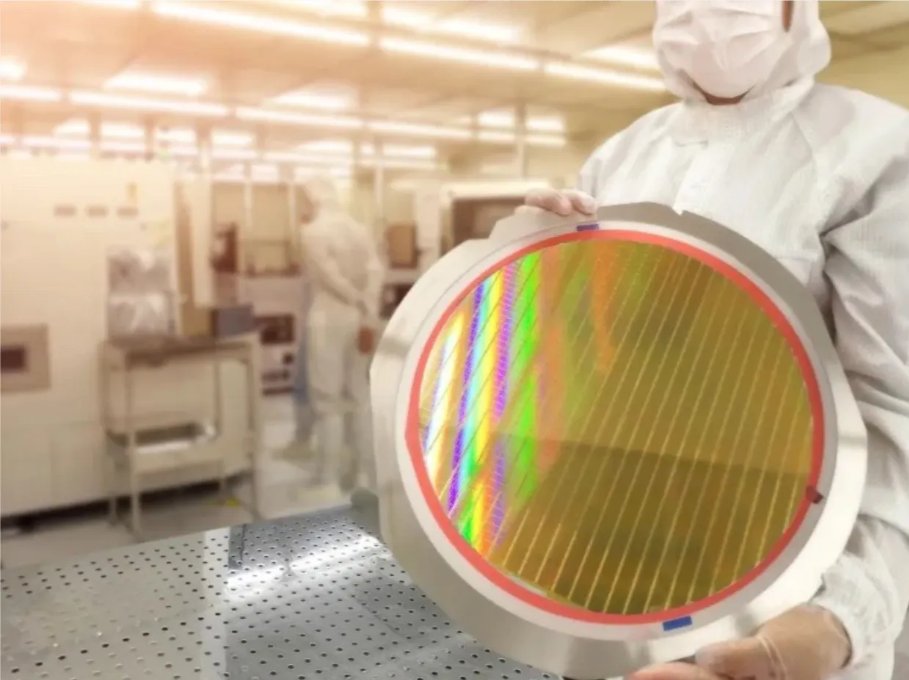
It is interesting because its entire architecture is built around bringing III-V semiconductor performance onto large-diameter silicon-compatible manufacturing platforms.
In plain English:
less dependence on traditional InP substrates,
more compatibility with silicon-scale manufacturing,
potentially better economics,
potentially better scalability.
Reuters says InP is now “gating” AI data center buildouts.
That word matters.
If a material bottleneck is gating the buildout, the market eventually hunts for alternative manufacturing architectures.
That is the $ALMU thesis.
Not guaranteed. Buy HIGHLY asymmetrical.
Still speculative.
Commercialization risk remains enormous.
But the setup is becoming very clear:
AI needs optics.
Optics need InP.
InP is constrained.
$ALMU is trying to change the manufacturing architecture underneath the whole problem.
That is why I keep calling this a manufacturing story, not just a photonics story.
Reuters link:
https://t.co/PDzvBAubxh
$ALMU #Photonics #AIInfrastructure #Semiconductors #SiliconPhotonics
Every major technology cycle eventually discovers its bottleneck.
The market spent the last two years focused on GPUs.
The next few years may be about power, packaging, photonics, and manufacturing.
That's where I'm spending my research time.
$ALMU
This Reuters article may be one of the most important photonics stories of the year.
Not because of what it says about optical devices.
Because of what it says about manufacturing bottlenecks.
https://t.co/25VQlnGfb3
This doesn't eliminate risk.
Commercialization risk remains.
Qualification risk remains.
Execution risk remains.
But today's Reuters article moves the discussion one step away from device performance and one step closer to manufacturing scalability.
That's a favorable shift for $ALMU.
If AI infrastructure becomes constrained by InP substrate availability, foundry portability, qualification throughput, packaging complexity, or optical manufacturing capacity, value may accrue very differently than most current models assume.
$ALMU is one of the few public companies directly pursuing that thesis.
Most investors still view $ALMU as a photonics company.
I increasingly view it as a manufacturing company.
The question isn't whether the devices work.
The question is whether the manufacturing architecture scales.
The Reuters article isn't saying photonics demand is slowing.
It's saying the opposite.
Demand is accelerating so quickly that substrate availability is becoming a strategic constraint.
That's exactly the environment where alternative manufacturing approaches become valuable.
$ALMU
This is why $ALMU has my attention.
While much of the optical industry remains dependent on traditional InP supply chains, Aeluma's approach is built around integrating III-V semiconductors onto large-diameter silicon wafers using CMOS-compatible manufacturing.
Different architecture. Different supply chain profile.
The most important sentence in the article:
"InP is one of several supply chain bottlenecks collectively gating AI data centre buildouts."
Not affecting.
Not influencing.
Gating.
That's a very different conversation.
According to the article:
• China controls ~70% of global indium production
• AXT and Sumitomo account for ~80% of InP substrate manufacturing
• InP wafer prices have surged
• Export permits remain constrained
• Capacity expansion takes years
That is the definition of a bottleneck.
For years, investors have focused on whether photonics could outperform copper.
That debate is largely over.
The new question is whether the optical supply chain can scale fast enough to support AI infrastructure demand.
Reuters is now reporting that Indium Phosphide (InP) has become a strategic constraint.
Good analysis. The most important point may not be that gedatolisib succeeded, but that the market now has stronger evidence that deep PI3K/mTOR pathway inhibition can produce meaningful clinical benefit in breast cancer.
The question that increasingly interests me is how much of Celcuity's success should be attributed to pathway validation versus molecule-specific attributes such as dosing, tolerability, pharmacokinetics, and trial design.
If investors conclude biology is doing most of the work, the implications for other well-designed PI3K/mTOR programs could be significant. If they conclude the result is primarily molecule-specific, the read-through is much narrower.
How do you think investors should think about that balance?
The key distinction is content growth vs value capture. A 30x increase in power semiconductor content does not automatically create a 30x increase in shareholder value. The real question is which suppliers possess pricing power, technological bottlenecks, and manufacturing constraints. Content is a starting point. Economics is the finish line.
Investors keep asking:
"Who has the best device?"
The better question is:
"Who enables deployment at scale?"
Historically, that's where value migrates.
Capability gets rewarded first.
Scalability gets rewarded later.
Usually very fast.
Part 2 explores where the physical layer breaks—and who may benefit when it does.
https://t.co/3Fx6vgnIpA
#AIInfrastructure #Photonics #Semiconductors #SiliconPhotonics #CPO #LiDAR
Everyone is still staring at GPUs and AI chips.
I think the bottleneck has already moved.
The next constraint isn't compute.
It's packaging, manufacturing portability, and ecosystem orchestration.
Here's a thesis the market may be missing:
https://t.co/wR2ed9iOnS
The same underlying constraints are beginning to appear across multiple markets simultaneously:
• AI datacenter optics
• Co-packaged optics (CPO)
• Optical interconnects
• LiDAR and autonomy platforms
Different markets.
Similar manufacturing challenges.
This isn't a capacity problem.
It's an orchestration problem.
Materials.
Foundries.
Packaging.
Testing.
Qualification.
Deployment.
The ecosystem only scales when all of them scale together.
Packaging is where promising photonics technologies quietly go to die.
Alignment that works in a lab fails at volume.
Thermal budgets collapse next to 1000W accelerators.
Test infrastructure struggles to keep up.
The challenge isn't invention.
It's repeatability.
Most investors still view AI as a compute story.
That's increasingly incomplete.
The harder problem isn't generating photons.
It's moving, packaging, aligning, testing, qualifying, and manufacturing them at scale.
The bottleneck is becoming operational.
Everyone talks about silicon photonics. Almost nobody talks about fiber attach, thermal management, test, yield, and field reliability. That's where technologies usually go to die. The winner won't be whoever demonstrates the best photonic engine. It'll be whoever can manufacture and deploy millions of them economically.