Director, Regional Studies Center (RSC),
think tank in Yerevan, Armenia; former US Senate staffer (Democrat); former lecturer, US Army Special Forces; RI native
Thousands of Albanians rallied in the capital, Tirana, against a luxury tourism project linked to Jared Kushner [@jaredkushner], son-in-law of U.S. President Donald Trump [@POTUS], over fears it could harm protected coastal habitats in the country’s south.
This week is the 37th anniversary of the June 4 crackdown in Beijing.
We had a big development in the available evidence on the violence since last year: the trial video of General Xu Qinxian leaked.
I wrote about the video for @WarOnTheRocks here:
https://t.co/hQ3o0WmwbE
My colleagues at the @dossier_center have obtained a large internal leak from a Moscow company called the Social Design Agency, or SDA.
It is run by a political operative named Ilya Gambashidze, the Kremlin is contracting him to manufacture scandals.
[2/19]
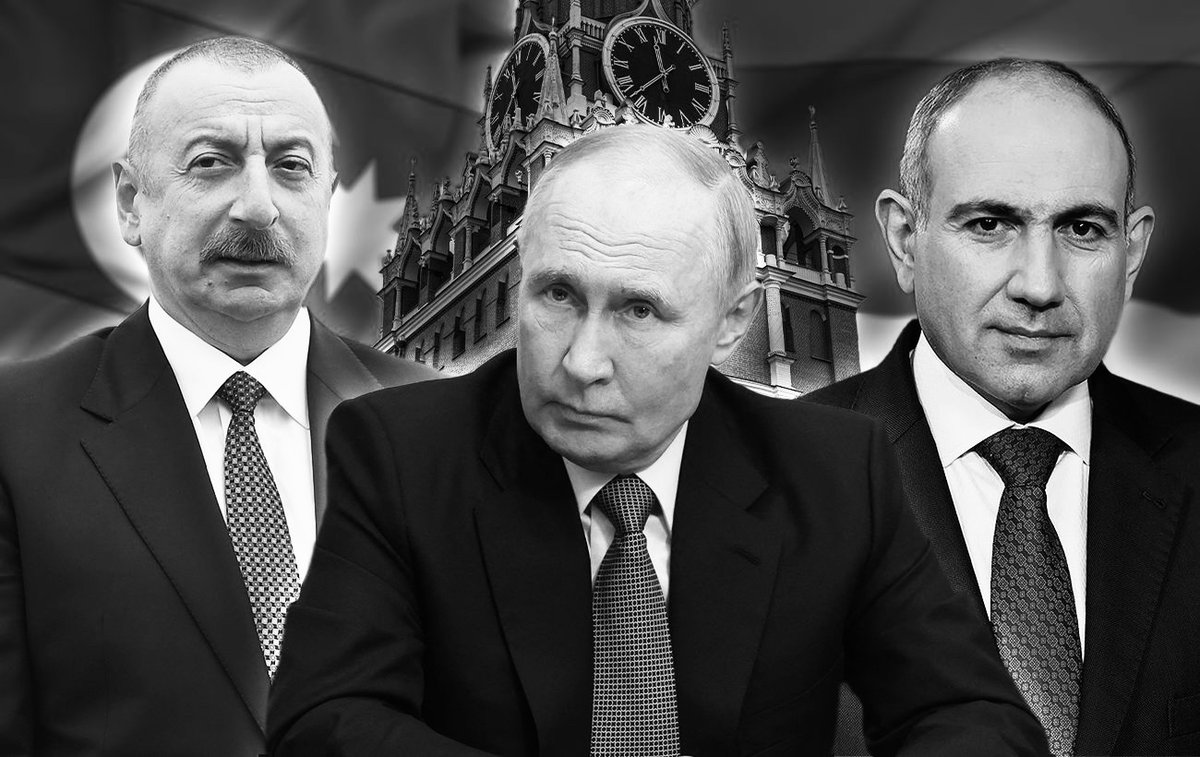
Russia's biggest battle right now is Armenia.
Russia has already lost elections in Romania, Moldova, and Hungary, and is now losing in Armenia. If it loses Armenia, Georgia will likely be next. Turkey is watching closely.
Russia is now doing everything it can to pull Armenia back into its orbit. Following its defeat in Karabakh and the effective collapse of Russian security guarantees, Yerevan began dismantling the system of dependencies that Moscow had spent decades building. Armenia froze its participation in the CSTO, openly questioned Russia's role as a security guarantor, expanded cooperation with France, India, the United States, and the European Union, and began searching for alternative sources of military support and economic ties.
In response, Moscow launched a comprehensive pressure campaign aimed at making any attempt to leave Russia's orbit as costly as possible.
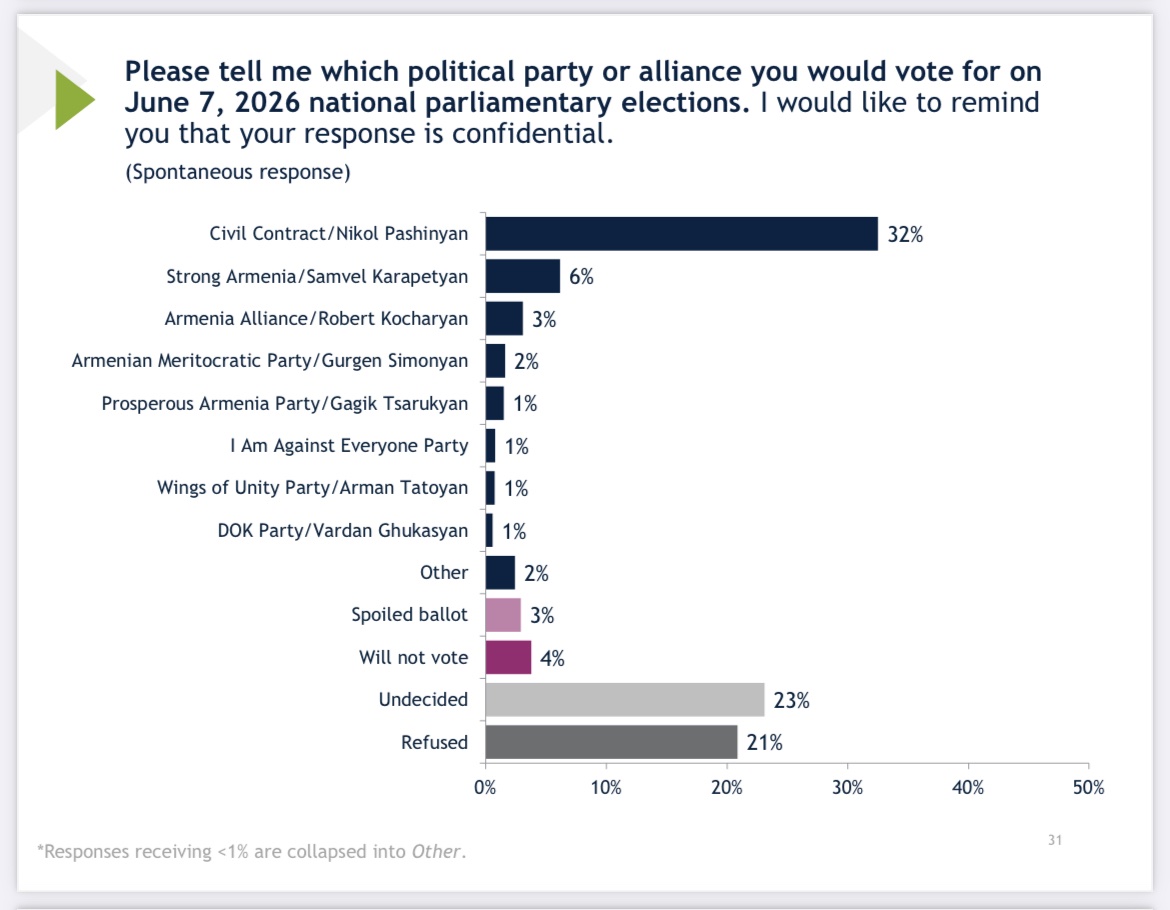
An investigation by the Dossier Center indicates that the Kremlin has been attempting to directly influence Armenia's domestic politics. This is not about supporting a single candidate but about building an entire anti-government infrastructure. Russian political strategists worked on projects associated with Samvel Karapetyan and Arman Tatoyan. At the same time, they deliberately avoided openly pro-Russian rhetoric. Instead, they promoted messages about "pragmatism," the need to take the Russian factor into account, and the alleged impossibility of Armenia's survival without cooperation with Moscow.
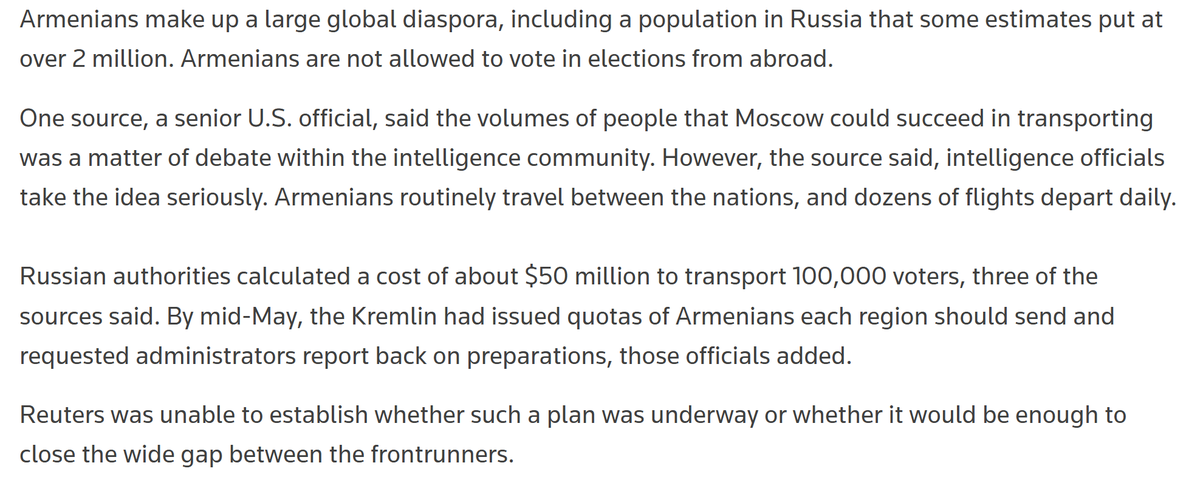
In parallel, the Kremlin intensified its information operations. According to Reuters and researchers tracking influence campaigns, Russia-linked networks created fake news websites, spread disinformation through social media, and coordinated campaigns against the government of PM Nikol Pashinyan.
The same familiar narratives were used: corruption, dictatorship, persecution of the Armenian Apostolic Church, "external control" by the West, and betrayal of national interests. The defining feature of these campaigns is that they do not promote any specific vision of the future. Their goal is to undermine trust in state institutions and create a sense of hopelessness.
A separate tool was economic pressure. Ahead of the elections, Russia began blocking or restricting Armenian exports to its market. Restrictions affected Jermuk mineral water, alcoholic beverages, flowers, vegetables, strawberries, and other products. Formally, the justification cited sanitary or technical violations. In reality, the Kremlin was demonstrating that any political distancing from Moscow could carry direct economic consequences for Armenian producers and exporters.
Energy remains another major lever. Russia controls most gas supplies to Armenia and regularly reminds Yerevan of this dependence. Fortunately, it is currently summer, and Armenia still has time before winter to address its reliance on Russian gas.
At the same time, Russian officials and representatives of the Eurasian Economic Union have warned of potential economic losses if Armenia continues to distance itself from Russian-led integration structures.
In this way, the Kremlin presents a simple choice: dependence on Russia or economic hardship.
Security blackmail is no less important. After its failure in Karabakh, Moscow lost the ability to convincingly present itself as an effective security guarantor. As a result, the emphasis shifted. Armenia is no longer offered protection; it is offered fear.
The Russian message is simple: perhaps we failed to protect you, but without us things will be even more dangerous. That is why Russian narratives constantly focus on the threat of a new war, regional instability, and external dangers.
Importantly, all of these tools function as a single system. Political interference is reinforced by information operations. Information operations are reinforced by economic pressure. Economic pressure is reinforced by security threats.
The Kremlin is trying to create an environment for Armenia in which any step toward greater independence will seem dangerous and too costly.
That is why the current struggle over Armenia is not a conflict between Russia and the West. It is a conflict between Armenia's desire to make its own decisions and the Kremlin's determination to preserve its mechanisms of control over the country.
The @SecWar recently blocked the promotions of at least seven @USNavy captains to admiral. Two of those seven were women, and two Black men.
https://t.co/ucwj8eS4WY @GregJaffe
“Around 2,000 U.S. diplomats have left the Foreign Service over the last year, either through layoffs or forced retirements, taking with them decades of institutional knowledge, experience in crisis response & highly specialized language skills paid for by the U.S. government” https://t.co/P3prE2fvJ1
Follow the money on this one. It is rotten to the core.
The Pentagon just lent $620,000,000 to a tiny North Carolina startup called Vulcan Elements. The company is two years old.
It had fewer than 50 employees.
And three months before the deal was announced, Donald Trump Jr.’s venture firm quietly took a stake in it.
Here is the part the administration tried to bury.
Of the dozens of companies the Pentagon was weighing, Vulcan was the only deal initiated by a top White House aide. That aide was Peter Navarro, a close friend of Trump Jr. The order came down to move fast.
One official put it plainly: The call came from the White House. We have to get this done.
Staff worked late nights to push it through in weeks. Deals like this normally take many months of vetting. And when it closed, Vulcan’s valuation jumped from about 200 million dollars to roughly 2 billion.
A windfall for the investors, including the president’s son.
This is public money. Your money.
Routed through the Pentagon to enrich the president’s family and their friends. The Bush administration’s own chief ethics lawyer called it corruption we pay for.
And there is more coming.
A drone parts company Trump Jr. holds a stake in is also under Pentagon review.
This is not a one-off. It is a pattern. The president’s family is treating the federal Treasury like a private bank, and the bill lands on every taxpayer.
https://t.co/4kB1cZNmlE
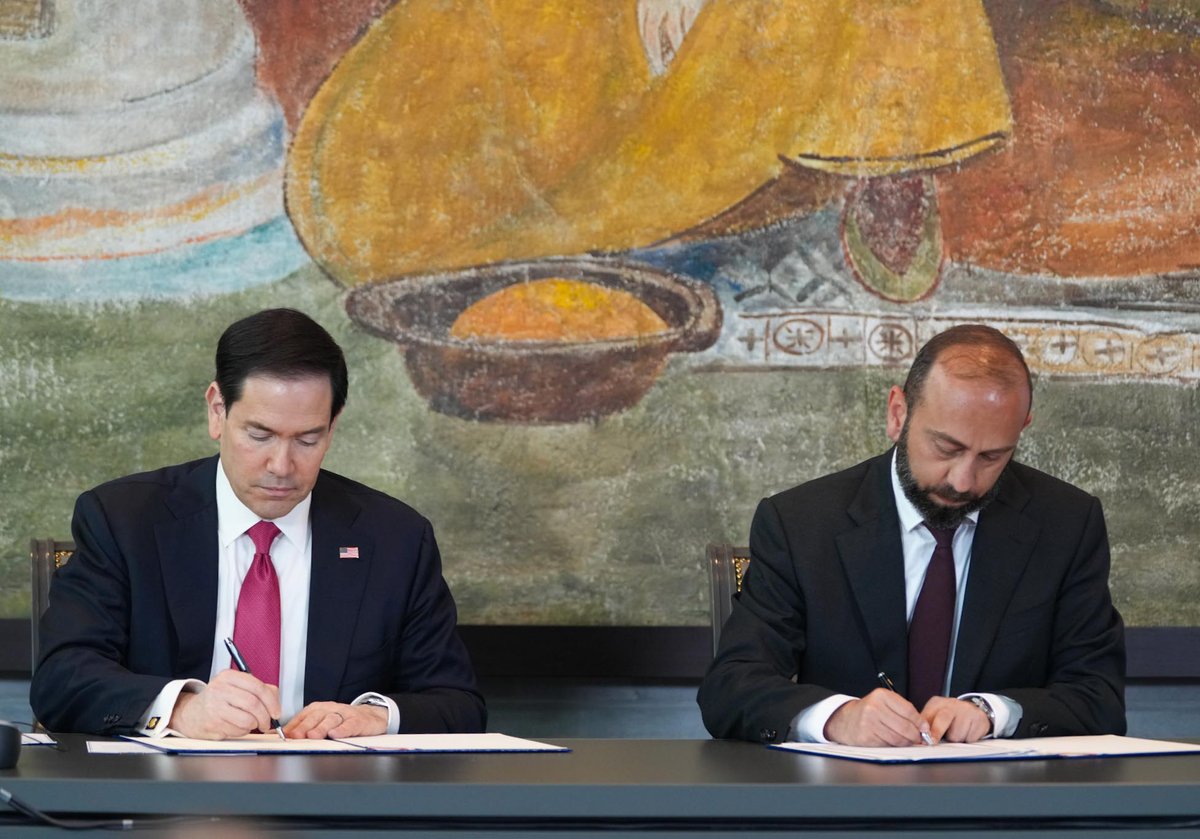
Today in Yerevan, Armenian Foreign Minister @AraratMirzoyan and I announced a bilateral framework agreement on the Trump Route for International Peace and Prosperity (TRIPP) and signed a Strategic Partnership Charter and MOU on Critical Minerals, furthering the goals established during @POTUS’s historic peace summit between Armenia and Azerbaijan. We also discussed the peace process and Armenia’s upcoming elections.
📌@TheEconomist’in CHP’ye yönelik “mutlak butlan” kararını ve Türkiye’de muhalefetin daralan siyasal alanını ele aldığı analizine katkı sundum.
Yorumumda da vurguladığım gibi, bu süreç CHP’yi kısa vadede zayıflatmanın çok ötesinde, muhalefeti bölerek, iç çekişmeye hapsederek ve seçim kazanma kapasitesini yapısal olarak törpüleyerek siyasal rekabeti fiilen ortadan kaldırma girişimi.
Türkiye’de otoriterleşme artık yeni bir safhada, seçimlerin anlamı, muhalefetin meşruiyeti ve iktidar alternatifi olma gücü sistematik olarak yeniden tanımlanıyor.
https://t.co/A07iArvhmq
Turkey’s president has already squeezed much of the life out of his country’s democracy. At this rate, Turks may soon have no genuine opposition to vote for https://t.co/Bnm2qvtufp
Photo: Getty Images
Türkiye’s Ministry of Trade announced that Armenia will henceforth be recorded as the terminal country in Turkish export declarations.
Until now, because goods physically crossed the Turkish-Georgian border, they were often labeled as exports to Georgia.
T
his was a labeling issue rather than an absence of trade, because Turkish companies were already exporting to Armenia, although the official data did not capture it.
The change is modest but meaningful: it is one of the most concrete outcomes of the diplomatic normalization process that has been underway since 2022.
A Turkish court removed the leader of the country’s main opposition party in a landmark ruling that could strengthen President Recep Tayyip Erdogan’s grip on power while risking political unrest and renewed market turmoil https://t.co/3uuljxGVBi
Turkish state lenders sold about $6 billion to defend the lira on Thursday, about half shortly after a court decision that removed the main opposition party’s leadership, according to traders familiar with the transactions. https://t.co/Iqafn3xBYa
On top of this, bank accounts of 18 people, including jailed Istanbul mayor Ekrem Imamoglu’s son, have been frozen. All this is happening as Turkey’s finance minister Mehmet Simsek is in London trying to convince investors that Turkey is a safe place to put their money.
Grabbing him by the “Beard”: The Insider identifies the FSB, GRU, and SVR agents Russia sent to Armenia to take on PM Nikol Pashinyan — The Insider https://t.co/IqH0MY1TWU
L’Institut kurde de Paris et l’Institut - Musée Komitas ont le plaisir de vous inviter à une conférence sur
« Komitas et la musique kurde »
le vendredi 29 mai 2026 à 18h00 à l’Auditorium de l’Hôtel de Ville de Paris.
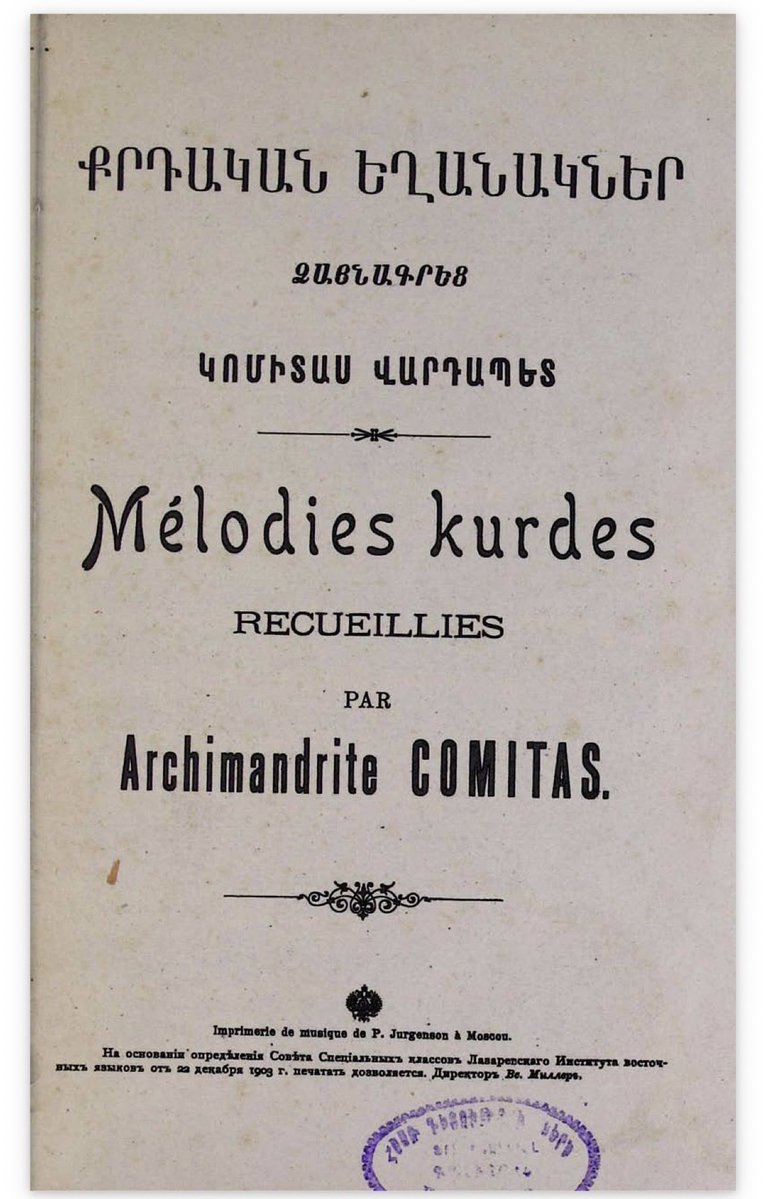
Au cours de ses longs voyages en Orient, parallèlement à son immense travail de collecte et de préservation du patrimoine musical populaire et classique arménien, le père Komitas recueillit treize chants populaires kurdes.
En retranscrivant ces mélodies populaires, le père Komitas adopta une approche particulièrement rigoureuse et sensible. En respectant fidèlement la structure mélodique kurde, il parvint à restituer une forme musicale authentique, préservée des superpositions et des influences des cultures voisines.
Ces transcriptions furent publiées pour la première fois en décembre 1903 par la maison d’édition P. Jurgenson à Moscou, sous l’égide de l’Institut Lazarev.
Longtemps négligé, ce travail constitue pourtant un témoignage précieux et un jalon essentiel pour une première approche de la musique kurde, mais aussi une source d’étude sérieuse pour mieux comprendre les liens musicaux et culturels entre les peuples de la région.
La conférence a pour objet d’explorer les liens et les échanges entre musiques populaires arménienne et kurde.
Vous pourrez également visiter dans le foyer de l’auditorium l’exposition collective éphémère des artistes arméniens Gago, Arman Tadevosyan et Herminé Demiro.
Entrée libre dans la mesure des places disponibles.
Inscription obligatoire : https://t.co/HYojZc688s
@KomitasMuseum








![khodorkovsky_en's tweet photo. My colleagues at the @dossier_center have obtained a large internal leak from a Moscow company called the Social Design Agency, or SDA.
It is run by a political operative named Ilya Gambashidze, the Kremlin is contracting him to manufacture scandals.
[2/19] https://t.co/qFXP3MsCUL](https://pbs.twimg.com/media/HJ0tTotWwAAba4i.jpg)