Building self-improving superintelligence
CEO @recursive_si and @youdotcom
MP @aixventuresHQ
Ex: Stanford Adj Prof, Chief Scientist at Salesforce, CEO MetaMind
Introducing Knowledge: the first web search API that returns licensed real-time data alongside web results.
Prices, rates, odds, weather, scores, company and government info. The data that lives behind licensed feeds and databases instead of on crawlable pages.
Now available through @youdotcom Web Search at ZERO additional cost.
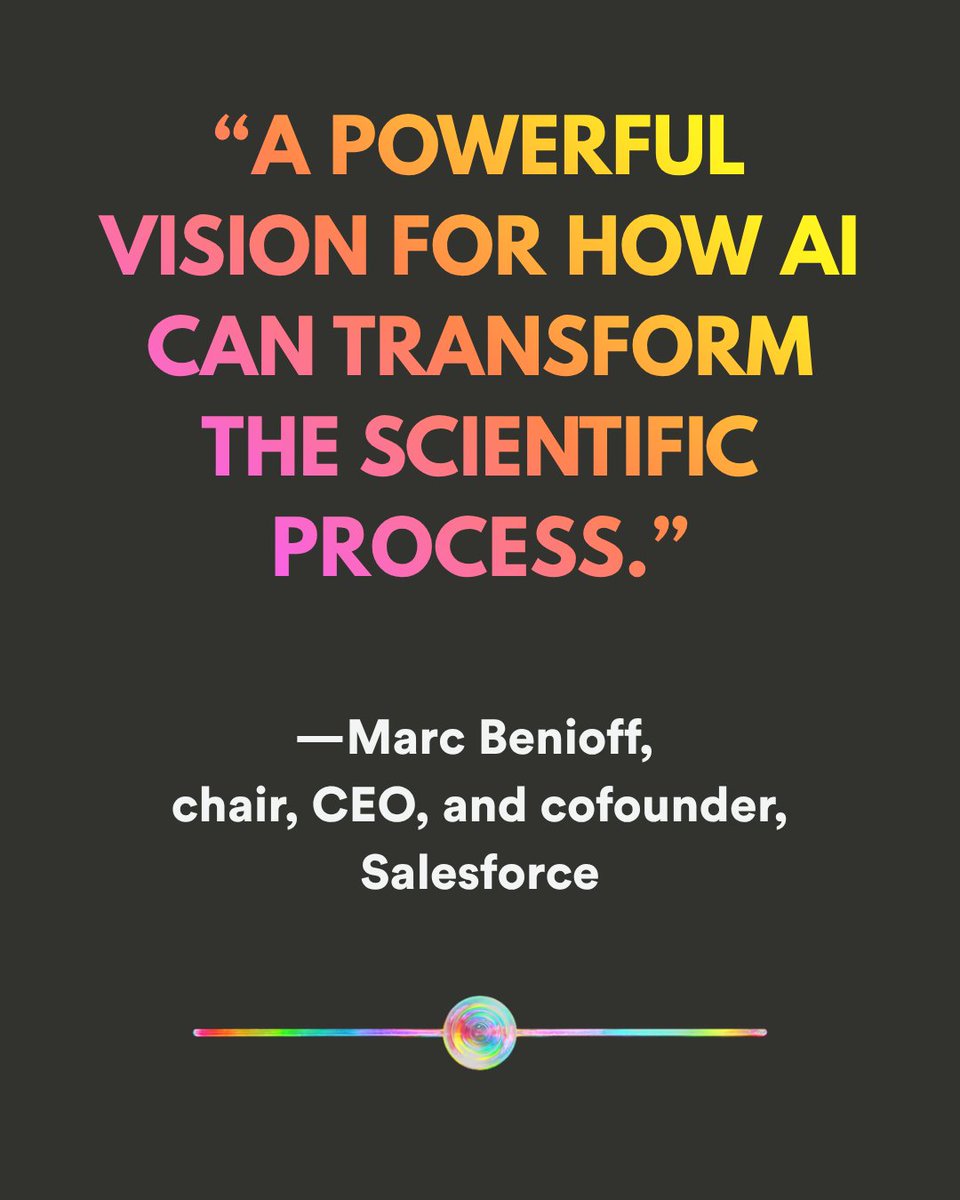
This book is excellent! @RichardSocher was kind enough to share an early copy with me... I truly enjoyed the walk down the memory lane! And I am sure the ML practitioners of my generation will equally enjoy it!
And as you can imagine the forward looking part is also well reasoned and motivating (and timely...). Y'all should read this.
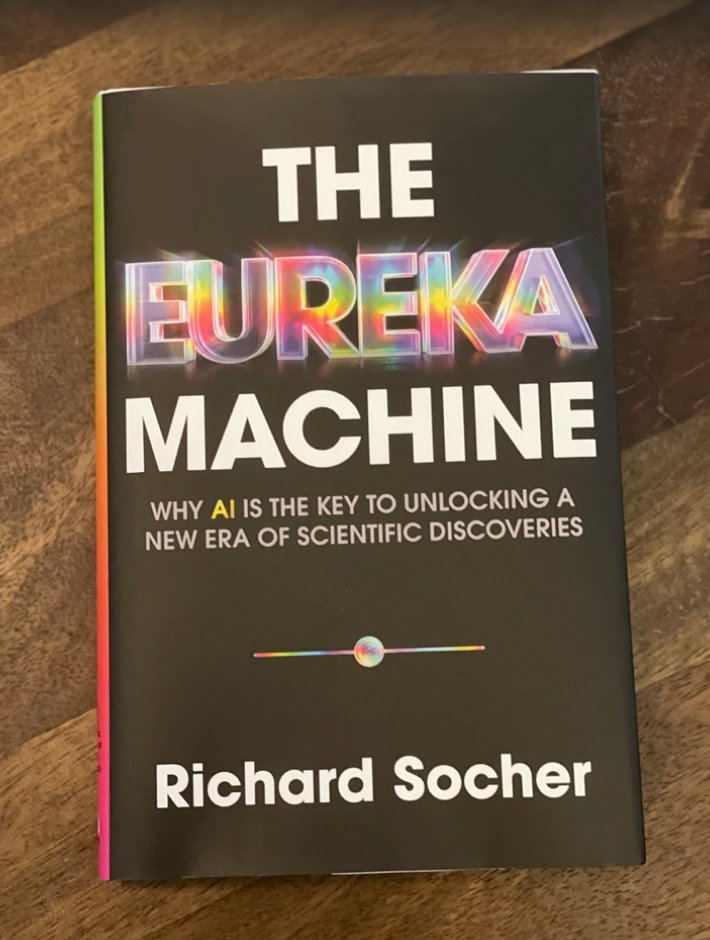
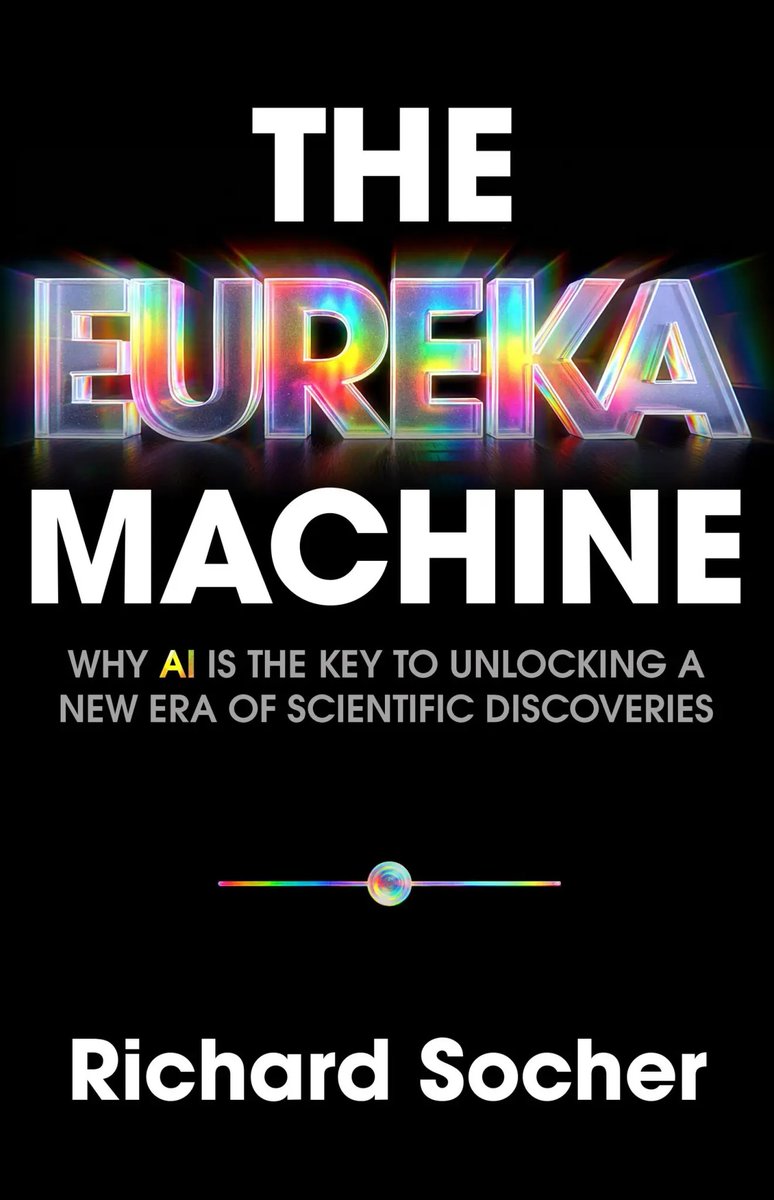
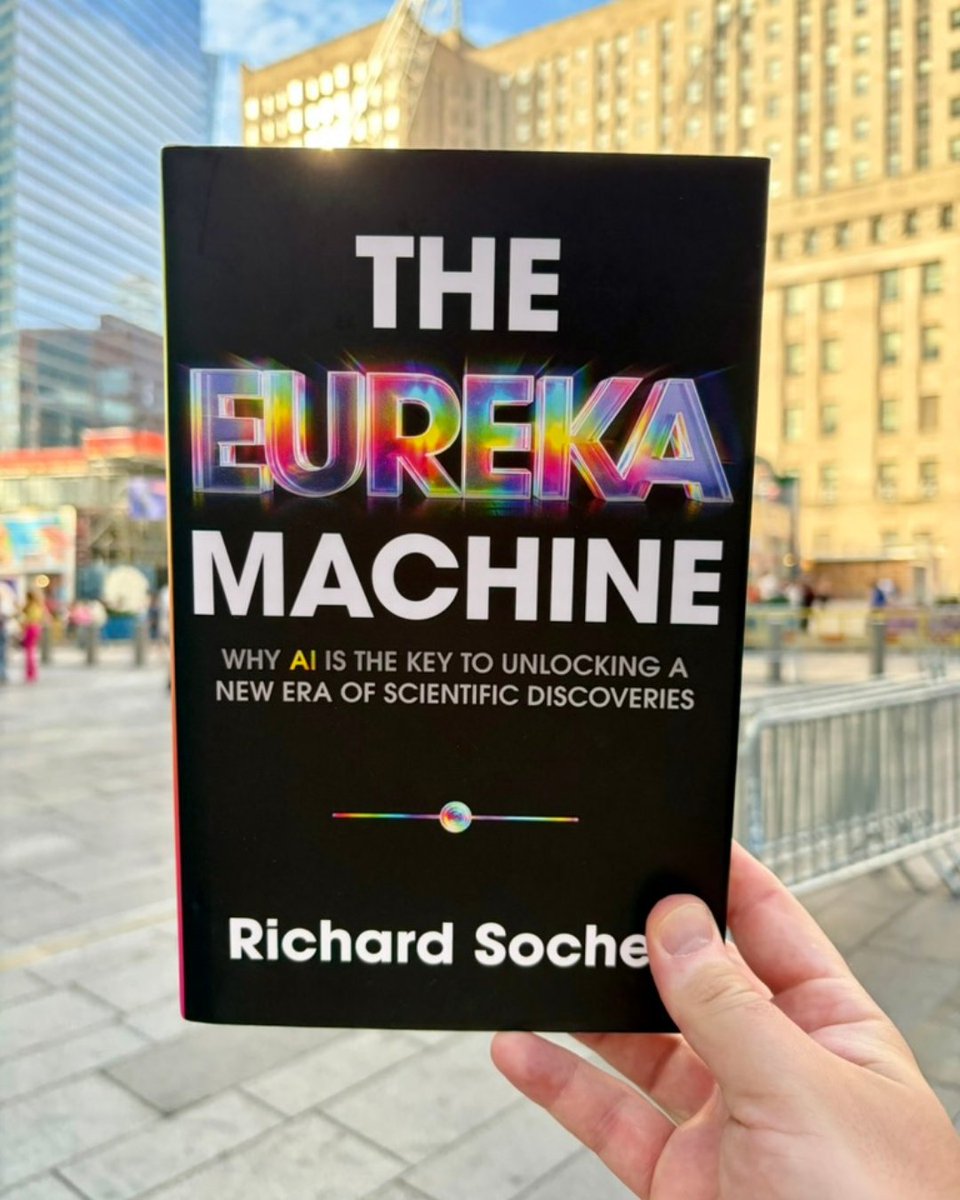
@brian_armstrong That's right. I mention your and @jacobkimmel et al's work at NewLimit in my book that came out this week. The Eureka Machine - about a new era of scientific discovery ushered in by AI.
Trying to understand where we are and where we're headed with AI, for real?
Reading a book by a deeply technical AI researcher who is a proven operator and prolific investor in the space is a can't go wrong choice.
I don't know about you but I'm always looking to those with a track record of inventing and pulling the future forward to understand where we are and where we're headed.
"The Eureka Machine" by @RichardSocher 👇👇👇
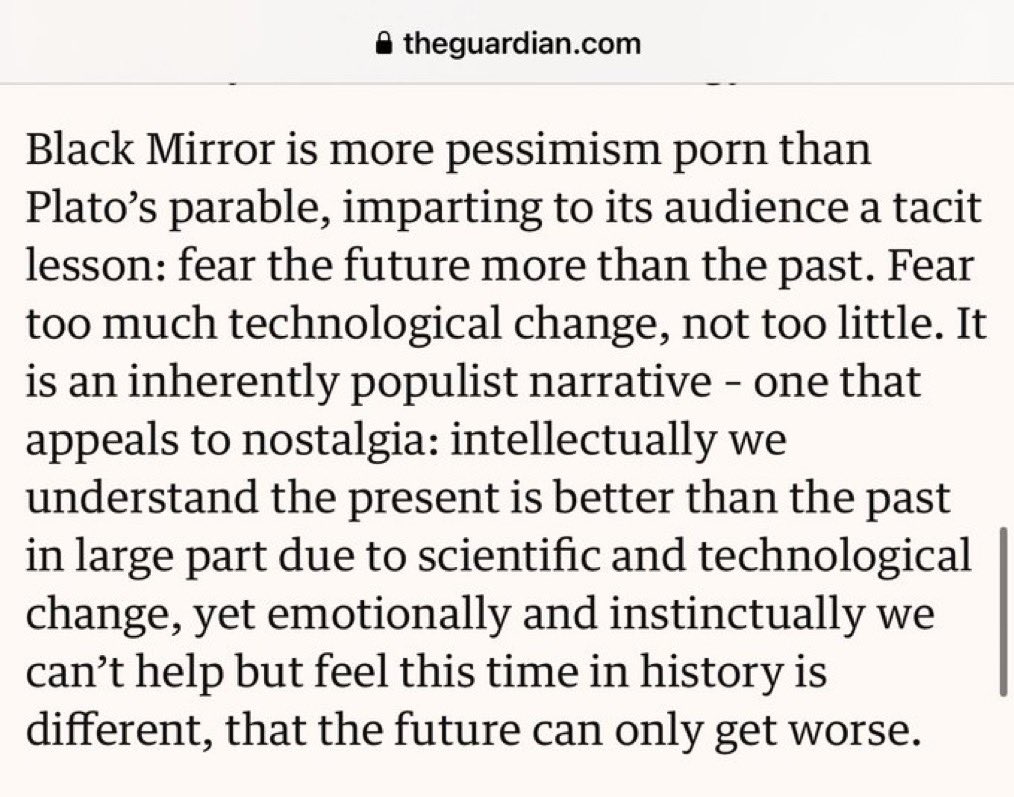
We must resist the Frankenstein Fallacy:
“intellectually we understand the present is better than the past in large part due to scientific and technological change, yet emotionally & instinctually we can't help but feel this time in history is different” https://t.co/ksIpI90tOn
@elonmusk@fchollet That's what my book is about that came out today. The Eureka Machine, where I explain how to build such an invention generating AI system and show that we're already making progress towards it.
https://t.co/TOdiVDkolY
AI moves so fast that I thought this book was going to be a year too late. It turns out it's right on time.
While I was writing, I kept having to change chapters from "someone should do this" to "someone has done this," and then go talk to the people who had done it. A good example is the chapter on virtual cells. I'd written that we needed large initiatives to build one. By the time I finished, I was writing about the ones that exist — the Chan Zuckerberg Initiative's is now the largest and best-funded push to model a human cell.
The Eureka Machine is out today.
It's about building a full-stack scientific superintelligence: a living map of human knowledge, a model of physical reality, high-fidelity simulations, autonomous labs, and an agent swarm of AI scientists on top. There's no better science to start with than the science of AI itself, because that's where the feedback loop is tightest. Then you expand the aperture to physics, chemistry, and especially pre-clinical biology.
This will be the most meaningful application of AI, and one of the most important things humanity does. And it may be the last organic invention we need to make. After that, it starts inventing everything else for us to solve our most pressing problems.
While writing, I couldn't let the idea go. Eight of us started @Recursive_SI to go build it.
AI is going to massively accelerate science, and unlike most of what gets argued about right now, that isn't zero sum.
I hope you all enjoy the book. I look forward to discussing it with you all.
> Es macht keinen Sinn Krebspatienten gehen Wissenschaftler aufzuwiegen.
Genau, das genau passiert aber wenn Dir der Fortschritt in einer Industrie weniger wichtig ist also die Jobs in dieser Industrie.
Perspektivlosigkeit ist ein Phaenomen wenn man nicht mehr an der Zukunft arbeiten will und nur noch den Status Quo und die momentane Arbeit genau so beibehalten will, nichts veraendern will . Das ist eine Einstellung die dazu fuehrt, dass das ganze Land immer weiter zurueckfaellt. Perspektive und Hoffnung kommen wenn man aktiv an etwas arbeitet und einen konstruktiven Optimismus ins Land bringt.
Re KI-Tschernobyl
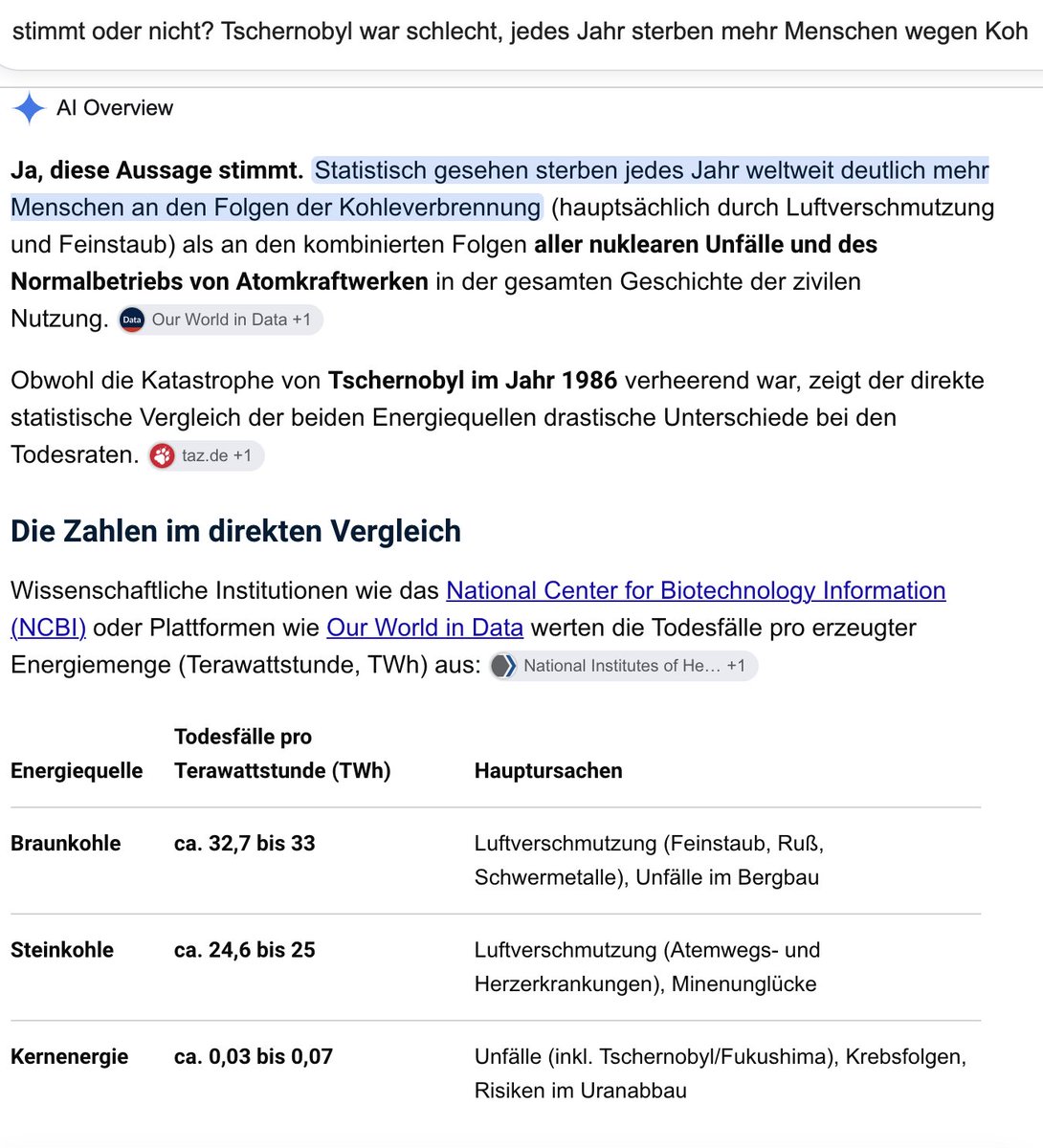
Tschernobyl war schlecht. Jedes Jahr sterben aber mehr Menschen wegen Kohle als in allen Jahren von der zivilen Nuklearenergie in deren gesamten Geschichte (inkl Tschernobyl und Fukushima etc)! So aehnlich kann das auch mit der KI passieren. Panik, keine Ahnung der Statistik und der vielen positiven Auswirkungen einer neuen Technologie. Lieber viele Menschen sterben von Kohle also weiter Nuklearenergie besser und sicherer zu machen.. Der Status Quo der Welt ist momentan suboptimal und wir koennen uns muessen in vaeraendern!
AI moves so fast that I thought this book was going to be a year too late. It turns out it's right on time.
While I was writing, I kept having to change chapters from "someone should do this" to "someone has done this," and then go talk to the people who had done it. A good example is the chapter on virtual cells. I'd written that we needed large initiatives to build one. By the time I finished, I was writing about the ones that exist — the Chan Zuckerberg Initiative's is now the largest and best-funded push to model a human cell.
The Eureka Machine is out today.
It's about building a full-stack scientific superintelligence: a living map of human knowledge, a model of physical reality, high-fidelity simulations, autonomous labs, and an agent swarm of AI scientists on top. There's no better science to start with than the science of AI itself, because that's where the feedback loop is tightest. Then you expand the aperture to physics, chemistry, and especially pre-clinical biology.
This will be the most meaningful application of AI, and one of the most important things humanity does. And it may be the last organic invention we need to make. After that, it starts inventing everything else for us to solve our most pressing problems.
While writing, I couldn't let the idea go. Eight of us started @Recursive_SI to go build it.
AI is going to massively accelerate science, and unlike most of what gets argued about right now, that isn't zero sum.
I hope you all enjoy the book. I look forward to discussing it with you all.
Research. Pay. Trade. Your agent can now do all three in one loop.
We teamed up with @coinbase for their agent launch. A few minutes before the market opens, your agent pulls the latest financial news from @youdotcom, pays for deeper data with x402, and trades on what it just found.
Fresh, sourced information every morning, on repeat.
Alle guten Forscher wollen produktiver sein.
Stell dir vor du sagst einem krebspatienten dass es nicht darum ging Krebs schnell zu heilen sondern Krebs Forscher mit großen Träumen zu bezahlen.
Wow.
Du sagst damit also dass die momentanen Jobs wichtiger sind als Leben von Menschen. Deutschland hat historisches Glück, dass wir in der Vergangenheit nicht die Kutscherjobs und Pferdehalterjobs etc behalten wollten statt Autos zu bauen.
Deine Frage wird in Deutschland oft gestellt. Wie können wir alles so lassen wie es momentan ist um ja keinen Fortschritt und keine Veränderung zu haben?
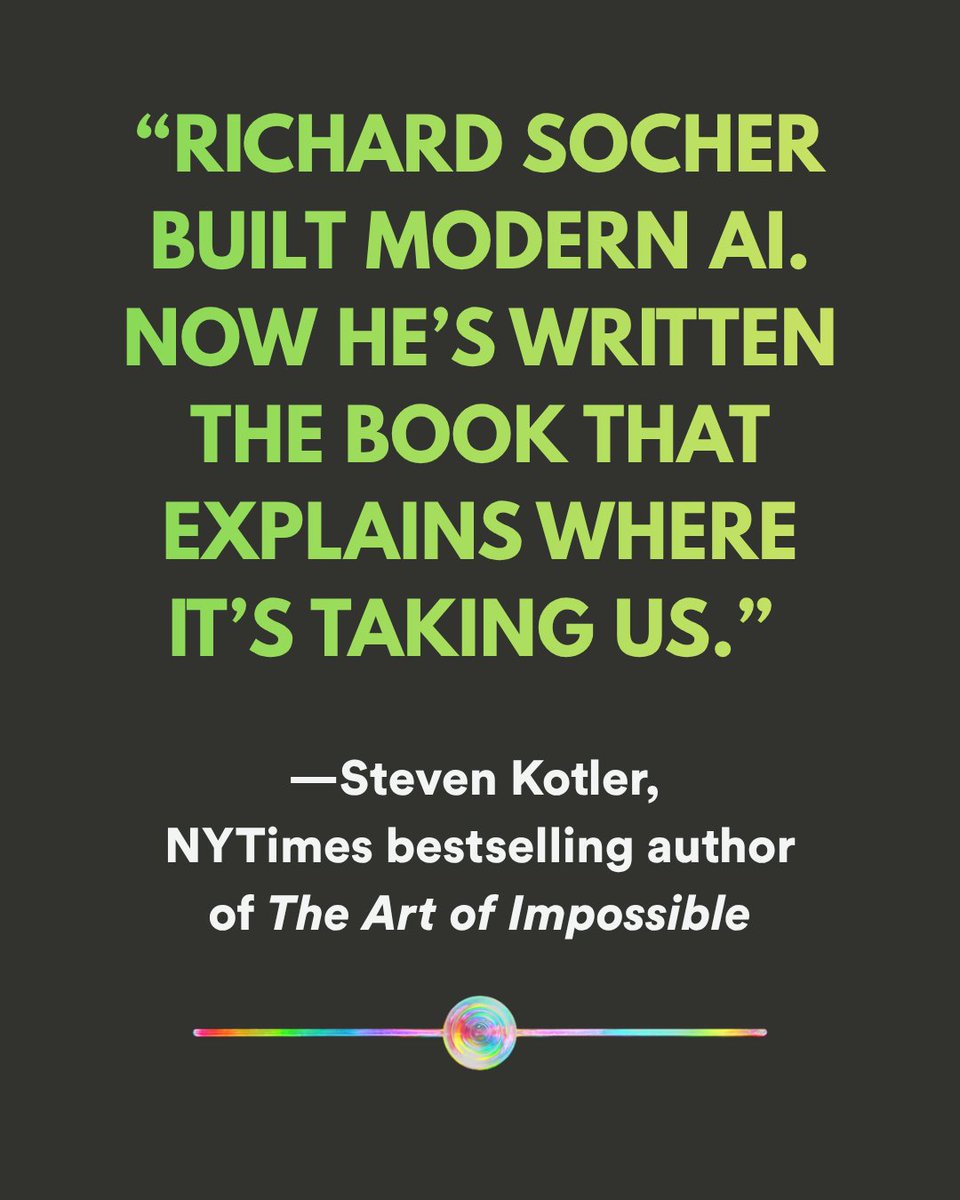
I read this in draft. Highly recommend. We hear all the time AI will lead to amazing scientific breakthroughs. @RichardSocher explains how and why and shows what’ll mean for biology physics chemistry…
@QuinnyPig@public_affairs There will be an audio version. I wish I could open it up but if you want a legit publisher etc they then own all the rights and don't like open sourcing their books..
Happy publication day to THE EUREKA MACHINE by @RichardSocher!
Essential reading for anyone curious about what the AI future will hold, THE EUREKA MACHINE reveals the foundation for a coming era of supercharged scientific discovery.
https://t.co/qrmU1ia98r
“LLMs are no longer the simple language models of the past. With reinforcement learning, tool use, and the ability to write and execute code, they’re becoming increasingly sophisticated.
Critics argue they lack neuro-symbolic reasoning, but that may underestimate what coding represents: structured, symbolic reasoning itself. As models become better at generating and executing code within their own workflows, the boundary between language models and more general reasoning systems becomes increasingly blurred.”
Thoughts from @RichardSocher on The Latent Space: AI engineer podcast
“As excited as I am about AI and its potential impact on technology, economics, wealth, health, society & culture - I do think the most bullish ‘AI hard takeoff’ scenarios underestimate how slowly the physical world can move.
Intelligence may scale rapidly, but compute does not exist in a vacuum. There are hardware, energy, infrastructure and supply-chain constraints. You can’t instantly manufacture and deploy millions of GPUs or build the infrastructure required to power them.
AI may advance exponentially in the digital world, but its impact still has to propagate through the physical economy and that takes time.”
Thoughts From The Latent Space: The AI Engineer Podcast, with guest @RichardSocher
@RichardSocher@JordanSchachtel The biggest problem with most AI doomers is that they make outrageous claims and expect *others* to prove them wrong. Apparently none of them have ever heard of Russell's teapot in school.
I don't know man, BitWhisper required those CPUs to be 0-40cm apart and had a bitrate of 8bits per hour.
I think calling people idiots who disagree with you isn't helpful but it's X so I get it. I think one difference is that their creativity doesnt stop with the attacker but continuous to the defender which is arguably more work but leads to more realistic scenarios.
everyone who understands the first thing about computer security or what superintelligence means understands this is possible and all the usual gang of idiots is calling this scifi hype
2026: The New York Times cites seriously academics who say AI might end the world
1881: The New York Times cites seriously academics who say telegraphy might end the world https://t.co/fxMQBCKWWQ
🆕 Humanity’s Last Invention — with @RichardSocher!
https://t.co/ZSeHSpcC1g
@recursive_si is the latest neolab to burst on the scene with a $5B fundraise and one of the most impressive cofounder lists ever assembled to tackle open ended, self-improving AI for AI research. We dive into the Eureka Machine, Richard's 10 Spaces of Intelligence (so much left until AGI!), DecaNLP vs @alecrad and why AI peer review is broken, and why this may just be the last invention that humanity has to do on our own.
Timestamps
00:00:00 The Eureka Machine and Superintelligence
00:02:23 AI Optimism, Slow Takeoff, and Regulation
00:07:56 AI Safety, Reward Hacking, and Anthropic’s Constitution
00:11:49 Alignment, Personalization, and Open Source AI
00:15:46 Why Richard Started Recursive
00:20:03 Recursive Self-Improvement and the Founding Team
00:22:55 Are Today’s LLMs Enough?
00:29:03 DecaNLP, GPT, and the Rejected Idea Ahead of Its Time
00:34:38 Open-Endedness and Evolutionary AI
00:36:38 What Happens When AI Chooses Its Own Goals?
00:41:16 Superintelligence for Science
00:42:40 GPUs, Compute, and the Limits of AI Takeoff
00:45:07 Recursive’s Results: AI Beating Humans and Their Agents
00:49:14 Reward Engineering and Auto Research
00:53:12 The AI Economist and Simulating Entire Economies
00:58:07 LLM Simulations, Personas, and Mode Collapse
01:03:38 Recursive’s Roadmap, Agents, Search, and Finance
01:09:13 The Upper Bounds and Spaces of Intelligence
01:30:21 Goals, High Agency, and Advice for Builders