Stoking fears of mass job loss from automation is good way to tank consumer sentiment, which is good way to crash economy, which is good way to cause mass unemployment
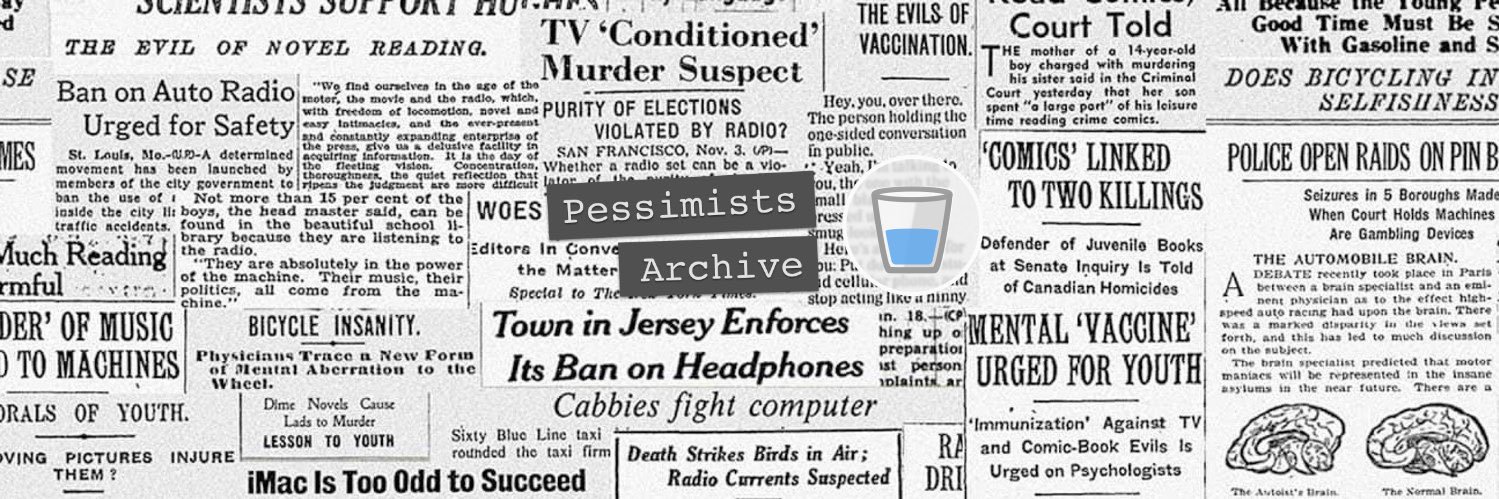
Could this self-fulfilling doomsday prophecy have been a bigger factor in Great Depression than we’ve realized?
Lots of automation fear leading up to Great Depression than it totally exploded in 1929 onwards which couldn’t have helped economically! https://t.co/0xTp5jXO0H
Stoking fears of mass job loss from automation is good way to tank consumer sentiment, which is good way to crash economy, which is good way to cause mass unemployment
Could this self-fulfilling doomsday prophecy have been a bigger factor in Great Depression than we’ve realized?
In 1939 Henry Ford wrote @nytimes article on why automation would create more jobs than it would destroy: “There are those who appear honestly to think that the only way to return idle men to work is to destroy the one thing that makes their jobs possible” https://t.co/0xTp5jXO0H
The Chobani solarpunk short sure is beautiful.
It it also a romanticized lie.
Too many believe this depicts a post-industrial, anti-capitalist degrowth paradise: small farms, soft light, handmade food, children in nature, no smoke, no concrete, no alienation. A world healed by slowing down.
But that is not what the film actually shows.
The farm only works because it is surrounded by an immense hidden stack of energy, intelligence, robotics, materials science, logistics, medicine, education, communications, and manufacturing.
The characters in the short are not surviving through peasant labor, spending twelve hours a day breaking their backs to produce calories. They live gently because machines are enduring the effort, the pain & the violence on their behalf.
The world depicted requires solar panels, batteries, sensors, drones, autonomous vehicles, precision agriculture, global supply chains, rare-earth mining, semiconductor fabrication, industrial chemistry, fertilizers, machine tools, roads, satellites, schools, universities, server infrastructure and data-centers, medical systems, and the accumulated knowledge of millions of specialists across generations.
In other words: it requires civilization.
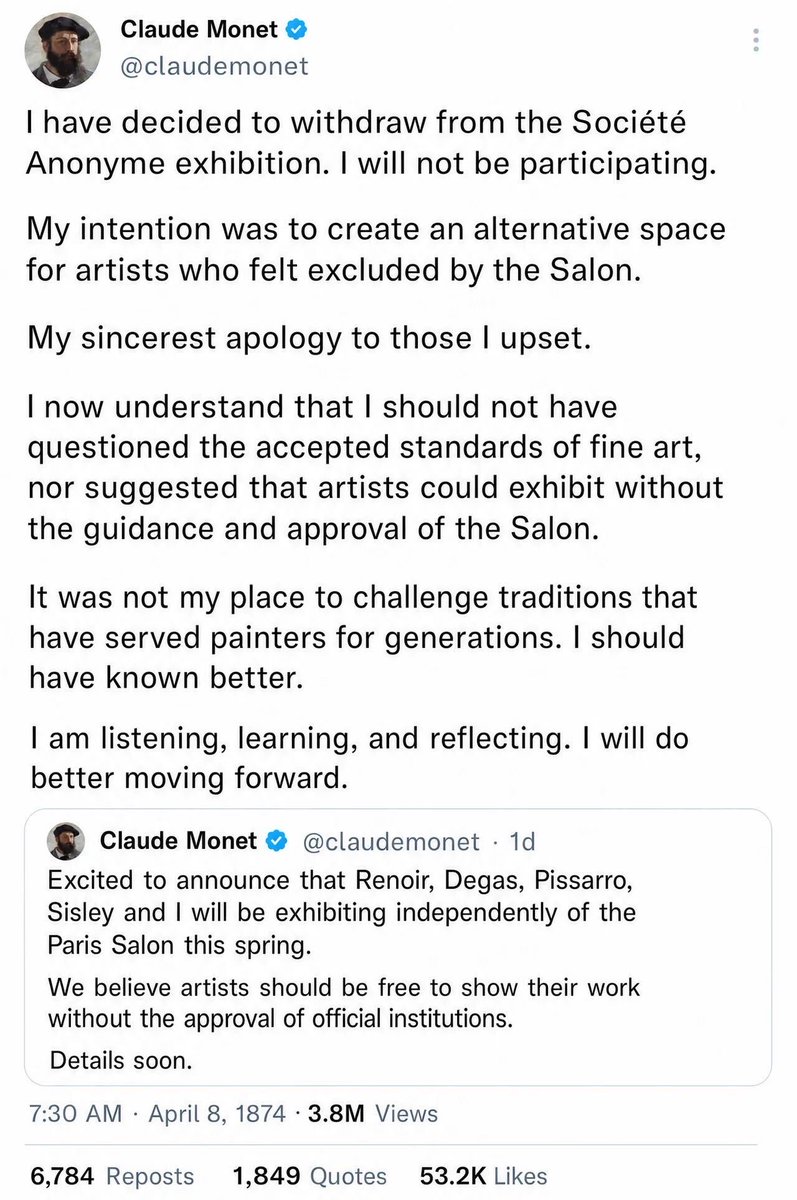
These judgments are a solid example of cultural essentialism. iow, the belief that there is a fixed essence of "real cinema" or "true art"
Every generation internalizes the standards of its artistic community and then experiences those standards as self evidently correct rather than socially learned.
Basically:
- A group of people/artists develops certain conventions, eg: "good films have three act structures","cinema should be shot on film", "art should be representational", "animation should only be done with certain software" . often as a way of rebelling against the prevailing system
- These conventions prove useful in some contexts
- Over time, people forget that they were choices made by particular humans in particular historical circumstances
Opinions are not facts. Don’t mistake accumulated traditions and conventions for laws of nature
The Ferrari Luce is quickly becoming the most controversial Ferrari ever. Why?
"The problem is that we are living in an era where the nostalgic approach is very high. Everybody's looking at the past, not the future..." - Ferrari Chief Designer Flavio Manzoni
"It's not that we're taking away something, but we're adding a new choice, which in some dimensions is unambiguously better. And in other dimensions you will understand them in terms of what is lacking. Perhaps it was reckless of us to do that, knowing that we will in some people's eyes be destined for failure. But I think we also love these absurd challenges..." - Jony Ive
Full answer here on HUGE* Conversations:
Every step function innovation in the Information Age has been met with this exact "prediction". It is always about a combination of "doesn't do what they say" AND "when it does what they say it will be the worst thing for humanity" AND "yes it will empower people while also creating a monopoly". And sooner rather than later the biggest critics and opponents end up embracing the technology for their own use while claiming the high ground.
It started with the printing press. Make it make sense.
I love how Jony and Flavio predicted the precise, immediate response we're seeing to the Luce.
It's almost like they're good designers who know a thing or two about design!
Clip from @cleoabram's interview, a must watch.