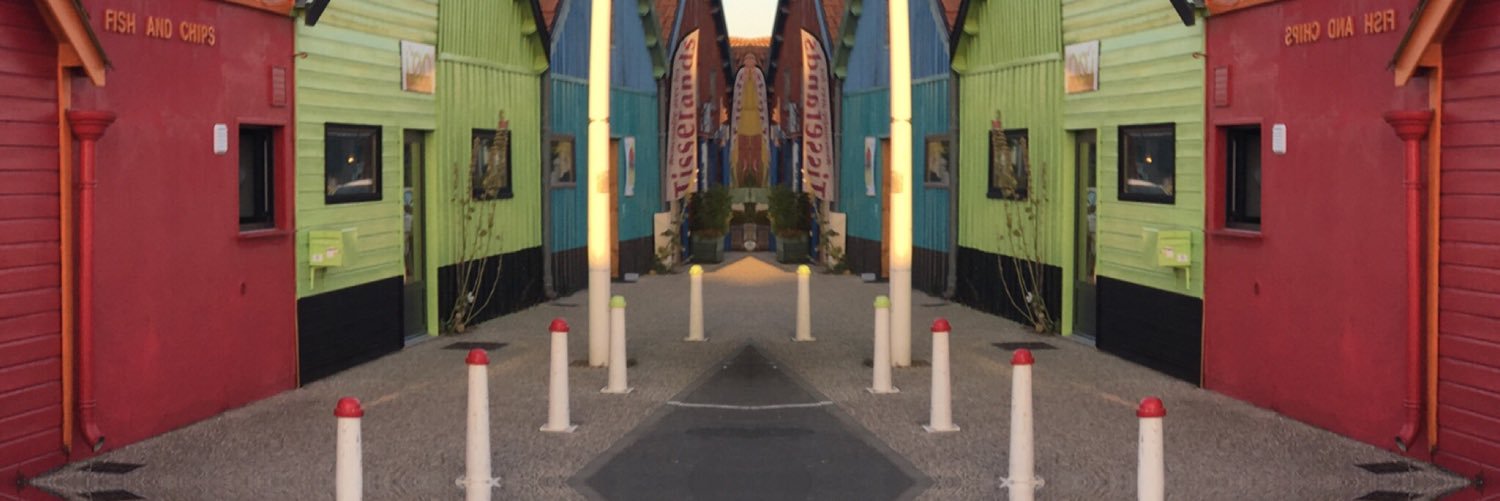
@PhilosophyFails@ErikBootsma Some examples to show it’s still possible for architects to design attractive, practical new buildings that most people like.
https://t.co/0fkUjPAbmY
https://t.co/5vRitywfm1
https://t.co/R3QRNQwnzw
https://t.co/BalDhjknl1
https://t.co/qsrggQUyJ5
@DYREKTIONS@IsntItShuffle@CPursall@tcanham459 In simpler terms - basically saying that you’ve got a point. Only disagreement is that you’ve not made your best case and this has resulted in you overplaying your argument.
Not really criticising you. More annoyed at the quality of the debate & the quality of the policymaking.
@DYREKTIONS@IsntItShuffle@CPursall@tcanham459 Possibly read up on Coasian bargaining. May give you the basis of a more defensible pro-‘NIMBY’ argument.
Had policymakers understood Coase they may have been able to keep the NIMBYS happy & avoid huge economic misallocations like the worst of the tunnels.
@PolemicTMM There are definitely methodological considerations:
- To keep bond market happy (and in order to be generally prudent) policymakers would be wise to focus on narrower economic benefits in the CBA.
- Need big margin for error as CBA, whilst useful, is usually inaccurate.
@maxtempers I think tension in the debate is which problem do we fix first - discipline around project selection (but keep spending) or delivery costs?
@maxtempers Counterargument:
If we only approve projects that create net value, eg approve Lizzy line reject HS2, debt-funded capital spending won’t spook the mkt.
Reform to reduce delivery costs is harder than approving spending. So less spending or waiting for reform risks underinvestment
@tferriss Here are two historical examples where paternalistic employers built model villages that hugely improved the health outcomes of their workers:
- Lever Brothers (Port Sunlight)
- Cadbury (Bourneville). ‘Quaker Capitalism’ overall was very focused on employee health and wellbeing.
@johndotwills@APDBullock Also worth considering that (at least in theory) ULVT could be used to reduce overall tax take in % terms. Mechanism: less economic distortion than other taxes. Means more growth per £ raised. If GDP is larger then can raise same revenue in £ terms with lower overall % tax take.
@johndotwills@APDBullock Agreed. However if unimproved land value tax (ULVT) worked in the way text books expect it to, then for any given overall total tax take ULVT would distort of incentives less than other methods of raising revenue.
That’s the theory. The real problem is reality is more messy.
@johndotwills Wrong criticism of Georgism (in my view).
The basic idea is to tax the UNIMPROVED value of the land (i.e. before any effort). In theory this approach avoids distorting incentives.
The best criticism of Georgism is that defining the unimproved value is extremely hard in practice.
@JeevunSandher Your assertion about losing more voters to the left misses Blair’s central & strongest point: policy driven by political expediency usually produces bad outcomes. The right approach is to decide the best policies first, then persuade both the party & electorate to support them.
@MerrynSW Not necessarily disagreeing, but do think this critique needs to be tightened. Needs to distinguish between interventions that are command economy style meddling & those that are designed to achieve free market market outcomes-eg regulation of competition & of natural monopolies.
@kickingmustang@MerrynSW What was he thinking!
Given his economics education he should have easily spotted that pushing a Georgist, unimproved LVT was the most obvious argument consistent with his world view.
Would have also pushed the debate into more serious ground -eg practicality of implementation.
@moving_charlie In discussions about economics, quite a lot of the time, it is useful to assume ‘ceteris paribus’ (all other things being equal) when talking about cause and effect.
Otherwise it gets very hard to have any discussion on how anything causes anything else.
Hopefully helpful.