I'm honored to be thanked by Sen. Manchin, along with @derektmuller@Nedfoley@jacklgoldsmith and Brad Smith, Michael McConnell, and Bob Bauer, for our work on the Electoral Count Reform Act of 2022.
@CassSunstein
Congratulations to my colleague, Tom Nagel, on this well-deserved award. I'll always be grateful to Tom for sharing his thoughts about why he left Princeton for NYU when I was considering similar institutional issues. At the Dworkin/Nagel NYU philosophy colloquium, Tom always respected authors by making sure his incisive, subtle, and wise comments were internal to the paper, rather than something he sought to impose from the outside.
This is an important piece on an important confirmation decision coming up with major implications for the separation of powers. The Comptroller General is an obscure office to most people, but Goldsmith explains the significance of this office.
Me on Ueland's nomination for Comptroller General: Can "a senior official in the executive branch agency that has sought to undermine Congress’s spending power... credibly lead the congressional agency...charged with helping Congress defend that power"?
https://t.co/cluCX5vJS6
Thanks to @lsolum for highlighting "Presidential Administration to the Slaughter" as the Download of the Week on his indispensable Legal Theory Blog. Draft here: https://t.co/EyARXTob4y. Comments appreciated!
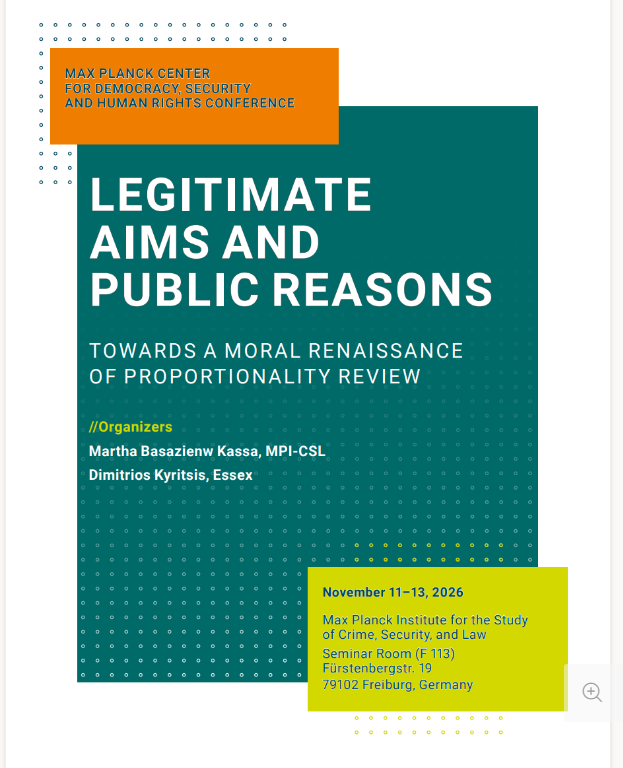
I'm participating in this multi-day conference in Germany on proportionality review.
My talk is somewhat at issue with the themes of the conference: "Exclusionary Reasons v. Proportionality in Judicial Review"
NEW PODCAST: Reflections on the 2026 Elections — What We Learned
Hear from @nyulaw Professors and Democracy Project Faculty Directors @RickPildes, @SIssacharoff, and Bob Bauer on their takeaways from the 2026 Elections.
Full podcast here: https://t.co/2LtRNtjEBV
NEW PODCAST: Reflections on the 2026 Elections — What We Learned
A conversation between @nyulaw Professors and Democracy Project Faculty Directors @RickPildes, @SIssacharoff, and Bob Bauer on the legal takeaways of the 2026 Elections.
Full podcast here: https://t.co/2LtRNtj6Mn
Vindication for those of us who said throughout we would have free and fair elections without major disruptions:
No ICE at the polls
No fruitless presidential declarations of "emergency"
No seizure of ballots or voting machines during the voting process
No major issues with 1,000 election monitors
No major disruptions at polling places
Courts block virtually all federal efforts to change voting policies and processes
There might be litigation battles over some close elections, but that's to be expected and courts will resolve these.
Check out our 30+ pieces from elections experts on potential threats to the 2026 elections and the mechanisms available to manage them
Read our full Elections 2026 series here: https://t.co/e1rUdPy4MH
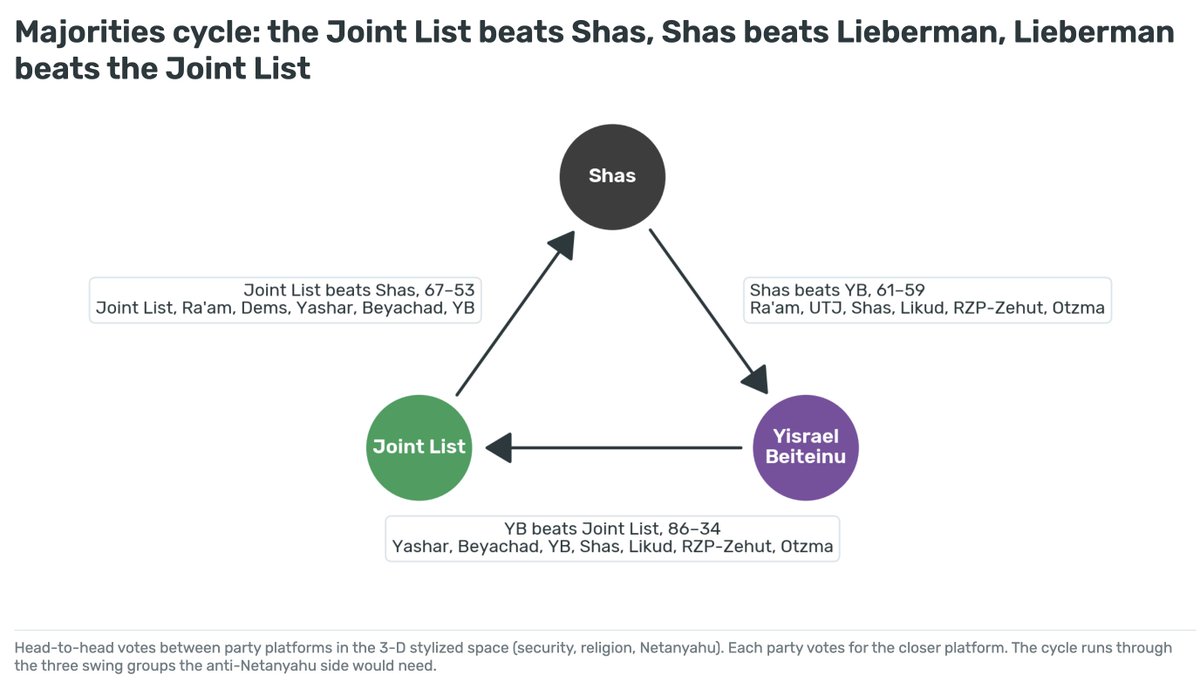
I made some plots to help visualize why coalition formation in Israel is so difficult right now
We are witnessing an extremely rare situation that political scientists call a "Condorcet cycle" - a demonstration of Arrow's impossibility theorem in the wild!
In the final stretch Democrats have money to put into winnable House races but it won't be used. My post with @bfschaffner @goodauth https://t.co/CULnIbKott
Have legal questions about the challenges and potential threats to the 2026 Elections? Our 2026 Elections series has essays from experts on issues including: Federal Interference, Federal Agents at Voting Sites, Certification, and many more…
Read here: https://t.co/e1rUdPy4MH
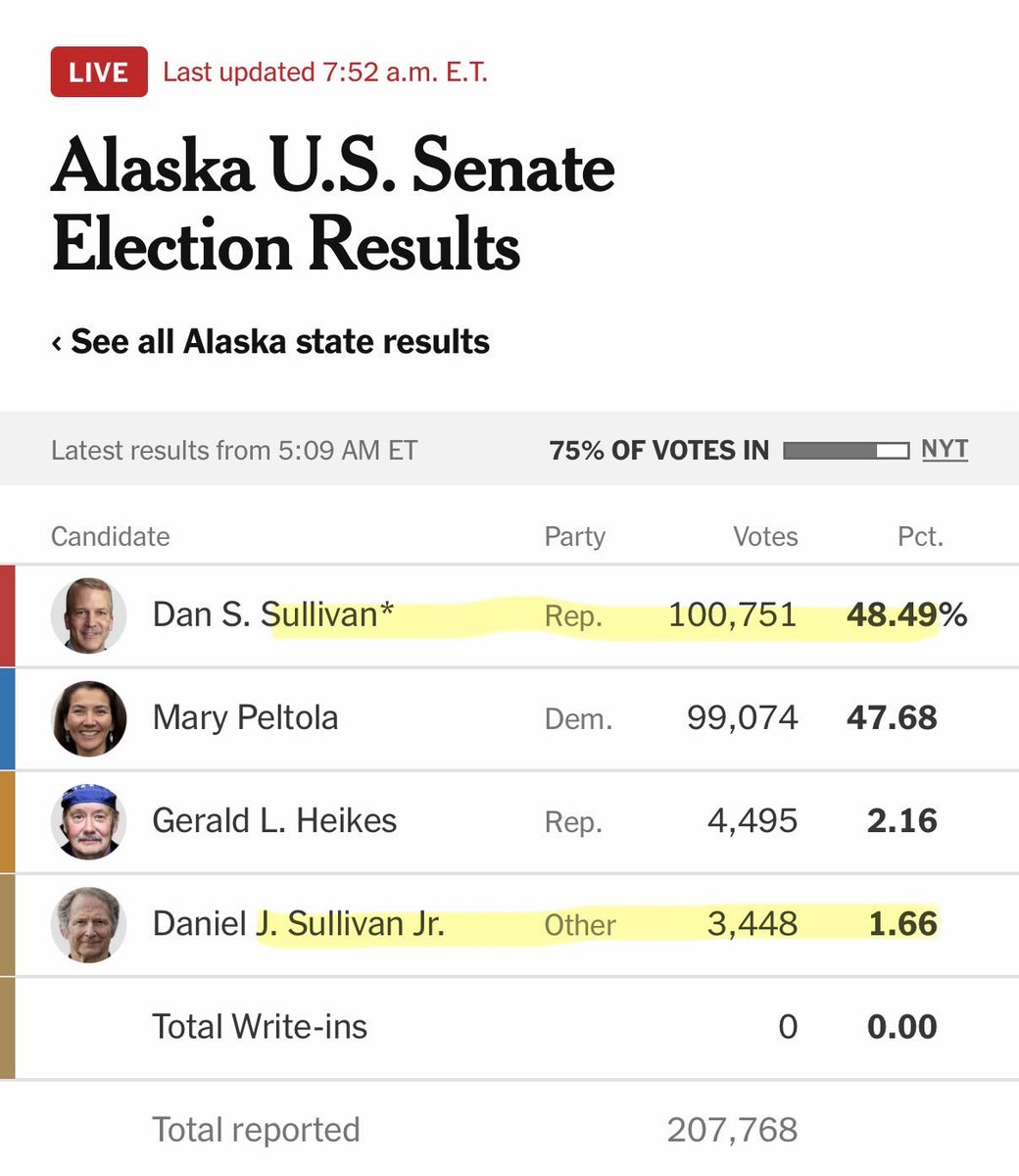
MA voters will be voting on whether to adopt the all-candidate primary, as in Alaska. It's ballot measure 3. As expected, both the D and R state parties have been working to defeat the measure.
@dsallentess has an essay on her substack supporting the measure and explaining the overall context:https://t.co/SeonAvBOAn
2/ Question 3 proposes an all-party primary: every candidate — Dem, Republican, Green, anyone — on one ballot. The top two advance to November, when turnout is highest. Why did I, an RCV-lover, decide to pursue this?
Check out this from The Renovator: https://t.co/x7pnzqlvlj
From @shaneharris The Atlantic article, The Real Threat of Election Interference (link in reply):
“A mere declaration by the president is not going to be enough legally to justify going in and trying to seize voting machines or ballots,” Richard Pildes, a professor at NYU School of Law, told me. Federal agents would need a warrant to take control of election equipment or ballots, and first they’d need to persuade a judge there was probable cause that a crime had occurred. Any classified intelligence reports might have to be shown to a judge, Pildes said. Even if the government was successful, it cannot legally remove the ballots themselves from state custody, and must rely on copies or images of them, he added. “There’s certainly no power in the executive branch to take over or nationalize the election process,” Pildes said.