Hung out with some frontier lab AI people last night, and it would seem some actually believe we are in the end times, eternal life is around the corner, and they're planning around the AGI apocalypse. I had to bite my lip and nod.
Read Cohn on millenarian fanaticism (specifically the chapter on the Münster rebellion), and remember Vogelin's warning to not immanentize the eschaton.
During times of political strife, every generation believes the Great Undoing is nigh, and the coming of the messiah will happen in their generation. When it doesn't happen (as it indeed never does), either the cult dissolves or the narrative is rewritten to postpone the date. This is essentially what happened with Christianity, as the Apostles assumed Christ was returning in their lifetimes during the very tumultuous first century. But they managed to rewrite the plot (there were a lot of competing messianic cults that died out at the time...Paul rescued the church).
It's also fascinating how very overtly secular people are re-enacting the religious narratives imprinted in their culture, unconsciously. One notes how in (non-Christian) China, where AI advances as quickly as here, you don't have the same anxiety around human extinction events, AI gods emerging, etc.
Re-enacting the Christ myth through technology is exclusively Western.
https://t.co/UtOcYcb1xW
Even before Mythos I was getting asked more and more what Anthropic's deal is, and why tf they're acting the way they're acting if they believe what they say they believe.
The best answer I can give is that their basic worldview is something like:
1. There are giant, dangerous monsters in the forest
2. We see others going out and making loud noises that will rouse the monsters, and they're not going to stop because of all the treasure and magical artifacts that can be found in the forest
3. We believe the best way we can help is to send out our own vanguard to go faster and farther into the forest than everyone else, because we'll spend a ton on monster containment and taming and we'll also send back detailed reports of what monsters we're finding so that the townspeople can ready themselves, which those other guys won't do
On the one hand I understand how they got there, and I think it's possible they're basically right. On the other hand it's not hard to see why this approach makes people wonder if you're crazy or lying or both.
"And so it was that I found myself overlooking the Manhattan skyline as people talked about the end of humanity over cocktails."
https://t.co/EFXim1sxU9
Many are rightfully excited over the success of LLMs in proving several Erdös problems and there is a lot of speculation about even harder questions. What I find interesting is that AI could give mathematics something like an experimental component
We might find ourselves in a future, where we know how to build models that can reasonably attempt something like a Millennium Prize problem, but only at enormous cost. Mathematicians could find themselves saying: “If we build this model, maybe we can prove Yang–Mills. But it will cost several billion dollars and we can't guarantee a working proof, but we're confident we will learn much more about what works and what does not."
Similar to particle physicists today: early colliders produced many rapid discoveries, but today a new collider is a multibillion-dollar investment and in science there is never a guarantee to discover what you're looking for
I feel we’re redoing early socialism and Industrial Revolution. Meanwhile, in all likelihood Marx would be all around locallama testing MoEs (and writing a very obscure blog on inference economics).
Christ’s gospel was so radical, so contrary to the wisdom of the world, that people are still coping 2000 years later, insisting that he didn’t actually mean what he said.
"The likely outcome is that formalized mathematics will now develop in two separate layers, an intelligible layer... and an unintelligible layer we might call Mathslop, ...results that are known to be correct via proofs that no human has ever understood."
https://t.co/zfRYrMSe80
The next few decades will be like the Hubble Deep Field observations, where you point new tech at a dark spot in the sky and discover another 3000 galaxies. PacBio HiFi only become available in 2019. So much about the genome and epigenetics is still dark. We have no idea.
Seeing stablecoin platform billboards out in the Texas countryside. Miles of nameless warehouses covered in surveillance cameras with armed guards posted up along the I-10 corridor west of Houston. Seems the post-humanistic economy is taking shape
The rise in performative public Christianity by people who can't actually get Christianity right is rather reminiscent of the Emperor Julian's performative public paganism in the 4th century, at a time when people were already getting a bit hazy on what paganism actually was
It’s interesting how many aspects of modern political commentary hold up the 1945-1971 postwar period as the natural state of things that was broken by our weird new modernity, when instead maybe it’s more accurate to see this period as profoundly unusual.
I think about this with media commentary all the time: “Why can’t we get back to Walter Cronkite, shared sense of reality, etc”
A brief and strange information oligopoly created a scarce number of radio/TV stations, which enforced a news monoculture on radio/TV audiences. Whether that was altogether good or bad, it was extremely weird! Look at the 19th century. A zillion newspapers, many of them insane and terrible and partisan. The chaos is what’s normal.
You can build complex systems which are essentially the backbone for global civilization, and then someone can simply blow it all up with $5000 drones. This is how war will be fought from now on. It’s never been more over.
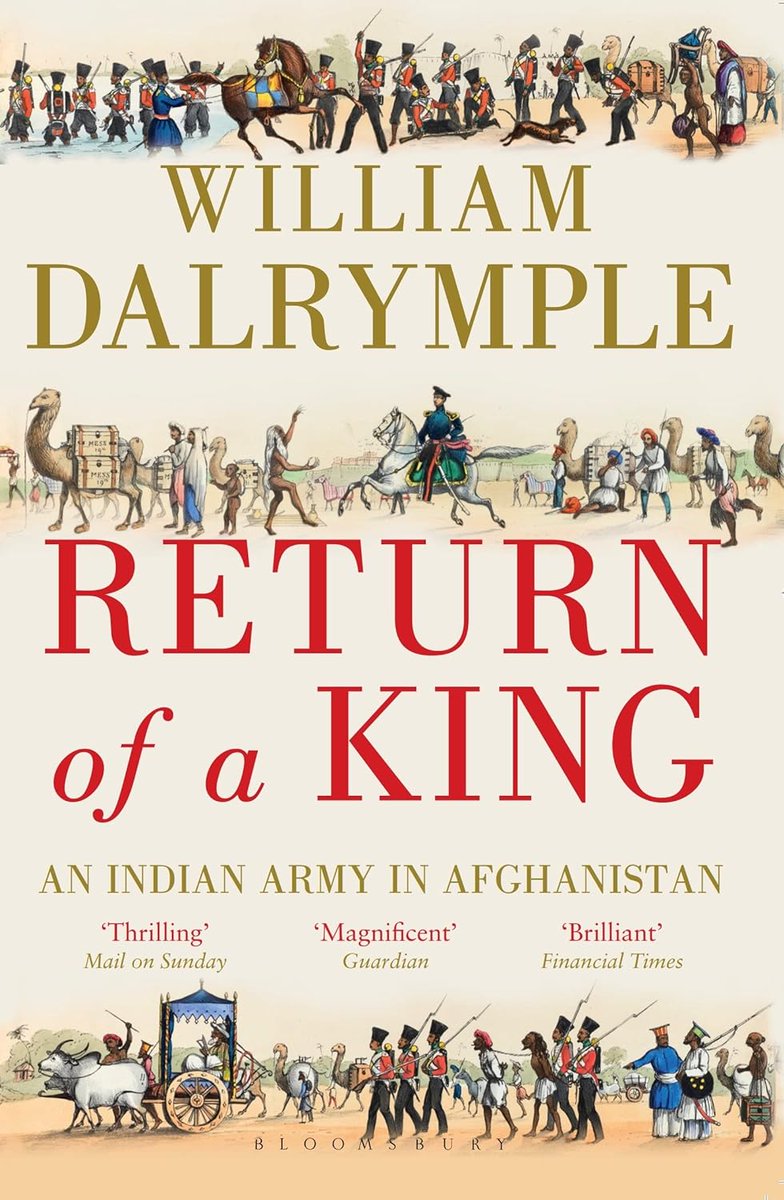
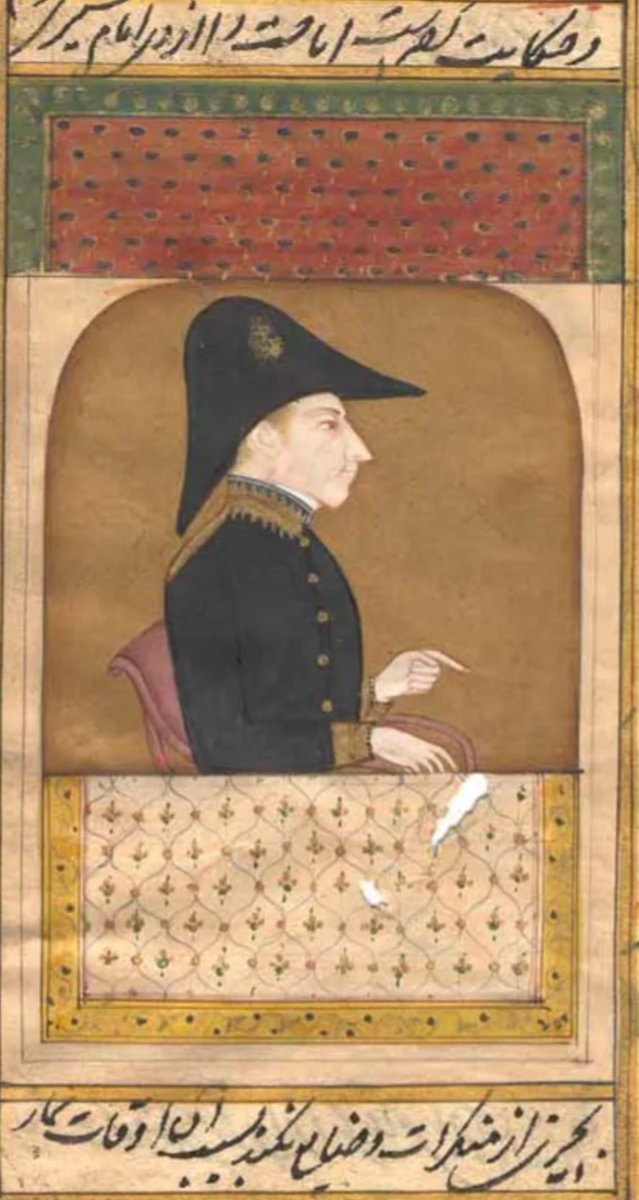
I wrote about one of the East India Company's two occupations of Kharg Island in my book Return of a King. The Company actually occupied Kharg twice: once from 1838-1842, on the orders of Lord Auckland (shown below) when they eventually withdrew in confusion after the disasterous Retreat from Kabul. Then the Company occupied Kharg for a second time from 1856-7. This time they pulled out again, due the outbreak of the Great Uprising of 1857, and the Highland regiments who had occupied it under Sir Jamew Outram were rushed eastwards to break the Siege of Lucknow.
On both occasions, occupying Kharg seemed like a good idea at the time, but proved a strategic dead-end. It showed that the Company could project power into the heart of the Persian Gulf at will, but it also highlighted their inability to translate naval dominance into lasting political stability in the region.
Shame our current leaders seem unable to learn the lessons of history...
If previous Imperialist wars were fought for resources, The Iran War is the ultimate the neoliberal war — warfare as market manipulation; military action as insider trading — the logical end point of a hyper fictitious speculative economic system combined with US Empire.
the roko's basilisk guys are so funny bc they correctly intuit that our lives will be controlled by a psychotic, amoral algorithm that hates humanity but they think some nerd in SF is going to build it on his macbook. it was already built, in 1602, by the Dutch
New review essay from me exploring @mark_lynas’ important but also extremely bleak new book on the new climate science of nuclear winter.
It turns out that just as climate models over the last couple of decades have enabled us to better understand global warming, these same models—compared against the impacts of volcanic eruptions and extreme wildfires—have allowed us to explore its inverse, global cooling, and thus confirm the nuclear winter hypothesis of the Cold War. We now know, for instance, that even a “small” nuclear conflict, say between India and Pakistan, is still suicidal for the human race due to stratospheric soot’s radical reduction of solar radiation.
In the essay, I place the book’s concerns in the context of the current Iranian and Ukrainian conflagrations, the cynicism and burnout of a 25 years of failed (?) antiwar campaigning, the collapse of the post-1945 international order, and the sudden uptick in recent weeks in nuclear taboo-breaking from Europe to Asia.
Enjoy! A fun lazy-Sunday read!