I’m making a show about buildings.
The concept is simple: do for the man-made world what Planet Earth did for the natural world.
But, when I pitched the idea, the answer was that nobody would watch it.
So I released a pilot episode on YouTube. It’s got 5.4 million views, 379k likes, and 23k comments.
People are interested, and now it’s time to make the full show.
Six episodes, filming in the UK, France, Belgium, Germany, Italy, and the USA, and releasing on a streaming service like HBO, Netflix, or Prime.
Why does this show matter?
First: we’re surrounded by buildings all the time. Look around yourself, right now… what do you see? Buildings are the logical conclusion of everything a society believes in. That’s the real focus of this show: not the buildings themselves, but what they say about us.
Second: there’s global dissatisfaction with modern architecture. This feeling gets written about online, but nobody’s given a voice to it on film or TV. That’s what this show will be. But this isn’t just about criticising modernity. That’s easy. This is about learning from the past in order to understand and improve the present, for everybody.
Third: there’s a drought of high-quality culture shows. When I spoke to film executives they said that only documentaries about sports, music, or true crime get funded. That’s a colossal missed opportunity. Galleries are always full, content about architecture goes viral online all the time, and people spend their precious holidays visiting beautiful cities.
Why no shows about architecture, then?
Tourists flock in their millions to see (for example) the buildings of Antoni Gaudí in Barcelona. But, if you asked those same people if they’re interested in “architecture”, they’d probably say no.
To put that another way: not many people want to watch “a show about architecture”, but lots of people want to watch a show that illuminates the real world they’re living in, each and every day.
What will the show be like?
Six episodes, going chronologically through history and arriving at the present, each focussing on the architecture and design of a specific period:
1. Middle Ages
2. Renaissance
3. Enlightenment
4. The Nineteenth Century
5. Art Nouveau & Art Deco
6. Present Day
But, in each case, the point isn’t just to learn about that era; the point is to learn about our modern world through those eras and what they’ve left behind. If you watch the pilot episode (included below) you’ll see what I mean.
So the show’s not really “about” the past; it’s about the twenty-first century.
That’s why it’s called The Modern World.
When you think of a typical history show there are loads of interviews, stock footage, archive photos, historical recreations, and graphics. We’re doing none of that. Everything will be filmed on location, because we’re telling our story only through the real world that exists right now. And, rather than going to the most obvious places, we’ll focus on buildings that aren’t well-known but should be more famous.
But that’s all big picture; what will it be like on screen?
Buildings used to look different in every country, and now they look the same. Why? Because the weather is different everywhere, and buildings were always a way of dealing with that weather, using local materials. Now we have air conditioning and we ship concrete around the world, so we don’t need to design our buildings with regard to local weather or rely on local materials.
Look at really old clocks and you’ll notice something: they don’t have a second hand… because it was only invented 300 years ago! Then you look at the present and you realise we’re surrounded by timers, by seconds ticking down and ticking up relentlessly. If we’re looking for a cause of our anxiety-inducing culture, that might be it.
When you spend time with the sun-softened bricks and time-warped timbers of old cities you notice that synthetic materials like plastic have taken over. When we’re surrounded by things that feel temporary, how do you think it makes us feel?
It’s only by seeing 19th century train stations, designed like cathedrals, that you realise tradition and technology aren’t enemies. New things don’t have to look boring: if the Victorians had designed AI data centres, they’d look like Medieval castles.
In the 1920s, at the zenith of Art Deco, people believed technology would uplift humanity. That’s why they decorated their buildings with statues inspired by electricity. Only by seeing their enthusiasm can we realise our own cynicism, and perhaps begin to fix it.
All of that… and much, much more.
But, above all else, this show is about a way of seeing. If you want to understand any society then you need to look at what it creates, not what it says about itself.
There’s a worldview in every single object; our skyscrapers are designed the same way as our phones. Learn to look at this world, to notice its details, and everything else starts to make sense.
What now?
I’ve been quiet online recently because I’ve been researching and working on scripts for six full-length episodes. Production begins when we’ve raised the funding.
The Modern World is coming.
I made a super simple website where you can see everywhere you can get to in under an hour on the NYC subway.
The generated map is both a heat-map (changes color) and a cartogram (warps space).
https://t.co/liTziAmQEd
The NBA is truly the best league on the planet because the stars have aligned to have one of the greatest players in NBA history hosting an event at a Speedway in Berea
What began as a grove planted by President Thomas Jefferson on the White House lawn has grown into a tradition lasting more than 150 years. 🌳
Since the 1870s, most presidents have planted a commemorative tree while in office — a symbol of friendship between nations, a lasting legacy, or even a sanctuary for wildlife. This Presidents Day, we’re reminded that a single tree can outlive us, quietly standing as a witness to history and the legacies we leave behind.
Scots Pine with no name, or a name only known to other Scots Pine - El Arenal, Spain
Trees detect gravity using tiny structures within the cells of their roots and shoots called statoliths. These tell them which way is up, & perfectly reflected here
Photo: Alberto C F
We are one bad incident...one bad adrenaline-fueled moment from another Boston Massacre or Kent State type occurrence.And there will be cheers from some Americans when that happens. And the Administration will support it and justify it and warn of more to come.Think about that.
“There are people in the world who are so sick or so angry that they sometimes hurt other people and they’re usually the ones who end up in the news...but when we get sad and angry, you and I, we know what to do with our feelings so we don’t have to hurt other people.”
The creature you see here is a relative of snails, octopuses, and clams! This one here is possibly a Pink Spotted Jacket Tonicia (Tonicia calbucensis).
📷 nicolas_lobos on iNaturalist
📍 Chile
🔗: https://t.co/oZMiVeguT8
#ObservationOfTheDay
Note: Hive AI detector is on X. Now there are at least two detectors that you can use to check suspicious videos or pictures. Don't ask Grok. Ask @hive_ai and/or @Ai_or_Not
Sydney McLaughlin-Levrone 🇺🇸 in ONE unforgettable night:
• Shattered a 42-year-old Championship Record, the oldest standing at the World Championships
• Clocked the fastest women’s 400m time in 40 years
• Became the FIRST athlete ever (man or woman) to win world titles in both the 400m & 400mH
• Joined the exclusive club of women under 48s — just the 3rd ever!
• Set a new American Record
• Climbed to No. 2 on the all-time list
• Achieved all this in her FIRST complete season at the 400m 🤯
Did we miss anything??🔥
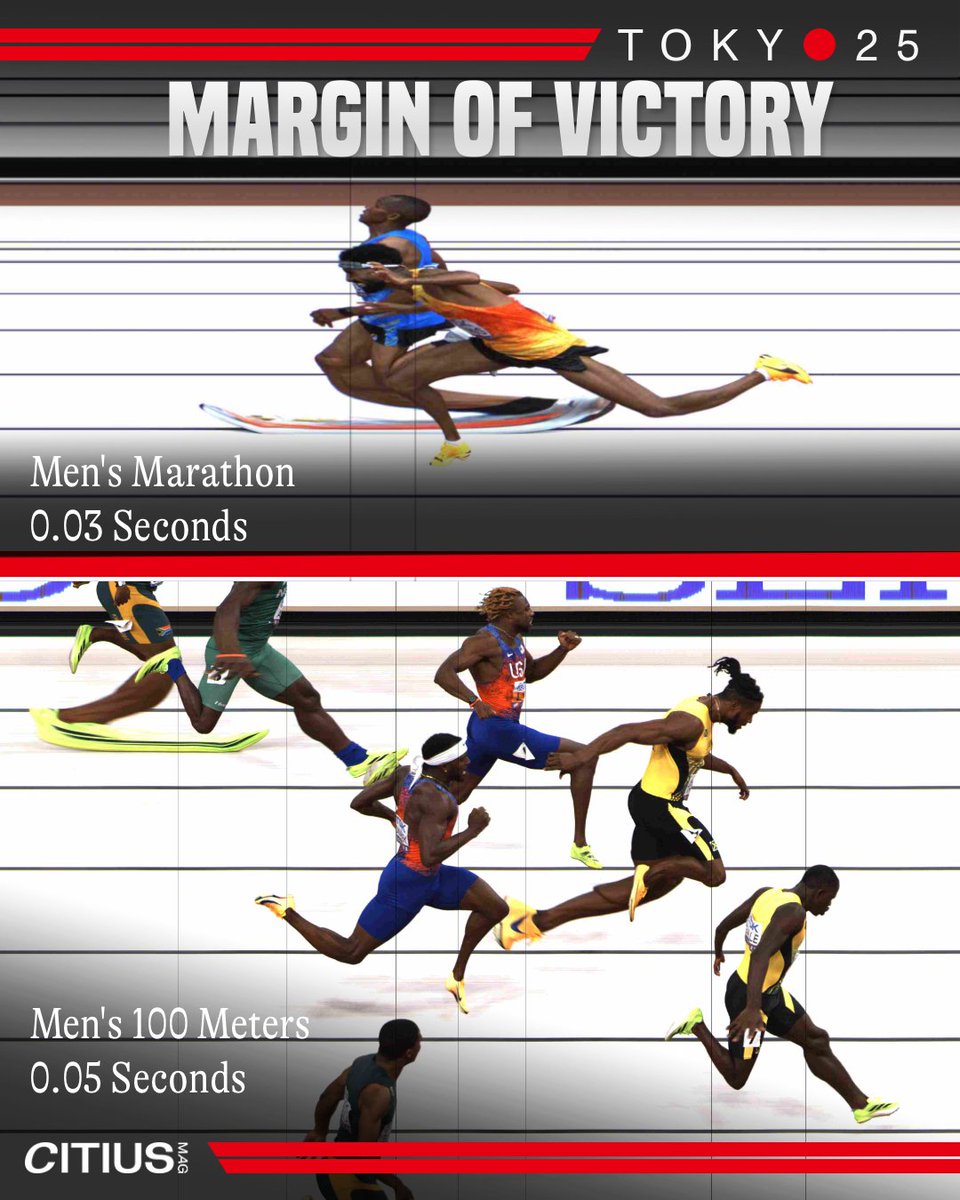
FACT: The men’s marathon at the 2025 World Athletics Championships had a closer margin of victory than the men’s 100 meters.
Both races also had a false start.
Sometimes you just can’t predict track, folks!
#WorldAthleticsChamps
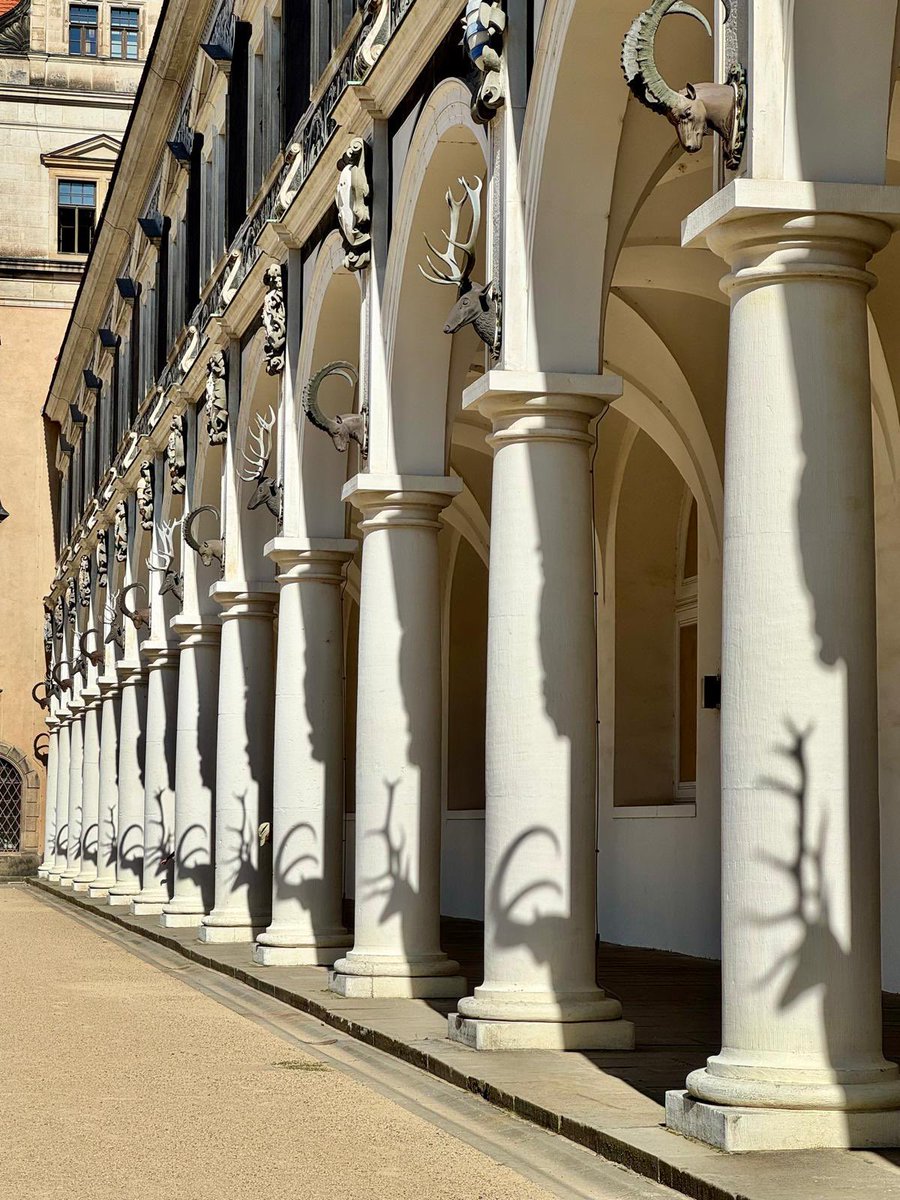
Es ist wieder soweit! Die Geweihe im #Stallhof#Dresden steigen als Schatten an den Nachbarsäulen hinab; dieser Tage jeweils für wenige Minuten gegen 10:30 Uhr; dann erst wieder im April 2026 -ich habe es #Stallhofhenge getauft
You may have heard hallucinations are a big problem in AI, that they make stuff up that sounds very convincing, but isn't real.
Hallucinations aren't the real issue. The real issue is Exact vs Approximate, and it's a much, much bigger problem.