“Animals give me more pleasure through the viewfinder of a camera than they ever did in the crosshairs of a gunsight. And after I've finished 'shooting,' my unharmed victims are still around for others to enjoy." ~ Jimmy Stewart.
MAYA IS MISSING IN QUEENS: last seen at Hoyt and 23rd Street in Astoria wearing a white band around her neck. If you've seen or found her please go here:
https://t.co/dggY7IYju8 and/or phone 877-818-0060 and PLEASE RT MAYA!
Apollo 10 Lunar Module "Snoopy" was so close to the lunar surface
Astronauts Tom Stafford and Gene Cernan flew the Apollo 10 Lunar Module "Snoopy" to within 9 miles (14.4 km) of the lunar surface OTD in 1969, completing a critical test of all the systems and procedures needed for the Apollo 11 lunar landing. In this photo we see Maskelyne crater, located 250 km away from "Tranquility Base," the Apollo 11 landing site.
After maneuvering to the lower altitude and returning to dock with the "Charlie Brown" Command Module, Snoopy was jettisoned into an orbit around the Sun, unlike the other Apollo lunar module ascent stages. In 2019, a team of astronomers who analyzed terabytes of radar data reported they were 98% certain they found Snoopy
NASA
🇺🇸 Take a minute to reflect on the hallowed grounds of the Normandy American Cemetery in France on this Memorial Day. Perched on a bluff overlooking Omaha Beach — the very site where our heroes launched the greatest assault for liberty in human history — lie the final resting places of 9,389 American warriors who gave their last full measure of devotion during D-Day in World War II.
These are not just graves. They are monuments to American courage, sacrifice, and the fierce belief that freedom is worth dying for. Among them:
• 307 Unknown Soldiers — forever honored, never forgotten.
• 1,557 names inscribed on the Walls of the Missing — their spirits still watching over the cause they served.
• 45 pairs of brothers who fought and fell together.
• Three Medal of Honor recipients and four heroic American women buried side by side with their brothers-in-arms.
This sacred cemetery was established on June 8, 1944, just days after the invasion. This was the first American WWII cemetery on European soil. A permanent reminder that when evil threatened the world, America answered the call.
To every American who stormed those beaches, climbed those cliffs, and never came home: Your blood bought our tomorrow. Because of you, the light of liberty still shines bright across the globe.
We will never forget. We will never falter.
God Bless our Fallen Heroes. God Bless the United States of America. ❤️🤍💙
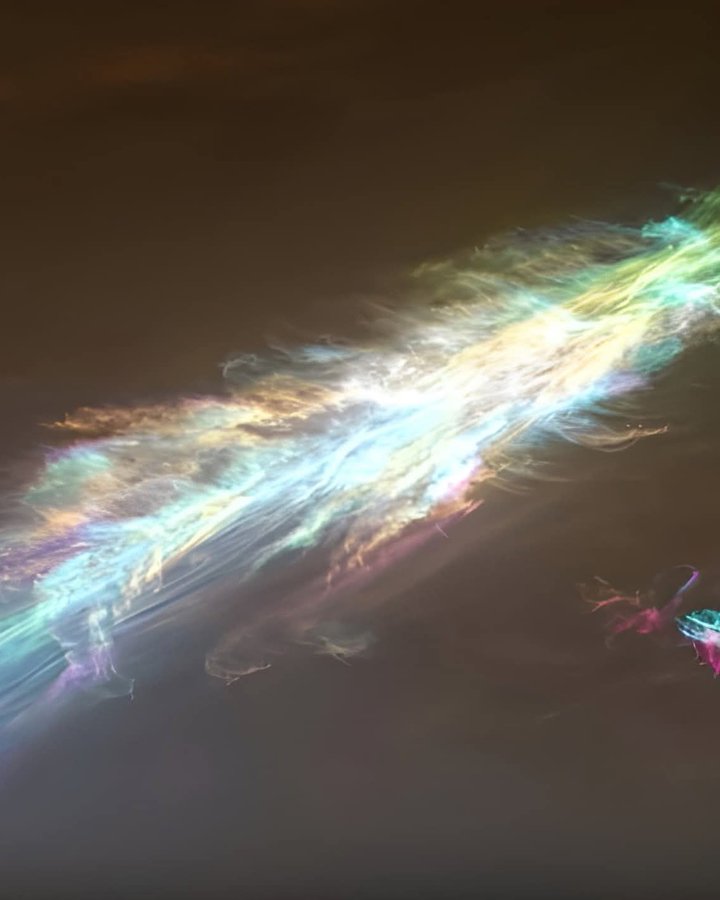
NASA’s Curiosity rover has captured one of the most breathtaking sights on Mars: shimmering, iridescent “mother-of-pearl” clouds glowing high in the Martian twilight.These rare, feather-like clouds float at extreme altitudes of 37 to 50 miles (60 to 80 kilometers) above the surface — roughly twice as high as most commercial airplanes fly on Earth. Unlike the water-ice clouds we’re familiar with, these are made of frozen carbon dioxide, or dry ice, forming only in the planet’s frigid upper atmosphere where temperatures plunge far below freezing.
How the Phenomenon HappensAs the Sun dips below the Martian horizon, the sky darkens for surface observers — but these high-altitude clouds remain bathed in sunlight. The tiny, uniform-sized dry ice crystals act like microscopic prisms. When sunlight hits them, it diffracts (bends and scatters), separating the light into vivid pastel and rainbow hues: soft pinks, greens, blues, and pearlescent whites.This is the same optical effect that creates Earth’s nacreous (mother-of-pearl) clouds in polar regions, but on Mars it’s even more striking because the atmosphere is so thin and the crystals are so perfectly sized. The result? Ethereal, glowing clouds that look almost alien against the rusty Martian landscape.
Curiosity has now spotted these iridescent twilight clouds multiple times in recent years (including striking images from January 2025), giving scientists a front-row seat to dynamic processes in Mars’ upper atmosphere. These observations help researchers understand how carbon dioxide freezes at unexpected heights and how the thin Martian air behaves during the transition from day to night.A fleeting, colorful reminder that even on a cold, dusty world, the sky can still put on a spectacular show.