Deathwork | Human Remains | Mass Graves | Mexico | Rights of the Dead. Research led by Claire Moon @LSEsociology. Funded by @wellcometrust & @LeverhulmeTrust
Our project film. The result of much hard work by a fantastic team, and nominated for a 2022 Learning on Screen Award @LearnonScreen.
Do the dead have human rights? | LSE Research https://t.co/LSOG1uCrjL via @YouTube
Claire Moon joined experts in Paris on 9–10 April, led by UN Special Rapp Morris Tidball-Binz, hosted with @UChicagoParis, @UChiHumanRights & @UN_HRC to draft UN Guidance Principles on Protection of the Dead — vital work for human rights. #HumanRights#Forensics
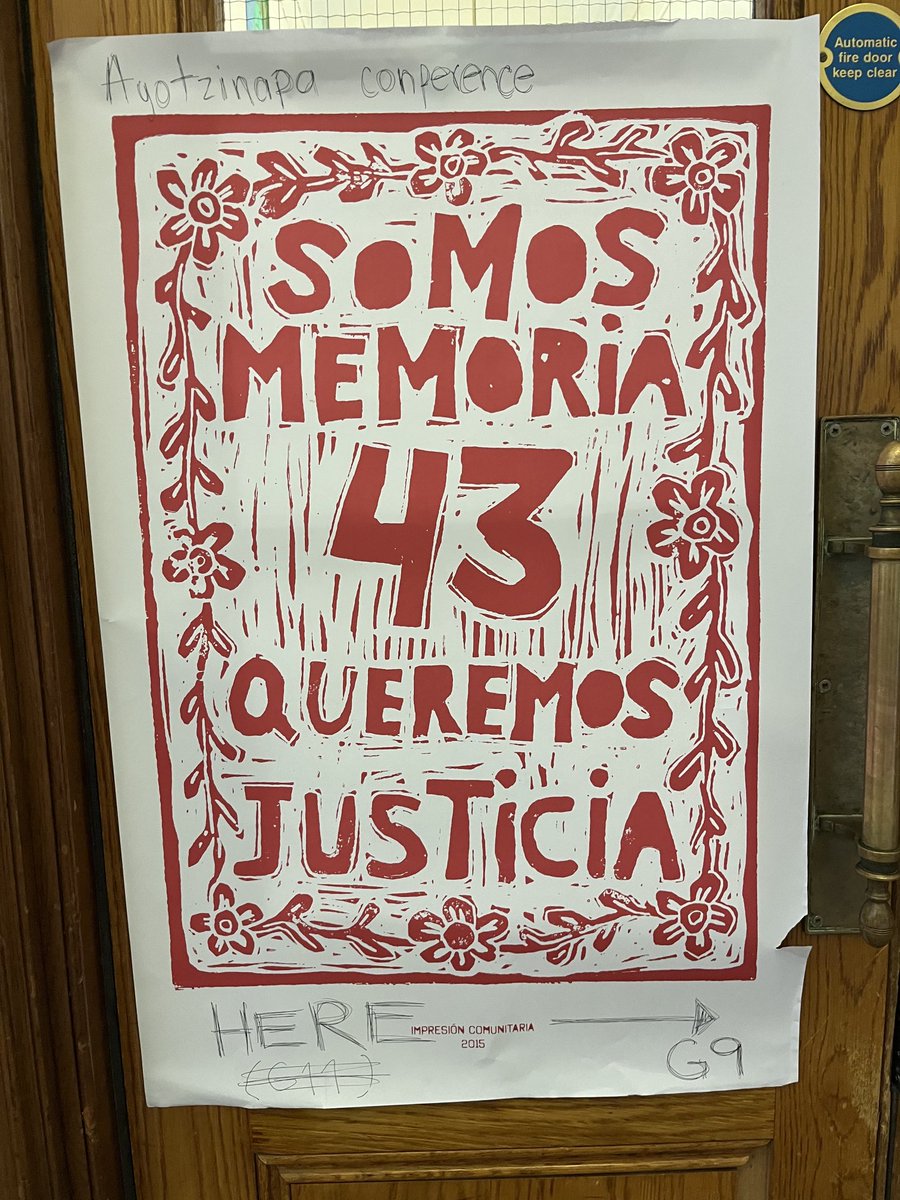
Hoy, en el Día Internacional de las Víctimas de Desapariciones Forzadas, miles de familias en todo el país saldrán a exigir la localización de sus seres queridos. En cifras oficiales, México tiene más de 133 mil personas desaparecidas y más de 25 personas buscadoras han sido asesinadas en los últimos años.
📹@vladimirado
Likely, the largest mass grave resulting from state crimes ever discovered.
Unspeakable.
True scale of Assad’s slaughter revealed at Syrian mass grave https://t.co/DSJ4D5ykXO via @paraicobrien
@GemaKloppe@RaraUribe PS my 'Interpreters of the Dead' paper might work better for a social theory class. The section 'do bones have politics' is where the theory happens, and the Argentina and genocide discussions reflect on the theory empirically.
Today, in my social theory graduate class, a discussion and reflection on Death, Sovereignty and Politics with these readings, including Achille Mbembe, @RightsRemains' generative work, and @RaraUribe powerful poetry