Chimpanzee Nut Crackers 🪨🌰
Nut-cracking with stone tools is limited to only a few West African populations, and is the only known habitual, culturally transmitted form of stone tool use among wild chimpanzees.
The technique is surprisingly precise: a chimp securely positions the nut on a stable anvil, such as a tree root or boulder, and strikes it from above with a hammerstone; the force of each blow is carefully modulated to crack the shell without smashing the precious kernel inside.
Infants of both sexes begin learning this skill by watching their mothers, who encourage practice by sharing cracked nuts (with the kernel visible) and handing over the hammerstone. Despite this, by adulthood, females crack nuts much more frequently and proficiently than males.
This performance gap comes down to a shift in daily priorities: as males transition into adulthood, they become increasingly gregarious, forming parties for foraging, patrolling, and hunting. In contrast, adult females tend to be relatively independent, focusing on solitary activities like nut-cracking and eventually passing this tradition on to their own offspring.
We've made the difficult decision to wind down @EverclearOrg.
@LayneHaber@RHLSTHRM and I started Connext (later Everclear) in 2017 to help solve the painful UX holding Ethereum back from mainstream adoption.
Over the last 9 years, our team:
- Shipped the first production L2 (using state channels) in 2018.
- Contributed to the creation of the @MolochDAO, catalyzing renewed interest in DAOs.
- Pioneered the first intent-based bridge in 2020.
- Created the Chain Abstraction vision and demonstrated it's potential for staking/restaking protocols.
- Pushed forward ERC-7281 as a neutral, open standard for bridged tokens.
- Brought clearance to DeFi.
- Processed over $6B in network volume.
Throughout that time, we've also done our best to stay true to our principles and the crypto ethos; pushing for a higher bar of transparency and trust-minimization for ourselves and the space at large.
Even though this isn't the ending we ultimately wanted, I am *incredibly* proud of what our team has accomplished and grateful to those who have supported us all of these years ❤️
Longer post-mortem coming soon.
In the meantime, if you are a team that is hiring: we have a team of 10x operators who have executed ruthlessly through some of the harshest market conditions on shoestring budgets. Reach out!
Probing for Prey 🐒🦎
The bearded capuchin is the only New World monkey that uses sticks to flush out hidden prey, with one population in Brazil’s Serra da Capivara National Park even actively modifying them by trimming side branches and thinning tips for better performance.
More institutional-grade privacy options are live with Polygon CDK.
Launch a custom private chain connected to global onchain liquidity, with a new validium configuration powered by @SuccinctLabs.
Private where it matters. Actually connected where it counts.
Introducing data confidentiality to OP Succinct.
Institutions can now keep transactions confidential on self-hosted infrastructure while settling to Ethereum for security and global liquidity.
@0xPolygon is the first partner to add confidentiality to their stack with Succinct.
Brothers in Arms
Above: Male chimpanzees embracing prior to a skirmish with a rival group, where physical contact communicates ally presence, which reduces fear and maintains coalitional integrity under threat.
Below: The same ancestral circuitry being activated in a ritualized manner during a men’s sports huddle.
The Oldest Stone Tool Industry
Discovered in 2011 on the western shore of Lake Turkana in Kenya, the Lomekwian stone tool assemblage is approximately 3.3 million years old — predating the Oldowan industry by 700,000 years! Characterized by large, heavy lava cores with simple flakes made using low-control knapping techniques, they are associated with Kenyanthropus platyops.
History made. We won ten out of ten seats, with overwhelming majorities in every single one.
Great Yarmouth First, then we Restore Britain.
A very special day.
The reconstructed skull of "Ardi" — a female Ardipithecus ramidus specimen excavated from northern Ethiopia in 1994. Dated to ~4.4 million years ago, her name comes from the Afar language, with "ardi" (ground) and "ramid" (root) reflecting her basal position in the hominin tree.
Base is partnering with Succinct to bring zero-knowledge proofs to Base Azul.
SP1 will prove $7.4 billion in deposits as @Base joins a growing list of major L2s adding validity proofs to their roadmap with Succinct.
Today, we're launching ZCAM, an iPhone camera app to Prove What’s Real.
ZCAM cryptographically signs photos and videos at the moment of capture. Anyone can independently verify the content came from a real device and hasn't been altered or AI-generated.
This door in Westminster Abbey is older than most modern nation-states. Made in the 1050s from an English oak, it's the only surviving Anglo-Saxon door in Britain.
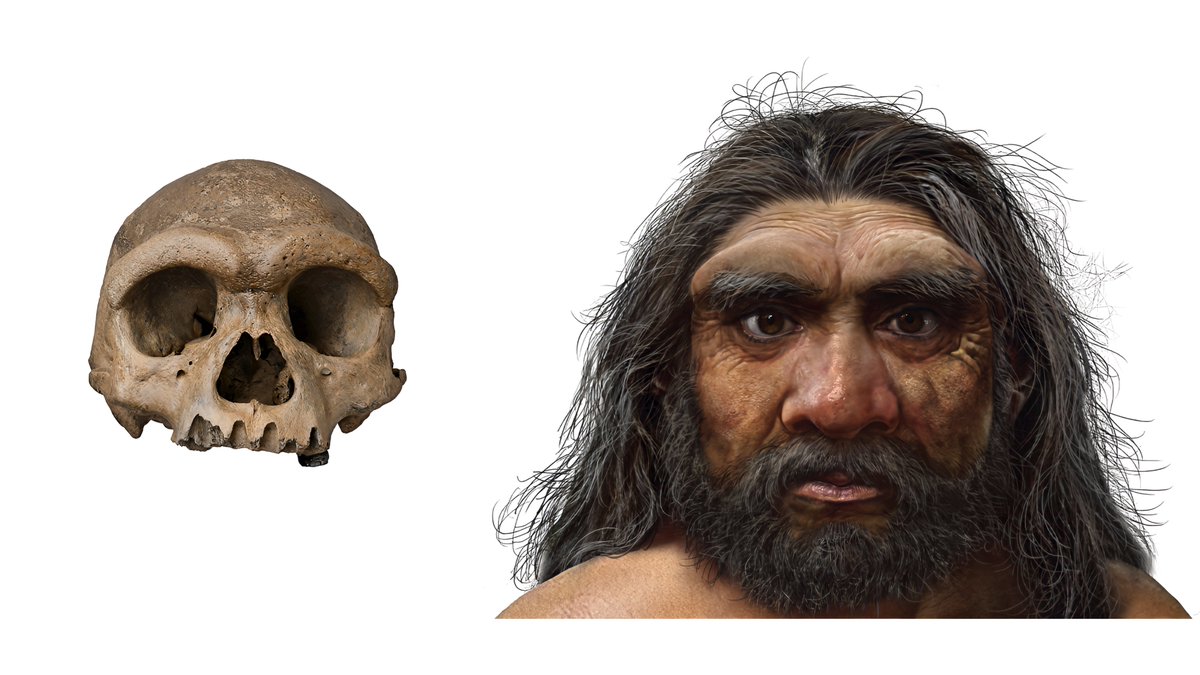
The Face of the Denisovans
Discovered in northeast China, the Harbin cranium is the most morphologically informative Denisovan fossil ever found. From a frontal view, you can see its huge supraorbital torus—the protruding region of the frontal bone that produces the brow ridge.
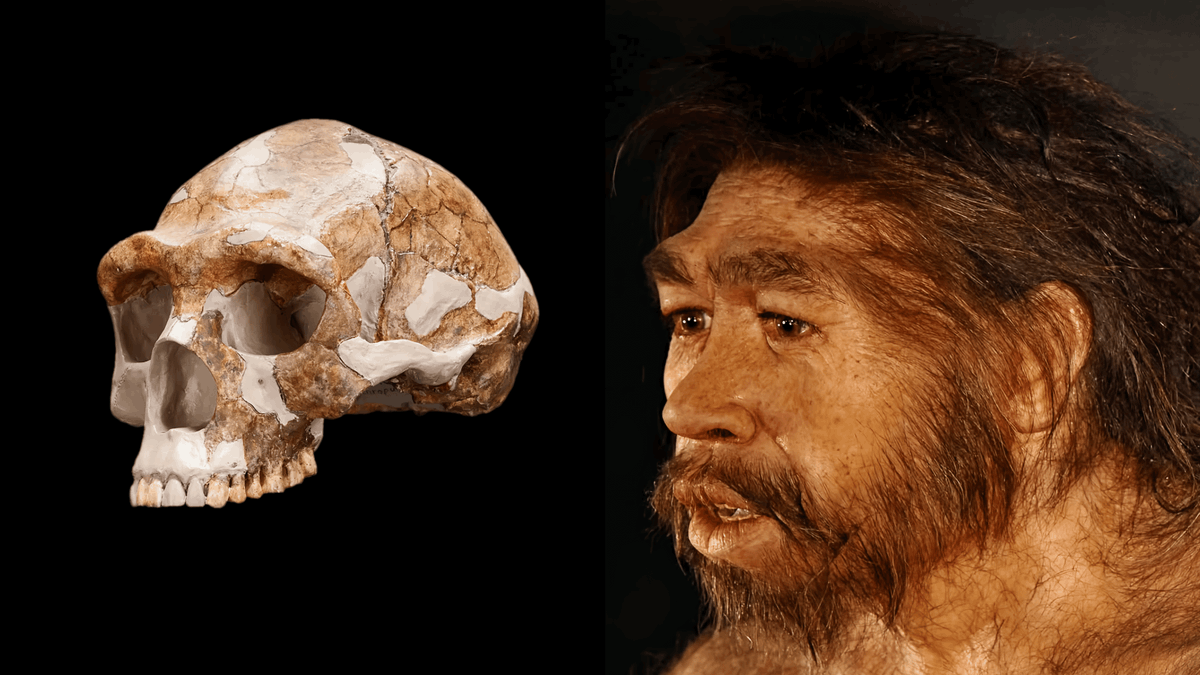
A glimpse of the Peking Man
Composite reconstruction of a male Homo erectus pekinensis skull by palaeoanthropologists Tattersall & Sawyer in 1995 using fragments dated between 780,000–400,000 years ago. | Sculptural life reconstruction by paleoartist Élisabeth Daynès in 2020.