🔹𝗜𝗻𝗳𝗹𝘂𝗲𝗻𝘇𝗮 𝗔 (𝗛𝟭𝗡𝟭) is a seasonal respiratory infection and is mostly 𝘀𝗲𝗹𝗳-𝗹𝗶𝗺𝗶𝘁𝗶𝗻𝗴 in healthy adults.
🔹𝗖𝗼𝗺𝗺𝗼𝗻 𝘀𝘆𝗺𝗽𝘁𝗼𝗺𝘀 include fever, cough, sore throat, runny nose, headache, body/muscle aches, fatigue, and sometimes nausea, vomiting or diarrhoea.
🔹𝗦𝘁𝗮𝘆 𝗵𝘆𝗱𝗿𝗮𝘁𝗲𝗱, rest well, wash hands frequently, cover your mouth and nose while coughing/sneezing, and stay home when unwell.
🔹If symptoms 𝗱𝗼 𝗻𝗼𝘁 𝘀𝘂𝗯𝘀𝗶𝗱𝗲 in 5–6 days, or in young/elderly persons or those with underlying medical conditions, consult a doctor or visit the nearest government health facility promptly.
🔹Stay alert. Stay informed. Stay healthy.
#H1N1
#Influenza
#HealthForAll
The Supreme Court on Monday (August 17, 2026) directed the Centre to conduct a nationwide survey and take steps to ensure the free passage of wild elephant herds through their ancient corridors across States without human will or habitations blocking or impeding their natural routes.
https://t.co/yD1NpD4Zrk
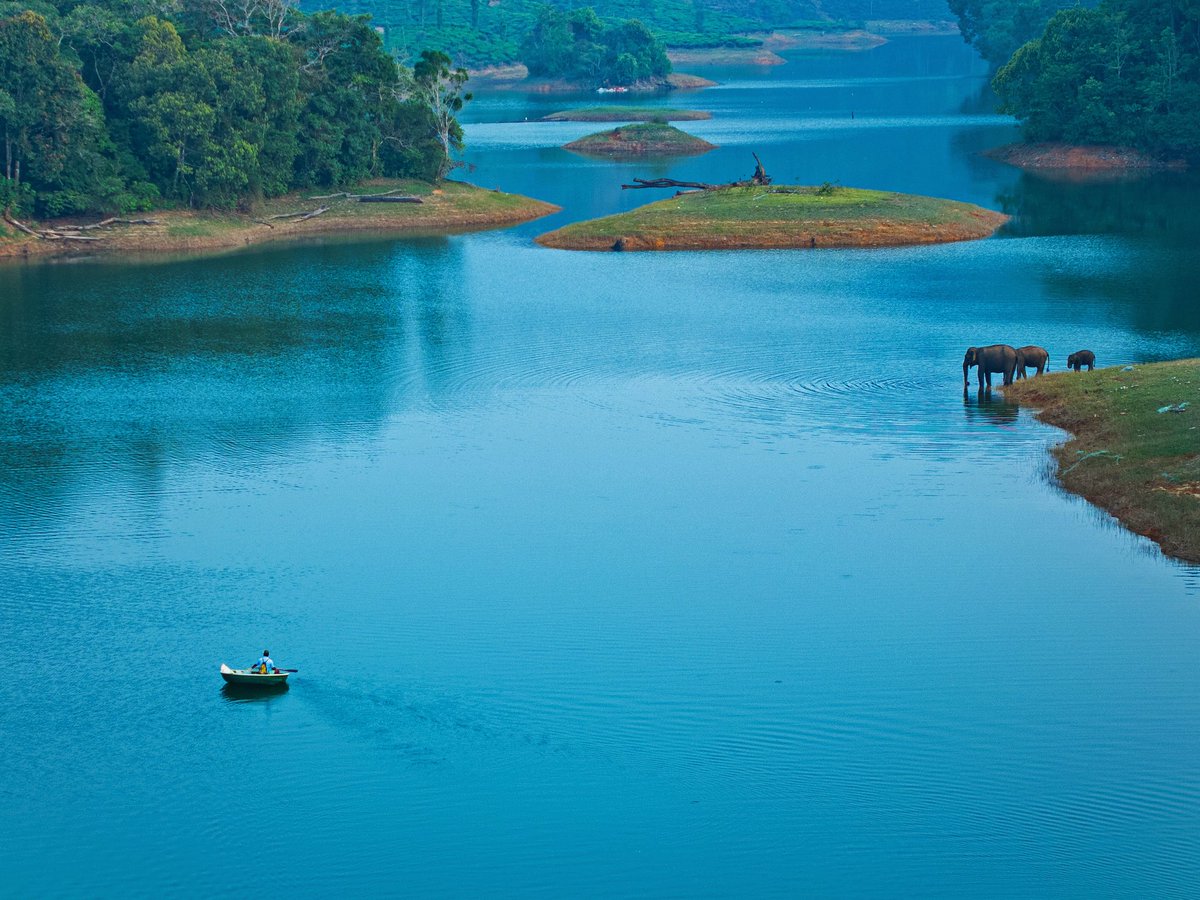
Imagine a world without elephants. Imagine forests without them. They would never be as rich, resilient and alive as they are when elephants roam through them as ecosystem engineers !
India is so lucky to have elephants. The latest Wildlife Institute of India DNA-based assessment estimates 22,446 wild elephants in India, meaning India is home to roughly half of the world’s remaining wild Asian elephants.
Within India, the Western Ghats are the great elephant stronghold. Karnataka (6,013), Tamil Nadu (3,136) and Kerala (2,785) together have 11,934 elephants, more than 53% of India’s entire estimated population. Tamil Nadu has the third-highest elephant population in the country, after Karnataka and Assam.
India’s top five elephant states are: Karnataka 6,013 | Assam 4,159 | Tamil Nadu 3,136 | Kerala 2,785 | Uttarakhand 1,792. Together they account for nearly 80% of India’s elephants.
This #WorldElephantDay, we must resolve to do everything we can to conserve elephants #worldElephantDay2026 #elephants #elephantday Brilliant capture @shanmughanandam
This day in history: Quit India Movement launched in 1942. Wish I could go back in a Time Machine and witness that historic moment. These fine people sacrificed their freedom, families and lives so that we could live free. 84 years later, the least we can do is protect the freedom they fought for. A standout feature as below pic shows is the number of WOMEN who were involved in it. As for those who stayed away and why that debate for another day!) Jai Hind! 🇮🇳
Remembering one of the most powerful and distinguished storytellers of our time: Toni Morrison.
She became the first African American woman to be awarded a #NobelPrize when she received the literature prize in 1993.
Learn more: https://t.co/eKJTEpQoMb
@MichelleObama@BarackObama For sure, the great Barack Obama has springs of youth in him. Turned 65? No...
he looks barely a twenty something guy. His steps are as light as a teenager's. He is the #Markendaya, gifted with the ever lasting youth. God bless him!
𝐅𝐫𝐨𝐦 𝟐 𝐦𝐢𝐥𝐥𝐢𝐨𝐧 𝐭𝐨 𝟑.𝟓 𝐦𝐢𝐥𝐥𝐢𝐨𝐧 𝐯𝐢𝐬𝐢𝐭𝐨𝐫𝐬 𝐢𝐧 𝐊𝐞𝐧𝐲𝐚 𝐏𝐚𝐫𝐤𝐬!
Kenya Wildlife Service has recorded a threefold increase in revenue - driven by stronger marketing, improved revenue management, and the continued growth of domestic tourism.
Speaking on the milestone, during the Fixing the Nation @ntvkenya podcast live, at Tsavo West National Park, Director General Prof. Erustus Kanga emphasized that Kenyans remain the backbone of conservation, with domestic tourism now accounting for 60% of all park visits.
This year alone, 3.5 million visitors have experienced Kenya's national parks and reserves, up from 2 million, a testament to growing public appreciation for our natural heritage.
These milestones would not have been possible without the unwavering dedication of our rangers, the men and women on the frontlines who protect Kenya's wildlife and wild spaces every day.
To all our rangers, thank you for your courage, sacrifice, and service.
Happy World Ranger Day! 💚
#ThisIsOurWild #KWS #WorldRangerDay
The @narendramodi government is a D Grade government . D for denial of present day reality. The Mod government is living in DENIAL of citizens lived experiences. My intervention in Parliament today on the president’s speech
We all love jamun, the tangy-sweet fruit that is a beloved summer favourite across India. But deep within the ancient Shola forests of the Western Ghats grows its rare mountain cousin, Syzygium calophyllifolium, the Nilgiri wild jamun. Endemic to the high-altitude forests of Tamil Nadu and Sri Lanka, this beautiful evergreen tree is believed to be an important seasonal food source for the Nilgiri tahr, birds and other forest wildlife. That is what makes forests so fascinating. Every tree has its own story, its own purpose and its own place in the intricate web of life #wildwonders #Biodiversity video @supriyasahuias
"The butterfly counts not months but moments, and has time enough."
- Rabindranath Tagore, awarded the 1913 Nobel Prize in Literature for his sensitive, fresh and beautiful poetry. He became the first non-European literature laureate.
“Trees are the most inspiring structures.” That line from the Academy Award-winning film Oppenheimer resonates even more deeply when we understand what a single mature tree sustains. Decades of research by Dr. Divya Mudappa and Dr. T.R. Shankar Raman in the Western Ghats have shown that wild figs (Ficus spp.) are keystone resources for hornbills. Unlike most forest trees, different fig species fruit throughout the year, providing a dependable food source when other fruits are scarce. Their research also found that hornbill abundance and breeding are closely linked to fig availability, while large, old trees with natural cavities provide the irreplaceable nesting sites these birds depend on. These deep hollows take decades often centuries to form and cannot be replaced once an ancient tree is felled
How two young Indians are converting discarded shoes into slippers for school children in need ! At the GreenSole Foundation, founders Shriyans Bhandari and Ramesh Dhami have made it their mission to give discarded footwear a second life. Their initiative has impacted the lives of over eight lakh people across India. Last year alone, 1,30,589 pairs of slippers and 95,357 school bags were distributed to children. Most shoes we throw away are made from a complex mix of rubber, plastics, foam, leather, and textiles, making them extremely difficult to recycle. Globally, nearly 20 billion pairs of shoes are produced every year ending up in landfills. Next time you think of throwing away a pair of shoes, donate them & be part of the solution. #sustainability https://t.co/mvrTRR2YN4
Many spoke about saving the Ganga. Prof. G.D. Agrawal gave his life for it. 💙🌊
An environmental engineer, professor at IIT Kanpur, and the first Member Secretary of the Central Pollution Control Board (CPCB), Prof. G.D. Agrawal made remarkable contributions to both science and environmental conservation.
Between 2008 and 2018, he undertook multiple indefinite fasts to preserve the river's natural flow.
He believed that cleaning the Ganga was not enough—it had to remain both clean ("Nirmal") and free-flowing ("Aviral"). His relentless efforts led to the shelving of several proposed hydropower projects on the Bhagirathi River, the formation of the National Ganga River Basin Authority (NGRBA), and brought river conservation into the national spotlight.
When he felt that meaningful action was still lacking, he began his final indefinite fast on 22 June 2018. After surviving 111 days without food, he passed away on 11 October 2018.
His sacrifice still echoes today, reminding us that protecting nature isn't just activism—it's a legacy.
His body gave up, but his message never will: If we cannot protect the rivers that sustain us, what kind of legacy are we leaving behind?
#SaveTheGanga #Environment #Sustainability #Respect
[G D Agrawal, Swami Gyan Swaroop Sanand, Ganga Conservation, Environmental Activist India, River Conservation India]
Her name is Subhasini Mistry.
She was married at the age of twelve. By the time she was around twenty-three, her husband Sadhan Chandra, a vegetable vendor near Kolkata, had died from a treatable illness.
The family could not afford medical care.
She was left with four children, no formal education and almost no money.
In the months that followed, the family slipped into extreme poverty. At one point, she had to place her eldest son in an orphanage because she could not feed him.
After her husband’s death, she made a promise to herself.
No one else in her village would die because they were too poor to afford treatment.
For a woman who could not read or write, it seemed impossible.
But she started anyway.
She worked as a domestic servant. She worked as a farm labourer. She sold vegetables on the roadside, the same work her husband had done.
For nearly twenty years, she saved whatever she could.
Part of that money went toward educating her son Ajoy. He eventually became a doctor.
With her savings, she bought a small plot of land in Hanspukur.
In the 1990s, with her son treating patients and villagers contributing whatever they could, she opened a small medical centre there.
They called it Humanity Hospital.
It began in a single room.
Today, it has dozens of beds and treats hundreds of patients every week, many of them free of charge.
In 2018, the woman who had never received a formal education was awarded the Padma Shri by the President of India.
She could not save her husband.
So she spent the next four decades helping thousands of other families save theirs.
Follow for stories India deserves to remember.
Her name is Aruna Roy.
She was born on May 26 1946 in Madras into a Tamil Brahmin family. Her father was a lawyer and independence activist.
She studied English literature in Delhi and joined the Indian Administrative Service in 1968. Seven years later, she resigned.
She gave up one of the most powerful positions in the Indian government to go and live in a village in Rajasthan, working with labourers who were not being paid the minimum wages guaranteed by law.
In 1990, she co founded the Mazdoor Kisan Shakti Sangathan in Devdungri village, Rajasthan.
The movement began from a mud hut.
Its members organised public hearings where villagers stood before officials and read government records aloud to prove that wages had been stolen or payments had never reached them.
Local authorities often resisted these hearings.Aruna Roy and her colleagues continued anyway.
The movement expanded beyond wages into a larger demand.
Ordinary citizens should have the right to access government documents.
If labourers could inspect muster rolls carrying their names, they could prove they had not been paid.
If citizens could access official files, corruption would become harder to hide.
The MKSS helped pioneer the idea of social audits and public accountability in India.
For years, the government resisted.Aruna Roy fasted, marched and organised across Rajasthan.
Thousands of ordinary people were trained to file information requests with local authorities.
In 2005, Parliament passed the Right to Information Act.
The movement she helped build became one of the foundations of India’s RTI movement.
She received the Ramon Magsaysay Award in 2000.
In 2011, she declined the Padma Bhushan, saying she did not believe in the system of state honours.
She recently turned 80. And she remains closely associated with the movement she built in Devdungri.
Follow for verified stories India deserves to remember.
National Tiger Conservation Authority and #Cheetah Steering Committee have approved the translocation of 2 male and 2 female African cheetahs, currently rehabilitated in MP, to the Banni grassland ecosystem.
With this move, #Gujarat is set to become the second home for Cheetahs in India after #KunoNationalPark in MP.
Banni facility is being developed as India’s first #CheetahConservation #BreedingCentre.
“If the urge to write should ever leave me, I want that day to be my last.”
- Nobel Prize laureate Naguib Mahfouz.
Mahfouz began writing when he was seventeen and was awarded the 1988 Nobel Prize in Literature when he was 76.
Read more: https://t.co/sQz917GcgY







![thebetterindia's tweet photo. Many spoke about saving the Ganga. Prof. G.D. Agrawal gave his life for it. 💙🌊
An environmental engineer, professor at IIT Kanpur, and the first Member Secretary of the Central Pollution Control Board (CPCB), Prof. G.D. Agrawal made remarkable contributions to both science and environmental conservation.
Between 2008 and 2018, he undertook multiple indefinite fasts to preserve the river's natural flow.
He believed that cleaning the Ganga was not enough—it had to remain both clean ("Nirmal") and free-flowing ("Aviral"). His relentless efforts led to the shelving of several proposed hydropower projects on the Bhagirathi River, the formation of the National Ganga River Basin Authority (NGRBA), and brought river conservation into the national spotlight.
When he felt that meaningful action was still lacking, he began his final indefinite fast on 22 June 2018. After surviving 111 days without food, he passed away on 11 October 2018.
His sacrifice still echoes today, reminding us that protecting nature isn't just activism—it's a legacy.
His body gave up, but his message never will: If we cannot protect the rivers that sustain us, what kind of legacy are we leaving behind?
#SaveTheGanga #Environment #Sustainability #Respect
[G D Agrawal, Swami Gyan Swaroop Sanand, Ganga Conservation, Environmental Activist India, River Conservation India]](https://pbs.twimg.com/media/HNRenWrb0AES3Hg.jpg)


