@alz_zyd_ I think good intuition, formal/precise reasoning, and bs detection will become more valuable (at least in a relative sense) and some subjects help with this, but agree it's getting harder to make the case for learning specific subject matter
@alz_zyd_ Always felt linear algebra should be taught much earlier. Tons of useful applications plus the proofs are IMO much easier and more transparent than calc/analysis epsilon-delta proofs.
Recently accepted by #QJE: “Why Doesn't the United States Have National Health Insurance? The Political Role of the American Medical Association,” by Alsan and Neberai: https://t.co/9a1xXkLlKV
In 1995, Professor Zhiguo He’s undergraduate advisor recommended a book that he couldn’t afford. Buying an unofficial copy on the street, he discovered more than advanced mathematics. “The first time I heard of Stanford GSB was through that book,” he says. https://t.co/rcg5KLLfgJ
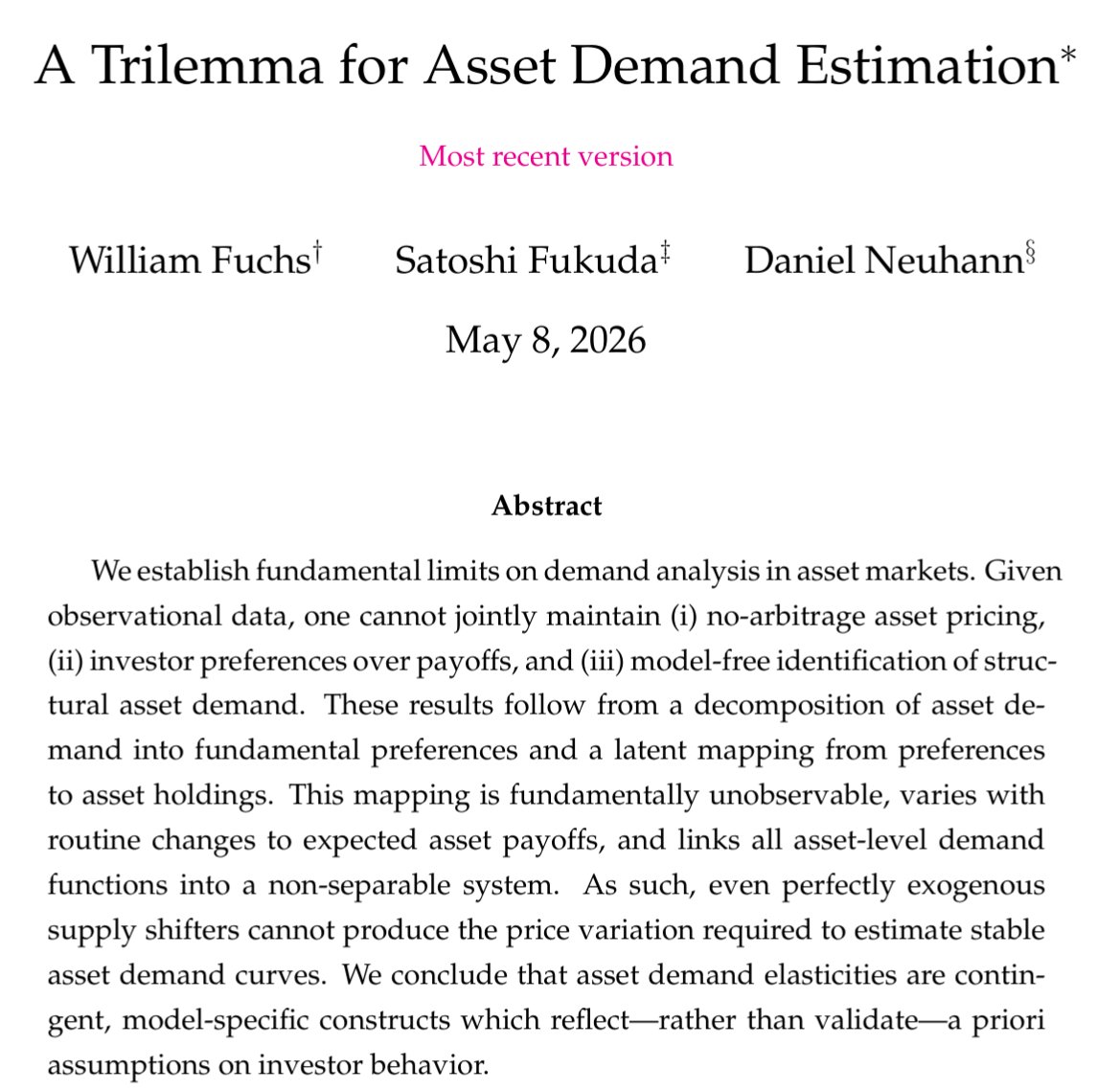
New paper by Fuchs et al pushes critique of asset demand estimation even further.
With observational data, you can't simultaneously maintain no-arbitrage pricing, investor preferences over payoffs, and model-free identification of asset demand.
I'm glad that the author of "Rent Control Is Fine, Actually" calls themself Unlearning Economics, bc it's good to just state things clearly, such as the open animosity that many left economic populists have for the field of economics and economists themselves.
Economists aren't gods, and economics isn't a divine truth, but economists are good--better than most--at something critical for making public policy: They're good at identifying tradeoffs. "Rents are too high, so freeze them" is compelling politics. But in the absence of other pro-supply policies, if you make it illegal to increase rents, landlords will stop upgrading units and convert them to condos, which reduces the supply of units for rent, reduces mobility, and drives up rents for everybody else.
The left econ populists have some clear, and clearly stated, policy ideas:
- Rents are too high, so freeze them.
- Electricity is expensive, so stop rate increases.
- Homes are too expensive, so ban institutional investors.
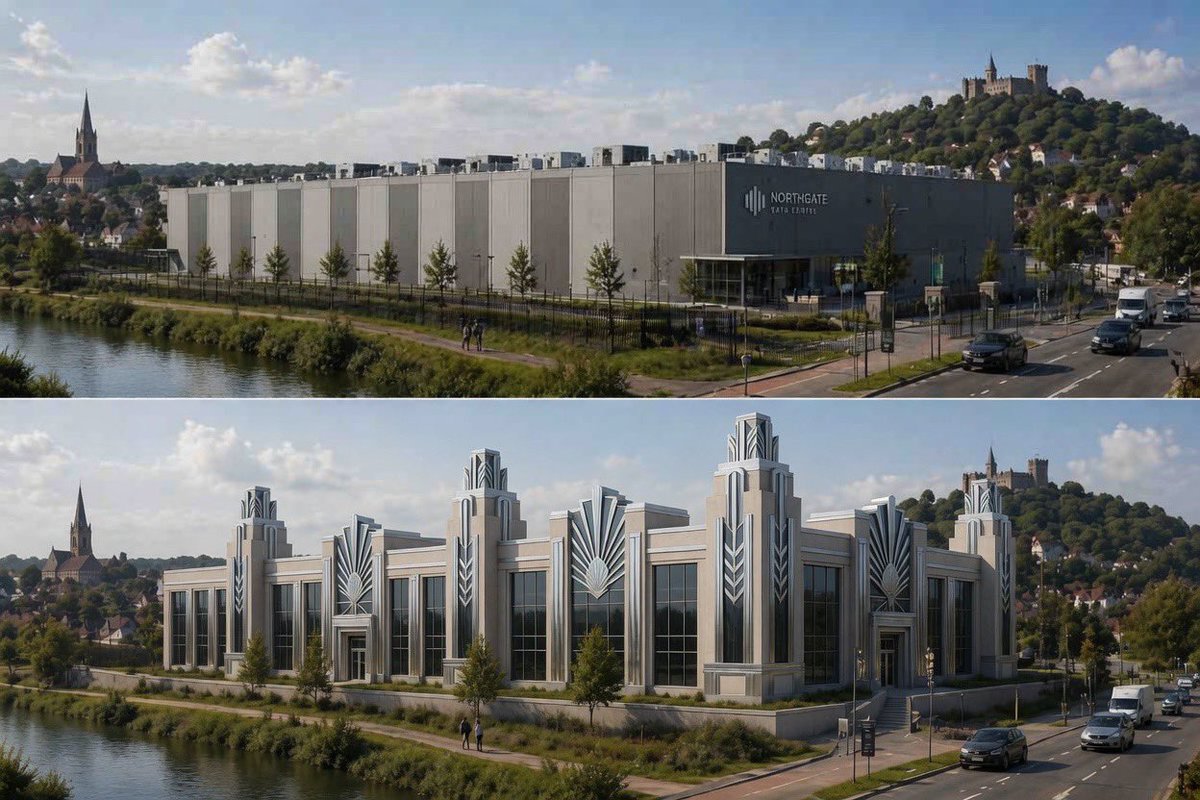
- Power prices are rising, so ban data center construction.
... All these policies feel like solutions because they're brisk, they name enemies, and they take on the most visible source of frustration. But they are much better as villain-naming exercises than they are as a complete public policy. On their own, each creates other problems: less housing built, less clean electricity built, abdicating energy policy by encouraging AI firms to build data centers abroad in unsavory countries with more emissions, etc.
I can't think of a single economic populist idea that wouldn't be helped with a little dose of economics, which is why it's troubling when I see the left participating in, and even celebrating, the great unlearning of economics.
For the first time in Norwegian history, a bus will carry passengers in regular traffic without any human behind the wheel. The first pilot without a safety driver was tested Friday, and if all goes as planned, anyone can ride driverless buses starting in May.