You can now view your full skin inventory on the site!
We also estimate battle pass completion, as well as your total inventory value (from store-only skins).
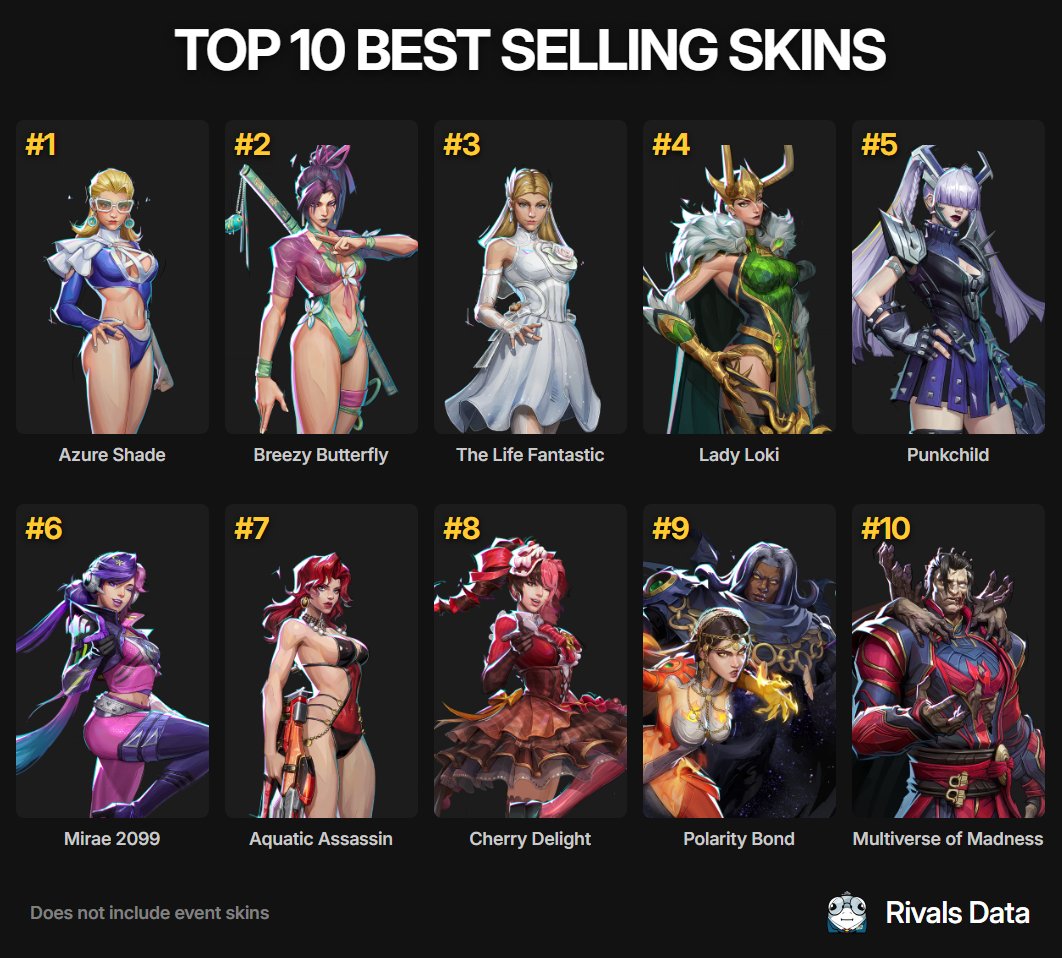
Yes, it's not an objective analysis, hence why I pointed out the nuance above. I collected the data via a random sample of 250,000 players who were checked on our website. The bias in that methodology is that due to our website only being out for 2~ months, this leans the sample set to *current* players of the game. Given that the game is far from it's monthly player peaks, this means it definitely excludes a large set of users who played previously and since quit (which is probably why don't see many OG skins in this ranking).
Despite it not being objective, I still found the data statistically significant (i.e #1 sold nearly 2x as #10, it's not a super tight grouping). The data is closer to "What skins have been bought the most by current players of the game in their lifetimes". And of course there's the whole other issue in not including event / store hybrid skins (or the revenue from the gacha skins as well, or chroma revenue, etc).
I think weekly sales is possible by rechecking the original sample, and would have a lower risk of bias. If I do a more in-depth post that's more prone to discussion (like grouping sales per hero), I'll make sure to explain all the nuance properly.
At the end of the day, it's difficult to get objective data, so my approach is to understand the issues with the data and make a judgement call on if it's still statistically significant.
@morticianfngknt I ranked this list based off quantity * unit price. Maybe that's in reference to just quantity?
My player sample is also more biased towards people currently playing the game (that skin was more popular towards the start of the game).
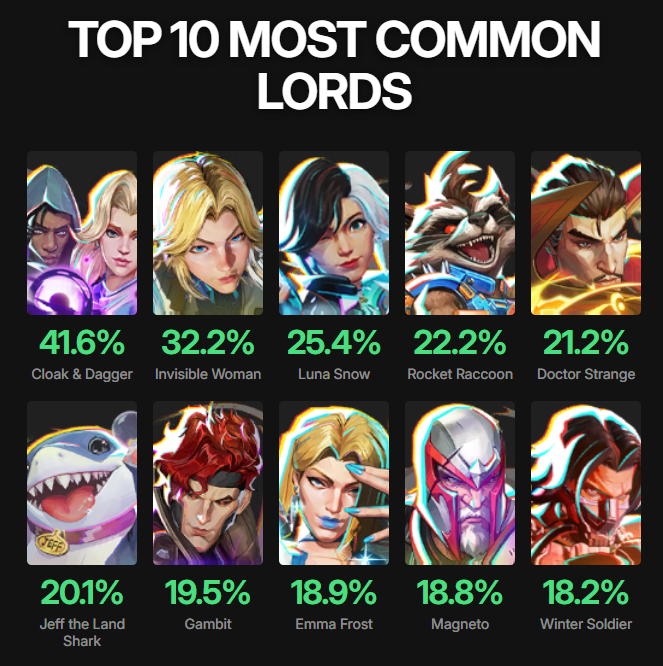
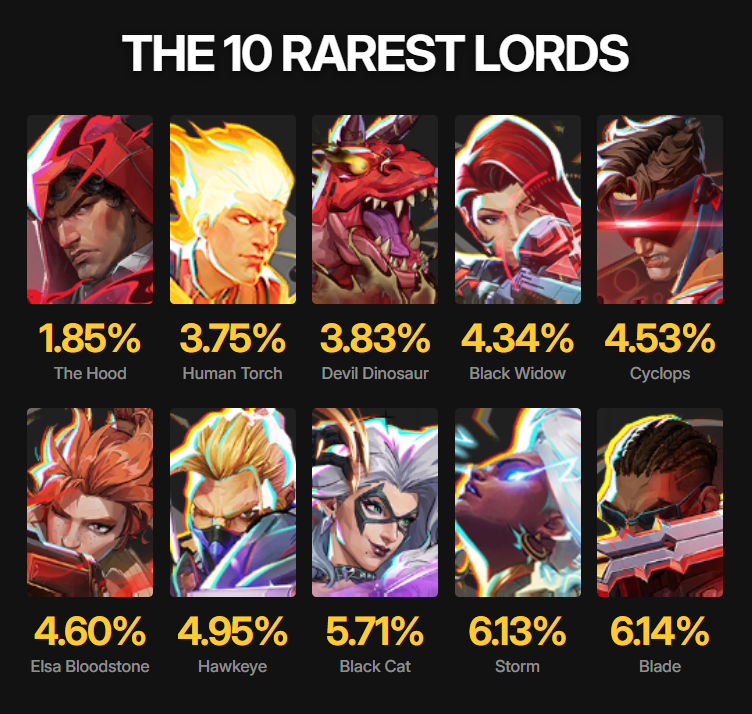
@yes__lad It's 41.6% of the people who have checked their proficiency on our site. This makes it lean more towards people who are active players, since newer players don't really care about that yet.
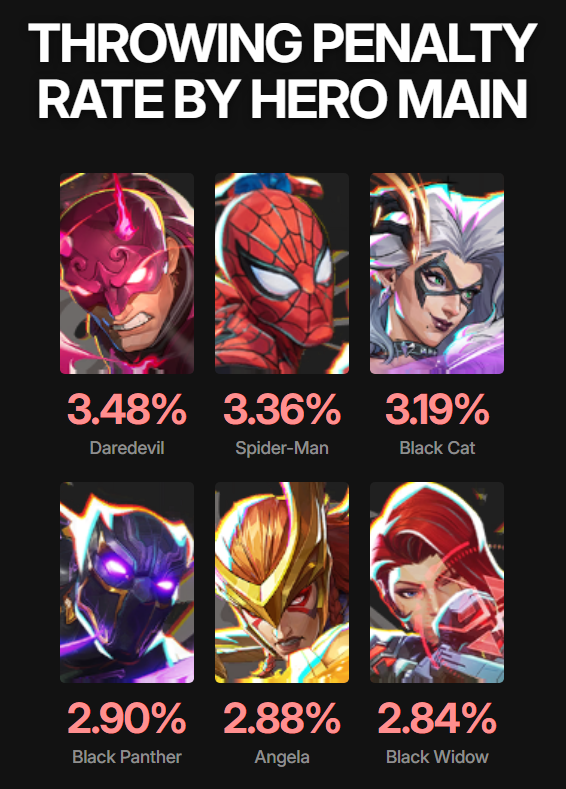
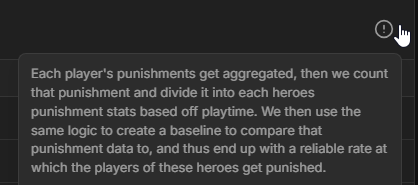
There's a small note on the page for how it works. It doesn't take into account what exact hero was played in the game where the infraction took place (because it would skew the data towards obvious throw picks).
Instead, after an infraction is detected, it checks the players hero playtime distribution in the past 2 seasons, and divides it into the stats for each hero accordingly. The same collection method is used to create the baseline (from the whole player base), hence a reliable rate can be distinguished.