@AdhirSinha There was no secrete bro, this story was taken from a French drama “ Beket”, there was a Marathi play on the same story named “ Beiman”, we had done that drama in college in 1978!!
काय गरज आहे अशा ठिकाणी जायची......
हा विडिओ पाहून आपोआप चीड येईल.
आपल्या घरचा, मंडळाचा गणपती आहे ना. त्याला नमस्कार करा. अपमान करून घ्यायला कशाला जाता 🤦♂️
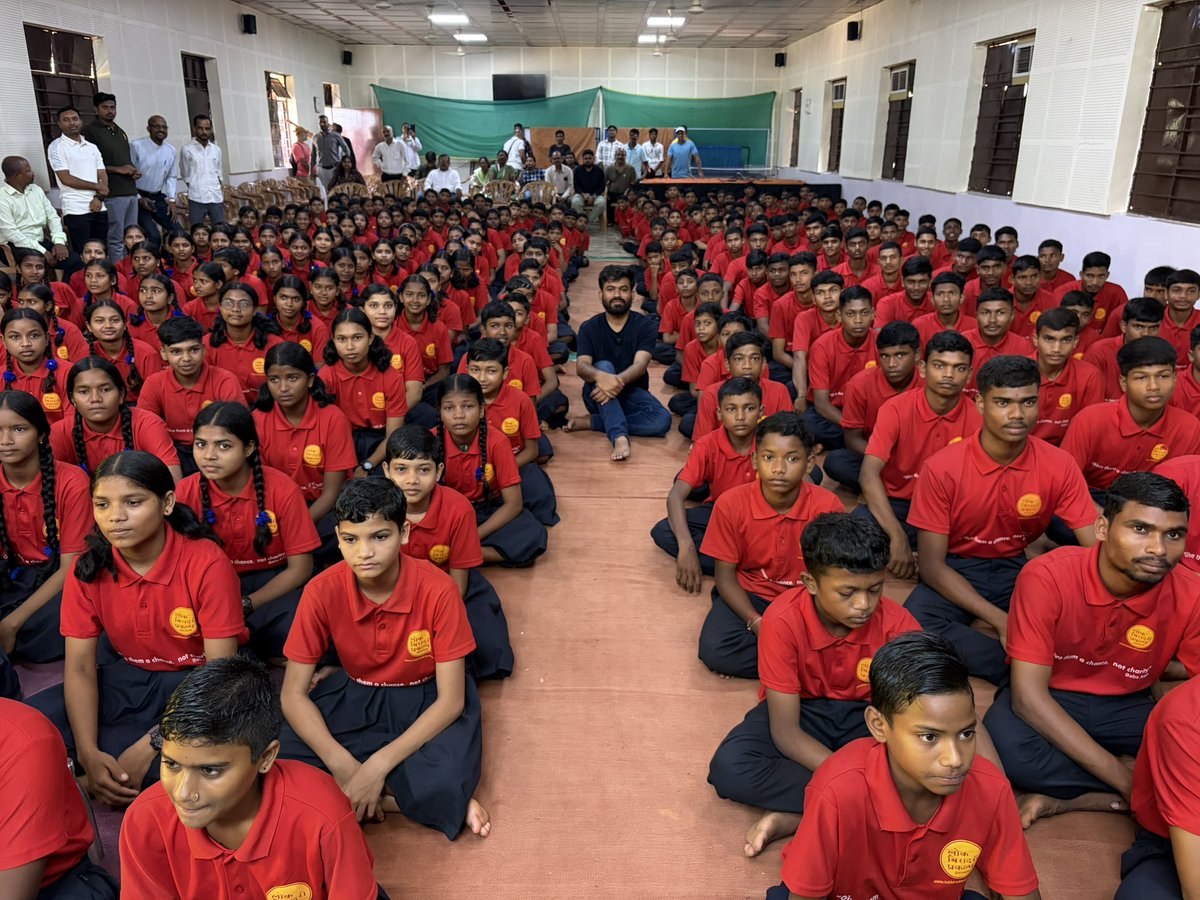
After travelling extensively across Gadchiroli, the only good school for Tribal children I came across was the one started by Dr. Prakash Amte.
It has a science lab, art studio, digital lab, library, and serves some of the healthiest meals I have ever seen being provided to students. This year 8 tribal students from this school cracked NEET and will become doctors.
After visiting the school, I was left with one question: if Dr. Amte can build and run a school like this, why can’t the govt do the same despite having lakhs of crores at its disposal?
Lastly, it was truly an honour to meet the Amte couple, who have dedicated nearly 50 years of their lives to serving Tribal communities and their children. Their work and commitment are truly inspiring.
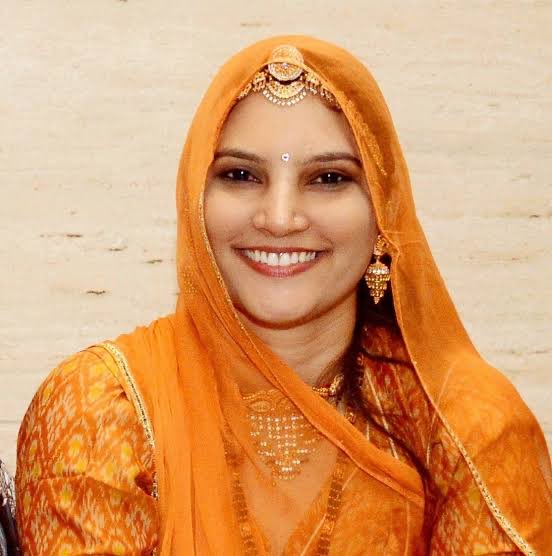
She made a bag by hand and sold it for 70 rupees.
The raw material had cost her 50.
So she had made 20 rupees.
Her name is Ruma Devi.
She was born in 1988 in Rawatsar, a village in Barmer district in Rajasthan. She lost her mother as a small child. Her father remarried.
When she reached class 8 her family took her name off the school rolls and put her to work in the house. Part of that work was walking about 10 km a day to fetch water.
She was married at 17.
Her first son died 48 hours after he was born.
She has spoken about what happened next. In those dark days, she said, she remembered that her grandmother had taught her kashidakari, the traditional embroidery of that region. She picked up a needle again.
That is where the 20 rupees comes in.
She had no sewing machine, so everything was done by hand. She went from house to house in the village asking other women to work with her. Most of them had the same skill. All of them had learnt it from a grandmother.
Ten of them agreed. Each put in 100 rupees. Together that was enough to buy one sewing machine.
That is the entire founding capital of what came next.
Today the network she built covers tens of thousands of women artisans across the villages of the Thar desert. She is president of an organisation called Gramin Vikas Evam Chetna Sansthan and runs a foundation in her own name.
For most of those women it was the first money they had ever earned themselves.
Somewhere along the way, designers came to Barmer for a fashion show. Ruma Devi asked whether she could take part in it.
She was told no. You are supposed to stitch, she was told. Fashion designing and fashion shows are not your forte.
She has since shown at Rajasthan Heritage Week. She has worked with Anita Dongre, Bibi Russell and Abraham Thakore. She has represented Rajasthan in Germany, Singapore and London. She was named Designer of the Year at Textiles Fair India in 2019.
In 2018 the President of India gave her the Nari Shakti Puraskar.
She has an honorary doctorate. Harvard invited her to speak.
She dropped out of school in class 8 because her family removed her name from the register.
The skill she built all of it on was the one thing nobody thought to take away from her, because her grandmother had already given it to her for free.
The most expensive part of a hospital bill may never touch the hospital at all.
A patient admitted for care has no way of knowing whether the price on a medical consumable reflects its actual cost or a markup fixed long before it ever reached the ward. That gap in information is, at its core, a public health issue.
A survey of hospital consumables in Maharashtra found an IV infusion set with a trade price of ₹11.05 carrying a printed MRP of ₹325 ; a markup of 2,841%. A syringe procured at ₹6.75 carried an MRP of ₹57.20. A catheter procured at ₹29.41 carried an MRP of ₹310.
These are not elective purchases. Patients cannot compare prices, seek alternatives, or question a number printed on a box while receiving care and the MRP itself is often fixed upstream by manufacturers and distributors, disconnected from the trade price by a wide, unexplained margin. The result is a system where the party bearing the cost has the least information to evaluate it.
The regulatory gap is structural: scheduled medicines are capped under the Drugs (Prices Control) Order, 2013. Most medical devices and consumables are not leaving both the pricing and the information around it almost entirely unmonitored.
A review of these findings and clear guidelines on the permissible gap between trade procurement price and declared MRP have been recommended to the Department of Pharmaceuticals and the NPPA ; a step toward closing not just a pricing gap, but the information gap patients are left to bear alone.
#PublicHealth #GoodGovernance #Leadership #TukaramMundhe
https://t.co/Ye9CVzr8qU
Hi. 😊 Swedish dude here.
When our children get sick, we have 60 paid days per year to stay home with them.
Per parent.
They're separate from my 25 paid vacation days.
Meaning I don't have to use my own paid sick leave.
If I'm a single parent: 120 days.
If my child has a chronic illness: 120 days
If my child is hospitalized: unlimited days.
These days reset every January.
By law. every year until child is 18.
Follow for more glimpses into life in a social democracy, where dignity is not a privilege.
Peace ✌🏼
🧵
It’s a bonnie lassie, sir - These words by a Scottish doctor heralded the birth of Indira Gandhi. Named Indira by her grandfather, after his mother and Priyadarshini by her parents. She grew up at the feet of Mahatma, while being coached in an extremely liberal
1/15
Lokmanya Tilak started the Sarvajanik Ganesh Festival in 1893 in order to use it as a medium of social & political awakening.
1st Photo (a later pic): Mahatma Gandhi wearing a Kathaiwadi Pagdi & Md Ali Jinnah wearing suit on the left with Lokmanya Tilak at Shantaram Chawl in Mumbai for the festival.
2nd Photo: This photo is of the same meeting at Shantaram Chawl.
3rd Photo: A license to allow devotees to play music in the streets granted by Police Commissioner of Mumbai to Dr M B Velkar during Vijayadashmi, Shivjayanti & Ganesh festivals. (1916)
-Tilak Archives
#GaneshChaurthi #GanpatiBappaMorya