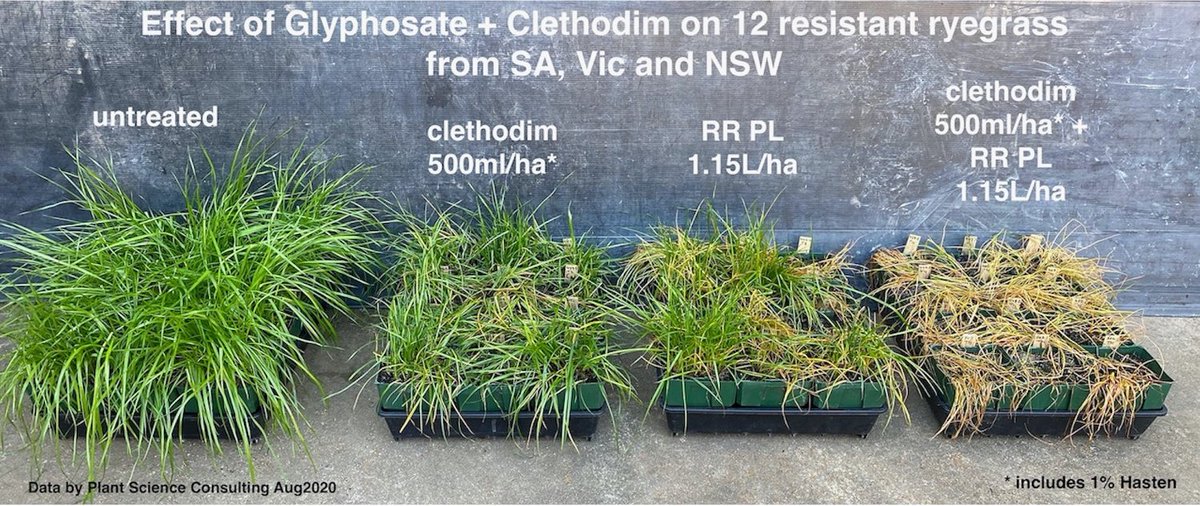
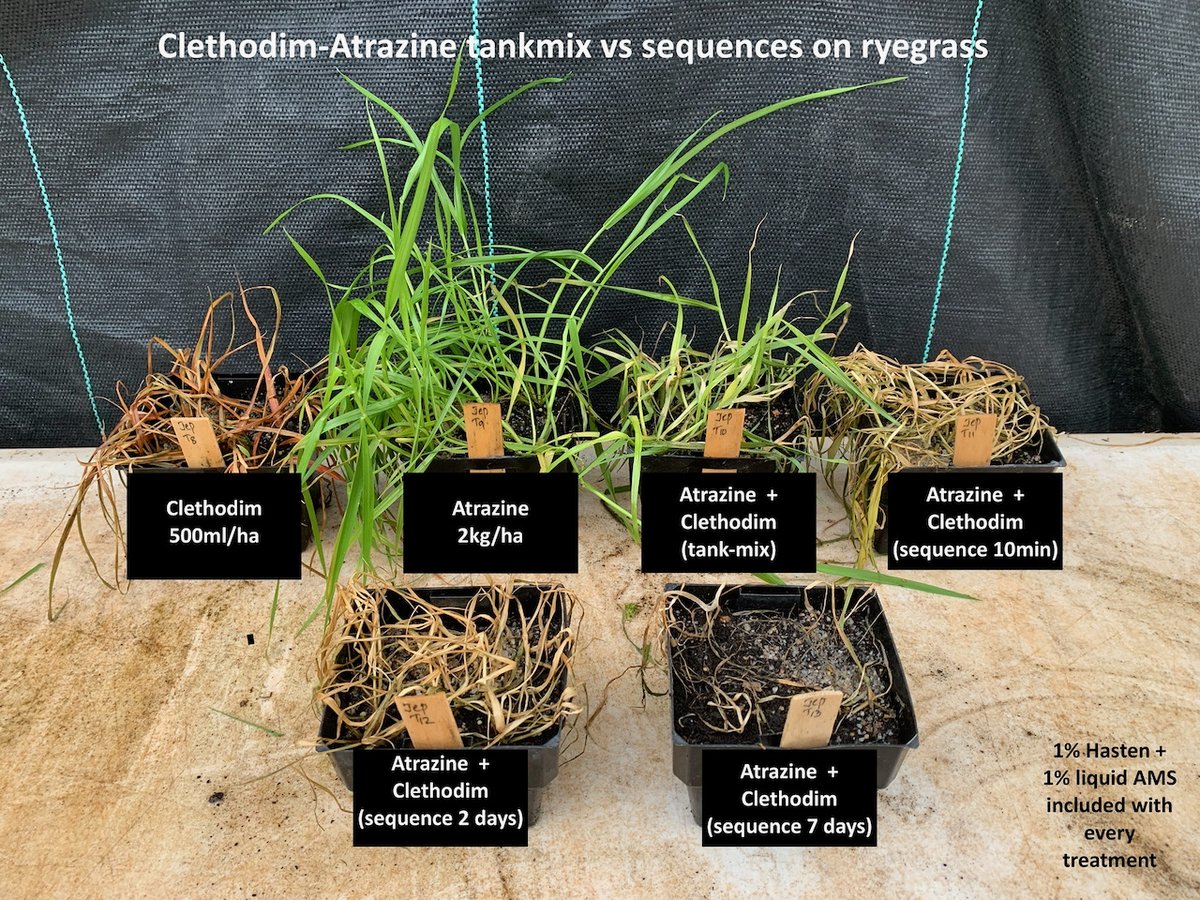
Combination of Clethodim + Roundup Ready Performance Liquid on ryegrass resistant to Dims, Glyphosate or both. Photo is of 12 populations. Each pot is a single population. The location of each pot in each tray is the same population.
Ryegrass from WA, SA, Vic and NSW chosen.
Our replicated pot trials identified that tank-mixing Clethodim + Atrazine was antagonist vs. Clethodim alone or separating the mixes. The longer the separation the greater the control. We included 3 DIM-resistant and 1 susceptible ryegrass in the study. @WeedSmartAU
Update @APVMA
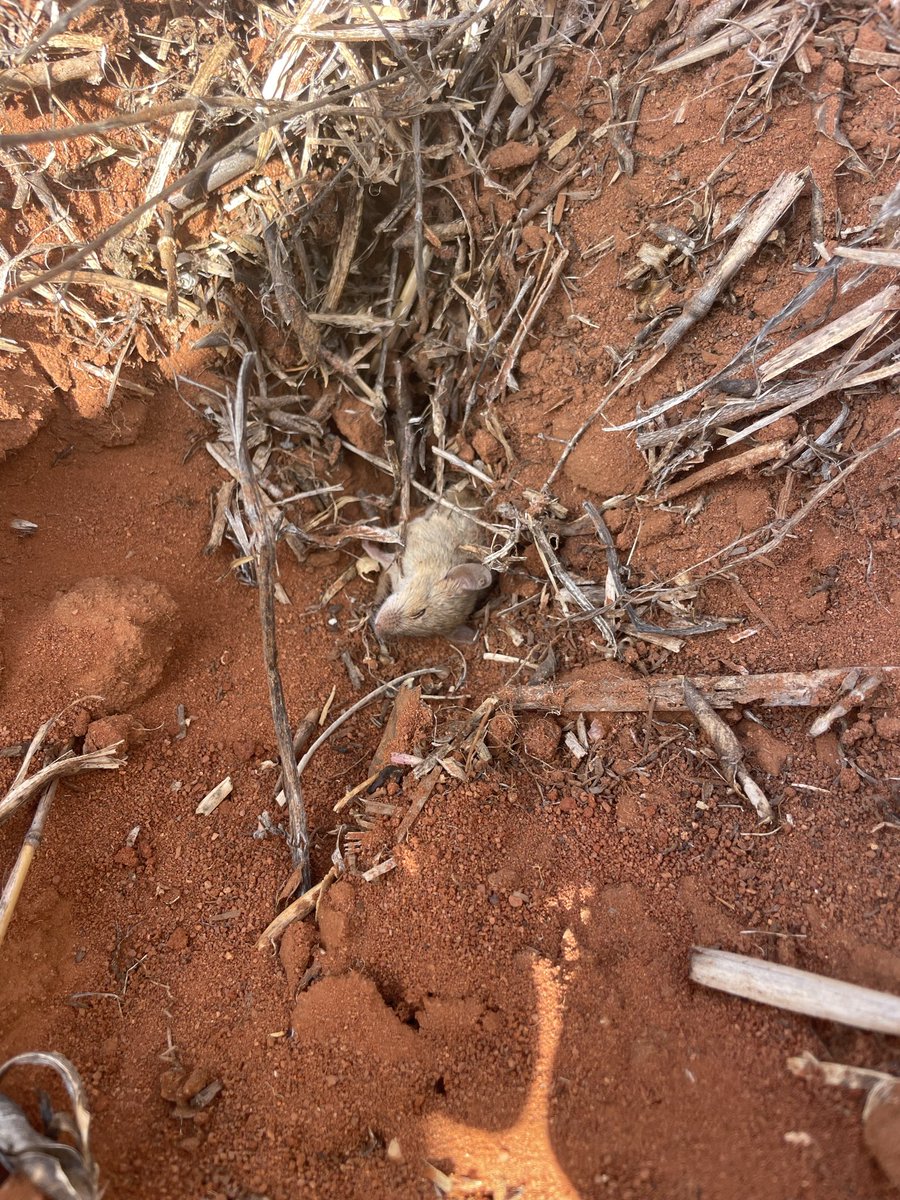
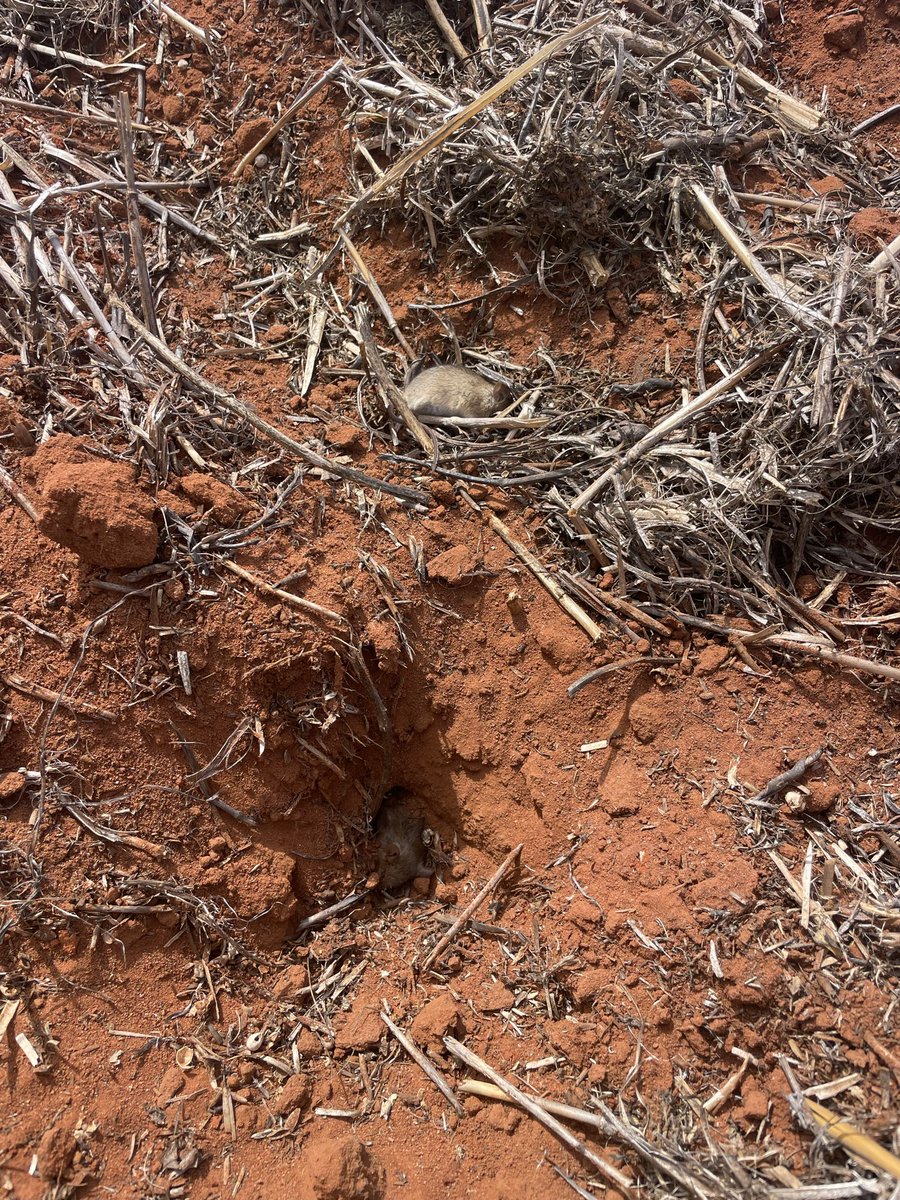
Might be knock off time at your place bit we're still living the nightmare. Spent $100k baiting so far and we won't get to harvest this 400ha unless we reseed it. Might not rain for another fortnight so we've lost 6 weeks of growing season, damage immeasurable 😢
#BREAKING The father of slain Australian soldier Robert Poate says his son’s killer still roams free while Australia hunts its own.
Private Robert Poate, a young Australian soldier, was riddled with 11 bullets by an Afghan Army “friendly”
Hugh Poate said it’s hard to stomach the fact the Albanese Government has dropped the ball on that case while splashing millions of dollars investigating Ben Roberts-Smith.
An allied ANA soldier known as “Hekmatullah” who was being mentored by Australian soldiers, murdered three Aussies and wounded two others in an insider attack.
Within 20 minutes of that attack, a small team of SAS soldiers led by Roberts-Smith was tasked with a capture/kill mission of Hekmatullah.
It was on this mission that 5 “war crime murders” allegedly occurred.
Hekmatullah was later captured in Pakistan where, with chilling defiance, he proudly confessed to all 4 charges – murdering 3 Australian Soldiers, wounding two, treason and being a member of a terrorist organisation.
He was sentenced to death.
It was later revealed that DFAT was unbelievably opposed to the death sentence being carried out & Hekmatullah was subsequently released.
Today, he roams free in the mountains of Afghanistan, while Ben Roberts Smith is persecuted by Anthony Albanese.
@agrosmyth@APVMA@MouseAlert 2. When you look at the numbers of grain per metre (only 2-3 at 1kg) and the numbers we are dealing with in some paddocks. In some paddocks where 50zp has been used I am still seeing med/high mice activity in hot spots.
@agrosmyth@APVMA@MouseAlert 1. This scenario looks likes a numbers game and feed source. Burning has removed a lot of feed source and going straight to canola seed. A good case for baiting twice or higher rates if permit/label allowed. Spread a few days before seeding and straight after seeding.
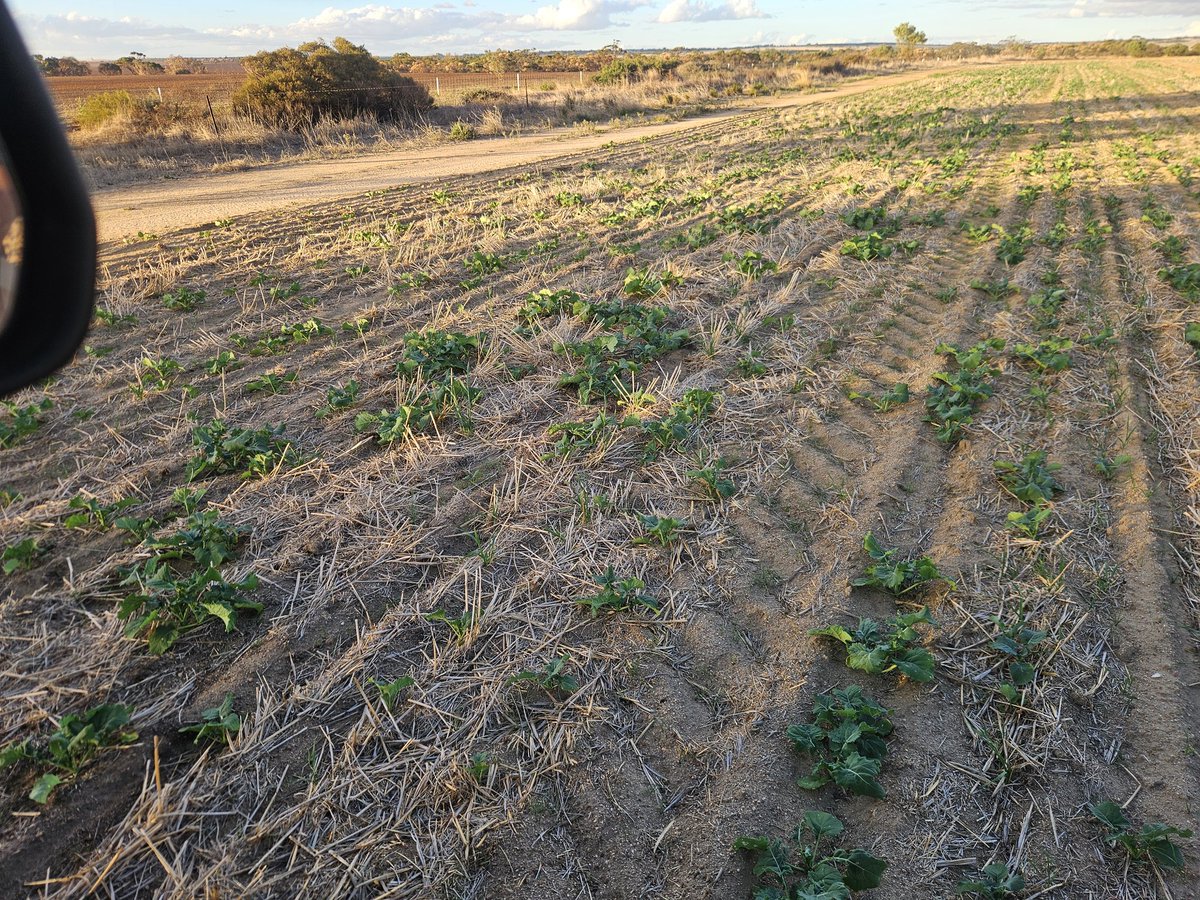
Burnt and sown to canola. 3 days later footage taken. Think the mice have a taste for canola seeds… 1kg of 25gai ain’t going to cut it here. Hoping it’s not a re seed...@APVMA@MouseAlert
Some highlights from last night's Channel 7 Spotlight.
Little wonder why Chris Bowen refused to be interviewed.
Our power grid is being sold out to the Chinese.
https://t.co/7KMlHY4wQ3
I don't think Australians will be comfortable with how the Chinese companies treat their miners in Africa
@HoolyMcg I hope your young blokes okay, our son in Perth had his ute stolen last Friday and was used to steal a lot of copper, water heaters and baby food around Perth. Police finally caught them after a high speed chase and ran the ute off a limestone wall. 😡😡
Fertiliser shortages lead to reduced food production, that’s about as simple as it gets. While many farmers have told me they have enough fertiliser for winter crop planting in late April, the real question is what happens as we move toward mid-year. Australia is almost entirely import dependent for fertiliser. A shortfall of specifically nitrogen fertiliser after planting could have a sizeable downward impact on crop yields and production in Australia.
The big challenge facing farmers is that for the time being crop prices are low, and due to the shortage of fertiliser, the cost of growing crops has gone through the roof. During my recent travels I saw nitrogen fertiliser prices jump to $1,300/mt, the next day $1,500/mt and some farmers even being quoted $1,600/mt. Prior to planting they were as low as $750/mt.
The US war in Iran is very different to Russia’s invasion of Ukraine from a wheat price perspective. Russia and Ukraine accounted for roughly 30% of global wheat exports. Black Sea port closures immediately at the onset of the war led to rocketing grain prices, buffering farmers from higher fertiliser and fuel costs. This time is very different. Iran is an importer of wheat, and no exporter has been stopped from exporting. Wheat prices haven’t risen due to the war. Furthermore, we still have plentiful wheat left over from last year. Argentina and Canada had record wheat crops at the end of 2025, and Australia produced more than expected.
This all changes as we head toward mid-year. Northern hemisphere winter wheat crops are coming out of winter dormancy now and will be nitrogen hungry prior to harvest at the end of June/July. On the Australia front, we’re yet to plant our winter crop. I’ve heard a broad range of responses from farmers so far to the higher cost of fertiliser and fuel: (1) deciding to switch away from nitrogen hungry crops like wheat and canola to feed barley (usually farmers don’t switch this close to planting) (2) farmers deciding they will be a lot more conservative with nitrogen application this season (leads to reduced yield and protein content of crops) (3) at the extreme, the occasional farmer even choosing just not to plant, the margins calculations simply don’t stack up. While usually farmers go ahead with planting in hopes the economics improve toward harvest, the rapid input price rise is making some question that mentality.
The duration of the closure of the Strait of Hormuz will determine the shortfall and price of fertiliser supplies this year. The shortage of fertiliser will determine the production and price impact. The main positive for Australian farmers is that (with the exclusion of northern NSW) soil moisture levels are looking good heading into planting, for some farmers even the best in years.
#agchatoz @Ross_Greenwood@SkyNewsAust
🚨
Fuel stations across regional NSW are running out of fuel ... but the 'renewable energy' mega-construction sites are still guzzling diesel. Surely we should preserve fuel and prioritise farmers over pie-in-the-sky renewables.
I asked the government today if they would pause the consumption of diesel by the renewable industrial complex to protect our food supply ... but all must bow before the Golden Calf of Renewables.
@sal_eacos@LibertariansNSW
@S_M_Bowman More effective spreading straight after seeding as cultivation will bury most of the other food source and the baits will generally be the first source of food they will find without digging. Pre seeding and you run the risk of burying the bait unless running a disc machine?
@bentags@ipaddockapps Yep, definitely before rain, still think these products need moisture to work properly. Don’t generally see too much visual breakdown, just when the bar goes through for stubble flow.
@bentags@ipaddockapps Will depend on how much rain and soil temperature following rain event. Ideally weekly rain event keeping top soil moist, once top soil dries out, process stops. A few stubble products out there improving stubble breakdown that are worth having a look at if not speed tilling??
@bentags@ipaddockapps With a lot of stubble incorporated into soil the C:N ratio is out of whack so higher, early nitrogen in- Furrow away from stubble for best N efficiency early. N will cycle back through later through organic N pool, Nitrogen just being used up by microbes >lower crop vigour.