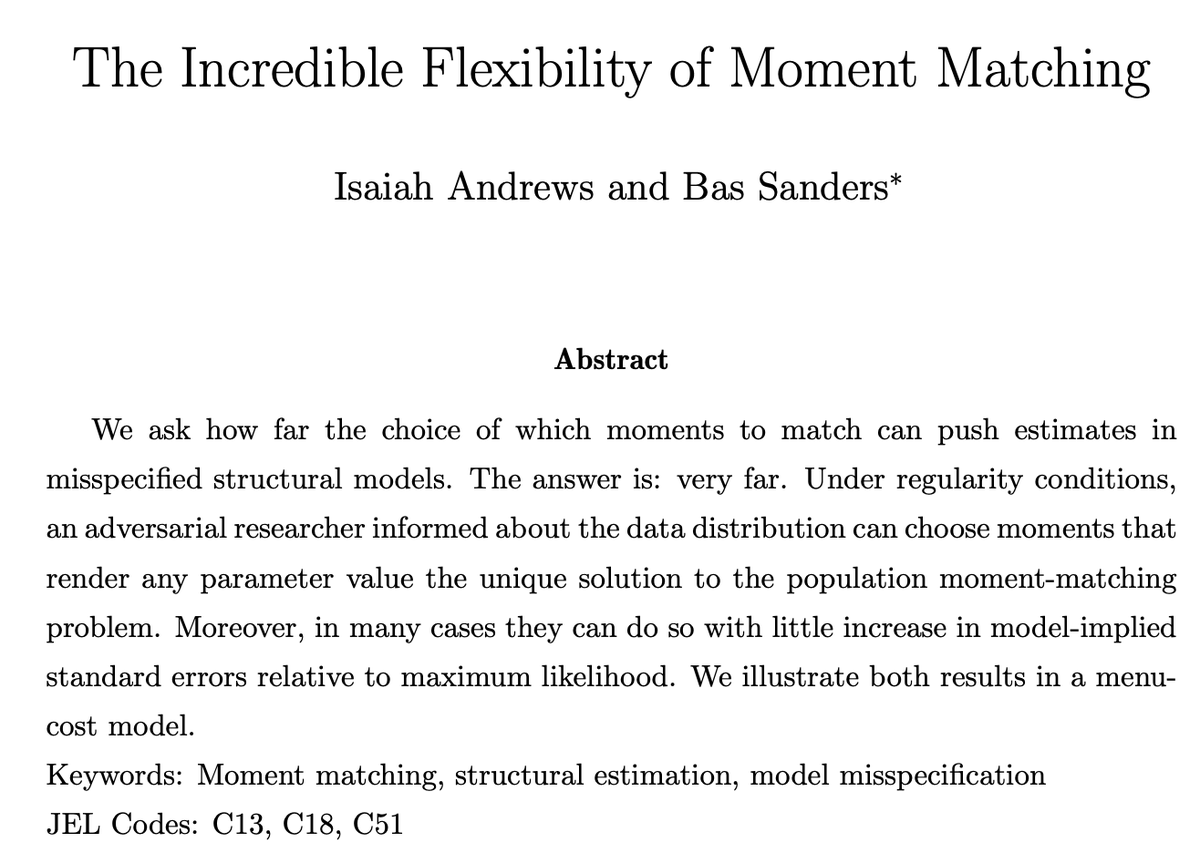
A federal bill to ban electronic shelf labels in grocery stores is in committee. Nine states have introduced similar legislation. In a recent CBS segment, Walmart cites our research to push back.
📺 https://t.co/7ypqMpg1xL
We’ve received notice that the Department of Commerce has lifted export controls on Claude Fable 5 and Mythos 5.
We'll begin restoring access tomorrow, and will share an update soon.
We’re grateful to our users for their patience, and to everyone who worked with us on redeploying the models.
#Grocery Retailers Substantially Reduce Food Waste through Local Demand Learning
The authors analyze sales, waste, and order-arrival data from new-store openings.
Authors: Kohei Hayashida, Kanishka Misra, Robert Evan Sanders
Read More: https://t.co/EMH6QhWlCL
#Sustainability
I think @Princeton
should seriously consider adopting the recommendations in the Yale report, which include:
• Expand financial aid and make pricing more transparent and predictable for families
• Reform admissions by prioritizing academic achievement, reducing legacy/athlete/donor preferences, and establishing a minimum academic threshold
• Address grade inflation — Yale's median grade is now an A — through grade normalization and transcript percentiles. (Harvard and Yale are moving so we wouldn't be going alone this time.)
• Combat self-censorship in classrooms, with joint faculty-student classroom principles
• Pursue intellectual pluralism through departmental self-studies and investment in underrepresented scholarly traditions
• Implement a device-free classroom default to restore focused learning
• Create a shared civic education curriculum for first-year undergraduates
• Streamline administrative bureaucracy with a transparent, faculty-involved review
• Strengthen faculty governance, including faculty liaisons to the Board of Trustees
• Communicate more openly and listen more broadly to public concerns
New in Claude Code: auto mode.
Instead of approving every file write and bash command, or skipping permissions entirely, auto mode lets Claude make permission decisions on your behalf.
Safeguards check each action before it runs.
Just had a faculty meeting at INSEAD about the impact of AI on management education and how we should respond.
Every serious business school is having the AI conversation right now.
1/
They use Claude as a thinking partner, iterating on tasks instead of providing simple directive instructions (like “write this email” or “summarize this report”).
It raises questions about whether AI proficiency may become a dividing line in the labor market.
FWIW we've been doing a lot at Booth. All faculty training days with Claude Code, a new Applied AI group with dedicated tenure lines (we're hiring!), Applied AI MBA concentration, and many faculty doing important research in the space.
@BrianCAlbrecht The firm-level version is even worse. "We can't quantify trust or link our actions to churn, so let's just squeeze customers now and hope for the best." That's the actual logic.
We examined 182M product-store-date observations from a major US grocer. Surge pricing affected 0.005% of products before ESLs, and that rate barely moved afterward (p = 0.94). Political capital is finite; this isn't where it should go.
📄 https://t.co/73kPfV7Afj
#econtwitter
A federal bill to ban electronic shelf labels in grocery stores is in committee. Nine states have introduced similar legislation. In a recent CBS segment, Walmart cites our research to push back.
📺 https://t.co/7ypqMpg1xL