RE: Gas Prices, Mind Control and Breaking Bad
So I finally caught up with the rest of America and I'm watching "Breaking Bad" for the first time. It's an intense show, and so well written.
I was watching the season opener for Season 5 (released in 2012) and something caught my eye at the beginning of Episode 1. See the screenshot below?
Notice the gas price. $3.63 a gallon. Somewhere In 2011/2012.
Breaking Bad is famously set in Albuquerque, New Mexico. According to Grok, on this day in 2026 the average price for a gallon of regular unleaded in Albuquerque is $3.41.
14 years ago, during the what was likely campaign season for Barack Obama's second term, gas cost $0.22 cents more per gallon than it does today.
And if you want to adjust for inflation, 2012's $3.63 in 2026 dollars is $5.34. So when Barack Obama was running for President, gas was an inflation-adjusted $1.71 more than it is now under President Trump.
President Trump's initiatives to make America energy-independent have done more to make gas affordable than anyone else in our lifetimes.
Yet did you hear that from ANYWHERE in the media or on social media during the midterms?
NOPE.
All we heard about was an "affordability crisis" and gas prices were Exhibit #1.
It's mind control. It's the Democrat/Media Complex doing what it does best. Kick yourself if you fell for it.
$7.2 Million Medicaid Fraud Case Conviction in Minnesota That Was Dismissed by Democrat Judge, Now Restored | David Greyson, The Gateway Pundit
A $7.2 million Medicaid fraud case conviction, tossed out by a leftist judge in 2025, has been restored by the Minnesota Court of Appeals.
There were originally six guilty verdicts against Abdifatah Abdulkadir Yusuf, which were reinstated by a three-judge panel. His healthcare business was the focus of the fraud.
The three-judge panel disagreed with Judge Sarah West’s view that Yusuf’s brother, Mohamed, was the one committing the fraud without Yusuf’s knowledge.
Yusuf was originally charged in June 2024 with stealing cash from Minnesota’s Medicare Program through the business he ran out of his home, called Promise Health. He was convicted by a jury in August of 2025.
Over a three-year period between 2019 and 2022, Promise Health made more than 40,000 claims deemed fraudulent. Witnesses testified at trial that the business charged the government for services that were never provided.
There was also evidence that Yusuf kept over $1 million from the business for himself. Authorities eventually discovered that over $400,000 was spent at luxury stores, including Canada Goose and Nordstrom.
Yusuf originally launched his business in 2018.
Judge Sarah West decided to acquit him in November 2025, going against the jury’s guilty verdict. It drew attention, especially since fraud has been in the news with Minnesota being front and center.
The three-judge panel was not convinced by Yusuf’s claim that he was unaware of the fraud.
New York Post Reported:
A conviction in a $7.2 million Medicaid fraud case that had been thrown out by a Democrat-appointed judge last year has been revived by the Minnesota Court of Appeals.
A three-judge panel on the Minnesota Court of Appeals ordered the six guilty verdicts reinstated against Abdifatah Abdulkadir Yusuf, whose healthcare firm was at the center of the fraud scandal.
The panel rejected Hennepin County Judge Sarah West’s determination that Yusuf’s brother, Mohamed, may have been behind the fraud without his knowledge.
https://t.co/0LCAry3iXd
Texas HOA's six-year vendetta against homeowner over tiny backyard office ends in spectacular $153,000 defeat | Sara Mcgiff, Daily Mail
A Texas homeowner has won a six-year legal battle against her homeowners association after it tried to block her from building a tiny backyard office – leaving the HOA facing a bill of more than $153,000.
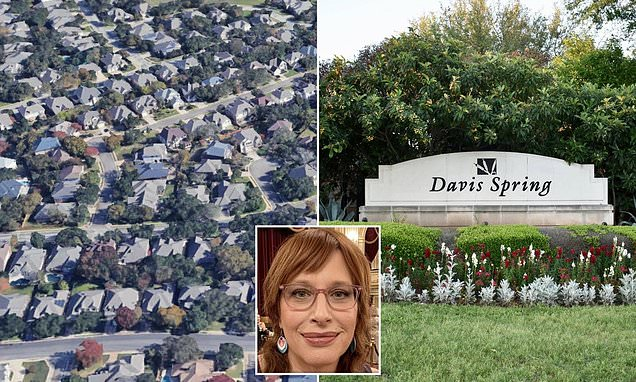
Masha Davis, who lives in the Davis Spring subdivision in Austin, fought the association for years after it rejected plans for her 160-square-foot backyard office in 2020, the New York Post reported.
But the association's architectural review committee rejected her proposal, citing concerns about the building's height and whether it could be used as a separate dwelling.
The proposed office measured just 10 feet by 16 feet and stood 9 feet, 6 inches tall. It would have electricity and air conditioning but no plumbing, and Davis said it would not have been visible from the street.
The homeowner, who had retired, wanted to use the space for consulting work and as a separate area where family members could isolate during the Covid-19 pandemic.
Davis argued that the HOA was enforcing a height restriction that was not included in the architectural guidelines legally in effect when she submitted her application.
She sued the association in January 2021, beginning a lengthy legal fight that would eventually see the courts side with her.
In August 2022, a Williamson County district court ruled that the applicable architectural guidelines contained no height restriction preventing the project and that the committee did not have the authority to reject it on those grounds.
A second ruling in January 2024 found that no restrictive covenant prohibited Davis from building the office as proposed.
The court subsequently awarded her $100,000 in attorney's fees, although Davis said her legal expenses had reached around $150,000.
The HOA appealed the attorney's fee award rather than the rulings allowing the office to be built.
But on September 29, 2026, the Texas Third Court of Appeals unanimously upheld the award, including an additional $30,000 in conditional appellate attorney's fees.
As of November 5, the association owed approximately $153,264 in attorney's fees, court costs and interest, according to calculations provided by Davis's attorney.
The amount is continuing to grow, with interest accruing at around $34 a day.
The association represents approximately 570 homes, and Davis said residents have yet to receive a clear explanation of how the judgment will be paid.
She said the HOA had agreed to pay the judgment and that an attorney had begun collection efforts to recover the money.
Davis also questioned whether the association's insurer, which had covered its legal defense, would pay the judgment or whether the money would have to come from the association's own funds.
At a November 3 board meeting, a former HOA president raised questions about the financial consequences of the lawsuit, but Davis said the board did not provide a clear answer.
The homeowner previously served as vice president of the HOA board before resigning in July 2020.
She is now pushing for changes to Texas HOA laws, including stronger accountability requirements for association directors and limits on how much of their legal defense expenses can be covered by insurance.
'I kept going because I believed the HOA was wrong, and I didn't want them to be able to win just by making the process too expensive for me,' Davis told the Post.
'An HOA should have to follow the rules it expects its homeowners to follow. That shouldn't be a controversial idea.'
https://t.co/lIGpMI3tB3
Joel Pollak: Ivanka Trump watched Coffee With Scott Adams in the White House.
“Ivanka could not wait to talk to me about Scott Adams. She was a complete super fan. I promise you, she was watching the live streams.”
Every morning we took a Simultaneous Sip with some of the world's most influential people and didn't even realize it ☕️
Scott Adams: A Life of Persuasion and Principle is available today.
Austin police no longer have to pass the written promotion exam because black and Hispanic officers were scoring lower than white and Asian officers.
Officers can now fail the written test and still make sergeant or lieutenant. The city labeled the change “increased diversity opportunities for promotions.”
The city dropped the test requirement after it paid a consultant $2.4 million to tell the city that the test "may have an adverse impact on candidates of color."
Officers used to need a 70 on the written test before they could advance further. Now the written score is averaged 50/50 with a role-play exercise called an "assessment center," and only the combined score has to reach 70.
So an officer who gets 40 on the written test and aces the assessment center can still qualify.
APD's sergeant and lieutenant exam notices now say: "There shall be no minimum passing score for the written examination to participate."