ROMPIENDO LA BARRERA DE LAS DOS HORAS.
REESCRIBIENDO LA HISTORIA.
Sebastian Sawe gana la Maratón de Londres con un tiempo de 1:59:30 y establece un nuevo récord del mundo. Yomif Kejelcha también baja de las dos horas en su debut. Marcianada.
🏃♂️ Lo has visto en @Eurosport_ES y @StreamMaxES. #LondonMarathon
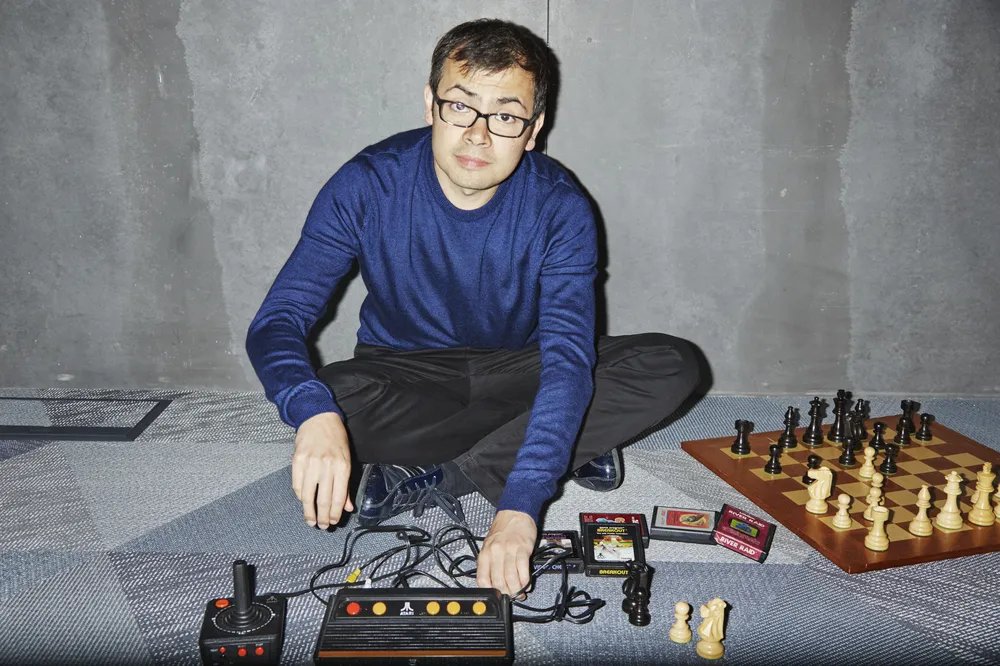
A British kid became a chess master at 13, then a bestselling video game designer at 17, then a PhD neuroscientist at 33, then the CEO of the AI lab that won the 2024 Nobel Prize in Chemistry.
People called him unfocused for twenty years. He was running the most deliberate career plan in modern science.
His name is Demis Hassabis, and the thing almost nobody understood while he was doing it was that every single step was feeding the same underlying obsession.
Here is the thread that connects the whole career, and why it matters for how anyone should think about building toward a hard goal.
The chess came first. He was born in London in 1976 and started playing at age four. By eight, he was the London champion for his age group. By thirteen, he had an international master rating that put him in the top fifty players in the world under his age bracket. He was on a track that would have made him a professional player for the rest of his life.
He walked away.
The reason he gave later, in interview after interview, is the part most people miss. He said chess forced him to think constantly about thinking itself. Every move required him to simulate what his opponent was simulating about him. He became fascinated not with winning the game, but with the process the human brain was running in order to play it. He decided chess was too small a container for the real question he wanted to answer, which was how intelligence actually works.
The video games came next. He used the money he won from chess tournaments to buy a ZX Spectrum. He taught himself to code. By seventeen, he was a lead programmer on a game called Theme Park that sold millions of copies. He could have stayed in that industry and built a career as one of the top game designers in Britain.
He walked away from that too.
He went to Cambridge, did a double first in computer science, and then made the move that looked like the strangest pivot of his life. He enrolled in a PhD in cognitive neuroscience at University College London. He was thirty. His peers from Cambridge were already running companies. He went back to graduate school to study how the human hippocampus builds memories and imagines future scenarios.
His 2007 paper on the link between memory and imagination was named one of the top ten scientific breakthroughs of the year by Science magazine. But the paper was never the point. The point was that he had spent three decades quietly building the exact combination of skills nobody else in the world had put together.
Deep intuition for how intelligent agents behave in complex systems, from a lifetime of chess. Hands-on engineering fluency, from years of shipping commercial software. And a rigorous scientific understanding of how biological brains actually produce cognition, from a PhD in neuroscience.
In 2010, he used that combination to co-found DeepMind with Shane Legg and Mustafa Suleyman. The mission statement he wrote was two sentences long and sounded absurd to most people who heard it. Solve intelligence. Then use it to solve everything else.
For the first six years, DeepMind worked almost entirely on games. Atari. StarCraft. Go. People outside the field could not understand why a lab that claimed to be building artificial general intelligence was spending hundreds of millions of dollars teaching computers to play Pong.
Hassabis kept explaining the reason in interviews and almost nobody was listening. Games were not the goal. Games were a controlled environment where you could iterate on general-purpose learning algorithms fast, measure their progress precisely, and prove to yourself that you had built something that could transfer between domains.
In 2016, AlphaGo beat Lee Sedol, the world champion at Go, in a match that had been considered decades away. And the day after that match ended, Hassabis sat down with his team lead David Silver and asked what they should do next.
The answer was the thing he had been working toward his entire life.
They turned the same deep reinforcement learning approach at a problem biology had been stuck on for fifty years. Protein folding. Given an amino acid sequence, predict the three-dimensional shape the protein would fold into. Every drug discovery effort in the world depended on it. The best computational methods could only solve a small fraction of proteins. Experimental methods took years per structure and millions of dollars per protein.
AlphaFold2 was released in 2020. Within a year, it had predicted the structure of almost every protein known to science. Two hundred million structures. Made freely available to the entire research community. More than two million researchers from a hundred and ninety countries have used it since.
In October 2024, Demis Hassabis and John Jumper were awarded the Nobel Prize in Chemistry for that work.
The line almost nobody quotes from his speeches is the one that explains the whole career. He has said, many times, that he did not build AlphaFold to solve protein folding. He built AlphaFold to prove that the approach he had been developing for thirty years could actually work on a real scientific problem. Protein folding was the demonstration. AGI was always the goal.
The chess taught him how to think about adversarial systems. The games taught him how to ship software. The neuroscience taught him how the only existing example of general intelligence actually worked. DeepMind used all three to build a method that could transfer between domains the way the human brain does. And the moment the method was ready, he pointed it at the single most important unsolved problem he could find in a domain where a breakthrough would save millions of lives.
Most people looking at his career from the outside, at any point before 2016, would have called it scattered. A chess prodigy who gave up chess. A video game designer who walked away from a gaming career. A computer scientist who detoured through neuroscience. A startup founder who burned six years on board games.
From the inside, it was the most focused career in modern science. Every step was quietly answering the same question. How does intelligence actually work, and what would it take to build one that could solve problems humans have not been able to solve alone.
The people who change a field are almost never the ones who looked focused along the way.
They are the ones who were obsessed with a single question so deep and so long that the path they took to answer it looked like chaos from the outside and like a straight line from the inside.
And they almost never get credit for the plan until decades later, when the Nobel Committee calls.
A 5% annual tax on unrealized gains.
Not on income. Not on profit. On value that exists only on paper. Value that can disappear tomorrow. Value that has already been taxed once, twice, three times on its way to wherever it's sitting.
The message is simple: we don't care if you actually made money. We just want what you have.
Rome tried this. The "corvée" and the "annona." Taxes on wealth, on property, on anything that couldn't hide. The rich didn't pay. They couldn't. The wealth was in land, in villas, in things that couldn't be liquidated fast enough to meet the tax bill. So they stopped being rich. They stopped being productive. They stopped being anything except targets.
The empire didn't collapse because the barbarians arrived. It collapsed because the people inside stopped believing the system would let them keep what they built.
France tried this in the 1790s. The assignats. The confiscations. The wealth taxes that turned entrepreneurs into émigrés and capital into flight.
The revolution ate its own. Then it ate the people who started it. Then it ate the idea of wealth itself.
5% annual on unrealized gains means the government owns a piece of every private company whether they contribute to it or not. It means the founder who took no salary, built for decades, and watched their equity grow owes a tax bill they can't pay without selling. It means selling becomes mandatory. Control becomes optional. Ownership becomes a rental agreement with a state that can change the terms anytime.
The billionaires will leave. Not physically. Structurally. Their assets will move. Their holdings will restructure. Their lawyers will find the gap between the law and the intent and park a fleet of yachts in it.
The ones who can't leave are the ones who suffer. The ones whose wealth is in family businesses. In land. In things that can't be moved to Delaware LLCs or Cayman trusts. They'll pay. They'll sell. They'll shrink.
And the government will get its 5%.
For a while.
Until the next thing. Until the base expands. Until the definition of "billionaire" drops to "millionaire" because the numbers need to keep the machine running.
The 1970s taught this lesson. High taxes didn't create prosperity. They created avoidance. They created the entire offshore industry. They created the very structures the new tax is designed to chase.
You can't tax your way to fairness.
You can only tax your way to a smaller pie.
And a smaller pie feeds fewer people.
The billionaires will be fine.
The question is what happens to everyone else.
The Netherlands was forced into taxing unrealized gains.
Their Supreme Court struck down the old Box 3 system in 2021. The previous framework assumed a fictional rate of return on your assets and taxed you on profits you never actually made. The court ruled it unconstitutional. That left a €2.3 billion annual hole in the Dutch treasury and no legal way to tax investment returns at all.
So parliament passed the replacement with 93 votes (needed 75). Multiple parties that voted yes publicly said taxing unrealized gains was not their preferred approach. They backed it because the alternative was collecting zero on investment returns indefinitely while refunding €1.2 billion in overpaid taxes from the old illegal system.
The math on what happens next is predictable. France ran this experiment for 20 years. Between 1988 and 2007, an estimated €200 billion in capital fled the country. 60,000 millionaires left between 2000 and 2017. The wealth tax cost France roughly €7 billion in annual fiscal shortfall, about twice what it actually collected. Macron killed it in 2018.
The Netherlands just approved something far more aggressive. France taxed total wealth at progressive rates starting around 0.5%. The Dutch version taxes annual paper gains at a flat 36%. Your portfolio goes up €100,000 on paper, you owe €36,000 in cash. You haven’t sold a single share. The government acknowledged this liquidity problem directly, which is why they exempted real estate and startup shares. Stocks, bonds, and crypto get no such protection.
The bill still needs Senate approval. Implementation targets 2028. But the EU has free movement of capital and people. Portugal, Malta, and Cyprus are a short flight away.
This matters for the US because unrealized gains taxation keeps surfacing in American policy proposals. California has a wealth tax ballot initiative that’s already triggered an estimated $2 trillion in capital flight threats. The Biden administration proposed taxing unrealized gains above $100M. The Netherlands is about to become the first country to broadly implement one at scale.
France spent 20 years proving the model fails. The Netherlands is about to rerun the experiment at 36%.
Si subes al Mulhacén, tu GPS dice 3.479 metros sobre el nivel del mar, pero ¿cómo sabemos ese nivel si el mar se mueve constantemente? Para fijar la altura de toda España, se necesitó un clavo de bronce, cuatro años de paciencia y una escalera en Alicante. Tira del hilo 🧵👇🏽👇🏽👇🏽
to do list:
bite the hand that feeds me
put all my eggs in one basket
kill two birds with one stone
let the cat out of the bag
think inside the box
burn bridges
walk on thin ice
play with fire
i work at meta. hr systems. mostly comp processing. quiet job. stable. sometimes i daydream about retiring in portugal.
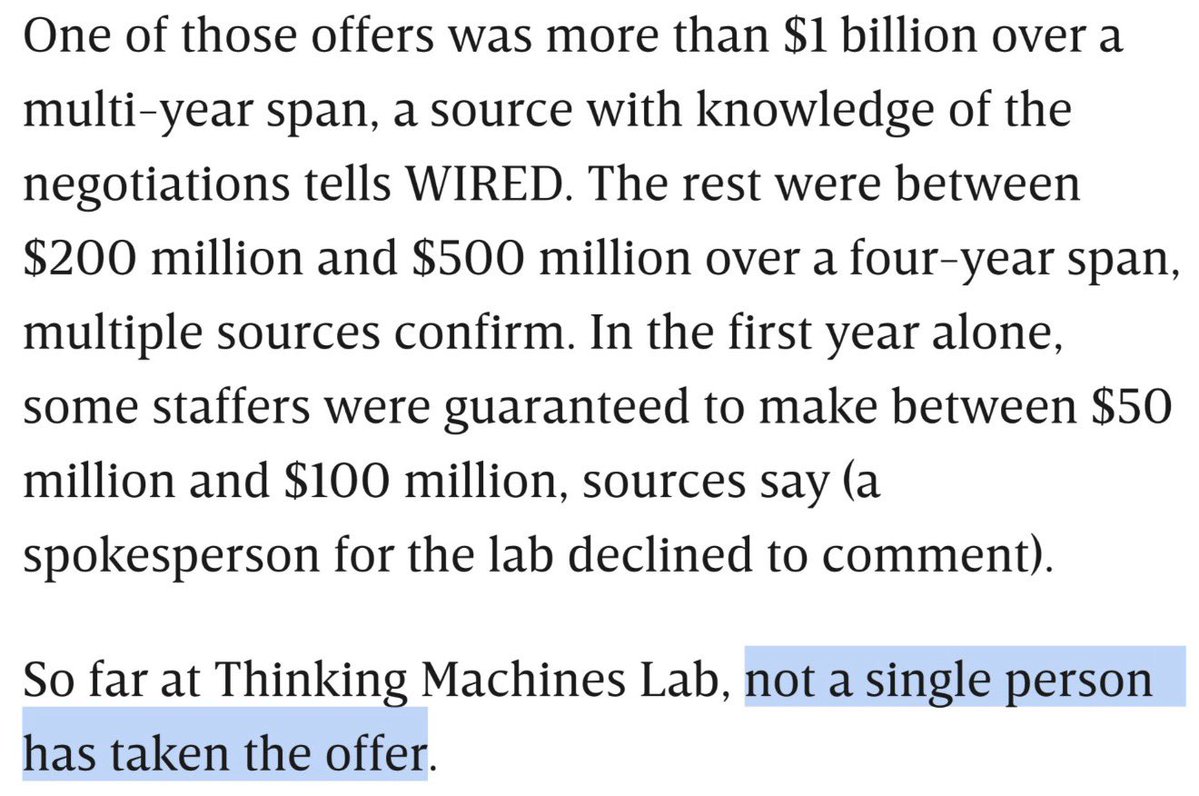
today a package hit my queue. base + bonus + equity. looks normal at first glance. then i open the details.
$1,000,000,000
over four years.
plus signing.
plus year 1 minimum: $100m.
i stare at it like it’s a typo. check the name. triple check the level. researcher.
coolcoolcool. so now i have to enter this into workday.
i paste the first number, field throws an error.“value must be below $99,999,999.”
lol. okay. i try splitting it. base in one bucket, equity in another. nope. i try scientific notation. it rounds it down.
the system can’t HANDLE a billion dollars.
i call someone on payroll infra. tell them i’ve got a 10-digit comp packet. they think i’m joking. i forward the req. they go quiet.
“we’re gonna need to escalate this,” someone mutters.
“to who?” i ask.
“god, maybe.”
next thing i know zuck’s chief of staff is in the thread. now i’m in a thread with zuck. because of a number.
then i find out the guy declined the offer.
just said no. no negotiation. no counter. just… no.
i’ve been maxing out my 401k for 11 years & this man said no to a billion dollars like he was skipping dessert.
i close the ticket. delete the draft.
go for a walk.
& then i rethink everything.