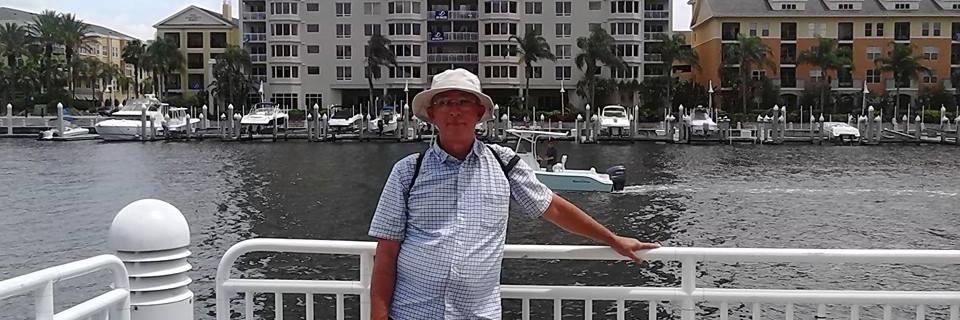
Robert Brian Follett Official page. Blind veteran and podcaster. I welcome all followers who meet X requirements.
* NO DMs.
* POLITICALLY NEUTRAL
* NO PORN
Disclaimer
The Robert Brian Podcast, Robert Brian Follett, and https://t.co/weGsqRpRkn
All content and operations of The Robert Brian Podcast, Robert Brian Follett, and https://t.co/wiP9sKSmdD are funded solely by Robert Brian Follett. Robert Brian Follett is not compensated in any way for his work and additionally no donations are accepted, and there is no monetization or profit generated from these platforms. The information provided on these platforms is for educational and informational purposes only. Comments, articles, writings, and resources used by The Robert Brian Podcast, Robert Brian Follet, Robert Brian and other contributors herein are not intended as medical advice. Please consult your medical care provider for any medical concerns or questions.
Robert Brian Follett is a blind US Army veteran who finds helping others understand vision issues and blindness through research of information and resources to be therapeutic for himself and others, as suggested by his Department of Veterans Affairs counselors.
Today would have been my dad’s 74th birthday.
This season carries gravity. Father’s Day, his birthday, and the anniversary of his passing all fall within 60 days.
For me, grief has no straight path. It revisits, reshapes, and rises when I least expect it.
But alongside it lives a legacy built on generosity and kindness.
He made people feel seen. Gave permission to feel deeply and to laugh through pain. That mission continues.
To those carrying loss right now: you’re not alone.
Happy birthday, Dad. Love you forever.
This is interesting and makes one think. Watch the full video and please, leave a comment.
#robertbrianpodcast
See this Instagram video by @daniellubetzky https://t.co/kUiLBJkdWU
Clawing back public media funding would rip vital services out of our communities – early education, local journalism, emergency alerts, and local connection. Urge your Senators to vote NO @MyPublicMedia: https://t.co/Tk2c7Qel6e #ProtectMyPublicMedia
Subject: Request for Non-Compensated Collaboration and Review – Dissertation on Back Pain and Postural Adaptations
Dear X medical members
I hope this finds you well. I am currently conducting research for my dissertation, titled "Back Pain and Postural Adaptations in Individuals with Monocular Vision and Vision Loss." See {the outline below} As part of this work, I am seeking collaboration and expert review from medical professionals, radiologists, and other specialists in related fields.
Your expertise in [specific field, e.g., radiology, neurology, physical therapy, ophthalmology] would be invaluable in ensuring the accuracy and depth of my research. I am requesting non-compensated collaboration in the form of professional insights, feedback, and potential review of key aspects of my study.
If you are willing to contribute, I would be happy to provide further details about my research objectives and methodology. Your input would be greatly appreciated and acknowledged in my dissertation.
Please let me know if you would be open to participating, and I would be glad to arrange a time to discuss further. Thank you for your time and consideration.
Best regards,
Robert Brian Follett
Title:
Back Pain and Postural Adaptations in Individuals with Monocular Vision and Vision Loss
Abstract:
A brief summary of research, highlighting the connection between vision loss and musculoskeletal strain.
Chapter 1: Introduction
Background on monocular vision and vision loss.
Overview of back pain and postural adaptations.
Research objectives and significance.
Chapter 2: Biomechanics of Vision Loss and Postural Changes
How monocular vision affects balance and posture.
Compensation mechanisms leading to musculoskeletal strain.
Studies on postural adaptations in visually impaired individuals.
Chapter 3: Neurological and Sensory Adaptations
Brain compensation for vision loss.
Impact on proprioception and spatial awareness.
Neurological factors contributing to back pain.
Chapter 4: Clinical Studies and Case Reports
Review of existing research on back pain in visually impaired individuals.
Case studies of monocular vision patients experiencing musculoskeletal issues.
Statistical analysis of prevalence and severity.
Chapter 5: Rehabilitation and Treatment Strategies
Physical therapy approaches for posture correction.
Assistive technologies and ergonomic adaptations.
Pain management techniques for visually impaired individuals.
Chapter 6: Conclusion and Future Research
Summary of findings.
Implications for healthcare and rehabilitation.
Areas for further study.
References and Citations