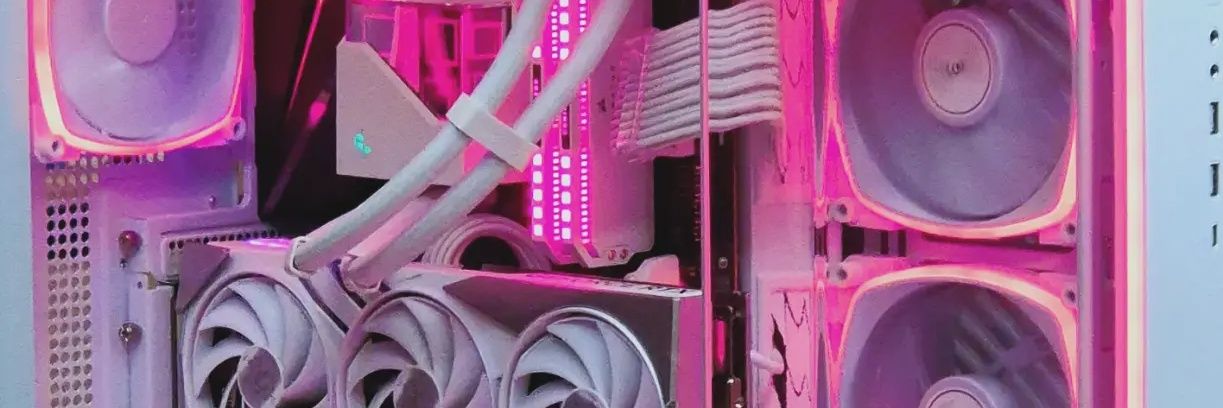
Finalmente posso mostrar meu PC depois de todos os ups que faltavam!!
Depois dos UPs da @MontechGlobal e da @msigaming
Ficou perfeito, vai sair vídeo na Tera semana que vem de como ficou e de como é o King 95
Na Thread tem as configs!!
Finalmente posso mostrar meu PC depois de todos os ups que faltavam!!
Depois dos UPs da @MontechGlobal e da @msigaming
Ficou perfeito, vai sair vídeo na Tera semana que vem de como ficou e de como é o King 95
Na Thread tem as configs!!
Running seasonal giveaways?
Here are 40+ campaign ideas for every season — from Valentine’s Day to Black Friday — to help you plan and promote smarter.
Read now → https://t.co/lLaAzuTH7n
#Gleam#GiveawayMarketing#SeasonalMarketing#EcommerceTips
Be one of the first to get your hands on a Steam Machine 🥷
@Gleamapp is giving it away to one lucky winner. Enter now for a chance 👉 https://t.co/FmOM9z3TpB
The SSD crisis is coming… “Orders backlogged for a year”
The global demand for SSDs (Solid-State Drives) is exploding as artificial intelligence (AI) and cloud services expand. With data centers and server companies rushing to secure high-performance, high-capacity SSDs, some products are now facing lead times of over a year after order placement. Experts say this marks a complete shift in the storage device market, which has long been dominated by HDDs (Hard Disk Drives), toward SSDs.
According to the semiconductor industry on the 28th, major NAND flash manufacturers such as Samsung Electronics, SK Hynix, and Kioxia are operating their SSD production lines at maximum capacity. Demand for AI server storage has far exceeded expectations, depleting inventories rapidly, and new orders from global cloud service providers are overlapping, making it difficult for supply to keep up. In particular, for high-capacity products of 8 terabytes (TB) or more, most of next year’s production is already fully booked.
Unlike HDDs, which store data on spinning disks, SSDs store data directly in NAND flash memory. Due to their structural advantages, SSDs offer dozens of times faster data access speeds, higher power efficiency, and lower heat and noise. The industry consensus is that for environments requiring real-time processing of massive data—such as AI training and inference—migration to SSDs is inevitable.
According to market research firm TrendForce, SSDs accounted for 62% of all new data center storage installations worldwide last year, surpassing HDDs for the first time. This year, that share is expected to exceed 70%. Another research firm, Gartner, also reported that the average SSD capacity per AI server has increased by more than 30% year-over-year, and HDD demand is projected to decline to half its current level within three years.
The rebound in NAND prices is also exacerbating the SSD supply shortage. After a prolonged slump through 2023, the NAND market began recovering early this year. Prices of high-layer (200+ layer) NAND products used in enterprise SSDs have risen sharply, prompting NAND suppliers to adjust production plans. Despite a more than 20% rise in NAND prices, major customers are expanding pre-orders to secure supply.
Korean companies are also ramping up their responses. Samsung Electronics is launching new SSD products based on PCIe 5.0 interfaces for data centers and expanding long-term supply contracts with major cloud providers in the U.S. and Europe, while also preparing for mass production of next-generation 300-layer NAND. SK Hynix, through its subsidiary Solidigm, is expanding its share in the North American data center market and operating a dedicated SSD production line for AI servers.
The semiconductor industry views the surge in SSD demand not as a temporary spike but as a structural transformation. While HDDs are still used in limited cases for low-cost, high-capacity backup or surveillance servers, they have lost competitiveness in performance-centric main storage markets. Legacy HDD leaders such as Seagate and Western Digital are scaling back production lines and shifting their businesses toward SSDs.
This shift is seen not just as a change in storage devices but as a signal of structural realignment in the semiconductor industry. As NAND demand rises sharply, the profit balance within the memory sector—traditionally dominated by DRAM—is shifting, and the increasing adoption of SSDs in AI servers is expected to drive annual NAND demand growth of over 25% next year.
A semiconductor industry official explained, “The SSD shortage, with orders backlogged for a year, is not a temporary phenomenon—it’s a symbolic moment showing the paradigm shift in storage from HDDs to SSDs that will underpin the AI era.”
$SNDK
Pra mim não existe jogo AAAA, jogo Triple-A já significa que é um dos jogos com equipes gigantes e investimento maior ainda
Qualquer dev que chama seu jogo de AAAA já sei que vai ser meia boca
Podem se acostumar pq esse será o novo padrão para anti-cheats em jogos, vai ter que ter Secure Boot / TPM em absolutamente todos os jogos em uns 10 anos
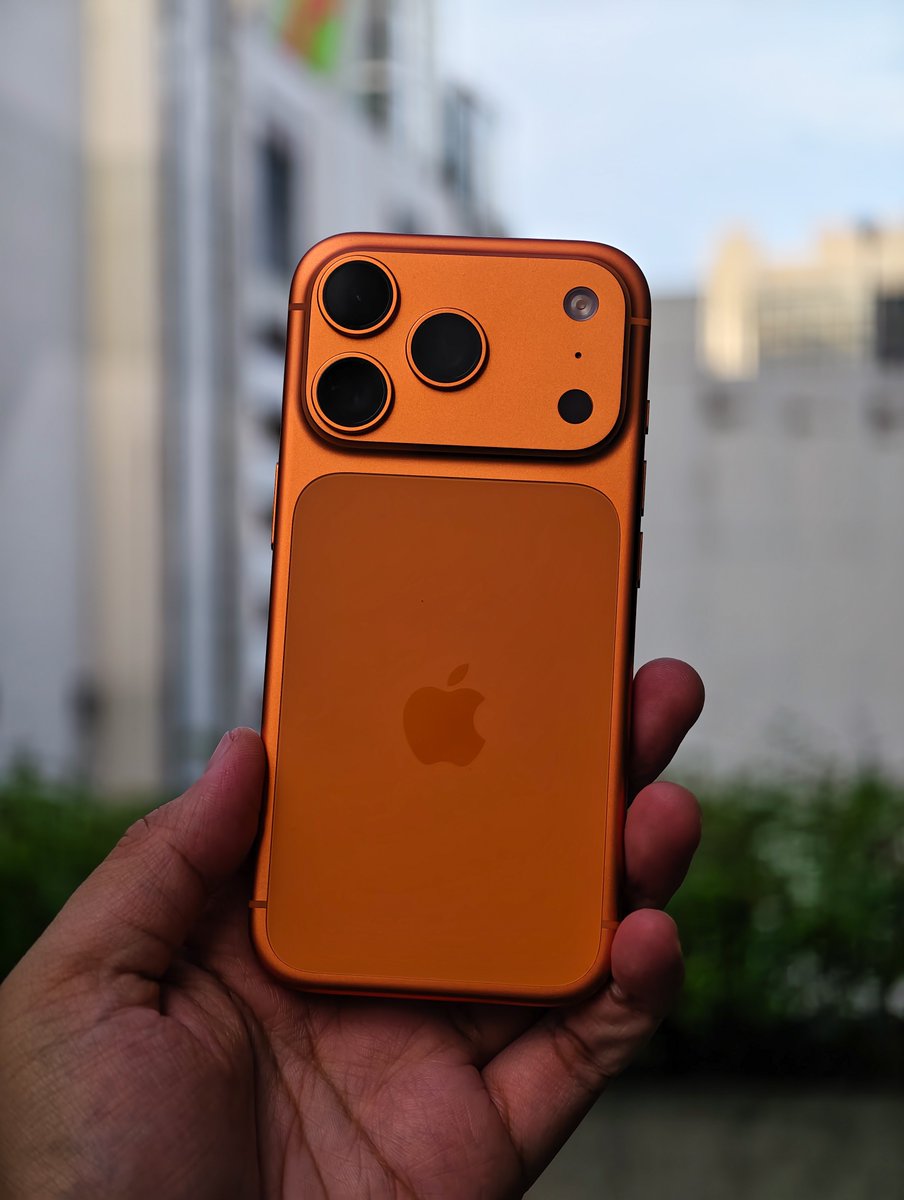
Vou ser 100% sincero com vocês
Eu achei do caralho essa cor e esse design
Fazia anos que não ficava com vontade de ir pra Apple, mas esse me fez passar vontade
e pra quem perdeu a live montando o PC novinho da Beamom, saiu agora um video no nosso canal mostrando tudinho com alguns cortes da live hehehehe
https://t.co/G2mDMixTBm
(gente olha essa thumb qe linda, Beamom te amamos)
um passarinho me contou que amanhã vai ter um cupom de desconto de MIL reais na live de Pix Time
MIIIIL REAIS
gente, nem sei se eu podia contar isso pra vcs