🔬 To recognize National STEM Day, let's examine how grade 8's performance on science questions changed over time. On 2 NAEP science questions, performance moved in opposite directions from 2019–2024. Take a look, test your science knowledge, and see how students responded.
🔬 What Does a Grade Look Like?
After a great conversation with @helopait about Who Gets to Judge?, we’re turning next to assessment with award-winning STEM educator @CSarkonak.
Student voice. Agency. Mistakes. Portfolios.
Nov. 21 @ 12 PM ET
🔗 https://t.co/LY54bP6OyQ
There are a multitude of instructional challenges that students who are hard of hearing face in school; teachers can help these students efficiently learn: https://t.co/ZHNQ8a0Ywy
#HardofHearing#ClassroomManagement#Students#Teachers
Remind your students that there’s always more than “one right way” to solve a math problem! 🧮✋💬🔢🎨
Get this free poster for your classroom: https://t.co/E3HvL8keXe
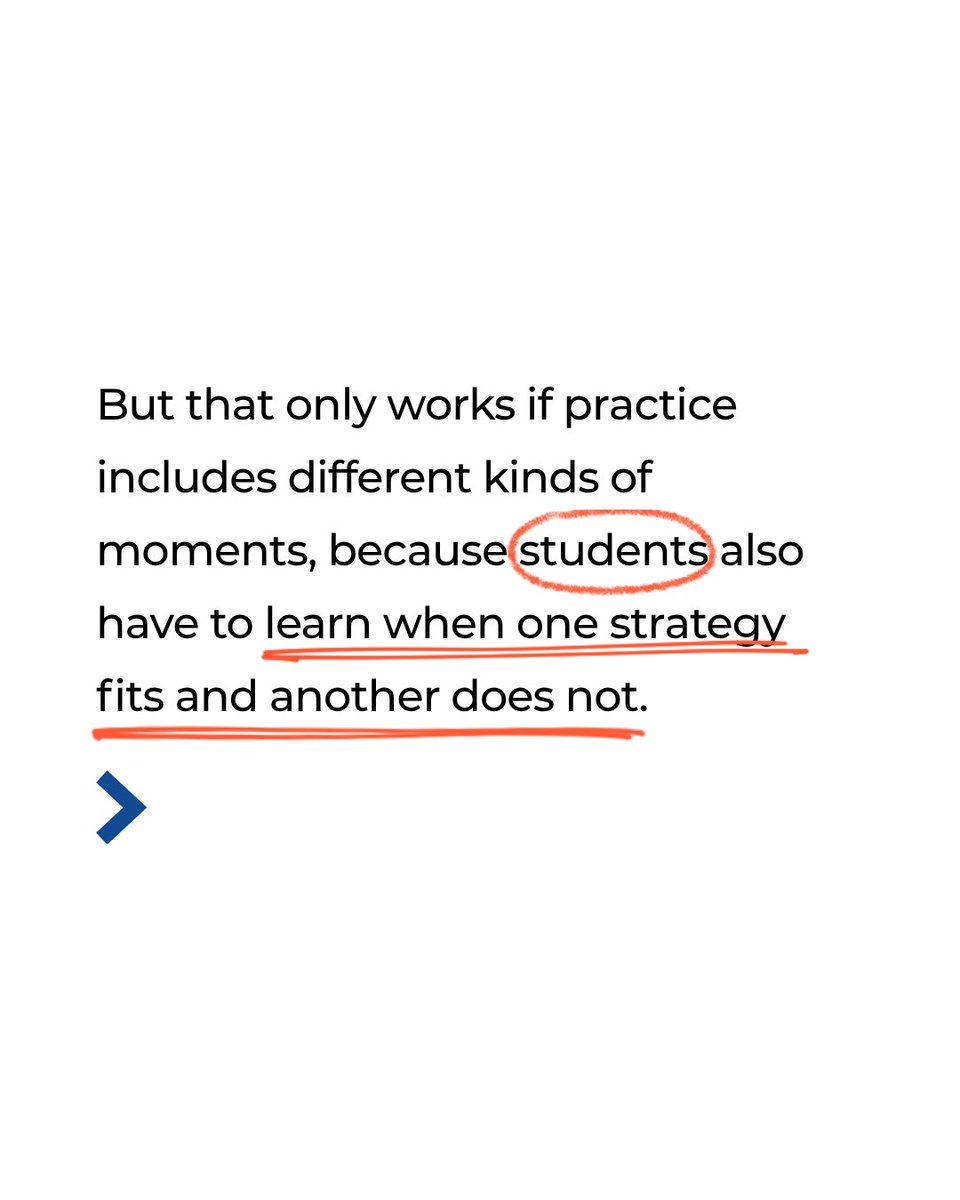
A student can know exactly what regulation means and still not know what to do when anger hits in front of everyone. Knowing, doing, and recognizing when to use a skill are different kinds of learning. #EmotionRegulation#Education
“Research indicates that the majority of teachers report inadequate pre- and inservice preparation in writing instruction.” — Harris, Graham and Laud
Effective writing instruction requires more than providing students with opportunities to write. It requires explicit instruction, teacher modelling, guided practice, and meaningful feedback.
This article by Dr. Leslie Laud, Steve Graham, and colleagues highlights the evidence supporting Self-Regulated Strategy Development (SRSD) and the importance of professional learning that equips teachers with the knowledge and skills to implement effective writing instruction.
As we continue to invest in literacy improvement, we must recognize that sustainable change depends not simply on adopting programs, but on building teacher expertise.
There is an important distinction between assigning writing and explicitly teaching students how to write.
We need to stop confusing assigning writing with teaching writing!!!
💬 I’d love to know: Were you explicitly taught HOW to teach writing in your teacher education program, or were you expected to figure it out once you entered the classroom?
📖 A worthwhile read for every classroom teacher, literacy coach and school leader! @LeslieLaud
LINK:
https://t.co/MtQpTZBTkf
Essays and exams probably take up a fair share of your assessment calendar, and for good reason, since they give students room to build an argument and support it with evidence. The difficulty comes when a student who explains the French Revolution clearly in a class discussion cannot organise the same ideas on paper, which leaves you with limited evidence of what that student understands.
This article on History Skills sets out seven alternative assessment formats, from historical roleplays to infographics, and pairs each format with a worked classroom example. A class studying France in 1789 could debate voting arrangements in the Estates-General, and a Vietnam War task could ask students to compare how Australian newspapers reported opposition to conscription. For a podcast, students could investigate why the Berlin Wall opened on 9 November 1989, which makes it a timely idea for this week.
Each example also comes with advice on keeping the historical thinking at the centre of the task. Students who make a documentary could submit their script and annotated sources alongside the finished video, and individual research notes help you assess each student in a group project. The article finishes with practical planning steps, and it suggests a brief checkpoint so that students can correct misunderstandings before they submit their work.
https://t.co/0OGNAiOjHG