One of Nelson Mandela’s most profound lessons on poverty is that it is not simply a question of giving to those who have less. It is a question of justice, equality, human rights and human dignity.
The lesson I take from his 2005 speech is that poverty should never be normalised, romanticised or treated as an inevitable condition of human existence.
Charity may provide temporary relief, but lasting change requires confronting the systems, policies and inequalities that reproduce poverty.
Development must go beyond counting beneficiaries and distributing assistance. It must empower people, expand opportunities, guarantee access to essential services and enable communities to shape decisions that affect their lives.
Fighting poverty is not about making people dependent on generosity. It is about creating a society where everyone can live with dignity, opportunity and freedom.
As Mandela reminded the world, poverty is a question of justice.
“Like slavery and apartheid, poverty is not natural. It is man-made and it can be overcome and eradicated by the actions of human beings. And overcoming poverty is not a gesture of charity. It is an act of justice. It is the protection of a fundamental human right, the right to dignity and a decent life. While poverty persists, there is no true freedom.”
Nelson Mandela, 2005
@SolomonSerwanjj@rcuptownkampala I love the goal, once Mandela said, “Fighting poverty is not charity. It is an act of justice. It is the protection of a fundamental human right, the right to dignity and a decent life.”
Thank you Chair and all those who made it possible.
There was a time, barely five years ago, when Uganda's irrigation coverage was still below 1%. Today, more people are investing in irrigation and water production, partly because rainfall patterns have become increasingly unpredictable. Farmers are beginning to realise that relying entirely on seasonal rainfall is no longer sustainable.
When #culturalinstitutions and #youngpeople speak with one voice, protection becomes a shared community responsibility.
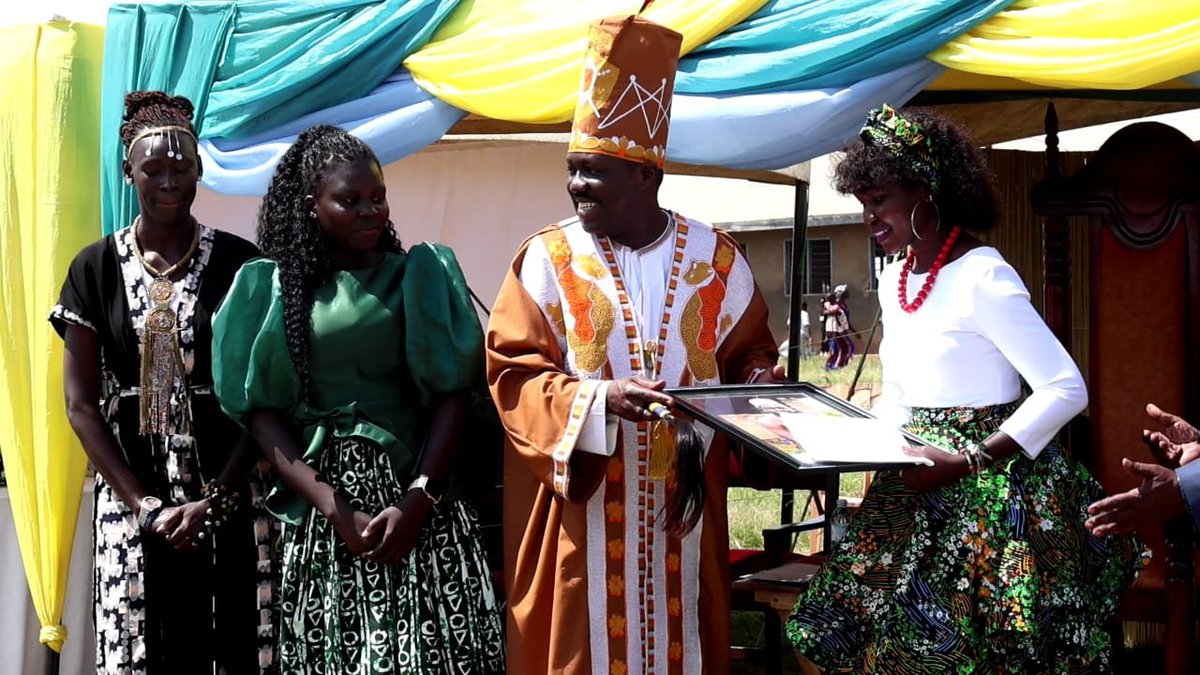
On the eve of the 16th Coronation Anniversary of Ubimu @KerAlurKingdom, we joined #KaoiPaAradu (The Youth Fire Place)-an Alur Kingdom platform that connects generations through dialogue on culture, values, traditions, and life lessons.
His Majesty joined the youth in an engaging conversation, sharing wisdom and insights on Alur culture, traditions, and values.
It was a meeting of generations. A passing of wisdom.
This year’s celebration reaffirmed the importance of strengthening our partnership with the Kingdom to advance the Ordinance on Addressing #Violence Against Women and Girls, and to collectively question and transform harmful norms, work we have undertaken together with the Kingdom over the years.
We acknowledge that #sustainablechange is grounded in effective engagement with different institutions, including cultural and community leadership, and #intergenerationaldialogue.
We call upon cultural leaders, partners, stakeholders, and young people to join us in ensuring the Ordinance is enacted and implemented. Only together can we ensure culture remains a source of protection, dignity, and equality for women and girls.
@MemprowGirls@GirlsFirstFund@vowforgirls@ObamaFoundation@girlsalliance@medicamondiale
#KaoipaAradu #EndSGBV
@Robertseries1@URAuganda@URA_CG It just shows lapse in tax policy planning. Their scenario planners should predict some of these developments. They should focus less in bonuses and more on tax policy planning
This should be viewed as a shift in consumer behaviour rather than a tax problem. -@URAuganda@URA_CG Internet is still taxed in Uganda at 12% Excise duty this replaced the the old OTT tax in July 2021.
My question is, why should citizens be made to feel that choosing a more affordable communication option is a threat to government revenue?
Tax policy should be clear to adapt to technological progress, not penalise citizens for finding cheaper ways to live. Perhaps the bigger conversation should be about efficient revenue utilisation, widening the tax base and improving public service delivery.
@CanaryMugume we still pay taxes for WhatsApp calls.
@rama_or your wise opinion on this will help, thanks.
Cheaper WhatsApp and other internet calls are reducing tax collected from ordinary voice calls, @URAuganda Commissioner General John Musinguzi said.
He explained that tax collections from data were increasing, but not enough to match the decline from voice calls. He also raised concerns about unlicensed operators redistributing Wi-Fi.
Watch here: