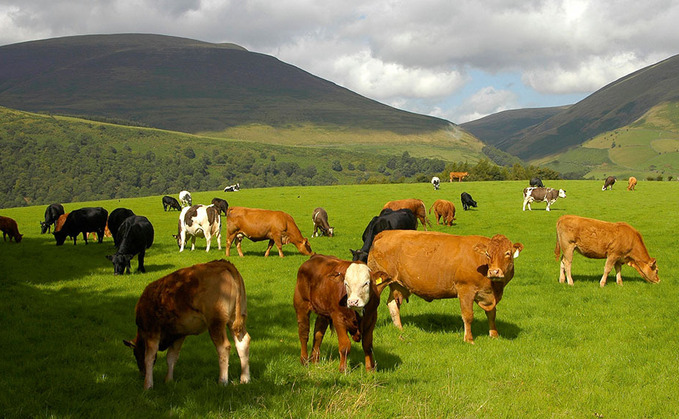
Trying to do the right thing: focus on food production in a healthy natural environment. Oxfordshire.
Ex @WiltonPark bringing people together for dialogue. OBE
UK crop ratings have fallen after weeks of dry weather, with AHDB warning that the next fortnight could be critical for yield potential.
Winter #wheat is now rated 64% good or excellent, down from 74% in April, while winter barley has fallen from 70% to 62%.
#oatt#agwx
Radio 4 this morning explained (again) that we face issues with global food supply that will see prices rise over the coming year, ticking up inflation significantly.
Has anyone any insight into the actions that the Government is taking, through DEFRA or HMT, to address these issues. Or that they recognise them?
We've seen the spike in fertiliser prices for a while now, and there are reports about an extreme El Niño event brewing off South America that is going to hit food production over the next 18 months.
It's late in the day, but I think we're in time for an agile DEFRA to take steps now to adapt for these risks. Is @EmmaforWycombe on top of this? What are we doing differently now to reduce the risk to the UK this presents?
Yes, the music was brilliant.
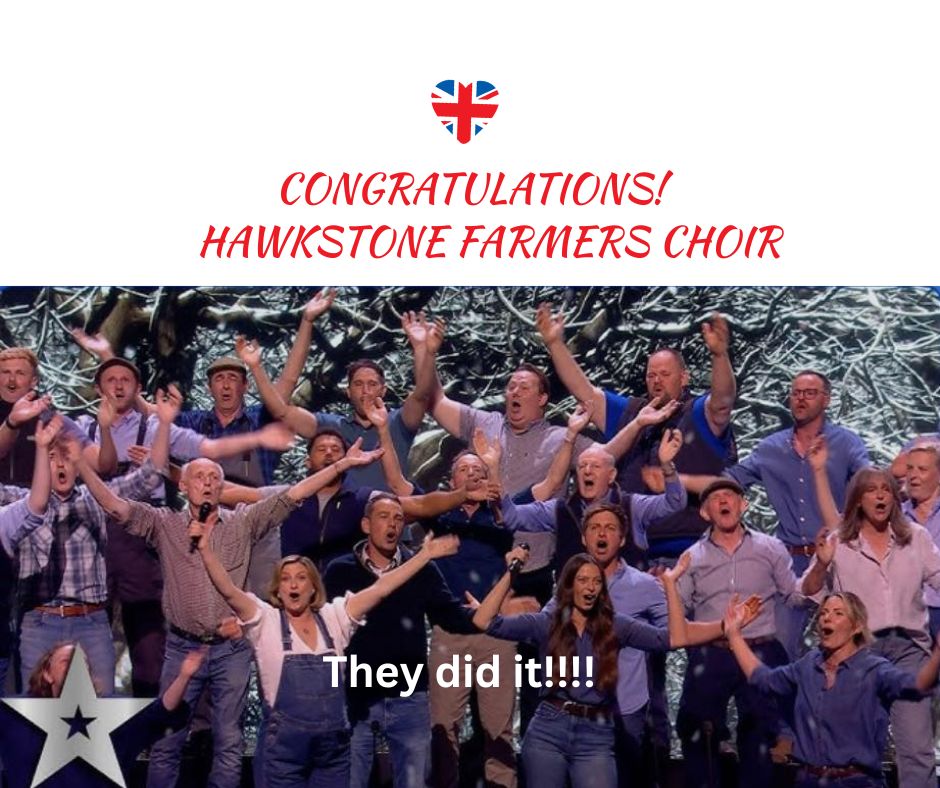
But the Hawkstone Farmers Choir winning @BGT means more than great singing. Their song was about bringing hope to UK Agriculture at a time when farming faces real challenges.
Well done @JeremyClarkson et al
Tonight, farming had a voice.👏🌾
WOW! Hawkstone Farmers Choir you did it! Winners of @bgt Final 2026. An incredible achievement. Thank you for shining the spotlight on British Farming - you are true champions everyday and using this opportunity to highlight our farming communities, the challenges and more through music and just being you - AMAZING!
#Britainsgottalent #BGT #Winners #HawkstoneFarmersChoir #BritishFarmers #BritishFood #Lovebritishfood #Itsoknottobeok #community #farming #farminguk #Britishfood
Quiet question. Who owns Britain now?
In 2023, around half of all UK farm sales went to non-farming buyers. The figure has been climbing since 2018, only easing in 2025 as the inheritance tax shock froze the market.
The new owners include:
Aviva Investors and Par Equity, who acquired 6,300 hectares of Aberdeenshire moorland at Glen Dye to plant trees and restore peatland against Aviva's own net zero target.
Brewdog, which bought the 9,300-acre Kinrara estate in the Cairngorms for £8.85 million, killed more than half its 100,000 planted saplings in year one, collected £690,986 in Scottish Forestry public grants, then sold the estate to Oxygen Conservation in October 2025 for the same price it paid.
Oxygen Conservation itself, which now controls over 20,000 hectares across 12 UK properties and plans to build a £1 billion offset portfolio before flipping the lot by 2030.
Multiple anonymous shell companies registered in Jersey and the British Virgin Islands, hoovering up upland sheep farms in Cumbria, Northumberland, the Borders, and the Highlands. Beneficial owners undisclosed. The UK has not produced a public register of agricultural land ownership. Successive governments have promised one. None have delivered.
The local livestock farmer cannot compete. A Welsh hill farm grossed £25,700 in 2023-24. A corporate carbon buyer can outbid them every time and write the cheque from petty cash.
The farmer is outbid. The farm is consolidated. The village empties. The press release talks about nature recovery.
The trees, in many cases, are already dead.
A farmer dies in April 2026.
His son inherits the farm. The farm has been in the family since 1847.
The farm consists of: 300 acres of grazing pasture, a farmhouse built in 1892, a barn, a milking parlour, two tractors of varying ages, a Land Rover that runs about 70% of the time, and a herd of 180 Hereford-cross cattle.
On paper, the farm is worth approximately £3.2 million. This is because land near him has been bought recently by a London hedge fund looking for carbon credits, which has dragged the comparable value of every field within forty miles upward to a number nobody local can justify.
In cash, the farm produces a profit of about £28,000 a year in a good year. In a bad year it loses money. The son also works as a fencing contractor three days a week to keep the operation viable.
The inheritance tax bill on a £3.2 million estate, even at the reduced 20% rate, comes to approximately £140,000 after the increased threshold is applied. The son does not have £140,000. The son has never had £140,000. The son has £4,200 in his current account and an overdraft.
The son sells 60 acres to a developer to pay the tax. The developer puts solar panels on the 60 acres. The remaining herd cannot be sustained on the reduced land. The herd is sold. The barn becomes a holiday let.
A different family eats Brazilian beef this Christmas without knowing why the price went up.
The Treasury collects £140,000.
The land never produces British food again.
The scary thing about supermarket food price caps is that we already know how this ends.
The supermarkets protect their margins, the processors protect theirs, and the squeeze gets pushed straight back onto farmers ☹️
Not a penny off billions in supermarket profits, but another cut for the people producing the food.
A serious government would focus on securing fertiliser, energy and domestic food production to prevent shortages and inflation in the first place.
But that would require understanding that food comes from farms, not supermarkets.
@agricontract@loosecollie@wheat_daddy@TheFarmingForum@GBNEWS@Iromg@MartinDaubney
https://t.co/MbOqEIiTze
#Farming #FoodSecurity #UKFarming #Agriculture #CostOfLiving #FoodPrices #Inflation #Tesco #Farmers #EnergyCrisis #FoodSupply
We are facing a potential crisis and the Treasury and DEFRA need to start working coherently on food security — now.
British farming is already under huge pressure from the inheritance tax changes, subsidy chaos and rising costs. Now four more problems are hitting together:
• the Iran crisis threatening global fertiliser supply;
• new El Niño warnings which could damage harvests across the southern hemisphere leading to global shortages;
• environmental charges increasing costs of fertiliser; and
• supermarkets being encouraged to keep food prices down, which would feed back down the supply chain to squeeze producers
There is a limit to how many extra costs farmers can absorb.
The danger is not empty shelves tomorrow. It is a growing squeeze over the next 12–18 months:
• less fertiliser used
• lower crop yields
• less confidence to invest
• greater reliance on increasingly expensive imports
Right now government does not appear to have a coherent approach to these huge risks. Ministers across the Treasury and DEFRA need to get a grip on our food security. Saying “we can import more” is not good enough. The window to act is closing fast.
@VictoriaAtkins@EmmaforWycombe
They attacked wool. We got polyester.
Half a million tonnes of microplastic fibres enter the ocean from synthetic clothing annually.
Microplastics are now in human blood, lung tissue, and placentas.
Wool biodegrades in months.
Polyester persists for centuries.
They attacked leather. We got PVC.
PVC production releases dioxins.
The vegan leather peels within two years.
Both require petroleum.
Leather is a byproduct of food production.
It lasts decades.
It biodegrades.
The ethical alternative requires an oil well.
They attacked butter. We got margarine.
Trans fat disease for a generation.
Now on its third formulation.
Butter contains vitamins A, D, E, and K2.
Margarine contains seed oils and an ingredients list.
The butter never changed.
The butter never needed to.
They attacked beef. We got plant-based burgers.
Pea protein extracted with hexane.
Seed oils. Nineteen other ingredients. A supply chain across multiple continents.
Soy driving deforestation in Brazil at a scale that dwarfs British cattle farming.
Beef on British marginal land grows on hills that cannot grow crops.
Sequesters carbon. Fertilises without a factory.
Complete protein. Every fat-soluble vitamin. No dead zone.
In every case: the traditional animal product was nutritionally superior, environmentally lighter, and cheaper to produce.
In every case: the ethical replacement was industrially complex, petrochemically dependent, and worse for the body using it.
The ethics were the marketing.
From today Family Farms and Businesses are subject to inheritance tax
You can’t farm without land, and you can’t run a business without assets.
Forcing families to sell off pieces of their livelihood just to pay a tax bill will lead to national decline.
British Farming is struggling right now and here’s why.
We no longer value food, unless it’s been highly processed. That’s why farmers can’t make a profit while supermarkets continue to enjoy bumper profits year after year
Britain is 110% self-sufficient in lamb.
Let that sink in for a moment.
Not "pretty good." Not "mostly fine." One hundred and ten percent. We grow more than we eat and export the rest. We have done this on permanent upland pasture that cannot be used for anything else, managed by farmers whose families have worked the same ground for generations, using animals that have been optimised for these conditions over centuries.
85% self-sufficient in beef. 100% in milk. 90% in eggs.
The animal products on your plate, if you're eating in Britain, are almost certainly British. The supply chain is: farm, abattoir, butcher or supermarket. Measured in miles. Sometimes in tens of miles.
Now.
Your January strawberries are from Egypt. Your year-round peppers are from Spain or Morocco. Your salad leaves are from Israel in winter. Your green beans come from Kenya. Your blueberries are from Peru or Chile. They travel by refrigerated air freight, which is roughly fifty times more carbon-intensive per kilogram than road transport, to sit in a plastic clam shell next to a small flag and the word "fresh."
The environmental argument against British animal products is not an environmental argument.
It is a geography argument made by people who have not checked where their food comes from.
Check where your food comes from.
⏰ Today, @SteveReedMP says we must prepare for food shortages.
But in the High Court last week, Treasury lawyers argued there was “no good reason” to delay or consult further on IHT affecting farms, citing the need for flexibility to protect public finances and avoid delaying revenue.
You can’t weaken food production and call it resilience.
The story about farmers and death that will just not die, 17 months in and if no change it will run to the next election when IHT changes will be consigned to history it is that bad a policy.
Hats off to @Farmer_Tom_UK for leading this 🤞@FairFamFarming
The UK is an international outlier in the lack of interest it shows in how we feed our population.
The presumption is that Tesco has it in hand.
We are terribly close to the day when this is shown to be folly @EmmaforWycombe.
https://t.co/PINMz2MCiQ