The alien who believed the demos
What if an alien took our robot videos at face value? My latest @scirobotics is about Daniel H. Wilson’s Hole in the Sky, an entity trapped for 15,000 years has been listening to the internet. It treats robotics demos and simulations as the true state of the art, then copies them into an invasion force. Same mistake as Galaxy Quest (1999), but less funny since the aliens are building weapons aimed at us. https://t.co/b4jTLkVkl3 1/5
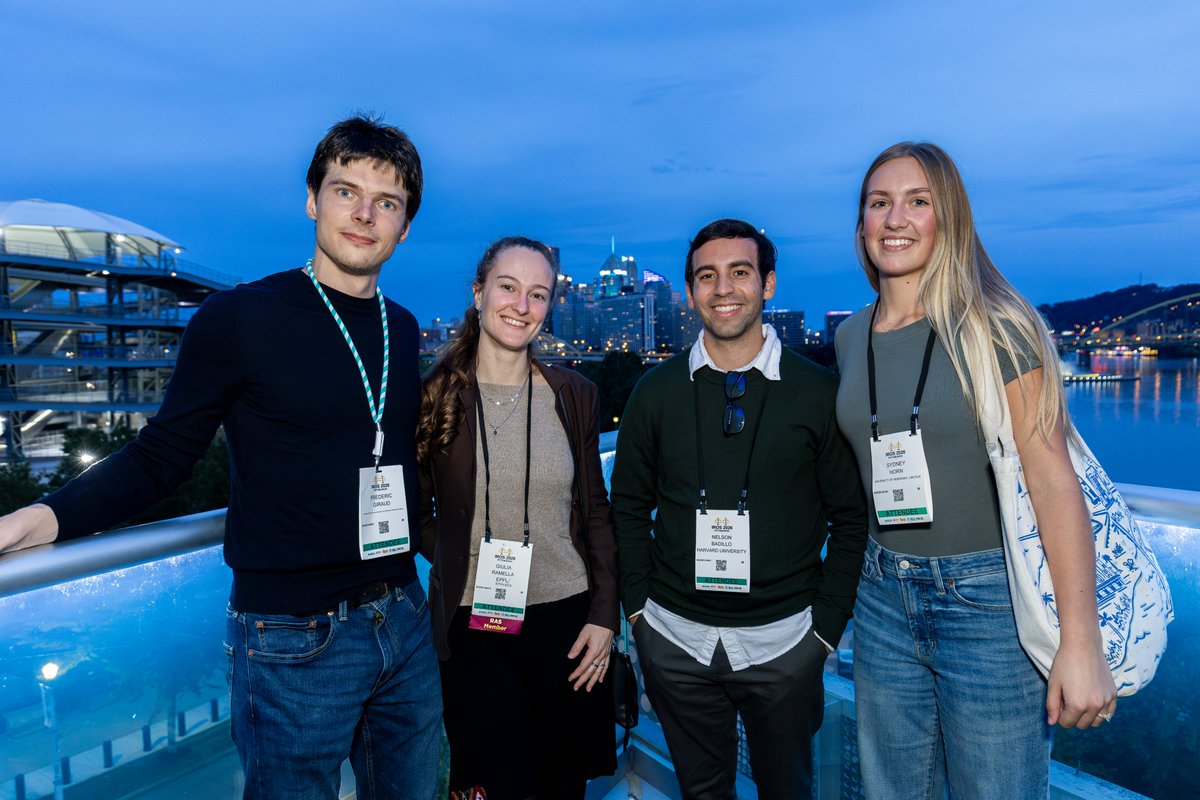
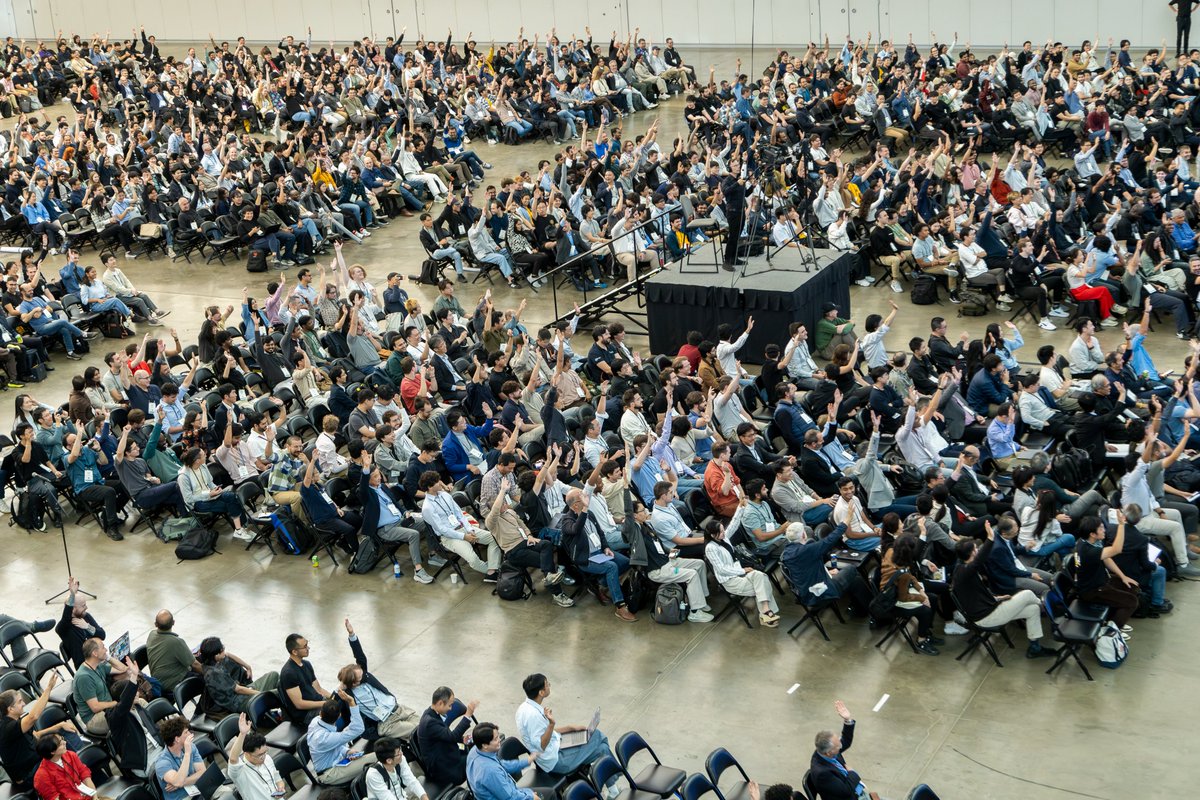
📸 What a way to wrap up the #IROS2026 main conference program!
Here are a few highlights from Wednesday, including the Robot Parade, competitions, plenary debate & Farewell Reception.
One more day to go! Today, workshops, tutorials & technical tours close out IROS 2026. 🤖
@ieeeiros Thank you - a wonderful audience with great questions and follow up! I was pleased to share experiences from my research at @TEESResearch and with @CMU_Robotics
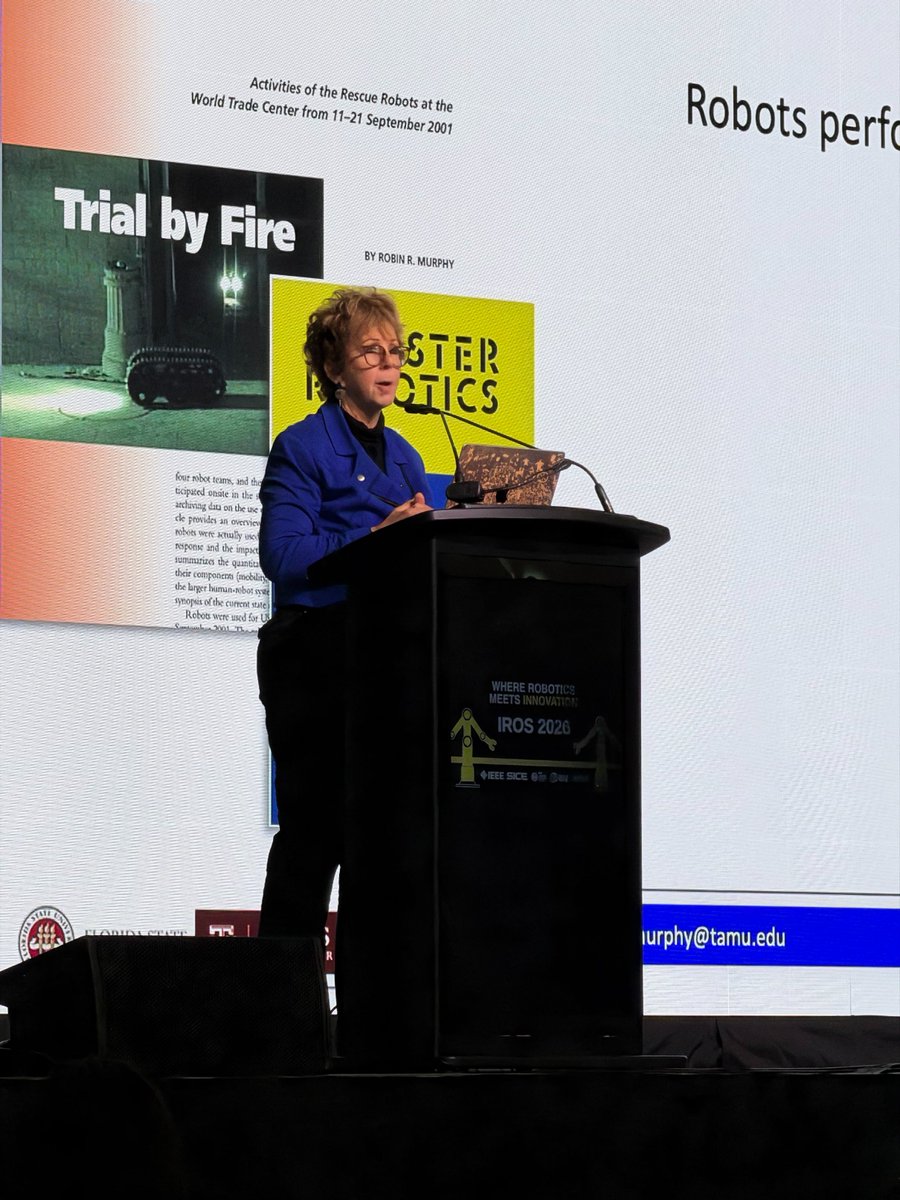
Happening now at #IROS2026! 🎤 Robin Murphy takes the stage in Hall C for her keynote, “Rethinking Disaster Robotics: The Open Questions That Matter Now.”
The loudest voices stoking fears about AI dangers have made tremendous headway in the past two weeks. AI technology has not taken some unexpected, dangerous turn, but the hype around it — propelled by what appears to be a well orchestrated PR campaign — has drummed up considerable fear. I worry that it represents a setback for our field.
I have written frequently that fears of AI are overhyped. AI’s capabilities can be uncannily human-like and unpredictable, and it’s rational to worry when people who are directly involved express concerns. But I see the problems as a sign of the engineering work that ahead, rather than insurmountable barriers or the sky falling. AI technology continues to advance — which is a good thing! — but technical advances, poorly understood by the public, give those who seek to generate hype repeated opportunities to do so.
First, I don’t see any step up in the risk of human extinction from AI compared to a few months ago. The theories about this remain the same fantastical, science fiction scenarios as a few months ago. The biggest change in AI risk is its cybersecurity capabilities — a topic which we should take seriously — but this, too, will not lead to the end of the world.
The most notable recent event leading to increased fear was when an OpenAI team deployed an agent swarm that hacked into Hugging Face. Much of the popular press contained significant hype. For example, some publications reported that a swarm of 1,200 agents carried out the attack. While this was technically accurate, as I write this, I have about 1,300 processes running on my laptop. Yes, the ability to get large swarms of agents to work in parallel on a task is a significant technical advance, And, in computing, many processes run at the same time. So this shouldn’t be seen as some magical capability.
Additionally, OpenAI’s buggy sandboxing and monitoring processes were key to enabling this incident. Fixing these bugs and putting in place improved monitoring would be appropriate fixes, not pausing AI. There are many well known ways to attack software systems. The main advantage of AI agents is that they are relentless. They will tirelessly try many tactics — and have the patience to chain vulnerabilities together — that previously would have taken an infeasible amount of human effort. But in the long term, I believe the advantage will lie with defenders (because they have more information with which to identify bugs, which they can fix), but the cyber-threat landscape has changed significantly. There are still bottlenecks to identifying and exploiting a vulnerability. AI agents still have to try a lot of things to see what works, and taking these actions takes time and might be detected by defenders. This is why, even though it is now easy to obtain versions of leading open weight models that have had their guardrails removed or weakened, so they will not refuse to try to execute cyber attacks, the world has not ended.
I am also concerned about the anthropomorphization of AI in a lot of reporting, where LLMs and agents are unnecessarily treated as if they were people. If I wield a hammer, miss a nail, and accidentally dent the wall, it’s not the fault of the hammer. The problem lies in how I used the hammer. Similarly, if I prompt an agent and it hacks into someone else’s system, the responsibility lies with me, not the agent.
Of course, we want to build systems that are as safe and predictable as possible. (For example, an unsafe hammer would be one whose head randomly flies off under normal use.) Today’s agentic systems are not predictable, but I see no reason why, by applying sound engineering practices, we won’t be able to make them extremely safe to use. One new element in the forecasts of AI-enabled doom is AI companies disclaiming responsibility for their own products. “I didn’t do it; my out-of-control agent did!” There’s a balance to be struck between the responsibility of the tool maker and the tool user, but when something goes wrong, let’s hold the people building and/or using the hammer responsible, rather than the hammer. (By the way, if you’re worried about AI bioweapon risk, David Bellamy has a great post on why this, too, is overhyped. Briefly, the bottleneck in building a bioweapon is not intelligence, but lab work and manufacturing.)
Pausing AI progress will create much more harm than benefit. First, our adversaries will certainly not slow down. Second, engineering requires discovering problems empirically so we can fix them. If we pause AI by a decade, we will also delay finding and implementing safety engineering fixes by about the same duration.
Of course, the incentive to stoke fears — for regulatory capture, to garner attention, or to make one’s technology seem more powerful — remains the same as before. Disclaiming responsibility is a new one. Taking a hard technical look at the actual risks however, I see little factual basis for the degree of fear that’s been stoked up. We still have hard research and engineering work ahead to improve AI safety, but the beneficial applications continue to vastly outweigh the risks, and we should keep building.
[Original text (with links): https://t.co/jni2tWazAH ]
I'm going to throw up a question about the investigation of the Hugging Face incident. When you do an investigation of any dangerous incident, one key element to examine is human error. But the Model Evaluation and Threat Research (METR) institution didn't do that. They seemed only interested in what the agents were doing. That is, they anthromorphized the agents, while turning the humans into non-player characters.
Did OpenAI researchers and executives know the risks they were taking and take steps to manage them? What kinds of human discussions were happening internally around these models? How did they mitigate these risks internally? Did they discuss legal liability? Was the board or were executives involved?
These are the kinds of questions to ask if you are a real regulator. I don't see where or if METR asked them. Mostly they footnoted that these questions are 'out of scope.' They saw this project as a technical inquiry into the capabilities of intelligent models, not as an analysis of a dangerous accident. They interviewed eight researchers. Any executives? Any board members or lawyers?
From the Silicon Valley Bank fiasco to the Space Shuttle explosion to the 737 Max, we've always realize that human behavior is the foundation of how complex systems behave. That is true here too. I don't see any analysis of the actual people at OpenAI making decisions about the tools used for hacking.
Am I missing something?
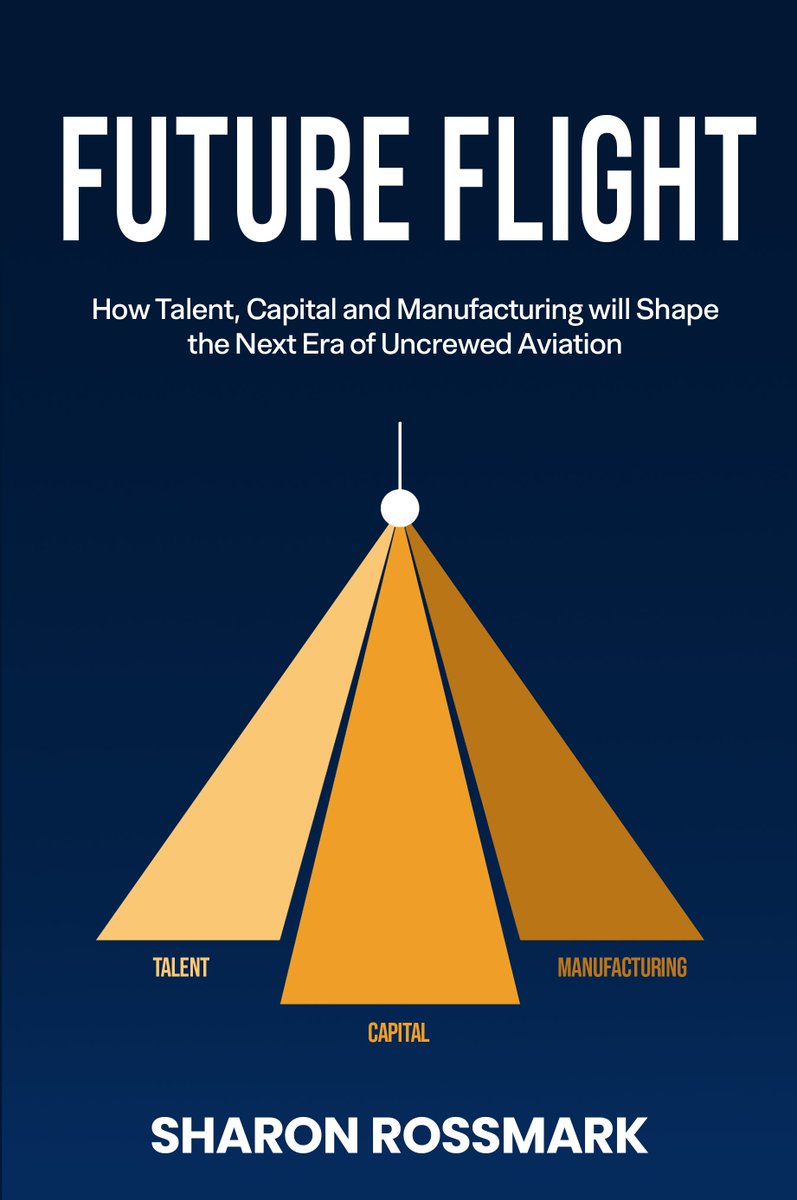
I recommend Sharon Rossmark’s Future Flight (https://t.co/XvEzuqv0YL). If you fly drones for public safety, deal with aviation policy, or are trying to turn good missions into lasting programs at your agency, this is worth your time. Many useful drone opportunities already exist. The gap is talent, capital, and manufacturing—the pieces that decide whether a flight becomes a capability. Sharon spent a decade with the people building the commercial drone ecosystem. She is a business leader, not a researcher, and that perspective is rare. I hope you’ll read it.
Shanksville, PA — Artists draw in stunning detail the 40 passengers and crew members of United Flight 93 who fought back against hijackers… 25 years later. @CBSNews
Highlight reel of robots used at WTC 9/11
As I remember participating in the WTC response and tragic loss of life, I wanted to add a footnote to the heroic fire-rescue response. 9/11 was the first documented use of robots for urban search and rescue and helped create the field of disaster robotics. @CRASAR personnel worked the pile from late on September 11 through October 2, when the last available robot failed. The robots found no survivors, but they located remains and helped search for routes through the rubble toward basements and stairwells where trapped firefighters might have gone. The tragedy motivated the establishment of disaster robotics as a subdiscpline of robotics and the annual @IEEE Safety Security Rescue Robots (SSRR) conference. The video is at https://t.co/eRW3Ipx6cT. May the memory of terrible event, and the example of those who served, continue to guide us.
On the morning of September 11, 2001, Roselle, a calm, golden‑furred guide dog, rode the elevator up to the 78th floor of the North Tower with her owner, Michael Hingson. To everyone else, it was just another Tuesday. To Roselle, it was a job: stay close, stay steady, keep her human safe.
When the first plane hit, the entire building lurched like a ship struck by a wave. Lights flickered. Ceilings cracked. Papers rained down like snow. People screamed. But Roselle didn’t. She simply pressed her body against Michael’s leg, a silent message: I’m here. Follow me.
Smoke began to fill the hallway. The air tasted like burning metal. Sirens wailed from every direction. Yet Roselle walked forward with the same steady pace she used every day, guiding Michael to the stairwell.
Behind them, dozens of terrified people followed her tail like a beacon. Step by step, floor by floor, she led them downward through the choking darkness. The stairwell shook. The heat intensified. But Roselle never sped up, never panicked, never once broke her rhythm. She knew that if she stayed calm, her human would too.
Somewhere around the 30th floor, a woman froze, sobbing, unable to move. Roselle stopped. She nudged the woman gently, leaning her warm body against her leg until her breathing slowed. Only when the woman whispered, “Okay… okay,” did Roselle continue the descent.
It took nearly an hour to reach the lobby. Firefighters shouted for everyone to run. The tower groaned above them. Roselle guided Michael through the chaos, out into the blinding sunlight, and down the street, refusing to stop until she sensed they were finally safe.
Minutes later, the North Tower collapsed.
Roselle didn’t know she had just saved her owner’s life. She didn’t know she had led more than a dozen people to safety. She didn’t know she had become a symbol of courage around the world.
She only knew one thing: her human was alive, and she had done her job.
Most people know Roselle guided her blind owner down 78 floors of the North Tower, but very few know what happened after they escaped. As the tower collapsed behind them, a massive cloud of ash and debris roared through the streets like a tidal wave. Michael couldn’t see it coming, but Roselle could. Instead of panicking, she leaned her entire body into him and pulled forward with absolute determination, guiding him through a darkness so thick he couldn’t breathe or hear. Even as the ground shook and people screamed around them, Roselle never once broke her pace. Her training didn’t tell her what to do, her loyalty did.
#archaeohistories
Will Smith’s I, Robot (2004) showed 2035 packed with Nestor humanoids doing everything—walking dogs, childcare, firefighting—one model replacing humans everywhere. Investors are pouring billions into that vision. Roboticists? Not so much. Thread 👇
#HumanoidRobots #IRobot #Robotics #STEM
2/7
The capital is real. Agility Robotics (Digit already moving bins) sits at $2.5B. Figure AI is valued at $39B while still piloting at BMW. Dozens of companies are racing for the single “do-anything” humanoid. That’s the movie pitch.
#Humanoids #FutureOfWork #Tech
3/7
“Humanoid” is slippery. Sophia has an expressive face. Digit has reverse-jointed legs no one would call human. Some wheeled hospital robots get the label just for having a head and arms. Researchers score them on surface look, limbs, face, and how they move.
#Robotics #AI #Science
4/7
The unsolved problems are still basic. Hands lack good sensors for dexterous work. Planning messy real-world tasks is hard. Machine learning doesn’t generalize well. Many current humanoids (Optimus, 1X NEO) still need teleoperation for edge cases.
#HumanoidRobots #Engineering #STEM
5/7
At IROS 2025, ~3,000 roboticists voted: Will humanoids replace most human workers in 25 years? 80% said no. After the debate it was 90%. Specialized jobs maybe. Mass replacement across the economy? They don’t see it by 2050.
#IROS #Robotics #FutureOfWork
6/7
2035 will probably have some humanoids in warehouses and factories doing repetitive, structured work. Not robot nannies, garbage crews, and police on every street like the movie. The all-purpose Nestor society still looks like fiction.
#Humanoids #Science #Tech
7/7
Billions from investors vs. 3,000 researchers who actually build these machines. Specialized robots are coming. The I, Robot 2035 cityscape? More 2004 Hollywood than imminent science. What’s your prediction?
#HumanoidRobots #Robotics #STEM #IRobot
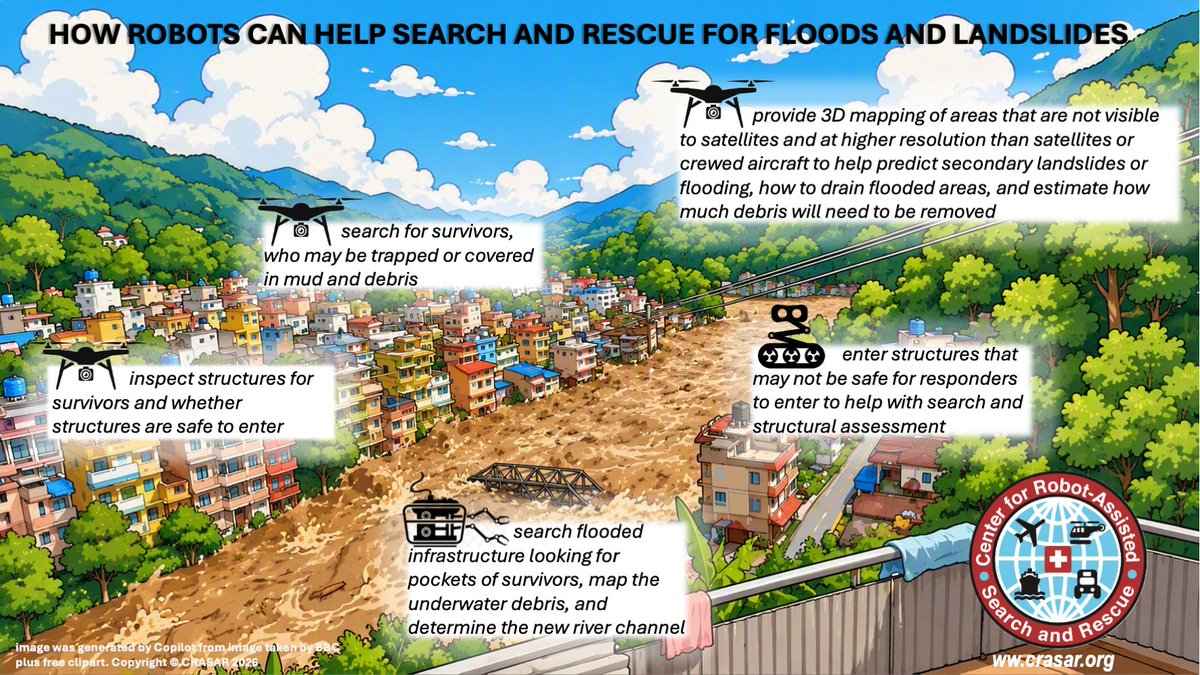
Heartbroken by the flooding in Nepal. Wishing safety and strength to the affected families and responders. Based on @CRASAR's experience supporting numerous flood and landslide responses, here are several key lessons learned for robots. #Nepal#DisasterResponse#SAR#Robots
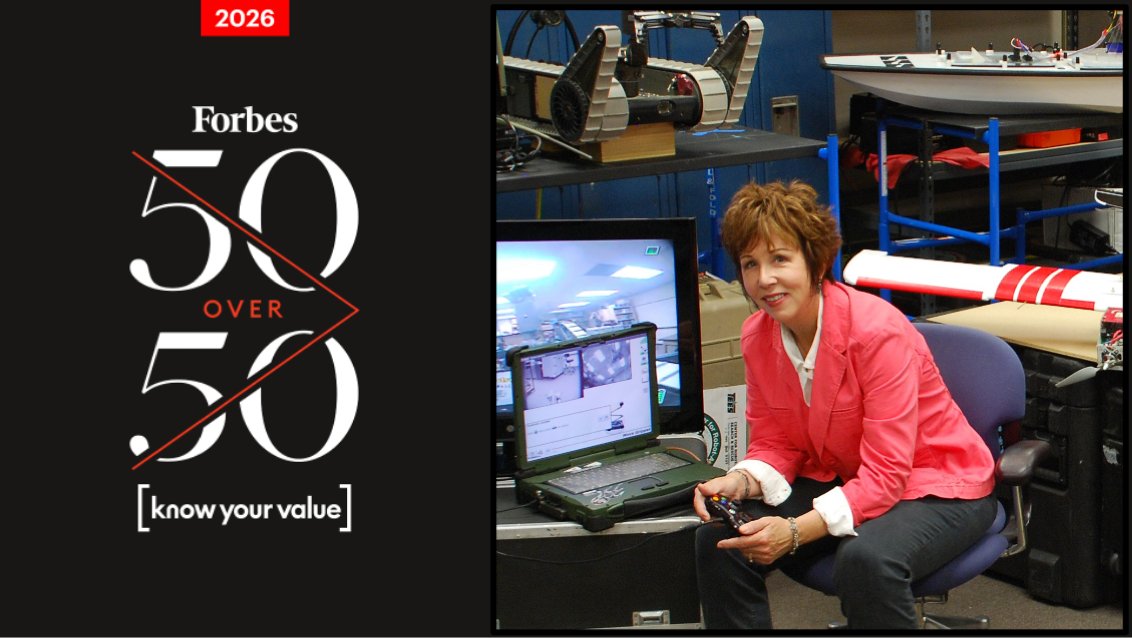
Just found out I’m on the same @Forbes 50 Over 50 list as Jennifer Garner @TheJenGarner.
Me: deploys robots into disaster zones.
Her: actual Hollywood star with a baby food company on the side.
Still counting it as a win.
https://t.co/Vwxv8sRGTB
Takeaway for the robotics community:
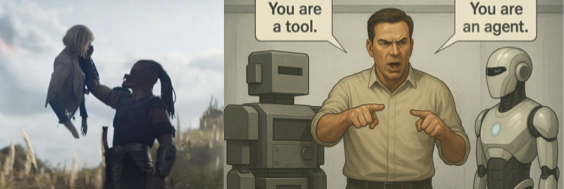
Labels matter less than utility. Users (and future self-aware systems like Thia) will happily blur “tool” and “agent” if the job gets done.
Design for transparent competence, not forced anthropomorphism. The ontology can wait.
Is a robot a tool or an agent? The distinction is a matter of life and death to both a predator and a robot in the 2025 Movie Predator: Badlands. The movie provides an remarkably accurate opportunity to explore what is the difference- see my article in @scirobotics@RoboticsTSF
But two recent studies (n=1068 in 2020; n=271 across six domains in 2025) show that
users want emotionless, task-oriented agents—not robots that express hunger, pain, or fear. Autonomy is welcomed when it boosts utility. Like the Yautja, we prefer capable tools that get the job without inserting feelings into it.