Why do workers dislike inflation? Because wages catching up to prices means costly conflict: tough pay talks, job search, bargaining. Survey + model show conflict more than doubles inflation costs. @jptguerreiro@JADHazell@ChenLian92 & Christina Patterson https://t.co/AObZHTOANN
Existe algo muito especial no debate iniciado entre novos-clássicos e novos-keyenesianos ser baseado apenas em “eu vou fazer AINDA MAIS MATEMÁTICA para provar que você está errado”
tudo deveria ser assim
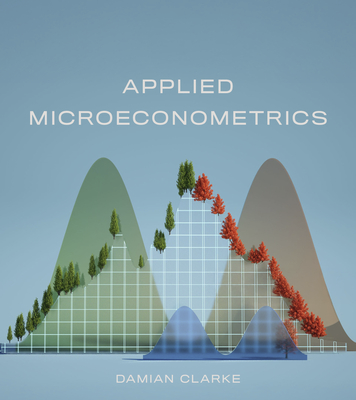
Hi #EconTwitter!
Interested in #microeconometrics & causal inference?
Damian Clarke's (@UniofExeter) 𝐀𝐩𝐩𝐥𝐢𝐞𝐝 𝐌𝐢𝐜𝐫𝐨𝐞𝐜𝐨𝐧𝐨𝐦𝐞𝐭𝐫𝐢𝐜𝐬 is out! The website is free, open and very cool, with lots of code/data in #R, #Python & #Stata.
Useful for grad students!
The same World Cup seat is $700 on FIFA's official site and $200 on SeatGeek right now. That gap is not a glitch.
Dynamic pricing solved the upside for FIFA. Demand climbs, the price climbs, $60 group seats turn into $700 matchups, the US opener hit $1,940 at face. The downside is where the system breaks. The second FIFA cuts an official price below what someone already paid, it invites refund demands, chargebacks, and a consumer-protection fight across three host countries.
So the official number cannot fall. It is a published price attached to thousands of fans who bought higher, which turns every markdown into a liability.
Read it as economics instead of conspiracy and it sharpens. FIFA overpriced, then built a channel where lowering the real price is legally radioactive. The secondary market is the only place left to discover what the seats actually clear at.
Those contiguous blocks landing on SeatGeek at $198, $228, $230 are FIFA's true demand curve leaking out where the official site can keep pretending it doesn't exist.
The elegant part: FIFA's own resale marketplace takes 15% from the buyer and 15% from the seller. So even as inventory clears below face, FIFA collects a toll on the way down. They earn on the markdown they can't announce.
Saudi Arabia vs Cape Verde settling near $200 while the official page holds the line tells you the market-clearing price was set months ago. FIFA just can't be the one to say it out loud.
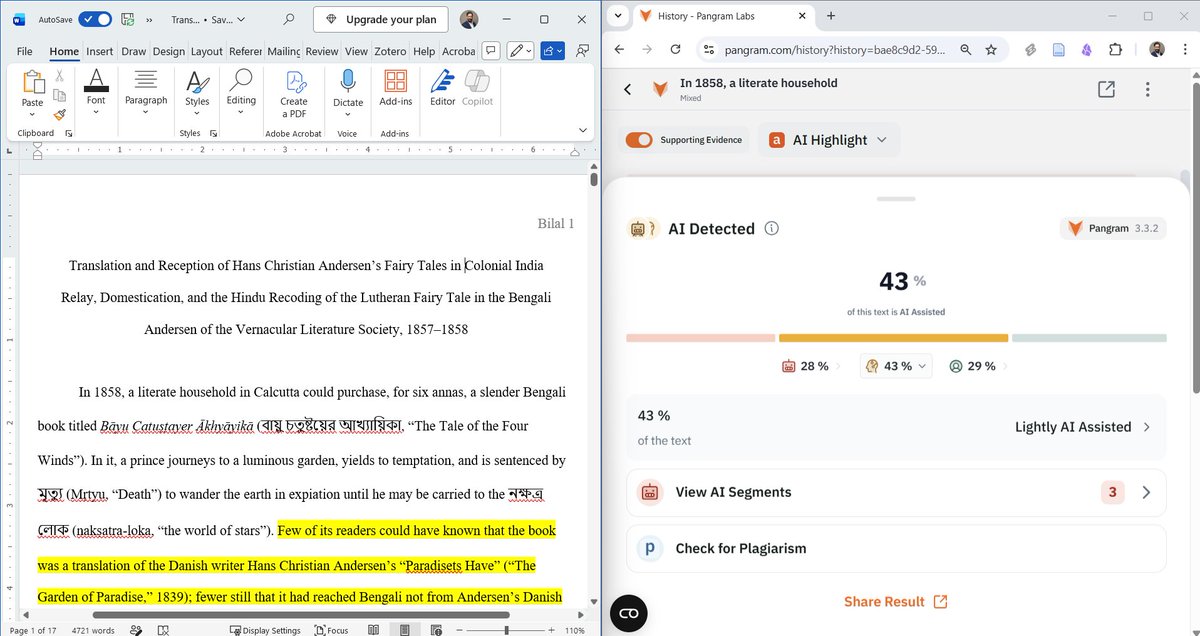
🚨Claude Code just gave me a complete research paper with a single prompt.
The paper has a strong argument and even beats AI-detection app, Pangram.
With a little editing, it can pass for 100% human, and can be easily submitted for peer review.
Here's the workflow I used:
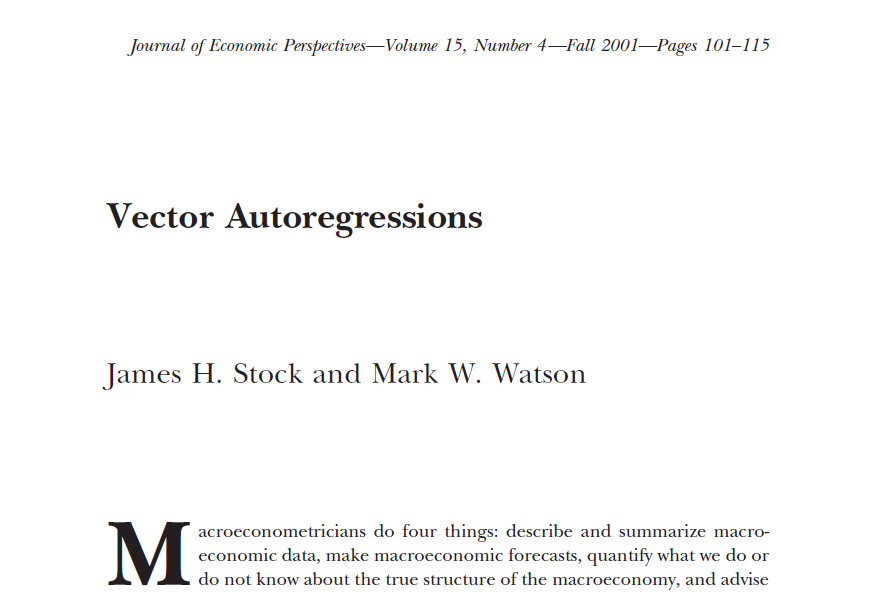
Este paper me encanta para introducir el estudio de modelos VAR. Me gusta porque presenta 1) Un pantallazo general de los VAR como toolkit (potencial de la herramienta), 2) Muy fácil de leer y 3) Tiene el clásico ejemplo de política monetaria y la Regla de Taylor.
U.S. economy: Rising public debt and discussions surrounding the Fed and its independence. It's high time to have another look at interesting books like this one!
"A Monetary and Fiscal History of the United States, 1961–2021" by Alan S. Blinder.
"Focusing on the most significant developments and long-term changes, Blinder traces the highs and lows of monetary and fiscal policy, which have by turns cooperated and clashed through many recessions and several long booms over the past six decades. From the fiscal policy of Kennedy’s New Frontier to Biden’s responses to the pandemic, the book takes readers through the stagflation of the 1970s, the conquest of inflation under Jimmy Carter and Paul Volcker, the rise of Reaganomics, and the bubbles of the 2000s before bringing the story up through recent events―including the financial crisis, the Great Recession, and monetary policy during COVID-19."
https://t.co/xKW7f4tnLI
🚨BREAKING: Anthropic just published a study mapping exactly which jobs its own AI is replacing right now.
The workers most at risk are not who anyone expected. They are older. They are more educated. They earn 47% more than average. And they are nearly four times more likely to hold a graduate degree than the workers AI is not touching.
The argument is straightforward. Anthropic built a new metric called "observed exposure." Not what AI could theoretically do. What it is actually doing right now in professional settings, measured against millions of real Claude conversations from enterprise users.
For computer and math workers, AI is theoretically capable of handling 94% of their tasks. It is currently handling 33% of them. For office and administrative roles, theoretical capability is 90%. Current observed usage is 40%. The gap between what AI can do and what it is already doing is enormous. The researchers are explicit about what comes next. As capabilities improve and adoption deepens, the red area grows to fill the blue.
The demographic finding is what makes the paper uncomfortable. The most AI-exposed workers earn 47% more on average than the least exposed group. They are more likely to be female. They are more likely to be college educated. This is not a story about warehouse workers or truck drivers. It is a story about lawyers, financial analysts, market researchers, and software developers. The exact group whose education was supposed to insulate them.
Computer programmers showed the highest observed AI exposure at 74.5%. Customer service representatives at 70.1%. Data entry keyers at 67.1%. Medical record specialists at 66.7%. Market research analysts and marketing specialists at 64.8%. These are not predictions. These are measurements of work that is already happening on AI platforms right now.
Then there is the pipeline finding nobody is talking about loudly enough.
Anthropic's researchers found a 14% decline in the job-finding rate for workers aged 22 to 25 in highly exposed occupations since ChatGPT launched. No comparable effect for workers over 25. Entry-level roles were never just jobs. They were the training ground where junior analysts became senior analysts, where junior lawyers learned how arguments hold together. If that layer disappears, nobody has answered the question of where the next generation of senior professionals comes from.
The detail buried in the paper that most coverage missed: 30% of American workers have zero AI exposure at all. Cooks. Mechanics. Bartenders. Dishwashers. The technology reshaping professional careers is completely irrelevant to roughly a third of the workforce. The divide is no longer between high skill and low skill. It is between presence and absence.
The company publishing this study is the same company selling the AI doing the replacing. Anthropic had every commercial incentive to soften these findings. They published them anyway.
If you spent four years and $200,000 on a degree to land a white collar career, the company that builds Claude just confirmed your job is more exposed than the bartender pouring drinks at your graduation party.
Source: Anthropic, "Labor market impacts of AI: A new measure and early evidence"
PDF: https://t.co/taYgsIfiTj
🚨ULTIMA HORA🚨
SciHub acaba de liberar SciBot una inteligencia artificial que hace referencia a articulos de paga de forma gratuita y te deja descargarlos para revisarlos sin pagar un centavo.
Recuerda NO utilizar estas paginas, sigue pagando en vez de tener acceso gratuito.
Alguien acaba de construir la herramienta de prospección B2B más completa que he visto en mi vida.
Funciona así:
Eliges un tipo de negocio y una ciudad. La herramienta scrapea Google Maps en directo y te devuelve cada negocio coincidente con 30+ campos de datos: emails verificados, teléfonos, WhatsApp, todas las redes sociales, horarios, ratings, coordenadas GPS.
Luego entra la parte interesante. La IA lee hasta 50 reviews de Google de cada negocio y detecta sus puntos débiles reales. "Los clientes se quejan de que las fotos no muestran el tamaño real" o "los anuncios tardan demasiado en venderse."
Le dices qué vendes tú. Cruza tu oferta con sus problemas específicos y te genera un cold email completamente personalizado para cada lead. Lo envías en 2 clics, uno por uno y nunca en bulk, así cae siempre en la bandeja principal.
Y todo aterriza en un CRM con mapa GPS donde dibujas tus zonas comerciales, optimizas rutas de visitas, supervisas a tu equipo en tiempo real y transcribes notas de voz tras cada reunión.
Funciona en 221 países. Cualquier sector. Si está en Google Maps, lo encuentras.
Y la parte más loca: lo construyó un solo dev con Claude Code en dos semanas.
Se llama MapiLeads.
The FT @FinancialTimes is hiring a new data journalist to join our US data and visuals team in New York or DC.
Great job, great team, great place to work.
Apply here 👉 https://t.co/Gct6nUljFT
Highly relevant!
"The Effects of Geopolitical Oil Price Shocks" by Guillermo Verduzco Bustos and Francesco Zanetti.
"We develop a novel instrumental variable to identify geopolitical oil price shocks arising around significant geopolitical tensions and examine their transmission to the global oil market, key U.S. macroeconomic aggregates, and cross-border spillover effects on other commodity markets, output, and inflation. Geopolitical oil price shocks resemble severe oil supply shocks, leading to production declines and a much sharper increase in oil prices than conventional shocks. They are coupled with heightened uncertainty and induce a distinct inventory response: an initial shortterm decline followed by long-term accumulation, reflecting market participants’ concerns about future economic and oil market conditions. The cross-border spillover effects are significant for oil-intensive commodities, and are stronger for output and inflation in oil-importing economies and for countries with low energy inventories and high energy dependency on foreign supply."
https://t.co/4CbPi4P4pY
Highly relevant!
Webinar: Forecasting the Economic Effects of AI
💻 Speaker: Ezra Karger (Federal Reserve Bank of Chicago; Forecasting Research Institute)
⏲️ May 27, 2026, 17:00 – 18:00 CEST (10:00 - 11:00 CDT)
REGISTRATION HERE: https://t.co/n6xvT1dmru
Link to working paper: https://t.co/pMsWnny7Y2
"We elicit forecasts of how AI will affect the U.S. economy, comparing the beliefs of five groups: academic economists, employees at AI companies, policy researchers focused on AI, highly accurate forecasters, and the general public. The median respondent in each group expects substantial advances in AI capabilities by 2030, small declines in labor force participation consistent with demographic shifts, and an annual GDP growth rate of 2.5%, which exceeds both the typical medium-run (2.0%) and long-run (1.7%) baseline forecasts from government agencies and private-sector forecasters."
La TV inglesa subió el video de los últimos 13 minutos del Rochdale-York por el ascenso a Cuarta División.
El Rochdale lo ganaba al '96, hubo invasión de cancha celebrando el ascenso y se lo empataron al '110 y ascendió el York.
Disfruten.