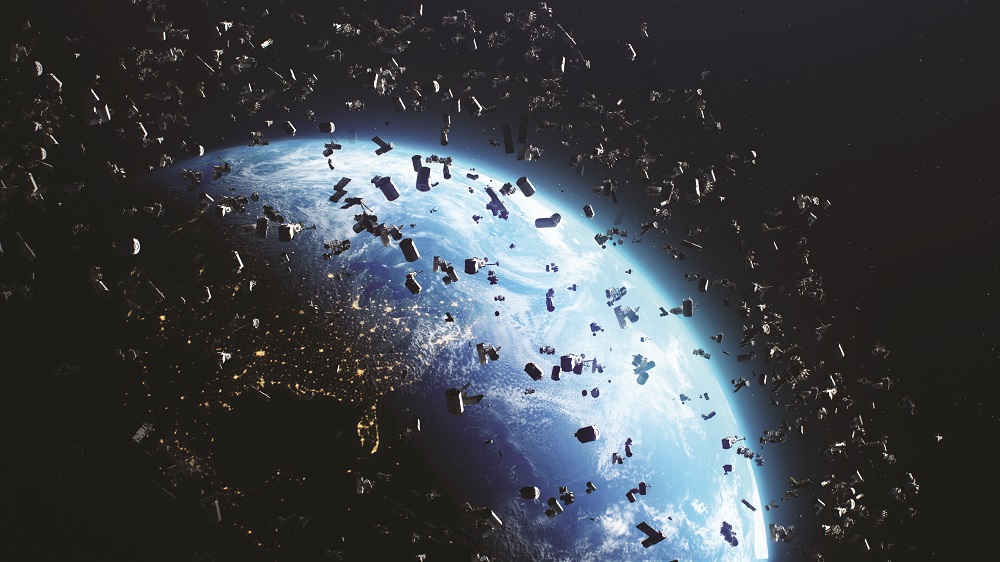
New Op-Ed just dropped! With thanks to my colleague Jamie Wilson for adding the deep physics know-how. Unlike my usual work, this is about one concept that SHOULDN’T be a norm in space: minimum safe distance or spherical “keep-out zones.”
What can be done to prevent collisions and mitigate threats in space if there is no minimum safe distance or spherical keep-out zone concept that can be applied as a norm? https://t.co/VOJgbCN5YC
How can the U.S. maintain the delicate balance between the two powers in these domains and the regional and wider strategic implications of their proximate operations?
@MichaelEOHanlon discusses with @Robin_M_Dickey & Josiah Case
July 26th at 10 AM EDT
https://t.co/59G6I4UH9M
Had a great time talking with Aaron on the @WarOnTheRocks Insider Podcast! Always a joy to get to situate space and norms in the broader context of national security and deterrence. 🚀
So glad I had the chance to write this piece for War on the Rocks!! Norms should be seen as complementary, not contradictory, to other tools of space deterrence and defense.
Norm development is one of many tools that can and should be applied strategically to preserve stability and promote U.S. interests in space. https://t.co/HsO2MOMIop
So excited to see this new @StateDept Strategic Framework for Space Diplomacy—it’s already been added to the @AeroPolicy Space Policy Archive! Check it out here: https://t.co/raQVjp8GVF
I would argue that the breadth and intensity of response to violation of a norm is a measure of that norm’s strength. Norms established in non binding guidelines will have different incentives (implied or explicit) than norms established in law. Different tools to make norms
Chiming in to @DougLigor and @brianweeden’s debate on What is a norm? There really is no commonly accepted definition, but I use the one Brian cited. Although I believe sanctions are not required to have a norm (just a common belief behavior is ok or not ok)…
Happy anniversary of the U.S. commitment to not conduct destructive direct-ascent ASAT tests to all who celebrate.
I’ll say it again: that’s one small step for a norm, one giant leap for normkind. What a difference a year makes!
So even though diplomacy and norm development in space is really difficult, it is rarely done completely from scratch. There are always potential lessons learned from history, from different kinds of actors or sources, or from analogies and other domains. (end 🧵)
Space may be a vacuum, but space norms and practices are NOT a vacuum.
The new Space Safety Coalition Best Practices include a lot of ways to improve space safety, but also show how many space norm efforts build off each other. Here are some of my takeaways: (🧵)
#News: In February, @SecDef approved the #USSPACECOM commander's 8 proposed specific behaviors that further define the @DeptofDefense's 5 Tenets of Responsible Behavior in Space and reaffirm the 🇺🇸's commitment to a safe, secure space domain. Read more: https://t.co/uQji0mu9j8.
🌏New Paper: Singapore Country Brief🌏
In this brief, @spacenukesam & @Robin_M_Dickey
highlight Singapore's domestic & regional context, space development, diplomatic activity, & opportunities for space collaboration with the United States.
Read here: https://t.co/s9ZB5yp3FH
🚨PAID internship alert!🚨@AeroPolicy has posted the opening for this summer’s Space Policy Graduate Internship! This internship quite literally changed my life- if you love space and politics, apply today! https://t.co/DwDRA9QWZp
What does Star Trek have in common with real life space diplomacy? Find out in tomorrow's episode of #TheSpacePolicyShow with @Robin_M_Dickey and @Monkeybane_DC.
Tomorrow @ 1 p.m. ET
https://t.co/6IImtpfpDJ
So all in all this was quite the year for space norms! Thanks for all who followed along this year and who laughed (or groaned) at my puns. Can’t wait for what’s to come in 2023! 🚀🎉🥳
As we approach “Norm Years Eve”, it’s time for a thread on this year’s major developments in space norms! Here are 5 major space norm happenings from 2022. 🧵
5 (cont.) Over 150 countries voted in favor of a UN resolution calling for a halt to this kind of ASAT testing. Now THATS Normentum, even though there is a long way still to go. https://t.co/Itdz0b1Npu