Studies of 1.5M+ people link antimuscarinics to a ~20% higher dementia/Alzheimer's risk, with overactive bladder (OAB) drugs posing top risks regardless of dose. Consequently, expert guidelines advise avoiding long-term use (>3 months) and trying \beta_3-agonists first for OAB.
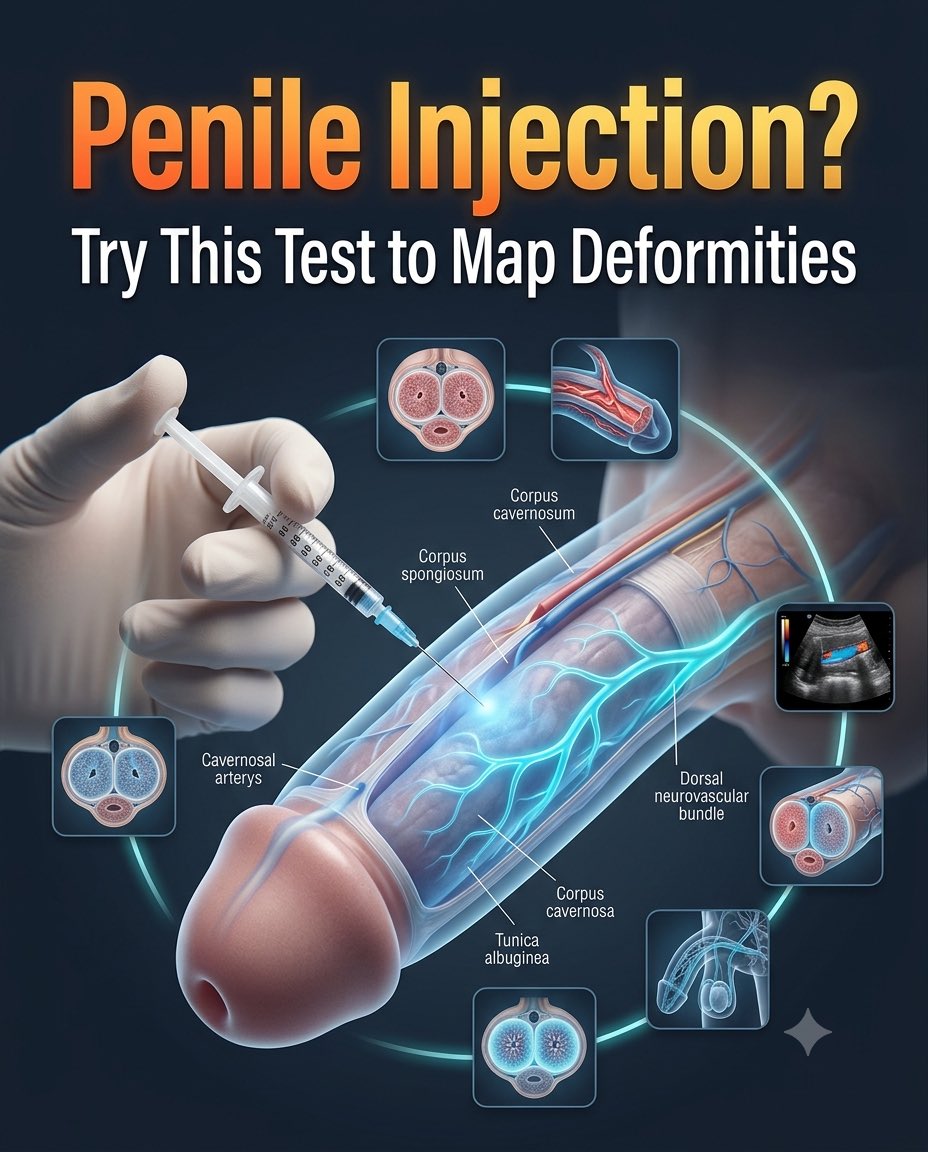
A penile injection test (Intracavernosal Injection) shows deformity, plaque(s), pain, curvature point, and erect length/girth. With duplex ultrasound, clinicians assess plaque size, calcification, and penile blood‑flow health for a clear picture of Peyronie’s. #UroRobotX
A Peyronie’s eval starts with the story: onset, triggers, progression, prior treatments, ED, pain, and exact deformities:
curvature, plaques, hourglass, hinge, contracture, shortening. Sexual func, rigidity, penetration limits, partner comfort, & distress all guide management.
Polyuria makes your body produce too much urine — and that’s why many people wake up at night to pee. It affects men and women and often has systemic causes like high fluid intake, diabetes, medications, or sleep apnea. Addressing nighttime urination means identifying the cause.
IC/BPS pain is intense and widespread — pressure, burning, and deep pelvic discomfort that can hit the suprapubic area, urethra, vulva/vagina, rectum, lower abdomen, and back, often worsen with certain foods or bladder filling, improve after urination, flares for hours to weeks.
PCNL + aspirin? Yes.
AUA Guidelines say PCNL can be done without stopping low‑dose aspirin (75–100 mg) — bleeding risk stays the same, and outcomes don’t change. Evidence shows no extra bleeding, same stone‑free rates, and no benefit to stopping aspirin.
#Urology#PCNL#Aspirin
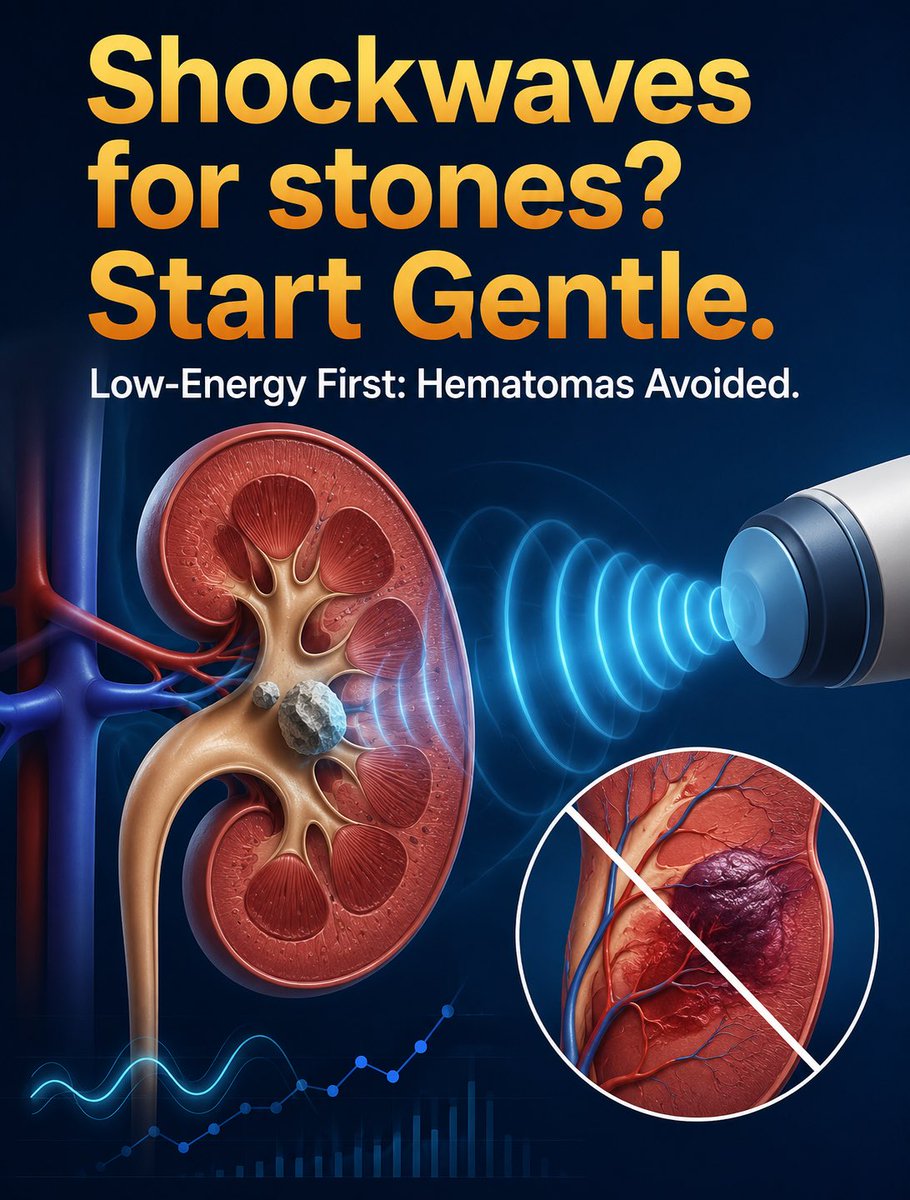
Start Low, Go Slow in SWL
For adults undergoing SWL, the 2026 AUA Guideline supports beginning with low‑energy shockwaves and gradually increasing energy to lower bleeding risk.
A step‑up protocol (10→12→14 kV) showed 24% hematoma vs 44% w/ continuous 14 kV. Conditional - C
Asymptomatic non‑obstructing stones?
Surveillance and surgery are both guideline‑supported paths now 🪨🩺
📚 Source: Surgical Management of Kidney and Ureteral Stones — AUA Guideline (2026)
Percutaneous Antegrade Approach 🪨
For ureteral stones >2 cm or those failing URS/SWL or not amenable to retrograde access, the 2026 AUA Guideline recommends an antegrade percutaneous approach.
Offers direct access and higher clearance for large/complex stones. Expert Opinion.
Surgery on the Table? URS + SWL Are Both Strong Options 🪨
For distal ureteral stones ≤10 mm needing surgery, the 2026 AUA Guideline supports URS or SWL—high stone‑free rates with URS, low morbidity with SWL.
#Nephrolithiasis#UroRobotX
Alpha‑Blockers Can Help Mid + Proximal Ureter Stones Move 💊➡️🪨
For adults w/ ≤10 mm stones in the middle or proximal ureter, the 2026 AUA Guideline says clinicians may offer MET (Med Expulsive Therapy) w/ alpha‑adrenergic blockers for ~30 days to improve spontaneous passage.
Alpha‑blockers relax smooth muscle at the prostate and ureter, lowering resistance, easing spasm, and helping stones move.
They don’t dissolve stones—they relax the plumbing so urine flows easier and stones pass.
After 30 days of medical therapy, AUA guidelines recommend repeat imaging—either CT or renal US + KUB—to confirm stone passage and rule out silent obstruction. Don’t assume the stone is gone. Re‑image and verify.
The Data Is In: α‑Blockers Help Kids Too.
💊👶 A meta‑analysis of 9 pediatric RCTs shows α‑Blockers improves distal stone passage (OR 3.49) with even stronger effects for <5 mm and 5–12 mm stones. Kids also had fewer pain episodes and needed fewer analgesics. 🔖 #UroRobotX
α‑blockers help small distal stones pass — and the data is strong.
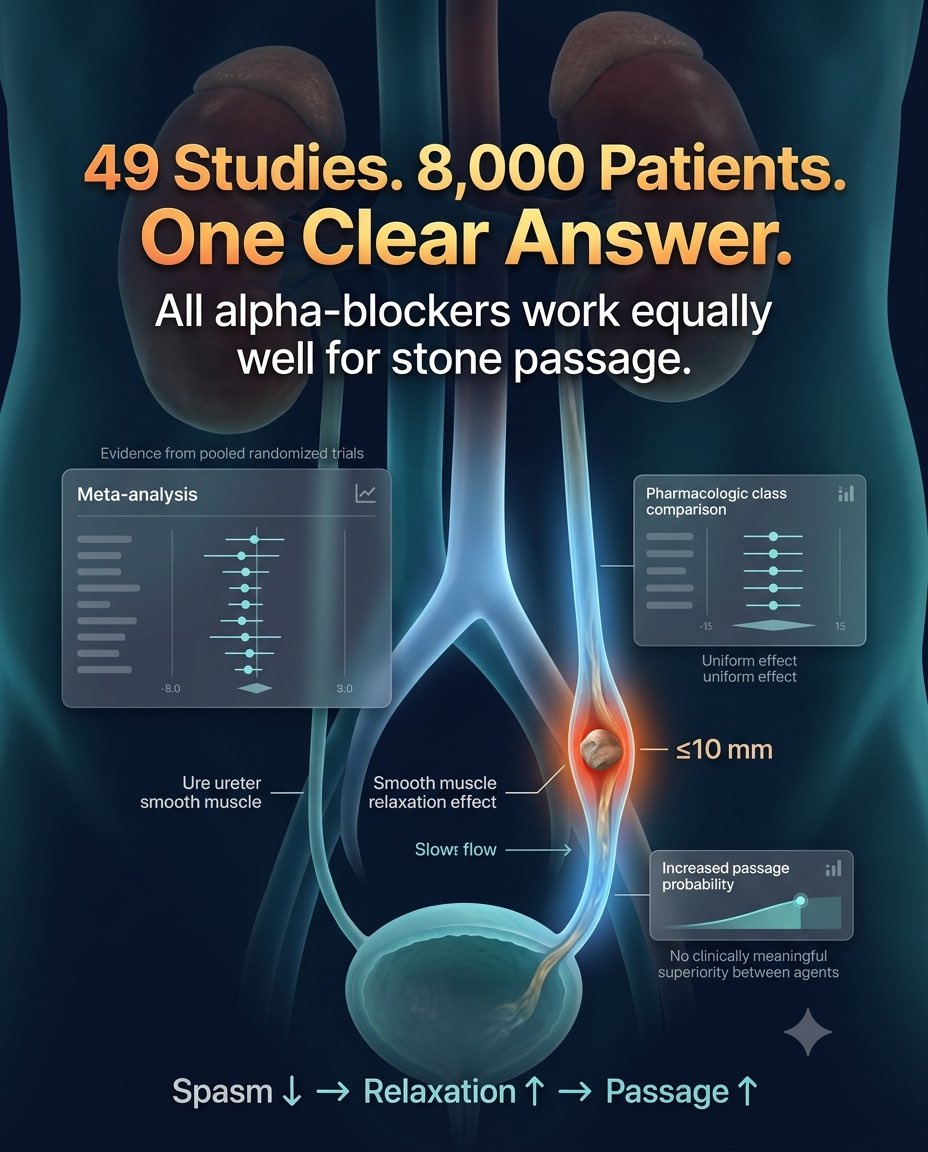
💊💥 A meta‑analysis of 49 studies (8,000+ pts) showed higher passage rates w/ α‑blockers: RR 0.71 ➡️ +25 more passages per 100 pts. 💊 Tamsulosin, silodosin, terazosin, doxazosin, alfuzosin all improve passage.
For patients trying spontaneous passage of a ≤10 mm distal ureteral stone, starting an alpha‑blocker can help.
💊 Tamsulosin, alfuzosin, doxazosin, terazosin, silodosin relax the ureter, making passage easier.
📈 Higher passage rates
🔥 Less pain
🏥 Fewer unplanned visits
Stones can cause renal functional loss through chronic obstruction, infection, or stricture.
Decline is suspected with long obstruction, low eGFR, or imaging showing hydroneph or cortical thinning.
MAG‑3 or DMSA assess split function to guide stone removal, ob, or nephrectomy.
Low‑dose CT can miss key details in obesity, altered anatomy, or when 3‑D planning is needed.
Image noise and limited resolution may compromise PCNL access planning. In these cases, standard‑dose CT or CT urography provides the clarity required for safe, precise tract selection.