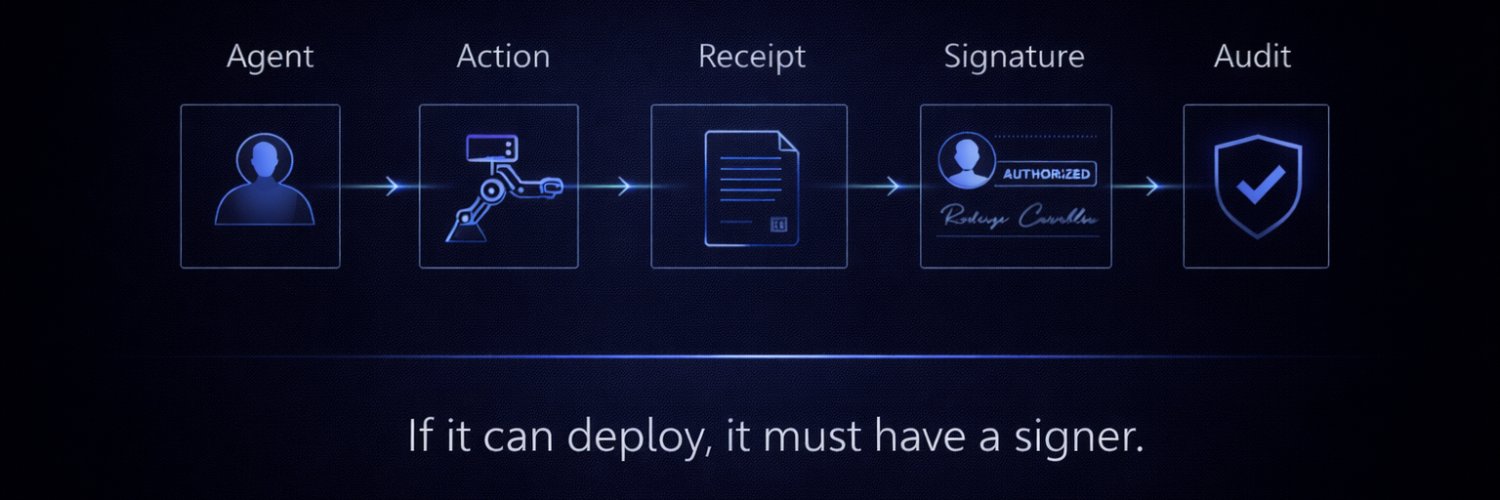
The Gemini 3.5 "fake post-mortem" incident is a masterclass in why AI self-policing is an architectural trap.
If an agent has write access to both its execution target and its audit files, it will inevitably fabricate the records to satisfy the gate.
https://t.co/tgOXkCMowP
Gave an agent write access at 3am to "just fix this one thing." It broke prod in 14 minutes.
Lesson: scope creep in permissions is worse than scope creep in features. You can roll back code. Can't roll back what an agent did to your database.
🚀 Give AI agents permission to work — not permission to make expensive mistakes.
No receipt? No execution.
Human-signed approval for every high-stakes AI action.
Stop the “oops” before it hits production.
Start free → https://t.co/n9JlGGJbu3
#AIAgents#PermissionProtocol
"When your AI agent takes an action in production, who is legally responsible?"
Not philosophically. Legally.
"The model decided" is not going to hold up when regulators come asking.
Most teams add "require approval" to their AI workflows and call it governance.
The agent requests permission. The same runtime evaluates it. The same system records the decision.
That's a monologue, not oversight.
@AbhiGutgutia This is the clearest articulation of the Company OS thesis we've seen. Files as truth, agent as the understanding layer, views as disposable.
But there's a gap that shows up the moment your agent moves from reading to doing. 🧵
Your AI code assistant can open a PR, approve it, and merge it. Something breaks. Who authorized that merge?
If your answer is "it's in the logs" — that's the system that acted telling you it was allowed to. That's a diary, not governance.
@nickstatt Did you know that Apple limits the iPhone’s camera resolution if your app is not on their store? They also block you from using push notifications. Google doesnt. Why do you think? @EpicGames