Mario Cristobal says he’s bringing in President Trump to speak to the team. Via @PeteNokos_
“I want them to learn something from one of my friends. When you fail don’t give up.” 🔥
Trump literally trumped the law. No one is ever going to see Donald Trump get the justice he deserves for all of the crimes he's committed. Why? It's bad. It's REALLY fucking BAD. Listen:
Here’s a summary of the Protect College Sports Act that nobody seems to wants to say out loud: in a sport where nearly 50% of the players are African-American - many of whom come from disadvantaged backgrounds - a bunch of rich white people have gotten together to propose
There's a big problem with the Protect College Sports Act that few people are talking about. Congress defined an athlete spending cap by reference to the House settlement's amendment mechanism, meaning that Judge Wilken, not Congress, effectively controls what the statutory cap is. But Congress can't delegate its legislative powers to the judiciary. https://t.co/lOKAflhKNB
Not to mention that for years the NCAA has violated antitrust laws so the solution is to exempt them so they don’t have to follow the law. 🙄 Make it make sense. I guess lobbying is king.
I would add that the "Protect College Sports Act" carries a crazy irony. A bill whose central purpose is to grant antitrust exemptions to college sports contains a provision that does the precise opposite of what antitrust law is meant to do. Antitrust law exists to promote competition and prevent restraints on it. Yet the Act would impose a statutory prohibition on two entities—the Big Ten and SEC—from merging or expanding, a government-imposed restraint on the structure of the market itself. Normally we worry about mergers because they reduce competition. Here, Congress would block mergers not to protect competition but to protect the competitive position of the schools left out of one— using the machinery of antitrust to achieve an avowedly anti-competitive distributional end: keeping the strong from getting stronger so the weak can survive. Whatever its policy merits, that is a strange use of federal power, and a stranger thing to bury inside a bill that spends its remaining pages exempting the industry from the very laws it is here invoking in spirit.
Nor is the pooling provision as "voluntary" as advertised. Cruz and Cantwell chose that word deliberately to make the bill appear agnostic as between the two power conferences and everyone else. It is not. The pooling mechanism triggers only if 75% of the 138 FBS schools opt in—103 or so—and the SEC, Big Ten, and Notre Dame together account for 35. On paper, that hands the power conferences a veto; in practice, it makes them the target. Because the projected media values the bill's backers tout only work if the SEC and Big Ten participate, the structure is engineered to pressure the two leagues into surrendering the premium they negotiated independently and sharing it across schools that contribute little to it. "Voluntary" describes the form. The function is coercion by arithmetic—a redistribution the drafters could not mandate outright, so they built a mechanism designed to make refusal untenable, or so it seems.
Some very pointed criticism overnight of the Cruz-Cantwell "Protect College Sports Act" from Ramogi Huma of the National College Players Association (@NCPANOW):
"This bill would functionally shut down a massive share of NIL from NIL collectives alone - well over $2 billion every year that would otherwise go primarily to football and men’s basketball athletes, the majority of whom are Black. At the same time, that money and more will continue flowing from these same sources to coaches and administrators who are predominantly White. This is an unjust wealth extraction, dressed up as ‘order.’ It’s a government sanctioned upward transfer that carves young Americans out of the American Dream and equal opportunity while locking in guaranteed riches for an older class of coaches and administrators."
@RTRWLT@thomast1908 Well, actually, there are more direct ways to get order but universities don’t want to go that route. This route just pushes more issues before courts. Not the smartest way to run a business.
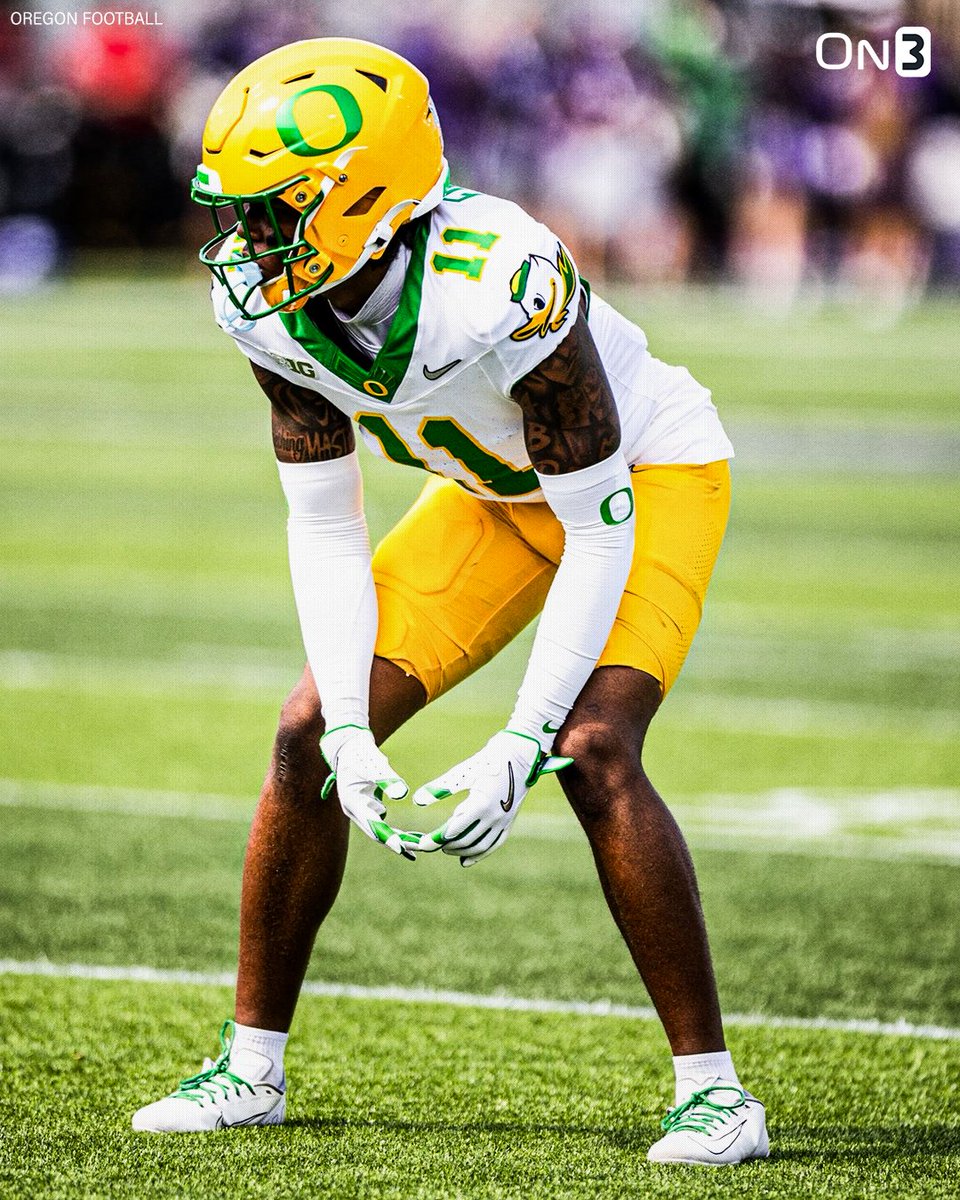
What are we doing? Oregon suing one of its former players over $10,000 for transferring? The president and Board of Trustees at Oregon think this makes sense? 🙄 Lost.
NEW: Oregon is suing Oklahoma DB Dakoda Fields for an alleged breach of contract, The Daily Emerald reports.
Fields transferred from Eugene to Norman in January.
Details: https://t.co/yYRel7gNdo
@thomast1908@RTRWLT It’s a different animal in recruiting world. It might alienate players, their families and agents. It also acknowledges that it is no longer a student-university relationship as the universities want (i.e., now employee-employer). risky. Could win this battle and lose the war.